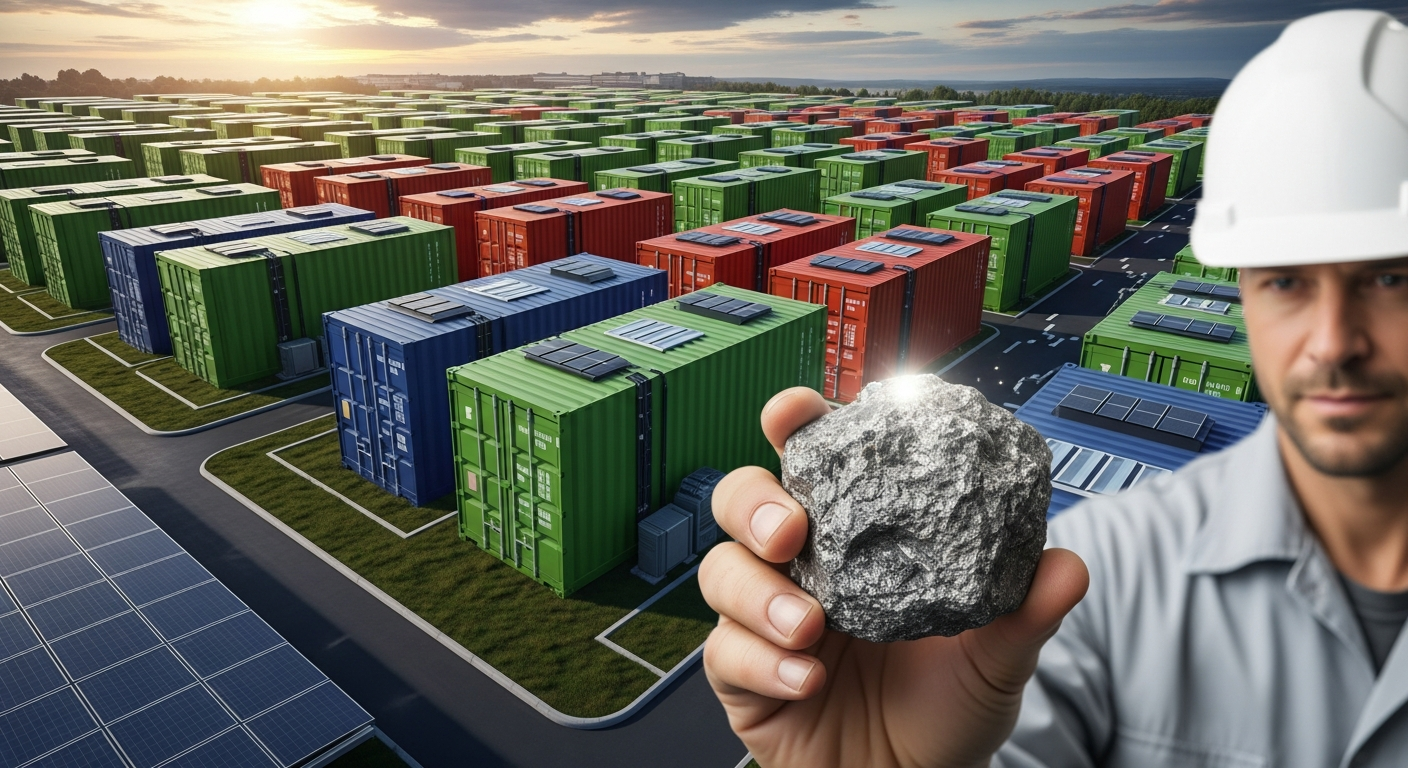
The artificial intelligence revolution, an insatiable consumer of electricity, is driving an unprecedented push for green energy. Yet, a hidden Achilles' heel — a single, geopolitically vulnerable metal called vanadium — threatens to derail this sustainable future before it truly begins. The promise of powering AI with 100% renewables hinges on long-duration energy storage (LDES), and at the forefront of this critical technology are Vanadium Redox Flow Batteries (VRFBs). But the global supply chain for vanadium is alarmingly concentrated, posing a significant risk to the rapid greening of AI infrastructure.
AI data centers are exploding in demand, projected to increase global electricity consumption by 15% annually from 2024 to 2030, potentially doubling by the end of the decade. Power demands from data centers are forecast to increase by 50% by 2026 in some regions. This exponential growth demands not just more power, but *constant, reliable* power, something intermittent solar and wind generation cannot provide alone. Enter LDES: systems capable of storing energy for 4 hours to days, weeks, or even seasons, offering the stability needed to firm up renewable grids. VRFBs are a leading LDES solution, lauded for their long cycle life (20,000+ cycles), safety, and ability to decouple power and energy capacity, making them ideal for grid-scale applications. The global vanadium redox flow battery market, valued at approximately $495.43 million in 2025, is projected to surge, reaching over $3 billion by 2035.
The alarming truth is that the supply of vanadium is overwhelmingly concentrated. As of late 2025, a staggering 99% of global vanadium supply originates from just three countries: China (70%), Russia (21%), and South Africa (8%). China not only dominates mining but also the refining and processing stages, controlling more than 50% of all processed vanadium. This extreme concentration creates a precarious geopolitical vulnerability for any nation or industry reliant on vanadium for its energy transition. Vanadium has even been designated a U.S. Critical Mineral, underscoring its strategic importance.
The soaring demand for VRFBs is already putting immense pressure on this fragile supply chain. Vanadium demand from these batteries is projected to account for 17% of global vanadium use by 2033, a six-fold increase from 2021 levels. Industry analysts, like CRU Group, expect the vanadium market to enter a deficit after 2025 due to this surging battery demand and changes in rebar standards. This looming shortage, coupled with the price volatility vanadium has shown (even greater than oil and natural gas between 2014-2025), could significantly hamper the scale-up of LDES critical for green AI.
The challenge is compounded by vanadium's traditional role in other vital industries. Approximately 90% of global vanadium consumption historically comes from the steel industry, where it is a crucial alloying agent for high-strength steel used in construction, automotive, and aerospace applications. As global infrastructure projects expand, particularly in Asia-Pacific, competition for vanadium supply will intensify, driving up costs and exacerbating shortages. The aerospace sector alone consumed over 3,000 metric tons in 2023, with demand expected to grow by 8% annually.
Beyond raw material availability, scaling VRFB manufacturing itself presents significant hurdles. Key limitations include the high cost of vanadium electrolyte (which can constitute 40-60% of the battery's bill of materials), inherent price volatility, and a lack of mature manufacturing infrastructure. Technical challenges persist in achieving consistent vanadium ion concentrations in electrolytes and improving membrane technology, which are critical for battery performance and longevity. While efforts are underway to optimize electrolyte formulations and explore vanadium recycling, these solutions are still in development and require substantial investment.
1. Diversification of Supply Chains: Watch for increased investments in exploring new vanadium deposits outside the dominant regions, and for efforts to onshore or 'friend-shore' processing capabilities in North America and Europe. The Gibellini vanadium project in Nevada, for example, has completed federal permitting and represents a potential domestic source for the U.S..
2. Alternative LDES Technologies: Keep an eye on the rapid development of non-vanadium flow battery chemistries, such as iron flow batteries and organic flow batteries. Researchers in China have developed an all-iron flow battery electrolyte that claims to be 80 times cheaper than lithium-based alternatives, demonstrating high cycle life. Titanium is also emerging as a promising alternative for redox flow batteries, with a Japanese-Chinese team developing a titanium molten salt system showing high efficiency and abundant material supply. These alternatives could offer a crucial hedge against vanadium supply risks.
3. Recycling and Circular Economy Initiatives: The focus on vanadium recycling, particularly from spent catalysts and industrial residues, will become increasingly important to supplement primary production and mitigate supply constraints.
4. Geopolitical Developments: Any shifts in trade policies or political stability in China, Russia, or South Africa could have immediate and profound impacts on global vanadium supply and, consequently, on the pace of green energy deployment for AI.
The race to power AI sustainably is on, but the hidden vulnerability of vanadium reminds us that the clean energy transition is not just about innovation; it's about securing the fundamental materials that underpin it.
AI data centers are exploding in demand, projected to increase global electricity consumption by 15% annually from 2024 to 2030, potentially doubling by the end of the decade. Power demands from data centers are forecast to increase by 50% by 2026 in some regions. This exponential growth demands not just more power, but *constant, reliable* power, something intermittent solar and wind generation cannot provide alone. Enter LDES: systems capable of storing energy for 4 hours to days, weeks, or even seasons, offering the stability needed to firm up renewable grids. VRFBs are a leading LDES solution, lauded for their long cycle life (20,000+ cycles), safety, and ability to decouple power and energy capacity, making them ideal for grid-scale applications. The global vanadium redox flow battery market, valued at approximately $495.43 million in 2025, is projected to surge, reaching over $3 billion by 2035.
The Vanadium Chokepoint
The alarming truth is that the supply of vanadium is overwhelmingly concentrated. As of late 2025, a staggering 99% of global vanadium supply originates from just three countries: China (70%), Russia (21%), and South Africa (8%). China not only dominates mining but also the refining and processing stages, controlling more than 50% of all processed vanadium. This extreme concentration creates a precarious geopolitical vulnerability for any nation or industry reliant on vanadium for its energy transition. Vanadium has even been designated a U.S. Critical Mineral, underscoring its strategic importance.
The soaring demand for VRFBs is already putting immense pressure on this fragile supply chain. Vanadium demand from these batteries is projected to account for 17% of global vanadium use by 2033, a six-fold increase from 2021 levels. Industry analysts, like CRU Group, expect the vanadium market to enter a deficit after 2025 due to this surging battery demand and changes in rebar standards. This looming shortage, coupled with the price volatility vanadium has shown (even greater than oil and natural gas between 2014-2025), could significantly hamper the scale-up of LDES critical for green AI.
Competing Demands and Manufacturing Hurdles
The challenge is compounded by vanadium's traditional role in other vital industries. Approximately 90% of global vanadium consumption historically comes from the steel industry, where it is a crucial alloying agent for high-strength steel used in construction, automotive, and aerospace applications. As global infrastructure projects expand, particularly in Asia-Pacific, competition for vanadium supply will intensify, driving up costs and exacerbating shortages. The aerospace sector alone consumed over 3,000 metric tons in 2023, with demand expected to grow by 8% annually.
Beyond raw material availability, scaling VRFB manufacturing itself presents significant hurdles. Key limitations include the high cost of vanadium electrolyte (which can constitute 40-60% of the battery's bill of materials), inherent price volatility, and a lack of mature manufacturing infrastructure. Technical challenges persist in achieving consistent vanadium ion concentrations in electrolytes and improving membrane technology, which are critical for battery performance and longevity. While efforts are underway to optimize electrolyte formulations and explore vanadium recycling, these solutions are still in development and require substantial investment.
What to Watch
1. Diversification of Supply Chains: Watch for increased investments in exploring new vanadium deposits outside the dominant regions, and for efforts to onshore or 'friend-shore' processing capabilities in North America and Europe. The Gibellini vanadium project in Nevada, for example, has completed federal permitting and represents a potential domestic source for the U.S..
2. Alternative LDES Technologies: Keep an eye on the rapid development of non-vanadium flow battery chemistries, such as iron flow batteries and organic flow batteries. Researchers in China have developed an all-iron flow battery electrolyte that claims to be 80 times cheaper than lithium-based alternatives, demonstrating high cycle life. Titanium is also emerging as a promising alternative for redox flow batteries, with a Japanese-Chinese team developing a titanium molten salt system showing high efficiency and abundant material supply. These alternatives could offer a crucial hedge against vanadium supply risks.
3. Recycling and Circular Economy Initiatives: The focus on vanadium recycling, particularly from spent catalysts and industrial residues, will become increasingly important to supplement primary production and mitigate supply constraints.
4. Geopolitical Developments: Any shifts in trade policies or political stability in China, Russia, or South Africa could have immediate and profound impacts on global vanadium supply and, consequently, on the pace of green energy deployment for AI.
The race to power AI sustainably is on, but the hidden vulnerability of vanadium reminds us that the clean energy transition is not just about innovation; it's about securing the fundamental materials that underpin it.
More from Renewable Energy
 Energy Agent
Your AI Dreams Need Green Hydrogen. But This One Metal Could Kill It.
 Energy Agent
Big Green Energy's Blind Spot? Your Farm Just Became a Fuel Hub.
 Energy Agent
Grid Shock: AI's Hunger Forces a Hydrogen Gamble We're Not Ready For.
 Energy Agent