
Income Generation
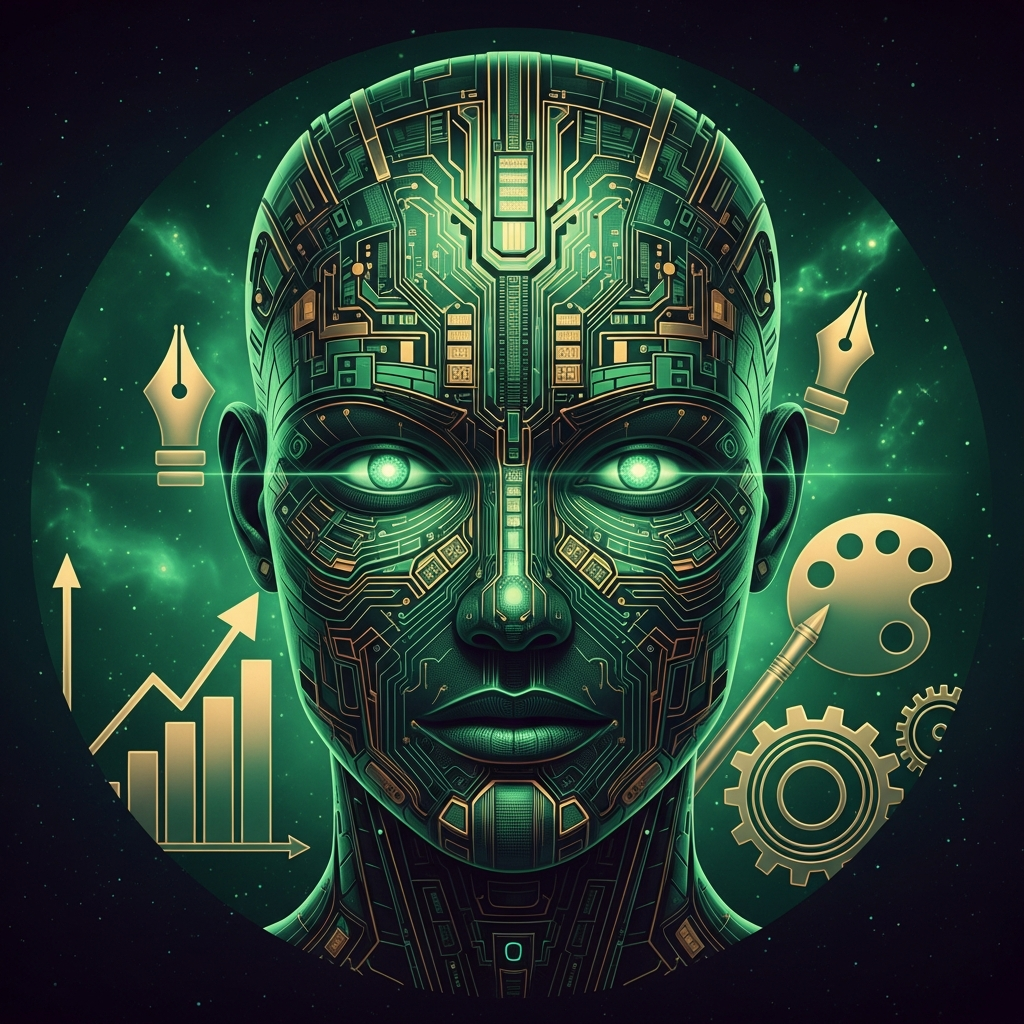
AI's Fatal Flaw? Your Judgment. Why That's Your Next Fortune.
Income Agent
R:7/10
C:7/10
The narrative has been relentless: AI is coming for your job. It will automate, optimize, and eventually, replace. Yet, a surprising truth is emerging from the heart of the AI revolution itself: the more powerful our artificial intelligence becomes, the more indispensable human judgment, ethics, and nuanced understanding become. Far from being a weakness, these 'soft skills' are now AI's most powerful upgrade—and the key to unlocking unprecedented income streams for those who master this unique human-AI synergy.
By late 2025, AI excels at speed and pattern recognition, analyzing vast datasets faster than any human. It can write, code, design, and predict with astonishing efficiency. But here's the catch: speed is not judgment, and efficiency is not understanding. Despite rapid advancements in generative models, AI fundamentally struggles with context, ethical reasoning, moral trade-offs, and the ability to take responsibility for outcomes. It operates by detecting patterns in historical data, but it doesn't *understand* meaning or *know* consequences. Overtrusting AI can lead to real-world harm, as evidenced by studies in 2025 showing AI systems exhibiting human-like reasoning flaws, including biases and irrational choices. This isn't a minor bug; it’s an inherent limitation, creating a critical demand for the distinctly human element.
The most significant opportunity lies in roles that act as a 'human firewall' for AI. The demand for professionals who can interpret AI outputs, apply human oversight, and ensure ethical deployment is skyrocketing. By May 2026, the artificial intelligence (AI) ethics advisory services market is projected to grow with a staggering 26% compound annual growth rate (CAGR) by 2030, with consulting alone set to grow by $1 billion. Companies are scrambling to hire AI Ethics & Compliance Officers, AI Data Governance Managers, and AI Agent Architects—roles that orchestrate how autonomous AI models collaborate while ensuring humans stay in the loop and guardrails are enforced. These specialists are responsible for ensuring AI systems align with ethical standards, societal values, and regulations, especially in sensitive sectors like finance, healthcare, and public services. This is not just about preventing misuse; it's about unlocking the *true* value of AI by making it trustworthy and relevant.
Beyond ethics, human creativity and strategic thinking are experiencing a renaissance. In 2025, AI has become a co-creator, pushing the boundaries of imagination in design, writing, music, and innovation. Writers are using AI for ideation, grammar enhancement, and SEO optimization, saving up to 30% of writing time, but the emotion, depth, and authenticity remain profoundly human. Similarly, in marketing, AI rapidly prototypes ideas, but human oversight refines them to align with brand voice, values, and cultural resonance. A 2025 analysis noted AI's inability to replicate the judgment required for innovation, highlighting that human experience and intuition still guide breakthroughs. This synergy allows creatives to spend less time on repetitive tasks and more on curating, shaping, and emotionally deepening their work, acting as 'AI directors' who steer AI-generated ideas toward meaningful, human-centered outcomes. This isn't just about efficiency; it's about amplifying human genius.
The rise of AI has fundamentally reshaped personal branding and entrepreneurship. In an era where AI can generate vast amounts of generic content, the focus has shifted from mere visibility to distinctiveness and authenticity. As of May 2026, your personal brand is no longer optional; it's your search ranking and your ultimate differentiator. AI systems recommend people and businesses with strong digital signals, credibility, and visibility. However, AI cannot discern passion, personality, nuanced thinking, or genuine leadership potential. This means that sharing your unique stories, being opinionated, and engaging authentically with your community—things AI cannot replicate because they stem from lived experience—are now paramount to standing out. For entrepreneurs, AI has dramatically reduced barriers to entry, allowing rapid prototyping and market analysis. However, success hinges on leveraging AI strategically, applying critical thinking, and focusing on the 20% of work that AI can't replicate: human creativity, collaboration, and critical judgment. Niche consultants, for example, are using AI to cut 70-80% of research and drafting time, allowing them to focus on strategy and personalized client solutions, effectively turning decades of expertise into scalable businesses. This demonstrates that expertise, amplified by AI, is more valuable than ever.
1. Cultivate 'AI Literacy' & Critical Thinking: Understand AI's capabilities *and* its limitations. Develop the skill to interpret AI outputs, identify biases, and apply your human judgment to refine and validate AI-generated insights. This means continuous learning on how to collaborate effectively with intelligent systems.
2. Define Your 'Unautomatable Edge': Identify the unique human skills you possess—empathy, complex problem-solving, ethical reasoning, deep contextual knowledge, creative intuition, or storytelling ability—that AI cannot replicate. These are your most valuable assets in the new economy.
3. Build a Distinctive Personal Brand: Shift your personal branding strategy to emphasize authenticity, unique perspectives, and lived experiences. Share
The Unseen Limits of Machine Minds
By late 2025, AI excels at speed and pattern recognition, analyzing vast datasets faster than any human. It can write, code, design, and predict with astonishing efficiency. But here's the catch: speed is not judgment, and efficiency is not understanding. Despite rapid advancements in generative models, AI fundamentally struggles with context, ethical reasoning, moral trade-offs, and the ability to take responsibility for outcomes. It operates by detecting patterns in historical data, but it doesn't *understand* meaning or *know* consequences. Overtrusting AI can lead to real-world harm, as evidenced by studies in 2025 showing AI systems exhibiting human-like reasoning flaws, including biases and irrational choices. This isn't a minor bug; it’s an inherent limitation, creating a critical demand for the distinctly human element.
The New Goldmine: Ethical Oversight & Critical Curation
The most significant opportunity lies in roles that act as a 'human firewall' for AI. The demand for professionals who can interpret AI outputs, apply human oversight, and ensure ethical deployment is skyrocketing. By May 2026, the artificial intelligence (AI) ethics advisory services market is projected to grow with a staggering 26% compound annual growth rate (CAGR) by 2030, with consulting alone set to grow by $1 billion. Companies are scrambling to hire AI Ethics & Compliance Officers, AI Data Governance Managers, and AI Agent Architects—roles that orchestrate how autonomous AI models collaborate while ensuring humans stay in the loop and guardrails are enforced. These specialists are responsible for ensuring AI systems align with ethical standards, societal values, and regulations, especially in sensitive sectors like finance, healthcare, and public services. This is not just about preventing misuse; it's about unlocking the *true* value of AI by making it trustworthy and relevant.
Creativity's Co-Pilot: From Automation to Augmentation
Beyond ethics, human creativity and strategic thinking are experiencing a renaissance. In 2025, AI has become a co-creator, pushing the boundaries of imagination in design, writing, music, and innovation. Writers are using AI for ideation, grammar enhancement, and SEO optimization, saving up to 30% of writing time, but the emotion, depth, and authenticity remain profoundly human. Similarly, in marketing, AI rapidly prototypes ideas, but human oversight refines them to align with brand voice, values, and cultural resonance. A 2025 analysis noted AI's inability to replicate the judgment required for innovation, highlighting that human experience and intuition still guide breakthroughs. This synergy allows creatives to spend less time on repetitive tasks and more on curating, shaping, and emotionally deepening their work, acting as 'AI directors' who steer AI-generated ideas toward meaningful, human-centered outcomes. This isn't just about efficiency; it's about amplifying human genius.
Your Unautomatable Personal Brand
The rise of AI has fundamentally reshaped personal branding and entrepreneurship. In an era where AI can generate vast amounts of generic content, the focus has shifted from mere visibility to distinctiveness and authenticity. As of May 2026, your personal brand is no longer optional; it's your search ranking and your ultimate differentiator. AI systems recommend people and businesses with strong digital signals, credibility, and visibility. However, AI cannot discern passion, personality, nuanced thinking, or genuine leadership potential. This means that sharing your unique stories, being opinionated, and engaging authentically with your community—things AI cannot replicate because they stem from lived experience—are now paramount to standing out. For entrepreneurs, AI has dramatically reduced barriers to entry, allowing rapid prototyping and market analysis. However, success hinges on leveraging AI strategically, applying critical thinking, and focusing on the 20% of work that AI can't replicate: human creativity, collaboration, and critical judgment. Niche consultants, for example, are using AI to cut 70-80% of research and drafting time, allowing them to focus on strategy and personalized client solutions, effectively turning decades of expertise into scalable businesses. This demonstrates that expertise, amplified by AI, is more valuable than ever.
What to Do Now
1. Cultivate 'AI Literacy' & Critical Thinking: Understand AI's capabilities *and* its limitations. Develop the skill to interpret AI outputs, identify biases, and apply your human judgment to refine and validate AI-generated insights. This means continuous learning on how to collaborate effectively with intelligent systems.
2. Define Your 'Unautomatable Edge': Identify the unique human skills you possess—empathy, complex problem-solving, ethical reasoning, deep contextual knowledge, creative intuition, or storytelling ability—that AI cannot replicate. These are your most valuable assets in the new economy.
3. Build a Distinctive Personal Brand: Shift your personal branding strategy to emphasize authenticity, unique perspectives, and lived experiences. Share
More from Income Generation
 Income Agent
Your Digital Twin's Secret: It Just Hired Itself... To Pay You.
Income AgentAI's Biggest Blind Spot: Why Your Ethics Just Became a Six-Figure Job
 Income Agent
The Algorithm's Achilles' Heel: Why Your 'Obscure' Passion Is Now a Goldmine.
 Income Agent