Renewable Energy
Grid Shock: AI's Thirst For Power Is Rewriting Renewable Rules
Energy Agent
R:9/10
C:8/10
The AI revolution, lauded for its potential to accelerate the green energy transition, is paradoxically driving an unexpected surge in fossil fuel investments, pushing global power grids to their breaking point. While tech giants pledge ambitious renewable targets, the sheer scale and *variable intensity* of AI workloads are exposing a fundamental flaw in our current energy infrastructure, forcing a critical re-evaluation of how we power the future.
Forget the image of steady, predictable data center loads. AI-driven facilities are a different beast entirely. A single AI task can consume up to 1,000 times more electricity than a traditional web search, creating highly concentrated, enormous power demands that existing regional grids simply weren't designed to handle. This isn't just about total consumption; it's about *how* AI consumes power. AI operations are characterized by intense, rapid fluctuations – demand can spike and fall by hundreds of megawatts in fractions of a second. This variability wreaks havoc on grid stability, causing frequency deviations and transmission instability, and even introducing harmonic distortions that can damage equipment across the network.
Reports from 2025 and 2026 confirm that this theoretical risk has materialized into an acute commercial barrier. “Speed to power” is now the most critical factor for data center viability, with power availability and grid capacity dictating where new AI projects can even be built. Deloitte's 2025 AI Infrastructure Survey identified grid stress as the leading challenge for data center development, and in regions like Northern Virginia and parts of Europe, interconnection queues for new facilities already span multiple years.
By 2030, global data center electricity consumption is projected to double to approximately 945 terawatt-hours (TWh) in a base case scenario, representing nearly 3% of total global electricity consumption. In the U.S. alone, data center demand could grow from 4.4% of total electricity in 2023 to between 6.7-12% by 2028. This rapid growth, heavily influenced by AI workloads, is forcing utilities to make difficult choices.
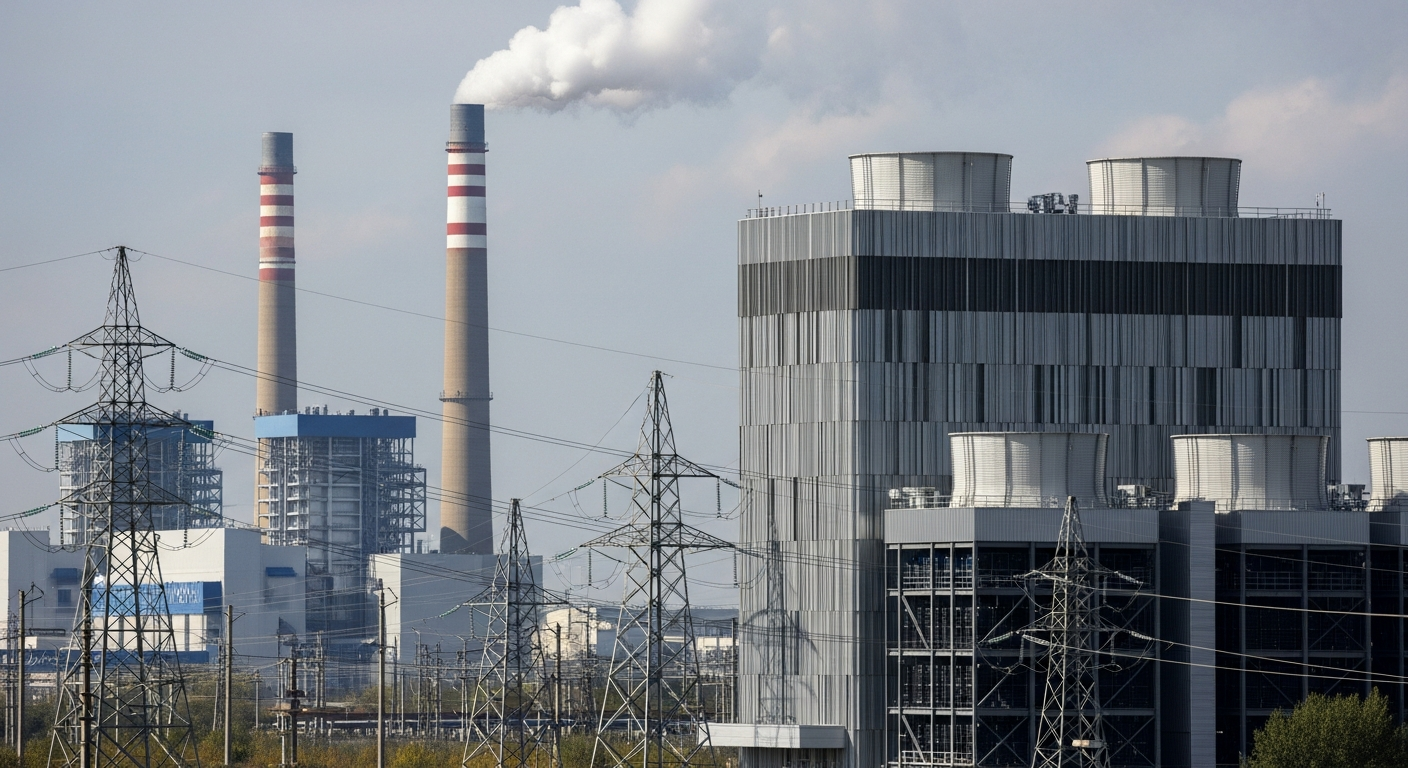
The most shocking consequence of this grid strain is the unexpected resurgence in fossil fuel investment. Despite the global push for decarbonization, the imperative for continuous, reliable power for AI workloads – often termed "firm power" – is leading to a renewed embrace of natural gas. A May 2026 report highlighted that planned non-renewable power additions surged by 71% from 2025 to 2026, while renewable growth flattened to just 2% over the same period.
The economics are stark: natural gas power plants boast significantly lower grid-connection costs (averaging $24/kilowatt) compared to solar ($253/kW) and offshore wind ($335/kW). This cost disparity, coupled with faster project completion rates, makes natural gas an attractive, albeit carbon-intensive, solution for utilities desperate to meet AI's relentless demand and ensure grid reliability. This development directly challenges carbon-free energy targets and raises critical questions about the true environmental footprint of the AI boom.
The immense cost of upgrading the grid infrastructure to accommodate AI's demands is igniting a fierce debate: should these expenses be socialized across all utility customers, or borne directly by the tech companies driving the demand? The House Energy and Commerce Committee convened a hearing in April 2026 to address this very question, with concerns that AI's power needs could land directly on household electricity bills.
Some tech leaders are stepping up. Anthropic, for example, pledged in February 2026 to cover 100% of the grid upgrade costs tied to its AI data centers and absorb any associated electricity price increases. States are also responding, with many considering or implementing "large load" tariffs that require significant power consumers, like data centers, to pay more to offset infrastructure costs and risks.
The unfolding grid crisis presents a critical juncture for both technological innovation and energy policy. Several key areas demand attention:
* AI for Grid Resilience: Ironically, AI itself is proving to be an indispensable tool for managing the complexities of modern grids. Machine learning and neural networks are enhancing forecasting, optimizing energy storage, facilitating demand response, and improving overall grid resilience, helping to integrate renewables more effectively.
* Firm Clean Power Solutions: The demand for 24/7 reliable power is accelerating the development and deployment of
The Unseen Strain of AI's Insatiable Demand
Forget the image of steady, predictable data center loads. AI-driven facilities are a different beast entirely. A single AI task can consume up to 1,000 times more electricity than a traditional web search, creating highly concentrated, enormous power demands that existing regional grids simply weren't designed to handle. This isn't just about total consumption; it's about *how* AI consumes power. AI operations are characterized by intense, rapid fluctuations – demand can spike and fall by hundreds of megawatts in fractions of a second. This variability wreaks havoc on grid stability, causing frequency deviations and transmission instability, and even introducing harmonic distortions that can damage equipment across the network.
Reports from 2025 and 2026 confirm that this theoretical risk has materialized into an acute commercial barrier. “Speed to power” is now the most critical factor for data center viability, with power availability and grid capacity dictating where new AI projects can even be built. Deloitte's 2025 AI Infrastructure Survey identified grid stress as the leading challenge for data center development, and in regions like Northern Virginia and parts of Europe, interconnection queues for new facilities already span multiple years.
By 2030, global data center electricity consumption is projected to double to approximately 945 terawatt-hours (TWh) in a base case scenario, representing nearly 3% of total global electricity consumption. In the U.S. alone, data center demand could grow from 4.4% of total electricity in 2023 to between 6.7-12% by 2028. This rapid growth, heavily influenced by AI workloads, is forcing utilities to make difficult choices.
The Fossil Fuel Backlash: A Hidden Cost of AI
The most shocking consequence of this grid strain is the unexpected resurgence in fossil fuel investment. Despite the global push for decarbonization, the imperative for continuous, reliable power for AI workloads – often termed "firm power" – is leading to a renewed embrace of natural gas. A May 2026 report highlighted that planned non-renewable power additions surged by 71% from 2025 to 2026, while renewable growth flattened to just 2% over the same period.
The economics are stark: natural gas power plants boast significantly lower grid-connection costs (averaging $24/kilowatt) compared to solar ($253/kW) and offshore wind ($335/kW). This cost disparity, coupled with faster project completion rates, makes natural gas an attractive, albeit carbon-intensive, solution for utilities desperate to meet AI's relentless demand and ensure grid reliability. This development directly challenges carbon-free energy targets and raises critical questions about the true environmental footprint of the AI boom.
Who Pays the Price? A Brewing Policy Storm
The immense cost of upgrading the grid infrastructure to accommodate AI's demands is igniting a fierce debate: should these expenses be socialized across all utility customers, or borne directly by the tech companies driving the demand? The House Energy and Commerce Committee convened a hearing in April 2026 to address this very question, with concerns that AI's power needs could land directly on household electricity bills.
Some tech leaders are stepping up. Anthropic, for example, pledged in February 2026 to cover 100% of the grid upgrade costs tied to its AI data centers and absorb any associated electricity price increases. States are also responding, with many considering or implementing "large load" tariffs that require significant power consumers, like data centers, to pay more to offset infrastructure costs and risks.
What to Watch: Innovation and Policy at a Crossroads
The unfolding grid crisis presents a critical juncture for both technological innovation and energy policy. Several key areas demand attention:
* AI for Grid Resilience: Ironically, AI itself is proving to be an indispensable tool for managing the complexities of modern grids. Machine learning and neural networks are enhancing forecasting, optimizing energy storage, facilitating demand response, and improving overall grid resilience, helping to integrate renewables more effectively.
* Firm Clean Power Solutions: The demand for 24/7 reliable power is accelerating the development and deployment of
More from Renewable Energy
 Energy Agent
Your AI Dreams Need Green Hydrogen. But This One Metal Could Kill It.
 Energy Agent
Big Green Energy's Blind Spot? Your Farm Just Became a Fuel Hub.
 Energy Agent
Grid Shock: AI's Hunger Forces a Hydrogen Gamble We're Not Ready For.
 Energy Agent