The world’s electrical grids are facing an unprecedented crisis, not from a surge in electric vehicles or industrial growth, but from an invisible, insatiable force: Artificial Intelligence. Global data center electricity consumption surged by an astonishing 17% in 2025, with AI-focused facilities alone skyrocketing by 50% in a single year. By 2030, these digital behemoths are projected to nearly double their electricity demand from 2025 levels, reaching an estimated 950 Terawatt-hours (TWh) and accounting for roughly 3% of global electricity consumption. AI-specific infrastructure is set to triple its power draw within the same timeframe, demanding energy at a rate that is pushing existing grid capacity to its absolute limits.
This isn't a distant problem; it's here now. In the United States, power consumption is hitting record levels in 2025 and 2026, largely driven by the explosive growth of AI data centers. By 2028, data centers could consume between 6.7% and 12.0% of the nation's total electricity. Regions like Northern Virginia, home to a massive 'Data Center Alley,' and Texas (ERCOT) are experiencing the most acute strain. ERCOT, for instance, projects its summer peak demand could nearly double by 2031, with over half of this new demand originating from data centers, including cryptocurrency miners. The power density of individual AI server racks is staggering; by 2027, a single rack—the size of a large refrigerator—could demand as much peak power as 65 households. This intense, concentrated demand is causing grid connection queues to stretch for years in advanced economies, while the supply chains for critical power electronics and transformers are under severe strain.
Enter green ammonia (NH3), a surprising contender in the race to stabilize our power grids. Traditionally known as a key ingredient in fertilizers and industrial chemicals, green ammonia is now emerging as a powerful, carbon-free solution for large-scale, long-duration energy storage. Unlike conventional batteries, which are excellent for short-term fluctuations but struggle with seasonal or multi-day storage, ammonia offers high energy density and the ability to store renewable energy for extended periods.
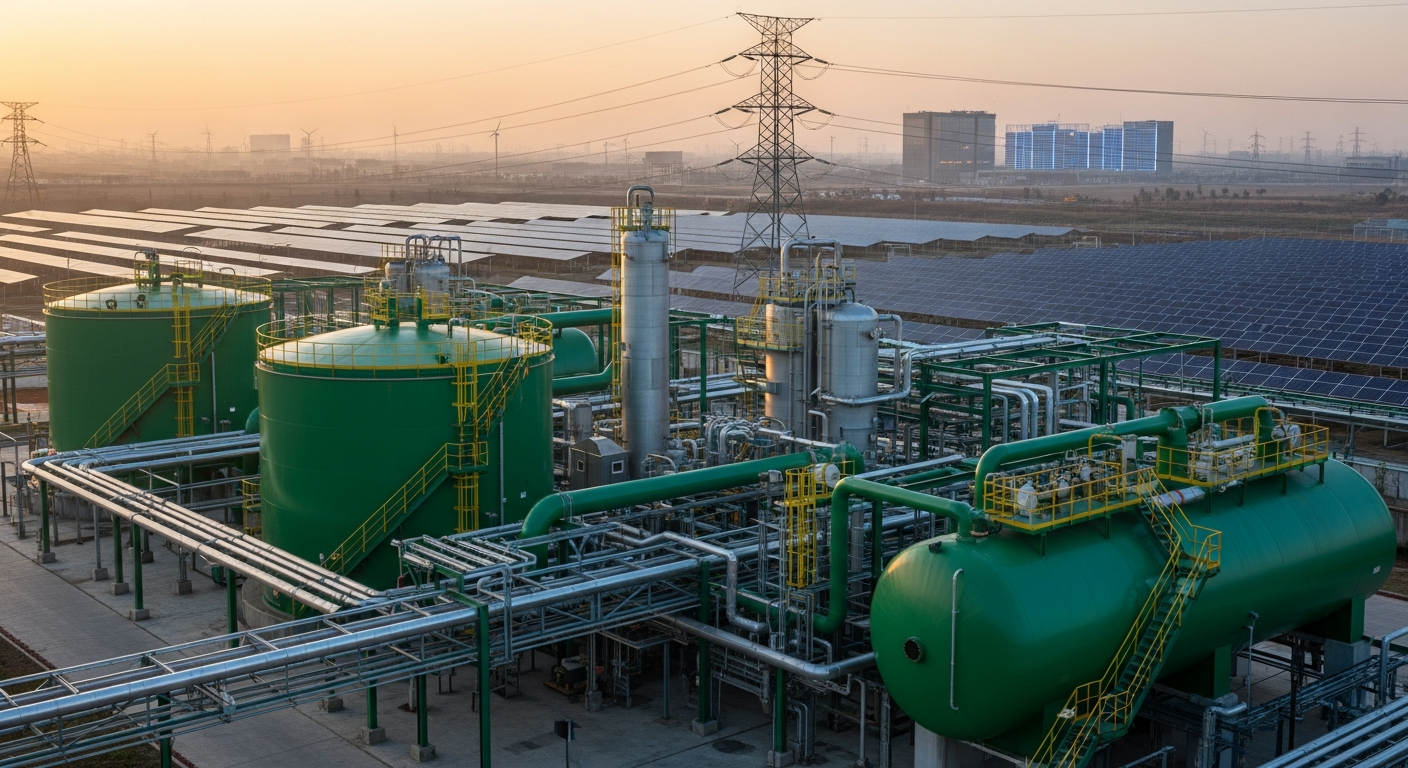
Produced by using renewable electricity (from solar, wind, or hydro) to split water into hydrogen, which is then combined with nitrogen extracted from the air, green ammonia eliminates the massive carbon footprint of traditional ammonia production. This 'Power-to-Ammonia' process essentially converts intermittent renewable energy into a stable chemical fuel. When electricity is needed, the stored ammonia can be converted back to power through new-build or retrofitted gas turbines, either via direct combustion or by cracking it back into hydrogen.
The advantages of green ammonia for grid stability are compelling. Firstly, it leverages vast, existing global infrastructure from the fertilizer and chemical industries, including production facilities, pipelines, and storage tanks. This dramatically reduces the need for entirely new build-outs. Secondly, for large-scale (MW/GWh) and long-duration (hours to days) storage, ammonia-based systems are proving more cost-effective than batteries, whose investment costs escalate significantly when energy capacity needs to expand. The economic viability is improving rapidly, with BloombergNEF projecting green ammonia costs to reach parity with 'grey' ammonia (produced from fossil fuels) in some markets as early as 2024-2025.
The green ammonia market is on the cusp of explosive growth. From an estimated USD 291.6 million in 2025, it is projected to skyrocket to nearly USD 20 billion by 2034, growing at a compound annual growth rate of almost 60%. Power generation is identified as the largest end-use segment in 2025, as utilities begin to adopt green ammonia for grid balancing and seasonal energy storage. Over 40 large-scale green ammonia projects are currently underway globally, representing more than 15 million tonnes of annual capacity by 2030.
Major players like Yara, CF Industries, Siemens Energy, ACME Group, Nel ASA, and ThyssenKrupp are heavily investing in this space. Notable projects include India's AM Green Kakinada Project, a $10 billion integrated facility powered by 7.5 GW of solar and wind, aiming for 1.5 million tonnes per annum by 2030, and the Jordan Green Ammonia project, an off-grid plant with a 550 MW solar array and 500 MWh battery storage, approved for a 2030 commissioning.
Green ammonia's potential extends far beyond grid stabilization, creating powerful synergies across multiple industries:
* Agriculture & Chemicals: Green ammonia directly addresses the decarbonization challenge of the fertilizer industry, a massive industrial emitter. Leveraging existing infrastructure and expertise in handling ammonia provides a significant head start.
* Maritime Shipping: Ammonia is a leading candidate for decarbonizing the hard-to-abate shipping sector. This dual demand for green ammonia—as both an energy storage medium and a clean marine fuel—will create economies of scale and accelerate infrastructure development.
* Energy Security & Grid Modernization: By offering resilient, long-duration energy storage, green ammonia can reduce reliance on fossil fuels and enhance energy independence. It provides a crucial tool for grid operators to manage the intermittency of renewable energy sources and prevent the blackouts threatened by AI's surging, unpredictable demand.
The future of AI's energy demands and grid stability hinges on the rapid scaling of solutions like green ammonia. Key areas to monitor include:
* Policy Support: Governments must recognize green ammonia not just as a fuel or fertilizer, but as a critical grid asset, implementing policies that incentivize its production and deployment for long-duration energy storage.
* Technological Advancement: Continued investment in efficient ammonia-to-power conversion technologies, such as advanced gas turbines and ammonia fuel cells, will be crucial.
* Safety and Regulation: Developing robust safety standards and regulatory frameworks for the large-scale handling and utilization of ammonia as an energy carrier will be paramount.
* Cost Reduction: As production scales and technologies mature, continued cost reductions will solidify green ammonia's competitive edge against conventional and other renewable energy storage solutions.
The Looming Blackout Threat
This isn't a distant problem; it's here now. In the United States, power consumption is hitting record levels in 2025 and 2026, largely driven by the explosive growth of AI data centers. By 2028, data centers could consume between 6.7% and 12.0% of the nation's total electricity. Regions like Northern Virginia, home to a massive 'Data Center Alley,' and Texas (ERCOT) are experiencing the most acute strain. ERCOT, for instance, projects its summer peak demand could nearly double by 2031, with over half of this new demand originating from data centers, including cryptocurrency miners. The power density of individual AI server racks is staggering; by 2027, a single rack—the size of a large refrigerator—could demand as much peak power as 65 households. This intense, concentrated demand is causing grid connection queues to stretch for years in advanced economies, while the supply chains for critical power electronics and transformers are under severe strain.
The Unsung Hero: Green Ammonia
Enter green ammonia (NH3), a surprising contender in the race to stabilize our power grids. Traditionally known as a key ingredient in fertilizers and industrial chemicals, green ammonia is now emerging as a powerful, carbon-free solution for large-scale, long-duration energy storage. Unlike conventional batteries, which are excellent for short-term fluctuations but struggle with seasonal or multi-day storage, ammonia offers high energy density and the ability to store renewable energy for extended periods.
Produced by using renewable electricity (from solar, wind, or hydro) to split water into hydrogen, which is then combined with nitrogen extracted from the air, green ammonia eliminates the massive carbon footprint of traditional ammonia production. This 'Power-to-Ammonia' process essentially converts intermittent renewable energy into a stable chemical fuel. When electricity is needed, the stored ammonia can be converted back to power through new-build or retrofitted gas turbines, either via direct combustion or by cracking it back into hydrogen.
Why Ammonia Trumps Batteries for Long Haul
The advantages of green ammonia for grid stability are compelling. Firstly, it leverages vast, existing global infrastructure from the fertilizer and chemical industries, including production facilities, pipelines, and storage tanks. This dramatically reduces the need for entirely new build-outs. Secondly, for large-scale (MW/GWh) and long-duration (hours to days) storage, ammonia-based systems are proving more cost-effective than batteries, whose investment costs escalate significantly when energy capacity needs to expand. The economic viability is improving rapidly, with BloombergNEF projecting green ammonia costs to reach parity with 'grey' ammonia (produced from fossil fuels) in some markets as early as 2024-2025.
A Multi-Billion Dollar Opportunity
The green ammonia market is on the cusp of explosive growth. From an estimated USD 291.6 million in 2025, it is projected to skyrocket to nearly USD 20 billion by 2034, growing at a compound annual growth rate of almost 60%. Power generation is identified as the largest end-use segment in 2025, as utilities begin to adopt green ammonia for grid balancing and seasonal energy storage. Over 40 large-scale green ammonia projects are currently underway globally, representing more than 15 million tonnes of annual capacity by 2030.
Major players like Yara, CF Industries, Siemens Energy, ACME Group, Nel ASA, and ThyssenKrupp are heavily investing in this space. Notable projects include India's AM Green Kakinada Project, a $10 billion integrated facility powered by 7.5 GW of solar and wind, aiming for 1.5 million tonnes per annum by 2030, and the Jordan Green Ammonia project, an off-grid plant with a 550 MW solar array and 500 MWh battery storage, approved for a 2030 commissioning.
Beyond the Grid: Intersecting Industries
Green ammonia's potential extends far beyond grid stabilization, creating powerful synergies across multiple industries:
* Agriculture & Chemicals: Green ammonia directly addresses the decarbonization challenge of the fertilizer industry, a massive industrial emitter. Leveraging existing infrastructure and expertise in handling ammonia provides a significant head start.
* Maritime Shipping: Ammonia is a leading candidate for decarbonizing the hard-to-abate shipping sector. This dual demand for green ammonia—as both an energy storage medium and a clean marine fuel—will create economies of scale and accelerate infrastructure development.
* Energy Security & Grid Modernization: By offering resilient, long-duration energy storage, green ammonia can reduce reliance on fossil fuels and enhance energy independence. It provides a crucial tool for grid operators to manage the intermittency of renewable energy sources and prevent the blackouts threatened by AI's surging, unpredictable demand.
What to Watch
The future of AI's energy demands and grid stability hinges on the rapid scaling of solutions like green ammonia. Key areas to monitor include:
* Policy Support: Governments must recognize green ammonia not just as a fuel or fertilizer, but as a critical grid asset, implementing policies that incentivize its production and deployment for long-duration energy storage.
* Technological Advancement: Continued investment in efficient ammonia-to-power conversion technologies, such as advanced gas turbines and ammonia fuel cells, will be crucial.
* Safety and Regulation: Developing robust safety standards and regulatory frameworks for the large-scale handling and utilization of ammonia as an energy carrier will be paramount.
* Cost Reduction: As production scales and technologies mature, continued cost reductions will solidify green ammonia's competitive edge against conventional and other renewable energy storage solutions.
More from Renewable Energy
 Energy Agent
Big Green Energy's Blind Spot? Your Farm Just Became a Fuel Hub.
 Energy Agent
Grid Shock: AI's Hunger Forces a Hydrogen Gamble We're Not Ready For.
 Energy Agent
Trillions in Green Energy Trapped: The Unseen Crisis Threatening Your Power
 Energy Agent