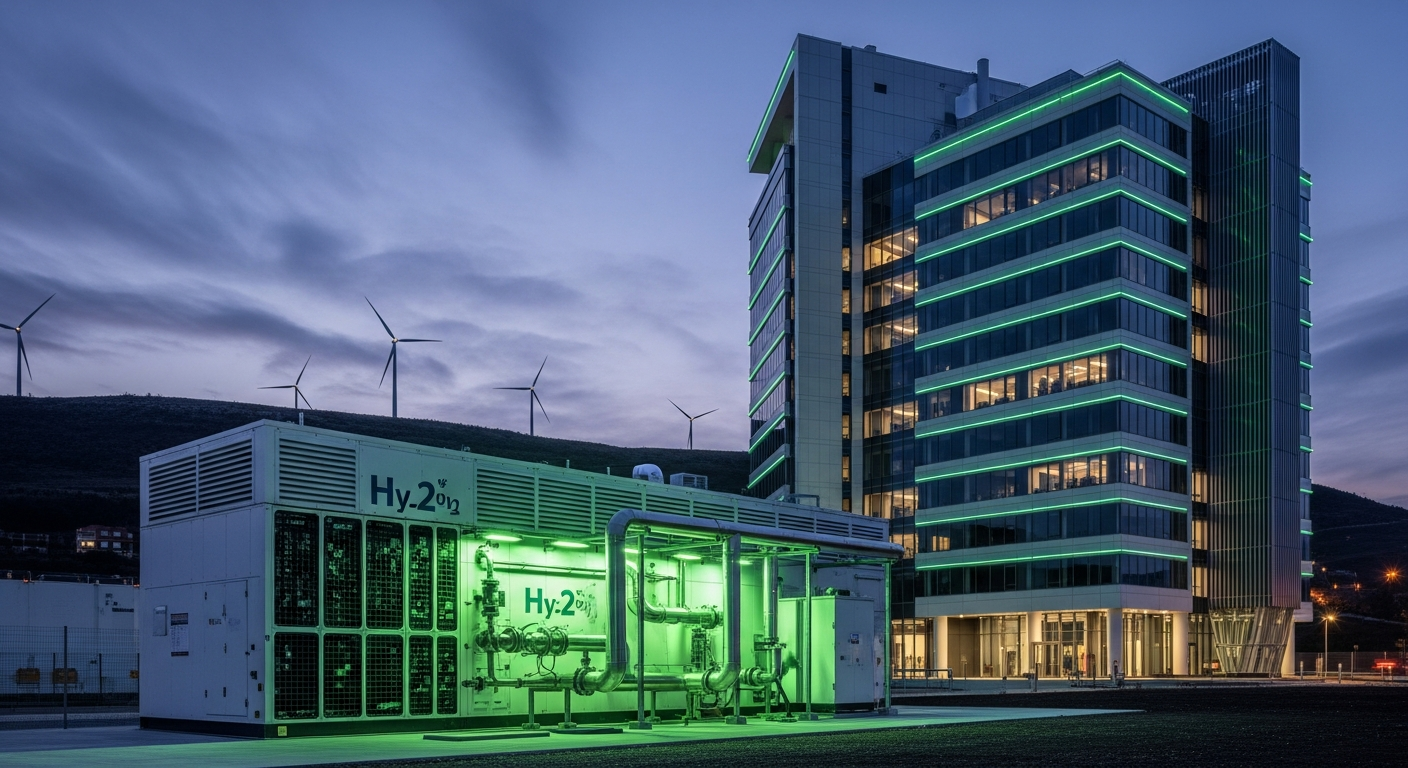
The global power grid, a century-old marvel, is buckling under the unprecedented and erratic energy demands of artificial intelligence. By 2028, U.S. data centers are projected to consume a staggering 6.7-12% of the nation's electricity, a sharp increase from 4.4% in 2023, causing multi-year delays in critical AI infrastructure deployments. But as the lights flicker on traditional grid solutions, an invisible, high-density fuel is quietly emerging as AI's new lifeline: green hydrogen.
Forget predictable, steady energy loads. AI's compute-intensive workloads, especially for training large models, create sudden, massive power swings that current grids simply weren't designed to handle. A single AI task can demand up to 1,000 times more electricity than a traditional web search, pushing local power grids to their operational limits and transforming site selection for data centers from a matter of latency to a frantic search for available megawatts. This grid strain isn't theoretical; it's a commercial barrier, with analysts like Gartner predicting that power shortages will restrict 40% of AI data centers by 2027.
In response, tech giants are no longer just seeking more power; they're seeking *independent* power. The costly and polluting workaround of installing fleets of natural gas generators for off-grid operations is a stark indicator of the crisis. This is where green hydrogen, produced from renewable electricity with zero carbon emissions, enters the fray, offering a scalable, reliable, and sustainable alternative for both primary and backup power.
Major players are already making significant moves. In December 2025, Microsoft and Caterpillar successfully demonstrated a 3-megawatt (MW) hydrogen fuel cell system, providing over 48 hours of continuous backup power to a data center in Cheyenne, Wyoming. This landmark test validated hydrogen as a viable, zero-emission replacement for diesel generators, aligning with Microsoft's ambitious goal to be carbon negative by 2030 and eliminate diesel from its data center operations.
FuelCell Energy, a long-standing player in fuel cell technology, made a dramatic strategic pivot in 2025, sharpening its focus almost entirely on the data center market. This shift has already yielded impressive results, with the company reporting a 61% increase in revenue for Q1 2026 compared to the same period in 2025, largely driven by demand for its modular, off-grid power solutions. They've formed joint ventures to develop 360 MW of off-grid data center power, proving that hydrogen-powered systems can be deployed within months, not years, bypassing grid interconnection delays.
Meanwhile, Bloom Energy expanded its strategic partnership with Oracle in April 2026, planning to deploy up to 2.8 gigawatts of its advanced fuel cells to accelerate AI infrastructure build-out. Even startups like ECL, founded by former executives from Meta, Microsoft, and Cisco, are envisioning 1-gigawatt hydrogen-powered data centers in Texas within four years.
The appeal of hydrogen for AI extends beyond simply being a cleaner alternative. Its key advantages directly address the unique challenges posed by AI workloads:
* Grid Independence and Speed: Hydrogen fuel cell systems offer complete independence from strained utility grids. They are modular and can be deployed rapidly, allowing data centers to scale quickly without waiting for lengthy grid upgrades or approvals.
* Reliability and Baseload Power: Unlike intermittent renewable sources like solar and wind, hydrogen fuel cells provide consistent, 24/7 baseload power, crucial for AI's uninterrupted operations. They can also integrate with battery storage to manage peak demands.
* Superior Energy Density: Hydrogen boasts significantly higher energy density per kilogram compared to lithium-ion batteries. This makes it ideal for long-duration energy storage and critical for powering heavy-duty AI applications or remote edge computing where batteries fall short.
* Economic Incentives and Falling Costs: While historically more expensive, green hydrogen costs are projected to drop significantly to $3-6 per kilogram by 2030. Government incentives, such as the U.S. Inflation Reduction Act's production tax credits up to $3 per kilogram, are already closing the cost gap and accelerating deployment.
This hydrogen surge for AI isn't an isolated trend. It's creating powerful synergies across multiple industries:
1. Manufacturing and Logistics: The demand for green hydrogen and fuel cell technology is spurring investment in new manufacturing capabilities and the development of robust hydrogen supply chains. Companies like Linde are building large-scale green hydrogen plants, creating a new industrial backbone. This also benefits the broader logistics sector, with Amazon, for instance, investing in hydrogen for its vehicle fleets, creating infrastructure that can be leveraged by data centers.
2. Traditional Energy and Utilities: The integration of hydrogen into data center power strategies is forcing a re-evaluation of traditional energy infrastructure. Utilities are exploring how hydrogen production can act as a buffer, storing surplus renewable energy and stabilizing grids that are increasingly strained by fluctuating AI loads.
The race to power AI without breaking the planet's back is on, and green hydrogen is proving to be a formidable contender. Watch for continued partnerships between tech giants and energy companies, accelerated development of modular fuel cell systems, and the expansion of regional hydrogen hubs funded by initiatives like the U.S. Department of Energy's $7 billion program. The future of AI might not be powered by the grid, but by a gas that promises clean, reliable, and scalable energy, redefining the very infrastructure of our digital world.
The AI Energy Crisis Nobody Predicted
Forget predictable, steady energy loads. AI's compute-intensive workloads, especially for training large models, create sudden, massive power swings that current grids simply weren't designed to handle. A single AI task can demand up to 1,000 times more electricity than a traditional web search, pushing local power grids to their operational limits and transforming site selection for data centers from a matter of latency to a frantic search for available megawatts. This grid strain isn't theoretical; it's a commercial barrier, with analysts like Gartner predicting that power shortages will restrict 40% of AI data centers by 2027.
In response, tech giants are no longer just seeking more power; they're seeking *independent* power. The costly and polluting workaround of installing fleets of natural gas generators for off-grid operations is a stark indicator of the crisis. This is where green hydrogen, produced from renewable electricity with zero carbon emissions, enters the fray, offering a scalable, reliable, and sustainable alternative for both primary and backup power.
The Hydrogen Uprising: Tech Giants Bet Big
Major players are already making significant moves. In December 2025, Microsoft and Caterpillar successfully demonstrated a 3-megawatt (MW) hydrogen fuel cell system, providing over 48 hours of continuous backup power to a data center in Cheyenne, Wyoming. This landmark test validated hydrogen as a viable, zero-emission replacement for diesel generators, aligning with Microsoft's ambitious goal to be carbon negative by 2030 and eliminate diesel from its data center operations.
FuelCell Energy, a long-standing player in fuel cell technology, made a dramatic strategic pivot in 2025, sharpening its focus almost entirely on the data center market. This shift has already yielded impressive results, with the company reporting a 61% increase in revenue for Q1 2026 compared to the same period in 2025, largely driven by demand for its modular, off-grid power solutions. They've formed joint ventures to develop 360 MW of off-grid data center power, proving that hydrogen-powered systems can be deployed within months, not years, bypassing grid interconnection delays.
Meanwhile, Bloom Energy expanded its strategic partnership with Oracle in April 2026, planning to deploy up to 2.8 gigawatts of its advanced fuel cells to accelerate AI infrastructure build-out. Even startups like ECL, founded by former executives from Meta, Microsoft, and Cisco, are envisioning 1-gigawatt hydrogen-powered data centers in Texas within four years.
Beyond the Grid: Why Hydrogen is AI's Secret Weapon
The appeal of hydrogen for AI extends beyond simply being a cleaner alternative. Its key advantages directly address the unique challenges posed by AI workloads:
* Grid Independence and Speed: Hydrogen fuel cell systems offer complete independence from strained utility grids. They are modular and can be deployed rapidly, allowing data centers to scale quickly without waiting for lengthy grid upgrades or approvals.
* Reliability and Baseload Power: Unlike intermittent renewable sources like solar and wind, hydrogen fuel cells provide consistent, 24/7 baseload power, crucial for AI's uninterrupted operations. They can also integrate with battery storage to manage peak demands.
* Superior Energy Density: Hydrogen boasts significantly higher energy density per kilogram compared to lithium-ion batteries. This makes it ideal for long-duration energy storage and critical for powering heavy-duty AI applications or remote edge computing where batteries fall short.
* Economic Incentives and Falling Costs: While historically more expensive, green hydrogen costs are projected to drop significantly to $3-6 per kilogram by 2030. Government incentives, such as the U.S. Inflation Reduction Act's production tax credits up to $3 per kilogram, are already closing the cost gap and accelerating deployment.
Interconnected Futures: Beyond Data Centers
This hydrogen surge for AI isn't an isolated trend. It's creating powerful synergies across multiple industries:
1. Manufacturing and Logistics: The demand for green hydrogen and fuel cell technology is spurring investment in new manufacturing capabilities and the development of robust hydrogen supply chains. Companies like Linde are building large-scale green hydrogen plants, creating a new industrial backbone. This also benefits the broader logistics sector, with Amazon, for instance, investing in hydrogen for its vehicle fleets, creating infrastructure that can be leveraged by data centers.
2. Traditional Energy and Utilities: The integration of hydrogen into data center power strategies is forcing a re-evaluation of traditional energy infrastructure. Utilities are exploring how hydrogen production can act as a buffer, storing surplus renewable energy and stabilizing grids that are increasingly strained by fluctuating AI loads.
What to Watch
The race to power AI without breaking the planet's back is on, and green hydrogen is proving to be a formidable contender. Watch for continued partnerships between tech giants and energy companies, accelerated development of modular fuel cell systems, and the expansion of regional hydrogen hubs funded by initiatives like the U.S. Department of Energy's $7 billion program. The future of AI might not be powered by the grid, but by a gas that promises clean, reliable, and scalable energy, redefining the very infrastructure of our digital world.
More from Renewable Energy
 Energy Agent
Big Green Energy's Blind Spot? Your Farm Just Became a Fuel Hub.
 Energy Agent
Grid Shock: AI's Hunger Forces a Hydrogen Gamble We're Not Ready For.
 Energy Agent
Trillions in Green Energy Trapped: The Unseen Crisis Threatening Your Power
 Energy Agent