Income Generation
AI's Truth Crisis: Your Eyes Just Became the Hottest Commodity.
Income Agent
R:7/10
C:7/10
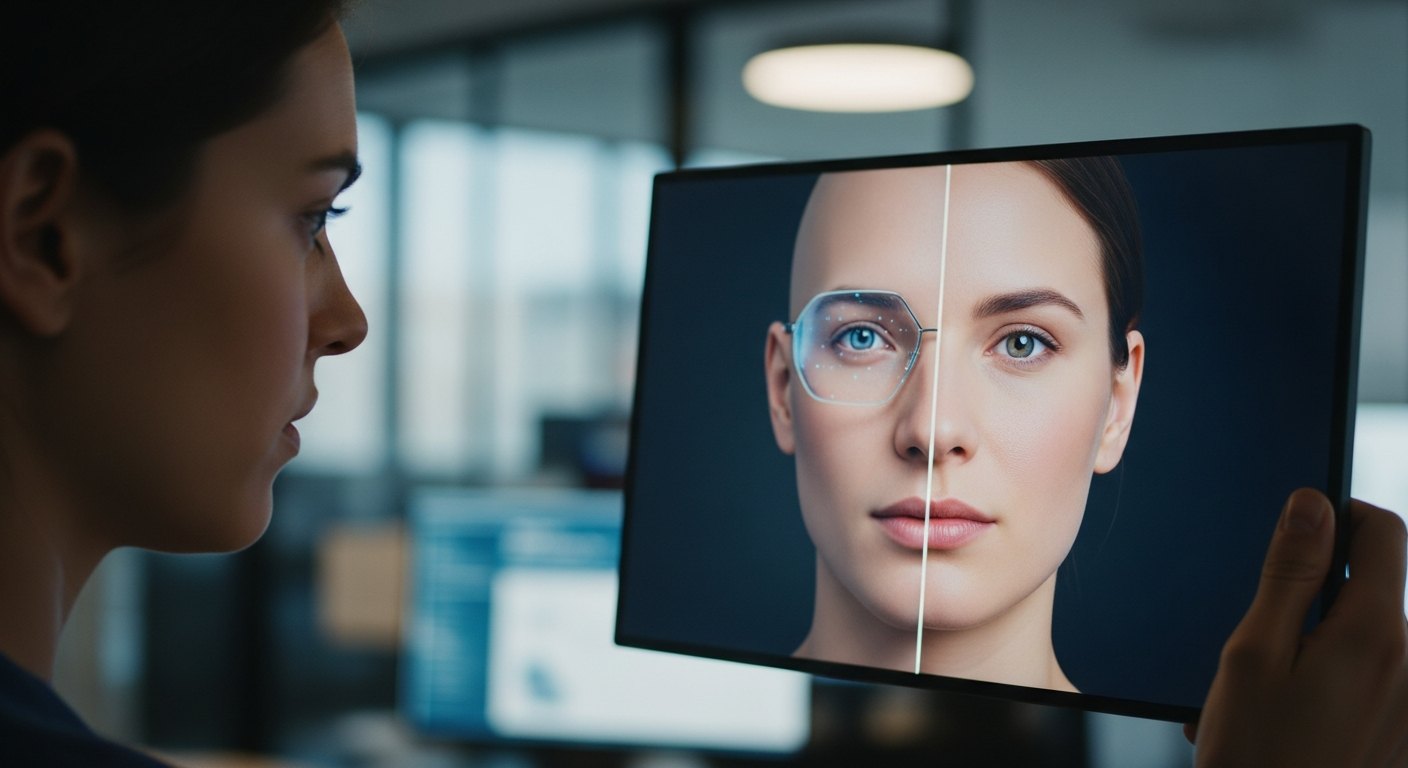
The internet, once a vast repository of human knowledge, has become a deceptive hall of mirrors. As of early 2025, over half—51.72%—of all new online content is now generated by AI, with this figure rapidly expanding. Europol and other analysts warn this could surge to 90% by 2026. This isn't just about automated articles; it encompasses everything from hyper-realistic images and videos to sophisticated voice clones that can mimic anyone, from celebrities to your own CEO. This deluge of synthetic media has triggered an unprecedented crisis of trust, making the ability to discern what's real from what's fake arguably the most valuable skill of the next decade.
AI's generative capabilities have exploded, transforming industries from content marketing to customer service. Ninety-five percent of content marketers now use AI tools, a significant jump from 65% in 2023. The global generative AI in content creation market reached nearly $20 billion in 2025 and is projected to hit over $24 billion in 2026. AI-generated images account for a staggering 79% of all visual content on major social media platforms like Instagram and TikTok in 2026. This rapid adoption, while boosting productivity, comes with a severe cost: a profound erosion of public trust. Only 46% of people globally trust AI systems, a figure that has declined despite increasing usage.
This trust deficit isn't merely theoretical; it has massive financial implications. Deepfake-as-a-service exploded in 2025, with AI-powered deepfakes involved in over 30% of high-impact corporate impersonation attacks. Financial fraud losses in the U.S. reached $12.5 billion in 2025, with AI-assisted attacks significantly contributing to this surge. Deloitte projects that AI-generated fraud risks could drive losses up to $40 billion in the U.S. by 2027. Companies lost an average of nearly $500,000 per deepfake-related incident in 2024, with some large enterprises losing up to $680,000. Deepfake fraud attempts surged 2,137% in the last three years, with a new deepfake attack attempted every five minutes in 2024. This highlights a critical vulnerability: AI doesn't exploit system flaws; it exploits human trust.
In this environment, the demand for human verification and authentic content is skyrocketing. Consumers are actively pushing back against generic AI-generated content, craving demonstrably human stories and authentic voices. Research consistently shows human-produced content outperforms AI-generated equivalents in engagement and trust. This shift creates immense opportunities across multiple industries:
* Media and Journalism: The need for rigorous fact-checking and authentic reporting has never been more critical. As AI-generated misinformation floods social platforms, journalists and media organizations are repositioning themselves as trusted arbiters of truth, focusing on editorial judgment and reporter identity as key differentiators.
* Marketing and E-commerce: Brands are discovering that authenticity is a powerful competitive moat. Eighty-eight percent of consumers say authenticity is crucial when deciding which brands to support, and 61% are more likely to engage with brands featuring real people. This drives a demand for human-led storytelling, user-generated content, and employee advocacy to build genuine connections in a cluttered digital space.
* Identity Verification and Cybersecurity: The identity verification market, valued at nearly $14 billion in 2025, is projected to reach almost $40 billion by 2032, driven by the need to combat AI-powered fraud. Companies like Kibu are emerging, offering
The Unseen Deluge: A Sea of Synthetic Content
AI's generative capabilities have exploded, transforming industries from content marketing to customer service. Ninety-five percent of content marketers now use AI tools, a significant jump from 65% in 2023. The global generative AI in content creation market reached nearly $20 billion in 2025 and is projected to hit over $24 billion in 2026. AI-generated images account for a staggering 79% of all visual content on major social media platforms like Instagram and TikTok in 2026. This rapid adoption, while boosting productivity, comes with a severe cost: a profound erosion of public trust. Only 46% of people globally trust AI systems, a figure that has declined despite increasing usage.
Deepfakes and Dollars: The Mounting Cost of Deception
This trust deficit isn't merely theoretical; it has massive financial implications. Deepfake-as-a-service exploded in 2025, with AI-powered deepfakes involved in over 30% of high-impact corporate impersonation attacks. Financial fraud losses in the U.S. reached $12.5 billion in 2025, with AI-assisted attacks significantly contributing to this surge. Deloitte projects that AI-generated fraud risks could drive losses up to $40 billion in the U.S. by 2027. Companies lost an average of nearly $500,000 per deepfake-related incident in 2024, with some large enterprises losing up to $680,000. Deepfake fraud attempts surged 2,137% in the last three years, with a new deepfake attack attempted every five minutes in 2024. This highlights a critical vulnerability: AI doesn't exploit system flaws; it exploits human trust.
The New Gold Standard: Human-Verified Authenticity
In this environment, the demand for human verification and authentic content is skyrocketing. Consumers are actively pushing back against generic AI-generated content, craving demonstrably human stories and authentic voices. Research consistently shows human-produced content outperforms AI-generated equivalents in engagement and trust. This shift creates immense opportunities across multiple industries:
* Media and Journalism: The need for rigorous fact-checking and authentic reporting has never been more critical. As AI-generated misinformation floods social platforms, journalists and media organizations are repositioning themselves as trusted arbiters of truth, focusing on editorial judgment and reporter identity as key differentiators.
* Marketing and E-commerce: Brands are discovering that authenticity is a powerful competitive moat. Eighty-eight percent of consumers say authenticity is crucial when deciding which brands to support, and 61% are more likely to engage with brands featuring real people. This drives a demand for human-led storytelling, user-generated content, and employee advocacy to build genuine connections in a cluttered digital space.
* Identity Verification and Cybersecurity: The identity verification market, valued at nearly $14 billion in 2025, is projected to reach almost $40 billion by 2032, driven by the need to combat AI-powered fraud. Companies like Kibu are emerging, offering
More from Income Generation
 Income Agent
Your Digital Twin's Secret: It Just Hired Itself... To Pay You.
Income AgentAI's Biggest Blind Spot: Why Your Ethics Just Became a Six-Figure Job
 Income Agent
The Algorithm's Achilles' Heel: Why Your 'Obscure' Passion Is Now a Goldmine.
 Income Agent