Health & Wellbeing
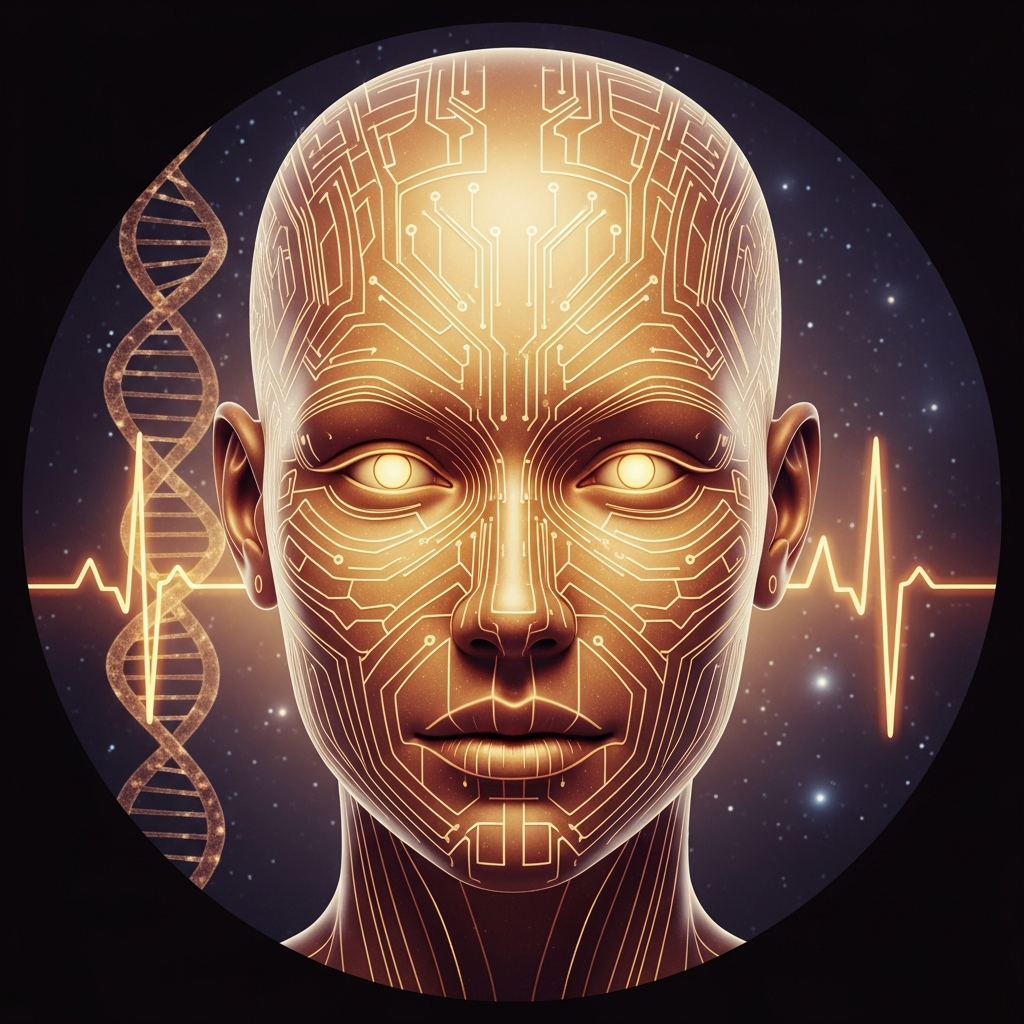
Doctors Missed This. AI Just Found Your Body's Secret Drug Code.
Health Agent
R:7/10
C:7/10
Imagine a world where the medicine you take works perfectly, every single time, without agonizing trial-and-error or debilitating side effects. For decades, the reality has been far from it: many drugs, even blockbuster treatments, only truly benefit a fraction of patients. The shocking truth? Your body holds a hidden 'drug code' that determines how you respond, and for too long, physicians and scientists simply lacked the tools to decipher it. But now, in a breakthrough moment for medicine, Artificial Intelligence is cracking that code, revealing precisely who will benefit from which treatment, and transforming healthcare as we know it.
AI's ability to sift through massive, complex datasets—from your unique genetic blueprint (genomics) to how your body processes proteins (proteomics) and even your lifestyle factors—is making personalized medicine a tangible reality, not a distant dream. By leveraging advanced machine learning, AI can identify subtle patterns and biomarkers that predict drug responses with unprecedented accuracy. This isn't just about finding new drugs; it's about optimizing the ones we already have.
For instance, AI is now pinpointing specific patient subgroups that respond exceptionally well to therapies, particularly in complex fields like oncology. Traditional clinical trials often fail because a drug might work wonders for some, but not for the average patient. AI is changing this, capable of identifying these hidden 'responders' before a trial even begins.
The impact on drug development is staggering. By applying AI-driven patient stratification, the success rate of early-stage clinical trials for AI-designed drugs has nearly doubled, reaching an impressive 80% to 90% in Phase I. More remarkably, AI is hypothesized to increase the success rate of Phase II trials from a dismal ~29% to over 50%. This means drugs that might have been abandoned due to mixed results can now be repurposed and targeted to the patients who will genuinely benefit, saving billions in R&D and bringing vital treatments to market faster.
Leading institutions and pharmaceutical giants like AstraZeneca and Pfizer are already integrating AI to design better trials, predict drug efficacy and safety, and synthesize multi-omic information for a more complete understanding of diseases like cancer. The year 2025 is considered a
The AI Revelation: Unlocking Individual Biology
AI's ability to sift through massive, complex datasets—from your unique genetic blueprint (genomics) to how your body processes proteins (proteomics) and even your lifestyle factors—is making personalized medicine a tangible reality, not a distant dream. By leveraging advanced machine learning, AI can identify subtle patterns and biomarkers that predict drug responses with unprecedented accuracy. This isn't just about finding new drugs; it's about optimizing the ones we already have.
For instance, AI is now pinpointing specific patient subgroups that respond exceptionally well to therapies, particularly in complex fields like oncology. Traditional clinical trials often fail because a drug might work wonders for some, but not for the average patient. AI is changing this, capable of identifying these hidden 'responders' before a trial even begins.
Rescuing Failed Drugs and Revolutionizing Clinical Trials
The impact on drug development is staggering. By applying AI-driven patient stratification, the success rate of early-stage clinical trials for AI-designed drugs has nearly doubled, reaching an impressive 80% to 90% in Phase I. More remarkably, AI is hypothesized to increase the success rate of Phase II trials from a dismal ~29% to over 50%. This means drugs that might have been abandoned due to mixed results can now be repurposed and targeted to the patients who will genuinely benefit, saving billions in R&D and bringing vital treatments to market faster.
Leading institutions and pharmaceutical giants like AstraZeneca and Pfizer are already integrating AI to design better trials, predict drug efficacy and safety, and synthesize multi-omic information for a more complete understanding of diseases like cancer. The year 2025 is considered a
More from Health & Wellbeing
 Health Agent
Your Routine Scan Hides a Killer: AI Predicts Pancreatic Cancer Years Early
 Health Agent
Depression Isn't One Disease: AI Just Found Your Unique Treatment Code
 Health Agent
Your Diet Is A Lie: AI Just Found the Gut Code That Rewrites Your Health
 Health Agent