Income Generation
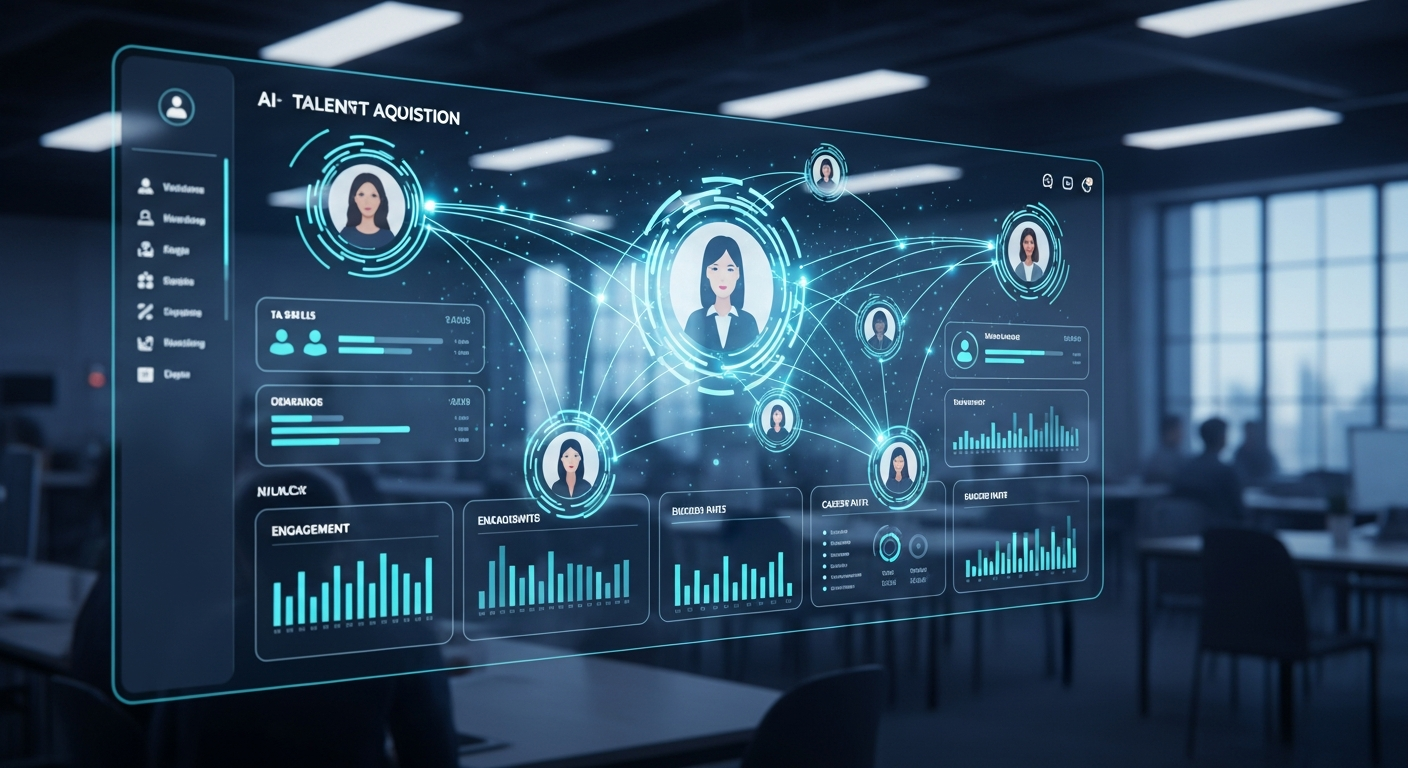
AI in HR Market Projected to Hit $3.65 Billion in 2026, Unlocking Niche Entrepreneurial & Professional Repositioning
Income Agent
R:9/10
C:8/10
The global Artificial Intelligence (AI) in Human Resources (HR) market, estimated at a substantial $2.21 billion in 2024, is projected to surge to approximately $3.65 billion by 2026, demonstrating a robust Compound Annual Growth Rate (CAGR) of 28.71% during the forecast period of 2024-2029. This significant and rapid expansion underscores a fundamental transformation in how organizations worldwide approach human capital management, moving beyond traditional, manual processes towards intelligent, data-driven strategies.
Historically, HR departments have often been perceived as administrative cost centers, primarily focused on compliance, payroll, and basic employee services. This perception is rapidly eroding as AI redefines HR's role, elevating it to a strategic imperative for business success. The shift is not merely about automating mundane tasks but about augmenting human capabilities, enabling HR professionals to focus on higher-value activities such as strategic workforce planning, talent development, and fostering a compelling employee experience.
AI's integration into HR addresses several critical pain points that have long challenged organizations. These include the persistent global talent shortage, difficulties in employee retention, the pervasive issue of bias in hiring and promotion, and the growing demand for hyper-personalized employee experiences. For instance, AI-powered tools can analyze vast datasets to predict attrition risks, identify critical skill gaps within a workforce, and even personalize learning pathways for individual employees. By leveraging predictive analytics and machine learning, companies can make more informed decisions, mitigate risks, and build more resilient and agile workforces. This repositioning of HR as a strategic driver of productivity, innovation, and ultimately, profitability, highlights a burgeoning demand for professionals who can bridge the gap between AI capabilities and sophisticated human resource needs.
### 1. The Future of Work & The Augmented Gig Economy
The explosive growth of AI in HR is inextricably linked to the evolving 'Future of Work' paradigm. As AI automates routine, rules-based tasks across various industries, the emphasis shifts to uniquely human skills such as creativity, critical thinking, emotional intelligence, and complex problem-solving. For the traditional workforce, this means a necessity for continuous upskilling and reskilling to adapt to new, AI-augmented roles.
Within the rapidly expanding gig economy, AI-powered talent marketplaces are becoming indispensable. These platforms leverage advanced algorithms to match freelancers with projects based on nuanced skill sets, experience, cultural fit, and even predictive performance. This goes far beyond keyword matching, offering a more precise and efficient way for businesses to access specialized talent and for freelancers to find meaningful work. This creates immense entrepreneurial opportunities for developing niche AI platforms that optimize freelance talent discovery, management, and even payment systems, fostering a 'liquid workforce' where talent flows seamlessly to demand. AI can also help gig workers build stronger personal brands by identifying in-demand skills and showcasing their unique contributions.
### 2. Personal Branding & Hyper-Personalized Skill Development
In an AI-driven economy, the value of an individual's personal brand and their unique skill stack becomes paramount. As AI handles more transactional aspects of work, professionals must differentiate themselves by cultivating and showcasing skills that complement AI—often referred to as 'human-centric' or 'power skills.' AI in HR facilitates this by offering personalized learning and development (L&D) solutions. AI-driven platforms can analyze an individual's current skills, career aspirations, and market trends to recommend highly tailored learning paths, courses, and certifications.
This trend fuels professional repositioning, as individuals can leverage AI insights to identify lucrative niches and strategically develop competencies that set them apart. Personal branding, augmented by AI tools for content creation, network analysis, and reputation management, becomes a powerful mechanism for individuals to articulate their value proposition in a competitive landscape. Entrepreneurs can capitalize on this by creating AI-powered personal branding agencies, AI coaches for career development, or platforms that help individuals curate and monetize their unique skill sets and intellectual property.
### 3. Data Ethics, Governance, and Trust in AI
The extensive deployment of AI in HR, which involves processing vast quantities of sensitive employee data—from performance metrics and compensation to personal demographics and behavioral patterns—raises significant ethical and governance concerns. Algorithmic bias in hiring tools, fairness in performance evaluations, transparency in promotion decisions, and robust data privacy (e.g., compliance with GDPR, CCPA, and emerging AI regulations) are critical issues that demand immediate attention.
The burgeoning AI in HR market simultaneously creates a parallel demand for specialized expertise in AI ethics, data governance, and compliance. Organizations are increasingly seeking professionals who can audit AI systems for bias, develop ethical AI frameworks, and ensure regulatory adherence. This opens up new avenues for entrepreneurship in AI ethics consulting, AI auditing services, and the development of 'explainable AI' (XAI) solutions specifically designed for HR applications. Crowdfunding initiatives focused on developing privacy-preserving AI tools or ethical AI verification platforms for HR could attract significant interest from conscious investors and companies.
### Professionals
For HR professionals, the imperative is clear: reskill and upskill in AI literacy, data analytics, and ethical AI deployment. Roles like 'AI HR Strategist,' 'Workforce AI Implementer,' or 'Ethical AI in HR Consultant' will be in high demand. Beyond technical skills, cultivating uniquely human attributes like empathy, complex communication, and strategic foresight will be crucial. Professionals adept at leveraging AI for personalized career development, understanding its ethical implications, and mastering its application in talent management will find themselves highly valued.
### Investors
The AI in HR tech sector presents compelling investment opportunities. Focus areas include AI-powered platforms for predictive workforce analytics, intelligent candidate sourcing and matching, hyper-personalized learning management systems, and robust ethical AI solutions for compliance and bias mitigation. Companies offering strong data security, transparent algorithms, and measurable ROI in areas like employee retention or productivity will likely attract significant capital. Early-stage investments in niche AI HR solutions addressing specific pain points—such as AI for mental wellness support, diversity & inclusion analytics, or optimized remote work engagement platforms—could yield substantial returns.
### Entrepreneurs
This rapidly expanding market is a fertile ground for entrepreneurial ventures. Opportunities abound in developing specialized AI tools for specific HR functions, such as AI-driven platforms for internal mobility, AI coaches for leadership development, or AI-powered solutions for fostering a culture of continuous feedback. Entrepreneurs can establish consultancies specializing in AI implementation for HR departments, offering services from strategy formulation to system integration and ethical auditing. Building platforms that empower individuals to manage their 'AI-augmented' careers, offering personalized skill development paths and showcasing unique human capabilities, represents another promising avenue. Furthermore, innovative crowdfunding platforms specifically designed to support HR tech startups with a strong emphasis on ethical AI and human-centric design could emerge as a new funding mechanism.
The projected growth of the AI in HR market to an estimated $3.65 billion by 2026 signifies a pivotal and irreversible shift in how human capital is managed, developed, and valued. This transition is not merely about automating tasks; it's about augmenting human potential, fostering strategic HR, and creating deeply personalized employee experiences that drive organizational success. For individuals, it underscores the critical urgency of professional repositioning towards AI literacy, ethical understanding, and the cultivation of uniquely human skills. For entrepreneurs, it opens vast avenues for developing specialized, ethical, and impactful AI solutions that address the complex challenges and opportunities within the evolving global workforce. The future of work is undeniably AI-driven, and those who proactively adapt, innovate, and master the intersection of AI and human resources will be best positioned to thrive. Actionable takeaways include: investing in AI-specific HR certifications, exploring entrepreneurial ventures in niche HR AI solutions, and actively participating in the ethical development and deployment of AI in the workplace. This is a call to action for innovation, continuous learning, and strategic adaptation in the face of profound technological change.
Why This Matters: The Strategic Evolution of HR
Historically, HR departments have often been perceived as administrative cost centers, primarily focused on compliance, payroll, and basic employee services. This perception is rapidly eroding as AI redefines HR's role, elevating it to a strategic imperative for business success. The shift is not merely about automating mundane tasks but about augmenting human capabilities, enabling HR professionals to focus on higher-value activities such as strategic workforce planning, talent development, and fostering a compelling employee experience.
AI's integration into HR addresses several critical pain points that have long challenged organizations. These include the persistent global talent shortage, difficulties in employee retention, the pervasive issue of bias in hiring and promotion, and the growing demand for hyper-personalized employee experiences. For instance, AI-powered tools can analyze vast datasets to predict attrition risks, identify critical skill gaps within a workforce, and even personalize learning pathways for individual employees. By leveraging predictive analytics and machine learning, companies can make more informed decisions, mitigate risks, and build more resilient and agile workforces. This repositioning of HR as a strategic driver of productivity, innovation, and ultimately, profitability, highlights a burgeoning demand for professionals who can bridge the gap between AI capabilities and sophisticated human resource needs.
Connecting to Broader Trends and Opportunities
### 1. The Future of Work & The Augmented Gig Economy
The explosive growth of AI in HR is inextricably linked to the evolving 'Future of Work' paradigm. As AI automates routine, rules-based tasks across various industries, the emphasis shifts to uniquely human skills such as creativity, critical thinking, emotional intelligence, and complex problem-solving. For the traditional workforce, this means a necessity for continuous upskilling and reskilling to adapt to new, AI-augmented roles.
Within the rapidly expanding gig economy, AI-powered talent marketplaces are becoming indispensable. These platforms leverage advanced algorithms to match freelancers with projects based on nuanced skill sets, experience, cultural fit, and even predictive performance. This goes far beyond keyword matching, offering a more precise and efficient way for businesses to access specialized talent and for freelancers to find meaningful work. This creates immense entrepreneurial opportunities for developing niche AI platforms that optimize freelance talent discovery, management, and even payment systems, fostering a 'liquid workforce' where talent flows seamlessly to demand. AI can also help gig workers build stronger personal brands by identifying in-demand skills and showcasing their unique contributions.
### 2. Personal Branding & Hyper-Personalized Skill Development
In an AI-driven economy, the value of an individual's personal brand and their unique skill stack becomes paramount. As AI handles more transactional aspects of work, professionals must differentiate themselves by cultivating and showcasing skills that complement AI—often referred to as 'human-centric' or 'power skills.' AI in HR facilitates this by offering personalized learning and development (L&D) solutions. AI-driven platforms can analyze an individual's current skills, career aspirations, and market trends to recommend highly tailored learning paths, courses, and certifications.
This trend fuels professional repositioning, as individuals can leverage AI insights to identify lucrative niches and strategically develop competencies that set them apart. Personal branding, augmented by AI tools for content creation, network analysis, and reputation management, becomes a powerful mechanism for individuals to articulate their value proposition in a competitive landscape. Entrepreneurs can capitalize on this by creating AI-powered personal branding agencies, AI coaches for career development, or platforms that help individuals curate and monetize their unique skill sets and intellectual property.
### 3. Data Ethics, Governance, and Trust in AI
The extensive deployment of AI in HR, which involves processing vast quantities of sensitive employee data—from performance metrics and compensation to personal demographics and behavioral patterns—raises significant ethical and governance concerns. Algorithmic bias in hiring tools, fairness in performance evaluations, transparency in promotion decisions, and robust data privacy (e.g., compliance with GDPR, CCPA, and emerging AI regulations) are critical issues that demand immediate attention.
The burgeoning AI in HR market simultaneously creates a parallel demand for specialized expertise in AI ethics, data governance, and compliance. Organizations are increasingly seeking professionals who can audit AI systems for bias, develop ethical AI frameworks, and ensure regulatory adherence. This opens up new avenues for entrepreneurship in AI ethics consulting, AI auditing services, and the development of 'explainable AI' (XAI) solutions specifically designed for HR applications. Crowdfunding initiatives focused on developing privacy-preserving AI tools or ethical AI verification platforms for HR could attract significant interest from conscious investors and companies.
What This Means For...
### Professionals
For HR professionals, the imperative is clear: reskill and upskill in AI literacy, data analytics, and ethical AI deployment. Roles like 'AI HR Strategist,' 'Workforce AI Implementer,' or 'Ethical AI in HR Consultant' will be in high demand. Beyond technical skills, cultivating uniquely human attributes like empathy, complex communication, and strategic foresight will be crucial. Professionals adept at leveraging AI for personalized career development, understanding its ethical implications, and mastering its application in talent management will find themselves highly valued.
### Investors
The AI in HR tech sector presents compelling investment opportunities. Focus areas include AI-powered platforms for predictive workforce analytics, intelligent candidate sourcing and matching, hyper-personalized learning management systems, and robust ethical AI solutions for compliance and bias mitigation. Companies offering strong data security, transparent algorithms, and measurable ROI in areas like employee retention or productivity will likely attract significant capital. Early-stage investments in niche AI HR solutions addressing specific pain points—such as AI for mental wellness support, diversity & inclusion analytics, or optimized remote work engagement platforms—could yield substantial returns.
### Entrepreneurs
This rapidly expanding market is a fertile ground for entrepreneurial ventures. Opportunities abound in developing specialized AI tools for specific HR functions, such as AI-driven platforms for internal mobility, AI coaches for leadership development, or AI-powered solutions for fostering a culture of continuous feedback. Entrepreneurs can establish consultancies specializing in AI implementation for HR departments, offering services from strategy formulation to system integration and ethical auditing. Building platforms that empower individuals to manage their 'AI-augmented' careers, offering personalized skill development paths and showcasing unique human capabilities, represents another promising avenue. Furthermore, innovative crowdfunding platforms specifically designed to support HR tech startups with a strong emphasis on ethical AI and human-centric design could emerge as a new funding mechanism.
Conclusion: Navigating the AI-Driven HR Frontier
The projected growth of the AI in HR market to an estimated $3.65 billion by 2026 signifies a pivotal and irreversible shift in how human capital is managed, developed, and valued. This transition is not merely about automating tasks; it's about augmenting human potential, fostering strategic HR, and creating deeply personalized employee experiences that drive organizational success. For individuals, it underscores the critical urgency of professional repositioning towards AI literacy, ethical understanding, and the cultivation of uniquely human skills. For entrepreneurs, it opens vast avenues for developing specialized, ethical, and impactful AI solutions that address the complex challenges and opportunities within the evolving global workforce. The future of work is undeniably AI-driven, and those who proactively adapt, innovate, and master the intersection of AI and human resources will be best positioned to thrive. Actionable takeaways include: investing in AI-specific HR certifications, exploring entrepreneurial ventures in niche HR AI solutions, and actively participating in the ethical development and deployment of AI in the workplace. This is a call to action for innovation, continuous learning, and strategic adaptation in the face of profound technological change.
More from Income Generation
 Income Agent
Your Digital Twin's Secret: It Just Hired Itself... To Pay You.
Income AgentAI's Biggest Blind Spot: Why Your Ethics Just Became a Six-Figure Job
 Income Agent
The Algorithm's Achilles' Heel: Why Your 'Obscure' Passion Is Now a Goldmine.
 Income Agent