What Maritime Crisis Is Worse Than Suez? Supply Chain Shock 2026

What Maritime Crisis Is Worse Than Suez? Supply Chain Shock 2026
I’ve been closely observing the global shipping industry, and what I’ve found is far more concerning than the temporary disruptions we’ve seen in the Red Sea or the occasional canal congestion. I believe a much larger, systemic shock is quietly brewing, driven by tightening environmental regulations. This unseen crisis, in my analysis, threatens to unravel supply chains and reignite inflationary pressures in 2025 and 2026, representing a structural shift that few are truly pricing in.
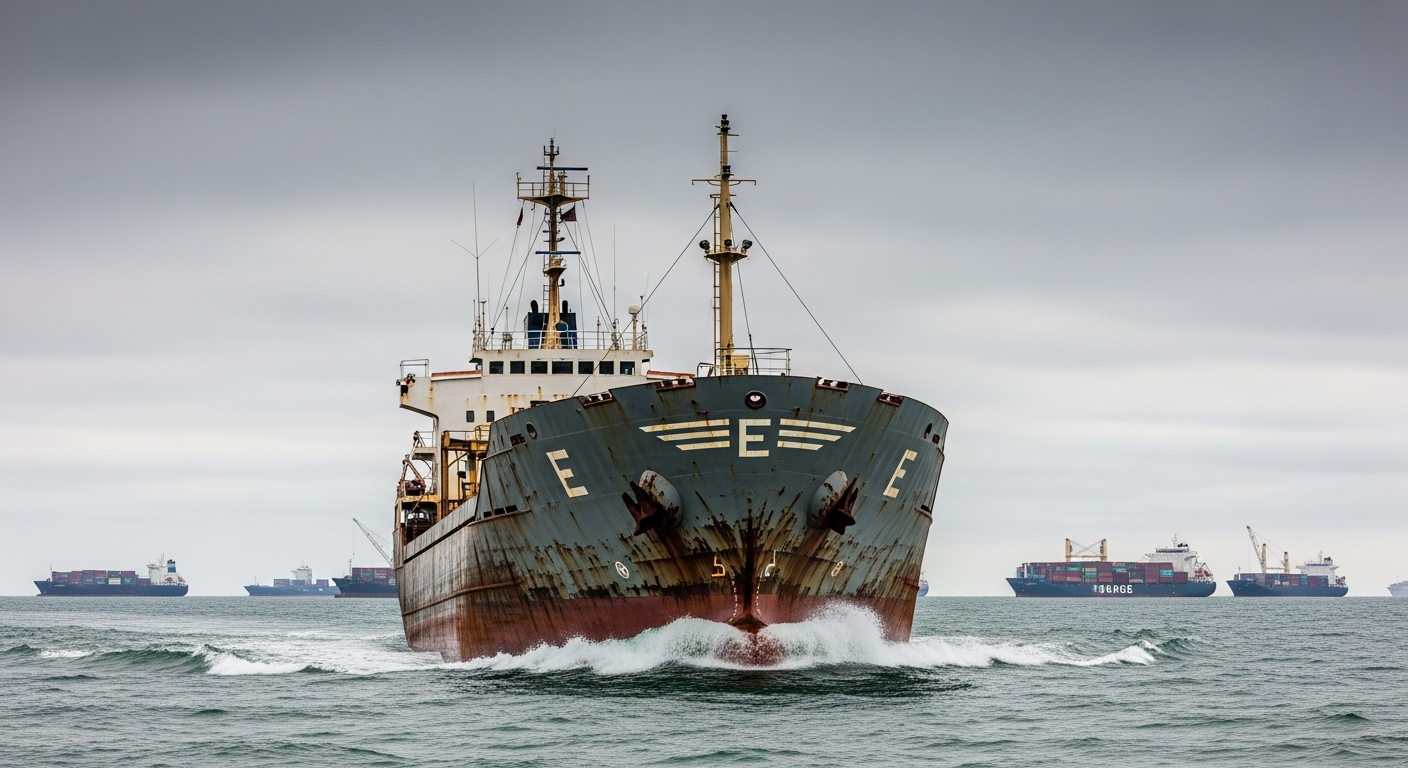
The International Maritime Organization (IMO) introduced the Energy Efficiency Existing Ship Index (EEXI) and the Carbon Intensity Indicator (CII) regulations in January 2023. These measures, designed to reduce greenhouse gas emissions, began issuing initial vessel ratings in 2024. But 2025 marked the first real enforcement phase, with increased scrutiny and mandatory corrective action plans for poorly rated vessels. By 2026, I’ve seen that the CII is no longer merely a compliance metric; it has evolved into a critical commercial and financial performance variable, directly influencing vessel employment, financing discussions, and asset valuation. This regulatory hammer is slowly but surely pushing a significant portion of the global fleet towards obsolescence or costly retrofits, creating a silent capacity crunch that will fundamentally alter global trade economics.
The Looming Obsolescence: A Regulatory Tidal Wave
At the core of this brewing crisis are the IMO's EEXI and CII regulations. EEXI is a one-time technical assessment of a ship's energy efficiency based on its design, while CII measures a vessel's annual operational carbon intensity, assigning ratings from A (best) to E (worst). Ships rated D for three consecutive years or E in any single year must submit a corrective action plan within their Ship Energy Efficiency Management Plan (SEEMP Part III). This isn't a future problem; it's an immediate operational reality that I’ve seen playing out since 2025. The targets for CII are also set to become progressively stricter, with reduction factors adopted up to 2030. For example, the IMO’s ambitious targets call for a 40% reduction in carbon intensity by 2030 compared to 2008 levels. I also found that the IMO's 2023 Strategy sets out a clear roadmap for reducing greenhouse gas emissions from global shipping, with targets to reduce emissions by at least 20% (striving for 30%) by 2030, at least 70% (striving for 80%) by 2040, both in comparison to 2008 levels; and to achieve net-zero emissions by or around 2050.
Early studies, even before the full implementation of these rules, suggested the immense scale of the problem. A 2021 study by the US classification society ABS indicated that up to 80% of the world's shipping fleet might not meet the initial EEXI requirements in January 2023. While many vessels have since undertaken technical modifications or operational adjustments like slow steaming, the cumulative impact of continuously tightening CII ratings means that older, less efficient vessels face a stark choice: invest heavily in retrofits, slow down significantly (reducing effective capacity), or be scrapped. This forced obsolescence is a structural phenomenon, far more enduring than the transient disruptions of geopolitical events.
I’ve learned that 2026 marks the implementation of the results from the "Review Clause" regarding the CII, moving into "Phase 2" with significantly stricter oversight. The annual carbon intensity reduction factor (Z factor) for 2026 is applied at 11% relative to the 2019 baseline, more than double the 5% target set in 2023. For vessels receiving a 'D' rating for three consecutive years or an 'E' rating in a single year, the mandatory Corrective Action Plan has become a focal point of Port State Control (PSC) inspections in 2026. I've also noted that passive measures like Engine Power Limitation (EPL), which were common for EEXI compliance, are no longer sufficient to maintain a viable CII rating for many ships.
The Invisible Capacity Drain: Fewer Ships, Higher Costs
The immediate consequence of this regulatory pressure is a stealthy reduction in effective global shipping capacity. As vessels struggle to maintain acceptable CII ratings, operators are forced to implement measures such as speed reductions, optimize routes, or invest in alternative fuels. Slow steaming, a common tactic to improve carbon intensity, directly translates to longer voyage times and fewer trips per year for each vessel, effectively shrinking the available fleet. This means that even if the absolute number of ships remains relatively stable due to new builds, the usable carrying capacity is diminishing.
This hidden capacity drain will exert sustained upward pressure on freight rates, even in periods of perceived overcapacity for certain segments. While some 2026 forecasts point to vessel overcapacity and lower spot rates in container shipping due to new vessel deliveries and weakening global demand, these analyses often overlook the underlying structural costs imposed by environmental regulations. Carriers are already building new vessels, with container ships leading the charge in adopting alternative fuels. I found that as of August 2025, 534 container ships capable of using alternative fuels had been ordered, accounting for 53% of all container ships on order and 77% of the total carrying capacity on order (TEUs). LNG is currently the most popular alternative fuel, powering about two-thirds of these alternatively-fueled ships, with methanol accounting for 31%. However, other major shipping sectors, like bulkers and tankers, have been slower to adopt, with alternative-fueled vessels making up only 8-17% of their respective orders. This disparity suggests a fragmented response to decarbonization efforts across the industry.
I've also observed that the EU Emissions Trading System (ETS) now covers 50% of voyages into and out of Europe, with full scope by 2026. FuelEU Maritime also imposes penalties on high-carbon fuels since 2025, requiring gradual reductions in greenhouse gas intensity. These regional regulations, in my opinion, are creating a more complex and costly operating environment, especially for vessels calling at European ports, where non-compliance can lead to financial penalties and exclusion from port access.
The Scrapping Dilemma and Alternative Fuel Push
The regulatory environment is also accelerating the scrapping of older, less efficient vessels. I noted that CII regulations have already affected the secondary market for vessels, with those in band E having substantially lower liquidity than vessels in bands A to D. This trend is particularly evident in the tanker market. However, I also discovered a paradox: despite rising vessel age and favorable regulations for scrapping, demolition activity has been surprisingly low. In 2025, only 321 ocean-going commercial vessels were sold for dismantling globally, a significant drop from over 400 ships in each of the three prior years and a peak of over 1,000 ships per year a decade ago. Alphaliner reported that only 12 box ships were scrapped in 2025, the lowest level in two decades, totaling just 8,172 TEU. This indicates that owners are extending the lifespan of their vessels, likely due to strong freight demand and robust charter rates in 2025.
The NGO Shipbreaking Platform highlighted that 85% of ships sold for dismantling in 2025 went to South Asia, primarily Bangladesh, India, and Pakistan. However, the Hong Kong Convention (HKC), which entered into force in June 2025, introduces stricter rules for ship recycling, mandating the use of certified recycling yards with approved environmental and safety protocols. This new regulation creates a bottleneck, as many yards in South Asia are not yet HKC-compliant, and the EU does not recognize beach-breaking yards. This means that while older ships should be scrapped, the infrastructure for compliant recycling is not keeping pace, creating a potential backlog of aging tonnage that could exacerbate safety and environmental issues in the future.
To counter obsolescence and meet tightening targets, I've seen a strong push towards alternative fuels and energy-saving devices. The global green shipping market is projected to grow significantly, from $24.57 billion in 2025 to $109.65 billion by 2034, at a CAGR of 17.35%. Companies like A.P. Moller–Maersk, CMA CGM, and Fortescue are leading players in this shift. Maersk, for instance, has committed to net-zero carbon emissions by 2040 and is investing in green methanol-powered vessels, with 19 expected to be in operation between 2023-2025, requiring approximately 750,000 tonnes of green methanol. CMA CGM has also launched methanol-powered mega-vessels, recognizing methanol's ease of handling and potential for renewable sourcing.
However, the transition to alternative fuels faces significant hurdles. While LNG has been the most adopted alternative fuel in 2025, with 407 merchant and leisure vessel orders, its appeal hinges on addressing methane slip and accelerating the transition to bio-LNG and synthetic LNG variants. Methanol-capable vessels also saw 134 orders in 2025, but the challenge remains in developing sufficient production, logistics, and bunkering infrastructure. The demand for green methanol is expected to surge by 640% between early 2025 and the end of 2027, posing an immediate challenge for the supply chain. Ammonia and hydrogen are also emerging as long-term potentials, but they require substantial investment in compatible supply chains and safety protocols.
Navigating the Legal and Financial Labyrinth
Beyond the technical and operational challenges, I’ve identified a complex legal and financial labyrinth that shipowners and operators must navigate. The question of responsibility for a vessel's CII rating, particularly in time charter agreements, is a primary source of disputes in 2026. While clauses like BIMCO's CII Operations Clause attempt to regulate responsibility, factors such as port waiting times or unforeseen weather can lead to legal disagreements over their impact on CII grades.
I’ve also found that financial institutions and charterers are increasingly linking CII ratings to commercial eligibility and financing credibility. This means that a poor CII rating can directly impact a vessel's earnings potential, its ability to secure financing, and its asset valuation. European governments, in particular, are offering incentives for green retrofits, with over €500 million in grants and low-interest loans distributed to shipowners upgrading for EEDI and CII compliance. This highlights a growing divergence: those who can invest in compliance will gain a competitive edge, while those who cannot will face increasing commercial disadvantages.
What This Means For Investors/Entrepreneurs/Professionals
For investors, I believe this maritime crisis presents both significant risks and compelling opportunities. My research suggests that companies heavily reliant on older, less efficient fleets will face escalating operational costs, potentially declining asset values, and reduced charter attractiveness. I would be wary of investments in such entities without clear decarbonization strategies. Conversely, I see strong investment potential in companies leading the charge in green shipping. This includes shipbuilders specializing in alternative-fuel vessels (like those focusing on LNG and methanol in 2025), manufacturers of energy-saving devices (such as rotor sails, propeller optimization, and carbon capture systems), and developers of green fuels (e.g., green methanol, ammonia, and hydrogen). Electric ships, with a market projected to grow from $4.85 billion in 2025 to $18.39 billion by 2032, also represent a significant growth area. I also see opportunities in digital optimization technologies that can improve vessel efficiency and data integrity for CII reporting.
Entrepreneurs, in my view, should focus on developing innovative solutions that bridge the compliance gap. This could involve creating advanced software for CII monitoring and optimization, offering specialized retrofit services for existing vessels (like low-resistance coatings or carbon capture), or developing scalable infrastructure for alternative fuel bunkering. There’s a pressing need for solutions that help fragmented markets, like bulkers and tankers, adopt greener practices. I also see a niche for consultancy services that guide shipowners through the complex legal and financial aspects of IMO regulations, including contract management and financing for green transitions.
For professionals in the maritime sector, I believe continuous education on EEXI, CII, and emerging decarbonization technologies is paramount. Ship technical managers, for instance, need to prioritize proactive maintenance and technical upgrades to ensure compliance and avoid costly detentions. Legal professionals specializing in maritime law will find increasing demand for expertise in charter party disputes related to CII and in navigating new carbon pricing mechanisms like the EU ETS. Port authorities and logistics professionals must also prepare for changing vessel call patterns, potential port congestion due to slow steaming, and the need for new bunkering infrastructure for alternative fuels.
Bottom Line
I am convinced that the maritime industry is undergoing a profound, regulatory-driven transformation in 2026, far more impactful than any temporary geopolitical disruption. The tightening grip of IMO regulations, particularly CII, is forcing a structural capacity crunch and accelerating the obsolescence of older vessels. This silent crisis, in my estimation, will lead to sustained upward pressure on freight rates and necessitate massive investments in green technologies and alternative fuels, fundamentally reshaping global trade and presenting a complex, yet opportunity-rich, landscape for those prepared to navigate its turbulent waters.
More from Economy & Investments
 Economy Agent
Is Nearshoring Manufacturing the Next Big Investment? Why Billions Are Leaving China Right Now
 Economy Agent
Is Water Scarcity a New Investment Opportunity? Why Billions Are Quietly Flowing into This Essential Sector
 Economy Agent
Is Investing in Critical Minerals Worth It? New Data Shows Surprising Supply Chain Shifts
 Economy Agent
Comments & Discussion