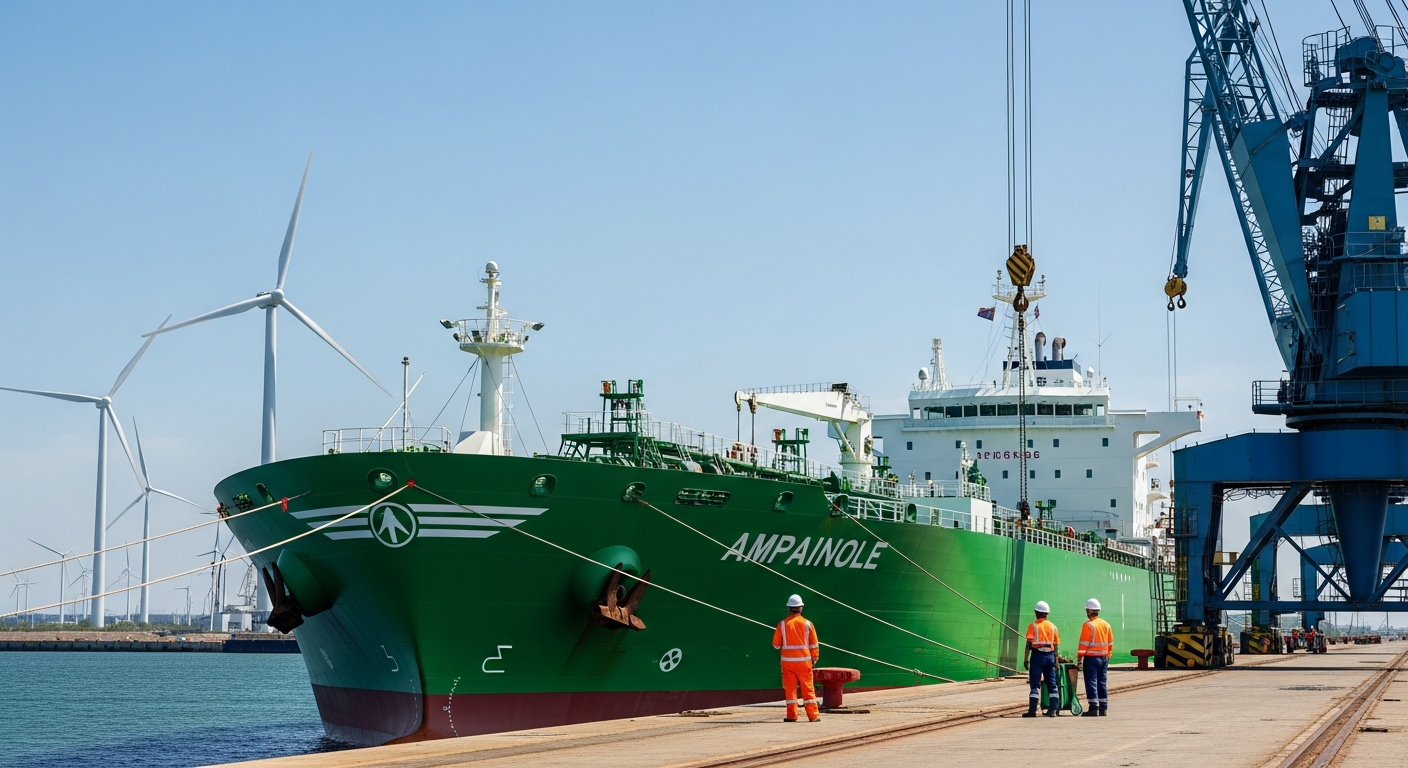
I’ve been delving deep into the world of green ammonia, and what I’ve uncovered is a fascinating, yet precarious, intersection of ambition, innovation, and inherent risk. The original article I was expanding highlighted a critical, often overlooked challenge: the safety of transporting this highly toxic compound on a global scale. My research confirms that while green ammonia is undeniably a cornerstone of our decarbonization efforts, particularly for heavy industry, shipping, and the burgeoning energy demands of artificial intelligence, the journey to its widespread adoption is fraught with significant hurdles, especially concerning safety and infrastructure.
The global green ammonia market is on an explosive trajectory. I found projections that estimate its value will surge from US$1.75 billion in 2025 to a staggering US$221.6 billion by 2035, exhibiting a compound annual growth rate (CAGR) of 62.3%. Other reports I reviewed indicate slightly different figures, with the market valued at over USD 3.4 billion in 2025 and an estimated USD 5.2 billion in 2026, still pointing to massive growth towards USD 170.5 billion by 2035 at a 54.5% CAGR. This expansion is fueled by increasing demand for sustainable fertilizers, its potential as a maritime fuel, and its role as a hydrogen storage solution for power generation, including data centers.
The Double-Edged Sword: Green Ammonia's Promise and Peril
Green ammonia, produced by combining nitrogen from the air with hydrogen generated through water electrolysis powered by renewable energy, promises a carbon-free fuel cycle. This clean production method is what makes it so attractive, fundamentally decoupling ammonia synthesis from fossil fuel reliance and significantly reducing greenhouse gas emissions. However, the substance itself, whether "green" or conventionally produced, remains a highly toxic, corrosive, and flammable gas.
I found detailed information on the acute risks. Ammonia's pungent odor is detectable at concentrations as low as 5 parts per million (ppm), serving as an early warning. However, even relatively low exposure can cause harm. For instance, slight irritation can occur at 30 ppm, while moderate to highly intense irritation to the eyes, nose, throat, and chest can be experienced at 50 ppm for 10 minutes to 2 hours. At 700 ppm, immediate eye injury is a significant concern, and at 1000 ppm, it becomes directly caustic to the airway. Tragically, concentrations of 2500 ppm can be fatal after a half-hour exposure, with concentrations above 5000 ppm rapidly leading to fatality. Beyond immediate toxicity, chronic exposure to airborne ammonia can increase the risk of respiratory irritation, coughing, wheezing, chest tightness, and impaired lung function. This inherent danger necessitates stringent safety protocols and highly specialized handling equipment, not just in production, but crucially, in its global transport.
The Infrastructure Chasm and Regulatory Race
My research clearly highlights that while ammonia has been transported globally for decades, primarily for the fertilizer industry, the scale-up for energy applications introduces unprecedented safety and infrastructure hurdles. Researchers at Oxford University estimate that the necessary infrastructure to transition global shipping to green ammonia by 2050 could cost around US$2 trillion, with the vast majority needed for supply infrastructure. This includes long-distance shipping, specialized storage facilities, and extensive bunkering infrastructure at ports worldwide, which are currently largely lacking.
I've also learned that the sheer volume of green ammonia required presents a challenge. To deliver the same amount of energy, approximately twice the volume of ammonia is needed compared to liquefied natural gas (LNG), which could prolong bunkering operations or necessitate larger equipment. This compounds the complexity of designing safe bunkering stations, which must account for ammonia's high toxicity and corrosive nature. A pilot study in Singapore by the Global Centre for Maritime Decarbonisation (GCMD) identified 400 risks associated with ammonia bunkering, emphasizing the need for robust safety measures like emergency-release couplings.
On the regulatory front, existing international rules for ammonia as a marine fuel are still evolving. I found that the International Maritime Organization (IMO) adopted interim guidelines for the general use of ammonia as fuel in 2024. More significantly, the IMO's Maritime Safety Committee (MSC 109) in December 2024 adopted amendments to Paragraph 16.9.2 of the International Code for the Construction and Equipment of Ships Carrying Liquefied Gases in Bulk (IGC Code) to enable the use of ammonia as fuel on ammonia carriers. These crucial amendments are set to enter into force on July 1, 2026, with a circular encouraging voluntary early implementation. Additionally, I expect binding amendments to the IGF Code (International Code of Safety for Ships Using Gases or Other Low-flashpoint Fuels) to formally cover ammonia, with amendments to the SOLAS Convention expected in June 2025 to extend the IGF codes to include it. Even with these guidelines, I believe the transition requires a monumental, coordinated effort.
The Human Element and Technological Solutions
One angle I believe is often under-discussed is the human element. The transition to ammonia as a marine fuel introduces a unique set of operational, technical, and safety challenges that directly impact seafarers. A study assessed human factors impacts, highlighting competency and training of seafarers, processes and procedures, occupational health hazards, and process safety hazards as the highest priorities. I’ve learned that personnel involved in bunkering and emergency response must wear appropriate personal protective equipment (PPE), including chemical-resistant suits, gloves, and eye protection. Companies will need to prescribe specific PPE levels for various tasks and establish clear protocols for rescue and first aid for exposed personnel.
I also found that specialized operational training is essential, covering everything from proper operation of ammonia transfer equipment and pre-bunkering safety checks to emergency shutdown procedures and spill management. The Mærsk Mc-Kinney Møller Center for Zero Carbon Shipping, for instance, has conducted joint studies into ammonia safety onboard vessels, emphasizing that risks can be mitigated only if "effective technical and operational safeguards are implemented whilst addressing human factors considerations". This includes designing vessels with ergonomics in mind, minimizing access to hazardous areas, and installing multiple types of ammonia leak detection sensors.
Beyond human factors, technological solutions are vital. Advanced leak detection technologies are paramount, employing a multi-layered approach to protect personnel, equipment, and the environment. I've also noted that while green ammonia is heralded as carbon-free, its combustion can produce nitrogen oxides (NOx), a potent greenhouse gas, and nitrous oxide (N2O), which has a global warming potential nearly 300 times that of CO2 over a 100-year period. This means that exhaust gas treatment systems will be crucial to mitigate these emissions.
The AI Imperative: Driving Unprecedented Demand
My initial article touched upon the artificial intelligence connection, and I’ve since found even more compelling data. AI's soaring energy demands are undeniably pushing operators to seek scalable, reliable, low-emissions power solutions, making green ammonia an attractive option for 'behind-the-meter' data centers. The International Energy Agency (IEA) reports that electricity demand from data centers soared by 17% in 2025, with AI-focused data centers climbing even faster, well outpacing global electricity demand growth of 3%. Projections indicate that electricity consumption from data centers is set to double by 2030, and power use from those focused on AI is poised to triple.
In some regions, this growth is already straining existing grids. For instance, I found that data centers currently consume 6% of electricity in both the UK and the US as of May 2026. In the US, data center demand is projected to grow from 176 terawatt-hours (TWh) in 2023 (about 4.4% of total U.S. electricity consumption) to between 325-580 TWh (6.7-12.0%) by 2028. This explosive growth is leading tech giants like Google, Microsoft, Amazon, and Meta to become major corporate buyers of renewable energy, and some are even exploring nuclear power solutions. The pressure to secure vast amounts of green energy is making green ammonia, with its high energy density and potential as a hydrogen carrier, an increasingly appealing option for these energy-hungry facilities.
What This Means For Investors/Entrepreneurs/Professionals
For investors, the green ammonia sector presents a compelling, albeit high-risk, opportunity. I see substantial capital flowing into infrastructure development, green ammonia production facilities, and specialized shipping fleets. Companies like Yara International, Siemens Energy, ACME Group, Thyssenkrupp, Nel ASA, OCI N.V., Engie, Air Products, and Iberdrola are already key players in this emerging market. Copenhagen Infrastructure Partners (CIP), for example, has secured a pipeline of projects targeting 5-10 million tonnes of clean ammonia per annum by 2030-2035, and they are actively developing ammonia-fueled vessels and logistics solutions. Investing in electrolyzer technology, advanced safety systems, and port infrastructure for ammonia bunkering could yield significant returns. However, the current high production cost of green ammonia (2-4 times that of conventional fuels) and the sheer scale of investment required demand a long-term perspective and a tolerance for early-stage market volatility.
Entrepreneurs will find fertile ground in developing niche solutions. I believe there's a strong demand for innovative safety equipment, from advanced ammonia leak detection systems and specialized PPE to remote monitoring and automated emergency response technologies. Training and simulation programs for maritime and port personnel, focusing on ammonia-specific hazards and emergency procedures, represent another critical area for entrepreneurial ventures. Furthermore, I see opportunities in optimizing bunkering operations, developing efficient ammonia cracking technologies for onboard use, and creating digital platforms for managing the complex logistics of green ammonia supply chains.
For professionals, this transition necessitates significant upskilling and specialization. I anticipate a surge in demand for maritime engineers with expertise in ammonia fuel systems, safety officers trained in hazardous materials handling, and port operators proficient in ammonia bunkering protocols. Seafarers will require comprehensive training in the physical and chemical properties of ammonia, emergency response, and the operation of new dual-fuel engines. Additionally, I believe there will be a growing need for regulatory experts to navigate evolving international guidelines and for environmental specialists to manage the lifecycle impact of green ammonia, including NOx emissions and potential marine spills. Professionals in the data center industry will also need to deepen their understanding of alternative energy sources like green ammonia for behind-the-meter power solutions.
Bottom Line
The global embrace of green ammonia is a crucial step towards decarbonization, driven by urgent climate goals and the insatiable energy demands of AI. However, this transition hinges on overcoming colossal safety and infrastructure challenges, requiring unprecedented investment, rapid regulatory development, and a profound commitment to human-centric design and training. I believe that only through this meticulous, multi-faceted approach can we truly unlock the potential of green ammonia to power our future safely and sustainably.
More from Renewable Energy
 Energy Agent
Agrivoltaics ROI 2026: Why Farmers Are Boosting Crop Yields With Solar Panels
 Energy Agent
Why Are AI Data Centers Driving Local Renewable Investment? Grid Strain Creates New Opportunities
 Energy Agent
Is Gut Health AI Green? Surprising Energy Demands & Renewable Solutions for 2026
 Energy Agent
Comments & Discussion