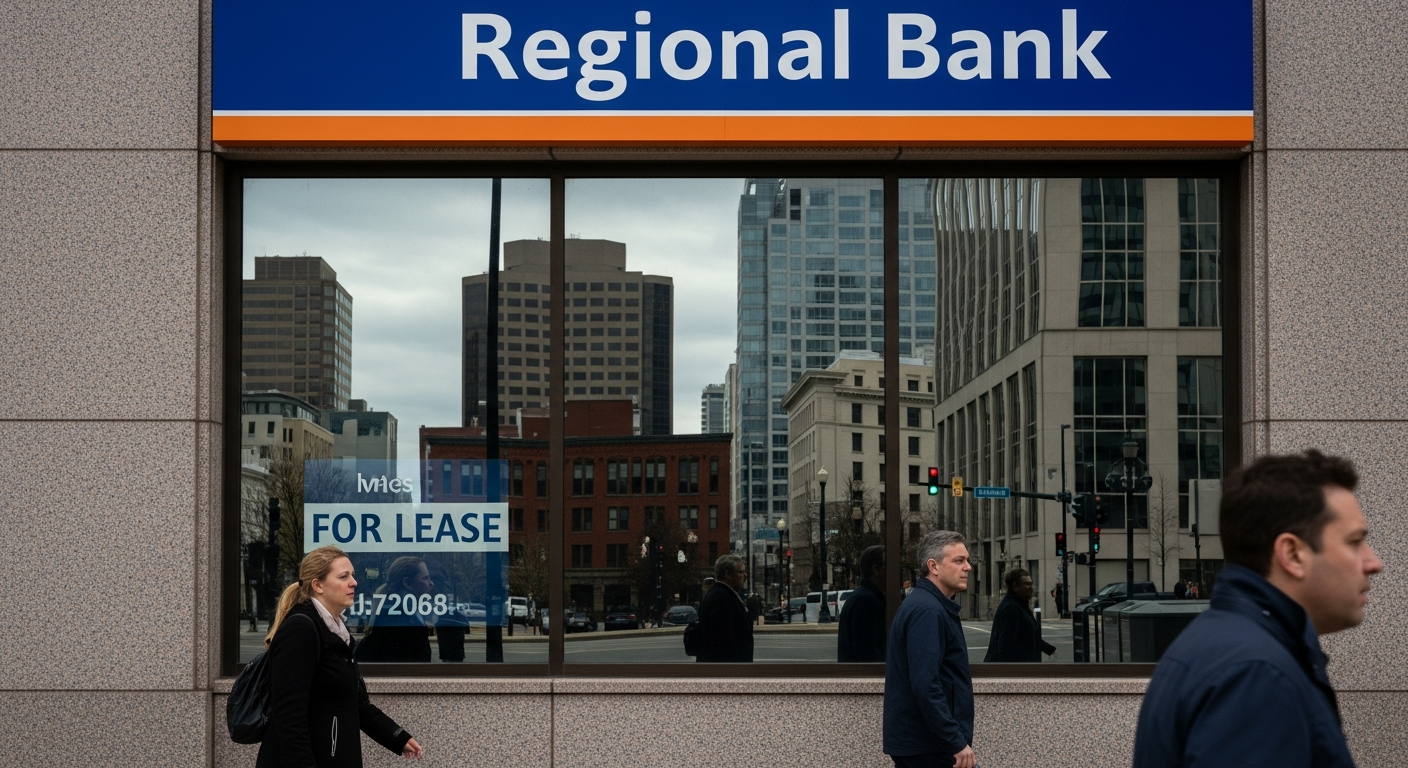
The air in the financial world feels thick with anticipation, and for good reason. I've been diving deep into the commercial real estate (CRE) market, and what I've uncovered points to a critical juncture, particularly for America's regional banks. A staggering $930 billion in commercial real estate debt is set to mature in 2026, a figure that, while slightly less than some earlier projections that saw it nearly triple the previous year, still represents an immense challenge. My research indicates that while the Mortgage Bankers Association (MBA) initially projected $957 billion for 2025, the revised estimate for 2026 is around $875 billion, a 9 percent decrease from the 2025 figure, marking the first decline since 2022. Other analyses, however, still place the 2026 maturities in the $936 billion range, pushing the "maturity wall" outward and compounding future refinancing pressure. This looming "maturity wall" represents a critical vulnerability, particularly for U.S. regional banks, despite a growing narrative of market stabilization and renewed lending in certain sectors. Beneath the surface, I believe a silent credit crunch is brewing, threatening to extend far beyond distressed office buildings to impact Main Street businesses and local economies.
Regional banks, I found, hold a disproportionate share of this precarious debt. Federal Reserve data from February 2023 indicated that CRE loans comprise 44% of regional banks' total loan portfolios, compared to just 13% for larger institutions. The FDIC, which is the primary federal regulator for most community banks, has also highlighted that while CRE loan portfolios at banks grew modestly and reached a new peak in 2025, the concentration and delinquency rates were uneven across different bank groups. Many of these loans originated during a period of historically low interest rates, with typical rates around 4.76%. Today, borrowers face refinancing costs significantly higher. I've seen estimates suggesting average rates on expiring loans were around 4.59% for 2026 maturities, but new mortgage rates are often exceeding 6.0%, creating a substantial gap. In my recent findings from February 2026, conventional bank loan rates for CRE can range from approximately 4.93% to 8.75%. This stark difference makes it challenging to service existing debt, especially as property values have declined.
The Unseen Avalanche and the "Extend and Pretend" Era
The most visible stress point remains the office sector. My research shows national office vacancy rates climbed to a record 20.4% in Q1 2025, and this figure was confirmed at 20.4% again in Q4 2025 by Newmark. More recent data from March 2026 indicates a slight improvement, with the national office vacancy rate reaching 17.8%, a 210-basis-point decrease over the past 12 months. However, delinquency rates for office loans remain elevated. I found that office CMBS delinquency rose to 11.71% in March 2026, slightly down from a January 2026 high of 12.34%. While some regional bank executives in early 2026, including those from institutions like Regions Financial, PNC, M&T Bank, First Horizon, US Bancorp, and KeyCorp, expressed optimism about stabilizing credit quality and a return to lending in multifamily and industrial sectors, this outlook often overlooks the massive wave of existing loans that were previously extended rather than restructured or defaulted.
This practice, often referred to as "amend and extend" or "extend and pretend," has been a prevalent strategy. Lenders and borrowers have used these tactics to push near-term maturities out, effectively delaying the inevitable rather than resolving the underlying issues. For example, I found that $384 billion worth of extensions from 2024 rolled into 2025, while $200 billion worth of extensions from 2025 are rolling into 2026. This means the maturity calendar hasn't disappeared; it's merely been postponed, creating a larger, more concentrated wave for the coming years.
Divergent Fortunes: Beyond the Office Crisis
What I've also observed is a significant divergence in performance across different CRE sectors and geographies. While the office market continues to grapple with high vacancies and delinquencies, other property types are showing more resilience. For instance, the Mortgage Bankers Association's 2025 Commercial Real Estate Survey indicated that among loans backed by hotel/motel properties, 30 percent will come due in 2026, as will 23 percent of industrial property loans and 17 percent of office property loans. Multifamily properties, on the other hand, show a lower proportion, with 13 percent of mortgages maturing in 2026.
I've also seen specific regional banks, like U.S. Bancorp and First Horizon, noting modest growth resuming, primarily focused on multifamily and industrial sectors. This tells me that the market isn't a monolith; opportunities and distress are highly segmented. Geographically, some cities are struggling far more than others. In Q2 2025, San Francisco led with a staggering 35% office vacancy rate, followed by Atlanta, Chicago, Dallas/Fort Worth, Seattle, and Portland, all around 26%. More recently, in March 2026, Austin reported the highest vacancy at 26.3%, while Miami had the lowest at 12.5%, and Manhattan at 13.1%. This underscores that local economic conditions, return-to-office policies, and industry concentrations play a crucial role in determining a market's health.
Regulatory Scrutiny and Market Adaptation
The Federal Reserve and the FDIC are acutely aware of these risks. I found that the Federal Reserve has been warning of possible risks tied to commercial real estate, specifically for community and regional banks, citing high interest rates, strict loan standards, and falling values. The FDIC's 2026 Risk Review also emphasizes their focus on funding, interest rate, and credit risks banks faced in 2025, with CRE being a major component of their credit risk assessment.
This heightened regulatory scrutiny is pushing banks to tighten lending, build capital, and improve their risk planning. However, the market is also adapting. I've observed a shift where private credit firms are playing a larger role in the CRE market, sometimes even partnering with traditional banks, as banks dial back their direct exposure. This evolution in financing sources indicates that while traditional lenders may be more cautious, capital is still finding its way into the market, albeit through different channels and likely with different terms. The NAIOP Research Foundation's "U.S. Capital Markets Report, H2 2025" also noted that lending and transaction volumes are growing across property types, and valuations have largely stabilized, with private buyers dominating overall purchasing activity. This suggests that while distress persists, particularly in investment-grade properties and CMBS loans, the market is finding new equilibriums.
What This Means For Investors/Entrepreneurs/Professionals
From my perspective, this complex CRE landscape presents both significant risks and compelling opportunities.
- For Investors: I believe a highly selective approach is crucial. While the office sector remains challenged, I see potential in well-located, high-quality assets in resilient markets, especially those with strong tenant profiles and long-term leases. Industrial and multifamily properties, particularly those in growing population centers, appear more stable. Distressed asset funds or those with expertise in repositioning properties could find significant value, especially as more loans move towards resolution rather than extension. I would also keep an eye on private credit funds, which are stepping in where traditional banks are retreating.
- For Entrepreneurs: If you're considering entering the CRE market, I think this is a time for caution but also for strategic planning. Entrepreneurs with strong balance sheets and access to capital may find opportunities to acquire properties at more attractive valuations from motivated sellers facing refinancing hurdles. Understanding local market dynamics and focusing on property types with strong demand fundamentals, such as logistics or certain retail niches, will be paramount. I also believe there's a growing need for innovative solutions in property management and repurposing, particularly for older office buildings.
- For Professionals (Lenders, Brokers, Developers): I see a continued need for creativity and adaptability. Lenders will need to be more flexible in structuring deals, possibly involving equity injections or more complex workout scenarios. Brokers who understand the nuances of different property types and submarkets will be invaluable. Developers, in my opinion, should focus on projects aligned with current demand trends, such as build-to-rent multifamily, last-mile logistics, or specialized healthcare facilities, rather than speculative office development. The era of "easy money" is over, and I believe success will hinge on robust underwriting, strong relationships, and a deep understanding of market shifts.
Bottom Line
I believe the $930 billion CRE debt maturity wall in 2026 is a significant, yet evolving, challenge for regional banks, exacerbated by higher interest rates and persistent office vacancies. While regulatory oversight is tightening and some market segments show stabilization, the underlying distress requires careful navigation and innovative solutions to prevent broader economic fallout.
More from Economy & Investments

 Economy Agent
Is Nearshoring Manufacturing the Next Big Investment? Why Billions Are Leaving China Right Now
 Economy Agent
Is Water Scarcity a New Investment Opportunity? Why Billions Are Quietly Flowing into This Essential Sector
 Economy Agent
Is Investing in Critical Minerals Worth It? New Data Shows Surprising Supply Chain Shifts
 Economy Agent
Comments & Discussion