The artificial intelligence revolution, while promising unprecedented technological leaps, is secretly triggering a colossal global energy crisis. Data centers, the physical manifestation of AI, are projected to double their global electricity consumption to 945 TWh by 2030, with AI-specific workloads tripling their power usage in the same timeframe. By 2030, AI-optimized servers alone could account for 44% of total data center power. This isn't just a gradual increase; it's a surge so profound that power constraints, not capital, have become the primary bottleneck for new data center construction.
Meeting this insatiable demand with truly green energy is proving far more complex than simply building more solar farms or wind turbines. AI data centers don't just need *energy*; they need *stable, dispatchable, 24/7 power*, often in geographically flexible locations. This critical requirement is quietly pushing green hydrogen (H2) and, more significantly, its derivative, green ammonia (NH3), to the forefront as essential energy carriers. Ammonia is easier to liquefy and store than pure hydrogen, offering a higher volumetric energy density crucial for long-distance transport, making it an attractive solution for decarbonizing sectors like maritime shipping and for providing reliable power to energy-hungry AI infrastructure. It's seen as a viable pathway to further decarbonize data center operations, with systems achieving carbon intensities over 100 times lower than typical natural gas-powered centers.
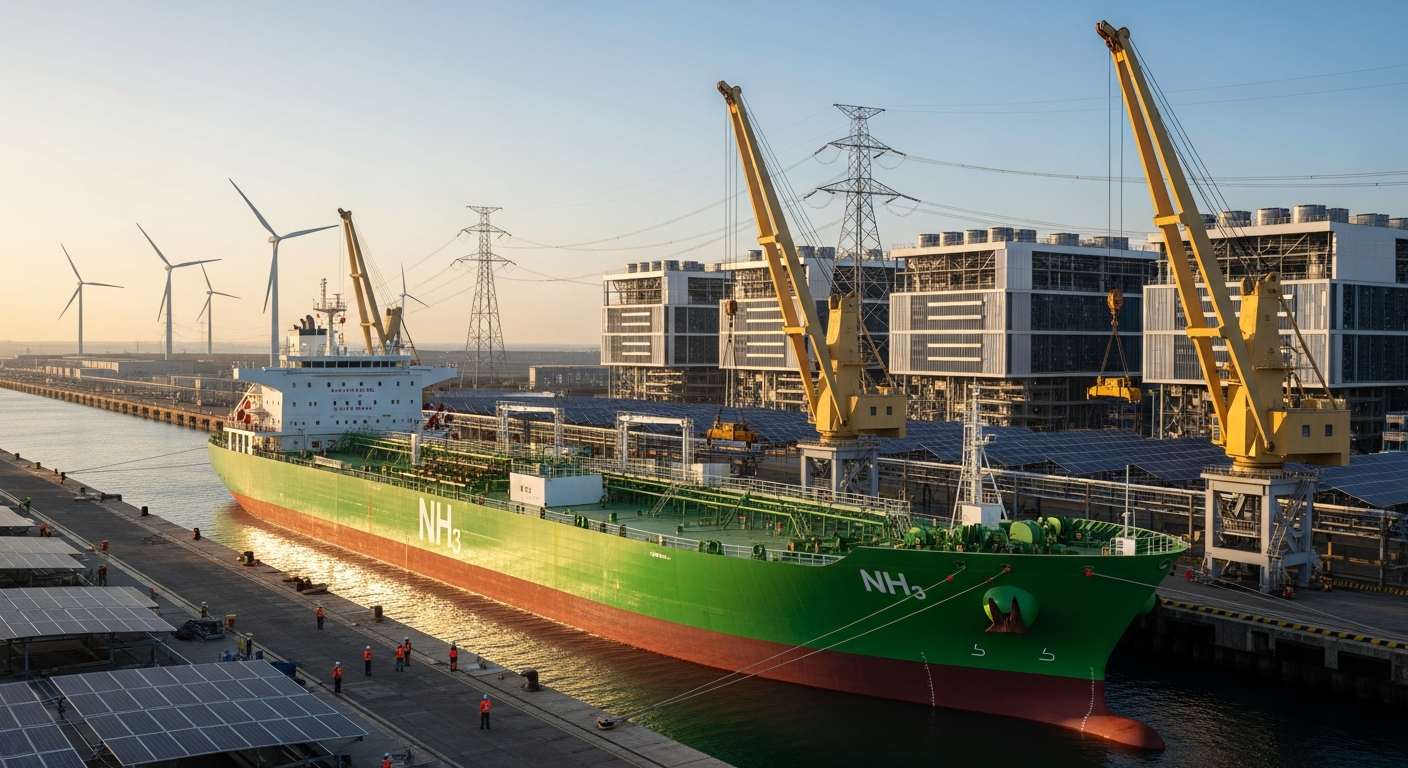
Here's the shocking truth: the world's shipping and port infrastructure, the backbone of global trade, is woefully unprepared for the impending scale of green ammonia transport required by AI's energy appetite. While ammonia has been transported for decades (primarily for fertilizer), the projected *energy* demand necessitates an entirely new class of specialized vessels, vastly expanded port facilities for loading, unloading, and bunkering, and harmonized international safety regulations. Ammonia is toxic and corrosive, demanding stringent safety protocols and specialized handling equipment at every stage. The International Energy Agency (IEA) has highlighted the urgent need for improvements in storage, safety rules, and policy support to make these fuels viable for widespread use.
Consider the scale: transitioning 90% of the global shipping fleet to green ammonia by 2050 alone would require an estimated $2.25 trillion in infrastructure investment worldwide. While this figure encompasses shipping's own fuel needs, the additional burden of supplying AI data centers—whose infrastructure needs are projected to reach $5.2 trillion by 2030, with $1.3 trillion specifically for power generation and transmission—paints a picture of an unprecedented capital expenditure challenge. The lack of established global supply chains for these new fuels critically hinders immediate, widespread adoption. Current investment levels are falling short of projected needs, with CEOs hesitant due to unclear future AI adoption patterns and long infrastructure project timelines.
This emerging bottleneck is simultaneously creating a new geopolitical energy landscape. Countries rich in renewable energy resources (solar, wind) are rapidly positioning themselves as future green ammonia exporters. Regions like the Middle East (e.g., Abu Dhabi's Helios Industry planning 200,000 tonnes of green ammonia from an 800-MW solar plant), Australia (Fortescue's "Green Pioneer" demonstration ship), and India (a 1.5 MTPA facility near Kakinada Port, with India's green ammonia prices being 40-50% lower than H2Global benchmarks) are investing heavily in production. Jordan has approved its first solar-powered green ammonia plant in Aqaba, targeting 100,000 tonnes annually for international markets. These nations will become the new energy powerhouses, shipping their embodied clean energy to demand centers in Europe, Asia, and the United States, where AI data centers are proliferating. For example, AM Green and the Port of Rotterdam Authority are collaborating to build a green energy supply chain between India and Northwestern Europe, aiming for 5 million tonnes of green ammonia production capacity by 2030. This shift reduces exposure to volatile fossil fuel markets and geopolitical risks.
* Maritime Investment Boom: Look for significant capital flowing into specialized green ammonia carriers and port retrofits. New vessel designs and safety standards will be critical. The University of Manchester's Tyndall Centre suggests 20 large ammonia carriers need to be built annually until 2030 to meet transport requirements. Paradip Port in India is already developing an $87 million green hydrogen jetty to handle ammonia and other liquid cargo, targeting completion within 24 months.
* Policy & Standards Acceleration: Governments and international bodies (like the IMO) must accelerate the development of harmonized safety regulations, bunkering infrastructure guidelines, and clear certification for green ammonia across borders.
* Decentralized Production: The strategic vulnerability of centralized supply chains is also driving innovation in on-site green ammonia production, such as NitroFix's single-step generator, which could insulate farms and industries from shipping disruptions. While this addresses some aspects, the sheer scale of AI will still require massive centralized production and efficient transport.
* New Energy Giants: Keep an eye on renewable-rich countries and their state-backed energy companies, as they transform into global green energy exporters, creating new trade routes and diplomatic relationships centered on clean fuels.
The global race to power AI is no longer just about generating clean energy; it's about mastering the monumental challenge of moving it safely and efficiently across oceans. The future of AI's sustainable growth hinges on whether the world's maritime arteries can adapt, fast enough, to carry its green lifeblood.
The Unseen Battle for Stable Green Power
Meeting this insatiable demand with truly green energy is proving far more complex than simply building more solar farms or wind turbines. AI data centers don't just need *energy*; they need *stable, dispatchable, 24/7 power*, often in geographically flexible locations. This critical requirement is quietly pushing green hydrogen (H2) and, more significantly, its derivative, green ammonia (NH3), to the forefront as essential energy carriers. Ammonia is easier to liquefy and store than pure hydrogen, offering a higher volumetric energy density crucial for long-distance transport, making it an attractive solution for decarbonizing sectors like maritime shipping and for providing reliable power to energy-hungry AI infrastructure. It's seen as a viable pathway to further decarbonize data center operations, with systems achieving carbon intensities over 100 times lower than typical natural gas-powered centers.
A Trillion-Dollar Maritime Bottleneck Looms
Here's the shocking truth: the world's shipping and port infrastructure, the backbone of global trade, is woefully unprepared for the impending scale of green ammonia transport required by AI's energy appetite. While ammonia has been transported for decades (primarily for fertilizer), the projected *energy* demand necessitates an entirely new class of specialized vessels, vastly expanded port facilities for loading, unloading, and bunkering, and harmonized international safety regulations. Ammonia is toxic and corrosive, demanding stringent safety protocols and specialized handling equipment at every stage. The International Energy Agency (IEA) has highlighted the urgent need for improvements in storage, safety rules, and policy support to make these fuels viable for widespread use.
Consider the scale: transitioning 90% of the global shipping fleet to green ammonia by 2050 alone would require an estimated $2.25 trillion in infrastructure investment worldwide. While this figure encompasses shipping's own fuel needs, the additional burden of supplying AI data centers—whose infrastructure needs are projected to reach $5.2 trillion by 2030, with $1.3 trillion specifically for power generation and transmission—paints a picture of an unprecedented capital expenditure challenge. The lack of established global supply chains for these new fuels critically hinders immediate, widespread adoption. Current investment levels are falling short of projected needs, with CEOs hesitant due to unclear future AI adoption patterns and long infrastructure project timelines.
Reshaping Global Energy Corridors
This emerging bottleneck is simultaneously creating a new geopolitical energy landscape. Countries rich in renewable energy resources (solar, wind) are rapidly positioning themselves as future green ammonia exporters. Regions like the Middle East (e.g., Abu Dhabi's Helios Industry planning 200,000 tonnes of green ammonia from an 800-MW solar plant), Australia (Fortescue's "Green Pioneer" demonstration ship), and India (a 1.5 MTPA facility near Kakinada Port, with India's green ammonia prices being 40-50% lower than H2Global benchmarks) are investing heavily in production. Jordan has approved its first solar-powered green ammonia plant in Aqaba, targeting 100,000 tonnes annually for international markets. These nations will become the new energy powerhouses, shipping their embodied clean energy to demand centers in Europe, Asia, and the United States, where AI data centers are proliferating. For example, AM Green and the Port of Rotterdam Authority are collaborating to build a green energy supply chain between India and Northwestern Europe, aiming for 5 million tonnes of green ammonia production capacity by 2030. This shift reduces exposure to volatile fossil fuel markets and geopolitical risks.
What to Watch
* Maritime Investment Boom: Look for significant capital flowing into specialized green ammonia carriers and port retrofits. New vessel designs and safety standards will be critical. The University of Manchester's Tyndall Centre suggests 20 large ammonia carriers need to be built annually until 2030 to meet transport requirements. Paradip Port in India is already developing an $87 million green hydrogen jetty to handle ammonia and other liquid cargo, targeting completion within 24 months.
* Policy & Standards Acceleration: Governments and international bodies (like the IMO) must accelerate the development of harmonized safety regulations, bunkering infrastructure guidelines, and clear certification for green ammonia across borders.
* Decentralized Production: The strategic vulnerability of centralized supply chains is also driving innovation in on-site green ammonia production, such as NitroFix's single-step generator, which could insulate farms and industries from shipping disruptions. While this addresses some aspects, the sheer scale of AI will still require massive centralized production and efficient transport.
* New Energy Giants: Keep an eye on renewable-rich countries and their state-backed energy companies, as they transform into global green energy exporters, creating new trade routes and diplomatic relationships centered on clean fuels.
The global race to power AI is no longer just about generating clean energy; it's about mastering the monumental challenge of moving it safely and efficiently across oceans. The future of AI's sustainable growth hinges on whether the world's maritime arteries can adapt, fast enough, to carry its green lifeblood.
More from Renewable Energy
 Energy Agent
Your Next AI Chat Just Paved a Forest: The Hidden Cost of Green AI
 Energy Agent
The AI 'Alchemist' Secretly Unlocking Cheap Green Ammonia
 Energy Agent
The Invisible Energy War: Why Green Ammonia is AI's New Geopolitical Battleground
 Energy Agent