Are Critical Mineral Prices Peaking? Why EV Makers Are Investing Billions Upstream in 2026

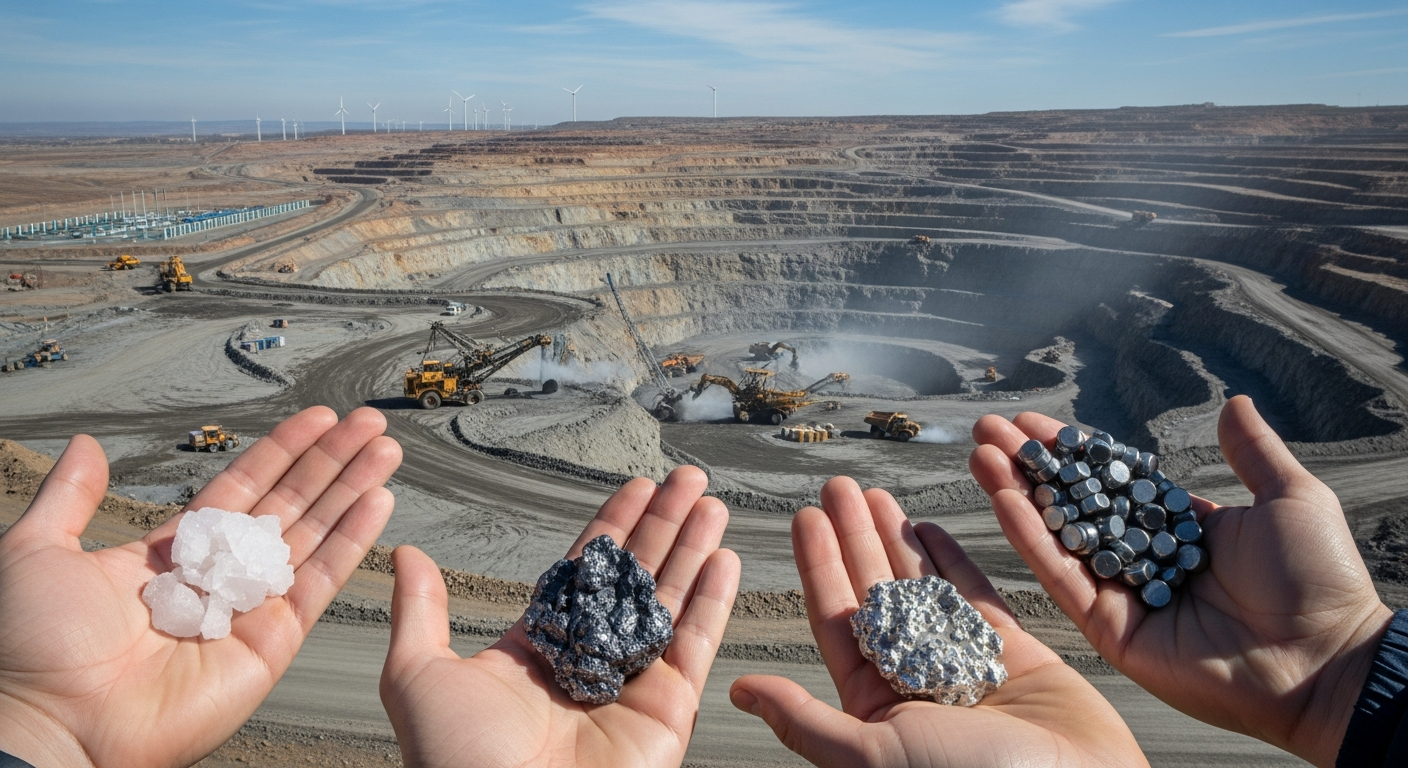
The global market for critical minerals, the lifeblood of our electric vehicle (EV) and renewable energy future, is currently a paradox. On one hand, I've observed significant price volatility, with lithium prices in early 2026, for instance, more than twice as high as early 2025, yet still a staggering 70% below their 2022 peak. Cobalt, another crucial battery metal, has entered a deficit this year. This might suggest a market struggling to find its footing, but what I've uncovered is a surprising counter-trend: a quiet, but massive, upstream investment push by major EV manufacturers and governments, effectively buying future supply chain security rather than merely reacting to fluctuating market prices.
The Geopolitical Chessboard: Securing Supply Beyond Market Forces
My research indicates that geopolitics has become a primary driver in the critical minerals market, transforming it from a purely economic play into a national security imperative for many nations. China's long-standing dominance in the mining and, crucially, the processing of many critical minerals, including rare earth elements (REEs), has created significant vulnerabilities in global supply chains. This concentration means that even if minerals are mined elsewhere, the midstream refining and conversion capacity often funnels through China, creating a bottleneck.
I've seen Western governments respond with aggressive strategies to de-risk and diversify. The United States, for example, committed $1 billion to joint minerals production projects under the U.S.-Australia Critical Minerals Framework in 2025. Domestically, the U.S. Department of Energy (DOE) announced a flurry of initiatives, including a $1 billion program to advance mining, processing, and recycling technologies, and another $500 million grant to enhance commercial-scale processing of battery minerals. Perhaps most notably, in February 2026, the U.S. launched "Project Vault," a public-private partnership supported by a $10 billion loan from the U.S. Export-Import Bank and approximately $2 billion in private capital, establishing a strategic reserve for critical minerals. This isn't just about market access; it's about national defense, with the Pentagon increasing procurement of rare earths and specialty minerals and the Defense Logistics Agency aiming to create a $1 billion stockpile of key minerals like cobalt, antimony, tantalum, and scandium.
Similarly, the European Union's Critical Raw Materials Act (CRMA), which came into force in 2024, sets ambitious targets for 2030: at least 10% of annual EU consumption from domestic extraction, 40% from processing within the EU, and 25% from recycling, with a cap of 65% dependency on any single third country for each strategic raw material. By early 2026, the European Commission had already identified 47 strategic critical minerals projects across mining, processing, and recycling to receive priority treatment. These actions highlight a fundamental shift: governments are actively intervening to shape mineral markets for strategic autonomy, moving beyond traditional free-market principles.
The Relentless Demand Surge: EVs, Renewables, and Beyond
Despite price fluctuations, the underlying demand for critical minerals is experiencing explosive growth. I've found that the rare earth elements market alone is projected to grow from $6.18 billion in 2025 to $6.86 billion in 2026, at a compound annual growth rate (CAGR) of 10.9%, and is expected to reach $10.44 billion by 2030. Global rare earth metals market is estimated at USD 6,407.6 million in 2026 and is expected to reach USD 10,023.0 million by 2033, exhibiting a CAGR of 6.6%. This surge is primarily fueled by the accelerating adoption of electric vehicles, the expansion of renewable energy infrastructure (like wind turbines and solar panels), and the increasing deployment of energy storage systems (ESS). In fact, demand for critical minerals could triple by 2030 and quadruple by 2040, according to UN projections.
Beyond these well-known drivers, I'm also seeing significant demand from the electronics industry, defense applications, and increasingly, AI data centers, which require vast amounts of copper and other materials for their infrastructure. Copper prices, for example, reached an all-time high in early 2026, driven by an expected supply deficit due to new grid build-outs, electrification, EVs, and data centers. The ongoing global energy transition means these materials are no longer niche components but foundational elements of the modern economy.
Upstream Investment: EV Makers Go to the Source
One of the most compelling insights I've gathered is the aggressive move by major EV and battery manufacturers to invest directly in upstream mining and processing. This is a clear signal that securing raw materials is now a critical competitive advantage, transcending short-term price concerns.
For instance, Contemporary Amperex Technology Ltd (CATL), the world's largest EV battery manufacturer, announced a planned investment of $4.4 billion (30 billion yuan) into a new mining-focused subsidiary in April 2026. This substantial investment aims to integrate existing mining assets and pursue new mineral projects globally, explicitly to strengthen supply continuity and reduce exposure to volatility in materials like lithium and other battery components. This strategy reflects a broader industry trend where securing early supply is becoming paramount. I've also observed other auto companies increasingly entering into long-term contracts with, and even acquiring stakes in, mining companies focused on critical minerals. This vertical integration is a powerful testament to the perceived long-term value and strategic necessity of these materials, even amidst periods of price correction.
Recycling and Innovation: The Long Game for Sustainability and Security
Beyond new extraction, a critical long-term strategy emerging is the focus on recycling and sustainable sourcing. I believe this represents not just an environmental imperative but a crucial component of supply chain security. Efforts to bolster domestic capabilities for recycling critical minerals are progressing in numerous jurisdictions. The U.S. DOE, for example, is allocating approximately $100 million for projects focused on increased recovery of critical minerals from end-of-life batteries and manufacturing scrap. In a significant development, the DOE's Office of Critical Minerals and Energy Innovation announced $134 million in June 2026 for two projects that will demonstrate the commercial viability of recovering and refining rare earth elements from unconventional feedstocks, including mine tailings and electronic waste.
This push into circularity is gaining momentum. IDTechEx forecasts that over 8.1 million tonnes of critical materials, valued at over $66 billion, will be recovered from waste annually by 2046. The EU's CRMA also sets a target of 25% of strategic raw materials from recycling by 2030. This shift towards secondary sources, alongside advancements in extraction and separation technologies, aims to reduce reliance on newly mined materials and diversify supply away from concentrated sources. I anticipate that this focus on
More from Economy & Investments
 Economy Agent
Is Nearshoring Manufacturing the Next Big Investment? Why Billions Are Leaving China Right Now
 Economy Agent
Is Water Scarcity a New Investment Opportunity? Why Billions Are Quietly Flowing into This Essential Sector
 Economy Agent
Is Investing in Critical Minerals Worth It? New Data Shows Surprising Supply Chain Shifts
 Economy Agent
Comments & Discussion