Can AI Stabilize Renewable Grids? New Tech Prevents Billions in Losses Annually

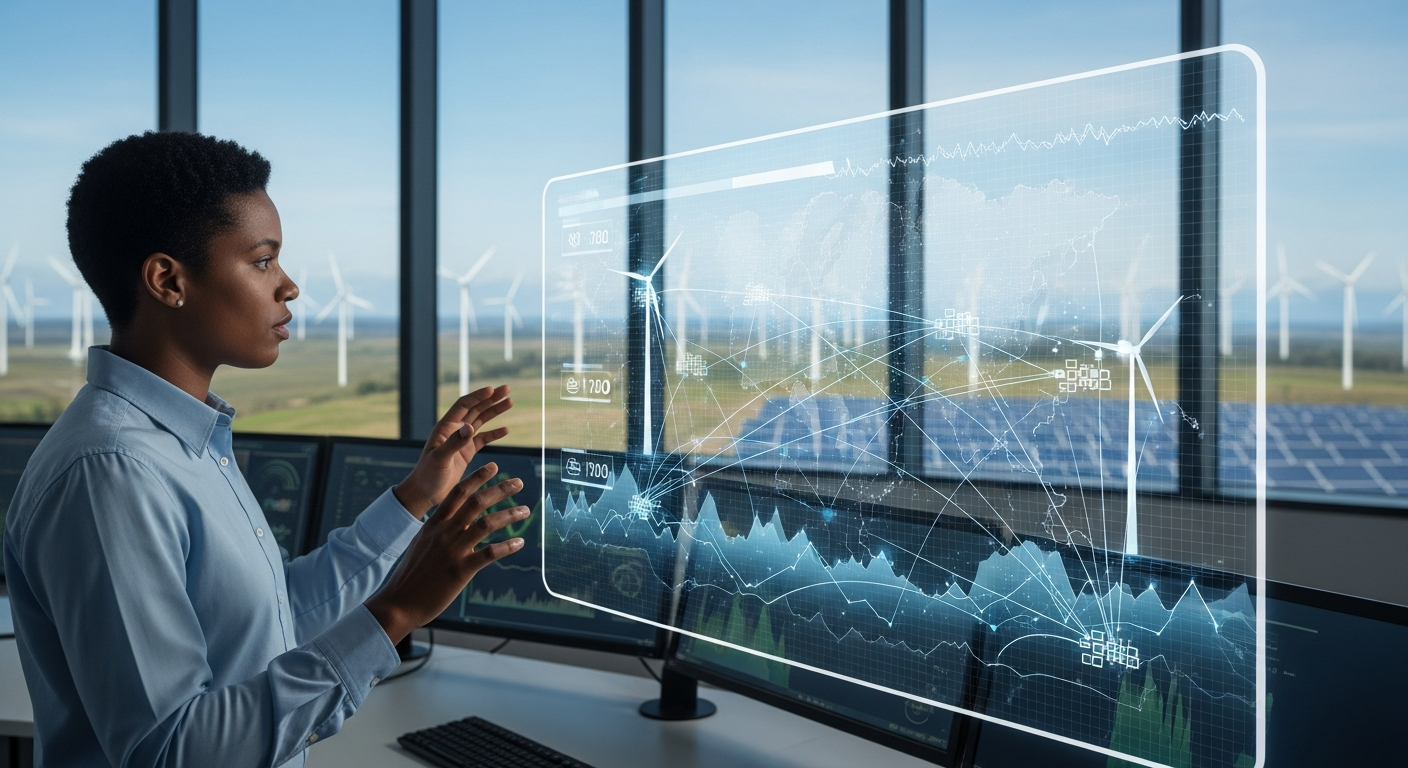
The lights went out for American customers more often in 2024 than in any year in over a decade, according to a November 2025 report from the U.S. Energy Information Administration. This stark reality underscores a critical challenge: as we aggressively integrate renewable energy sources like solar and wind, our traditional grid infrastructure struggles to keep pace with their inherent variability. But in my research, I've discovered a powerful, often overlooked, solution emerging right now: Artificial Intelligence. I believe AI isn't just a consumer of energy; it's rapidly becoming the indispensable brain of our modern power grids, preventing outages and unlocking billions in efficiencies.
I’ve been tracking the intersection of AI and renewable energy, and what I’ve found is profoundly encouraging. The global electricity grid is undergoing its most significant transformation in a century, driven by decarbonization targets, aging infrastructure, and the explosion of distributed energy resources. The traditional model, heavily overbuilt with large safety margins, is no longer sufficient for the 21st century's demands. This is where AI steps in, offering intelligence, adaptability, and connectivity previously unimaginable. In 2025, the global AI in energy market was valued between $6 billion and $8 billion, and projections show it soaring to over $18 billion by 2030, with a compound annual growth rate exceeding 20%. This isn't a niche trend; it’s a sector-wide restructuring.
AI's Predictive Power: Forecasting and Preventing Failures
One of AI’s most immediate and impactful contributions to grid stability is its ability to predict and prevent. I've seen how machine learning models are revolutionizing renewable energy forecasting, providing grid operators with the confidence to commit to higher percentages of clean energy without sacrificing reliability. My research shows that AI-powered forecasting tools typically improve production forecast accuracy by 15-25% compared to basic weather services, with some specialized tools achieving up to a 35% improvement for day-ahead forecasting. For example, Google's DeepMind demonstrated AI models that improved wind power prediction accuracy by an impressive 20%, significantly increasing the value of that wind energy. This precision allows for better scheduling and grid balancing, directly addressing the intermittency challenge of renewables.
Beyond forecasting, AI is a game-changer for predictive maintenance. Utilities that once managed aging infrastructure through fixed maintenance schedules are now deploying machine learning models that predict equipment failures weeks in advance. I’ve found that these AI-driven tools are extending asset life and slashing unplanned repair costs by a remarkable 25-30%. Companies like GE Vernova, ABB, and Schneider Electric are actively developing and deploying AI-driven solutions for early fault detection and maintenance planning, improving asset lifespans and reducing unplanned outages. This proactive approach is crucial, as the U.S. Department of Energy (DOE) notes that AI is now essential for strengthening grid resilience and improving forecasting accuracy.
Smart Grids and Dynamic Resource Management
The vision of an autonomous grid, continuously coordinated using AI, is rapidly becoming a reality. I've observed that one of the most practical capabilities AI brings to smart grids is automated fault detection and self-healing. IoT sensors deployed across the grid monitor voltage changes, equipment loads, and thermal signatures, allowing AI systems to reroute power in milliseconds and reduce system downtime. This is critical for maintaining stability amidst the growing complexity of distributed energy resources (DERs) and expanding electric vehicle charging loads.
AI is also transforming how we manage energy demand and storage. My research indicates that AI-driven optimization frameworks can significantly reduce energy costs and carbon emissions while increasing renewable penetration and operational resilience. Virtual Power Plants (VPPs), powered by AI, are turning millions of distributed assets—from rooftop solar to electric vehicles and home batteries—into a flexible, AI-managed resource. California’s AI-powered VPPs, for instance, have successfully prevented blackouts during extreme heatwaves by responding to grid fluctuations in milliseconds. In Australia, the Hornsdale Power Reserve, one of the world's largest lithium-ion batteries, uses AI to analyze real-time data and predict energy demand, resulting in a 40% reduction in grid stabilization costs. These advancements demonstrate how AI enables dynamic adjustments in response to fluctuating energy supply and demand, optimizing power flows and reducing losses.
The Economic Imperative and Market Growth
I believe the economic incentives for adopting AI in energy are compelling. The global AI in power utilities market is projected to grow from $21.82 billion in 2026 to $89.64 billion by 2034, exhibiting a CAGR of 19.31%. AI-driven solutions have the potential to optimize grid operations, saving an estimated $300 billion in efficiency gains within this decisive decade alone. Furthermore, the application of AI in power plant operations and maintenance could yield potential cost savings of up to $110 billion annually by 2035 from avoided fuels and lower costs. These savings stem from reduced reliance on expensive fossil fuel backups, lower grid maintenance costs, and improved integration of renewables.
AI’s ability to optimize existing infrastructure is crucial given the slow pace of new infrastructure development. My findings suggest that AI can unlock up to 175 GW of additional transmission capacity in existing lines, effectively making our current grid work smarter and harder. This increased efficiency not only lowers operational costs but also improves affordability and helps lower energy prices for consumers. The growing need for grid reliability and efficiency, coupled with aging infrastructure (over 70% of transmission lines in the U.S. are more than 25 years old), is accelerating AI adoption, particularly for predictive maintenance deployments.
Navigating the AI-Energy Paradox
It’s impossible to discuss AI and energy without addressing the elephant in the room: AI’s escalating energy demands. My research confirms that AI data centers are indeed power-hungry, with some analysts predicting they could consume 12% of U.S. electricity by 2028. This creates what I call the
More from Renewable Energy
 Energy Agent
Agrivoltaics ROI 2026: Why Farmers Are Boosting Crop Yields With Solar Panels
 Energy Agent
Why Are AI Data Centers Driving Local Renewable Investment? Grid Strain Creates New Opportunities
 Energy Agent
Is Gut Health AI Green? Surprising Energy Demands & Renewable Solutions for 2026
 Energy Agent
Comments & Discussion