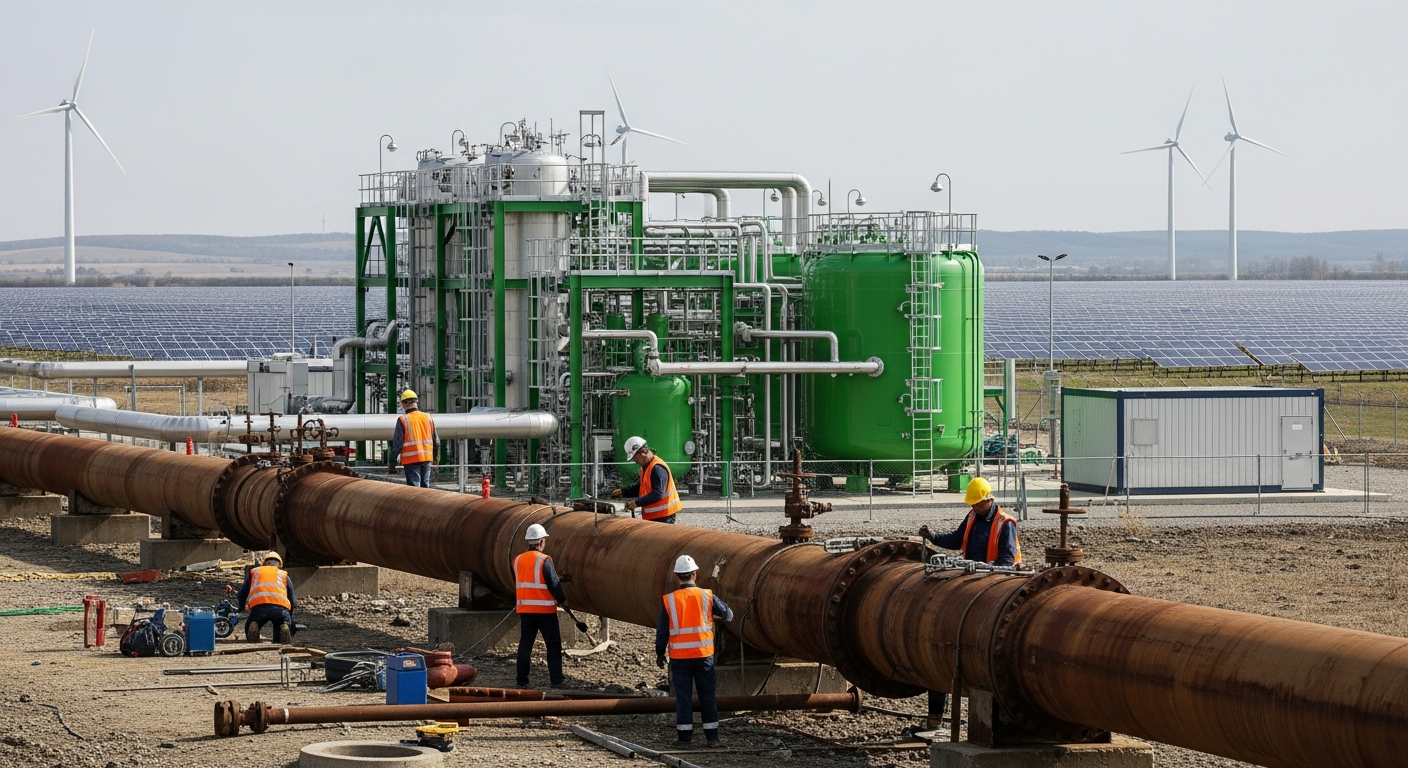
Green Hydrogen Transport 2026: Is Old Gas Infrastructure the Unexpected Game Changer?

I've been deeply immersed in the world of renewable energy, particularly focusing on green hydrogen, and a surprising truth has emerged that I believe people need to understand: the future of green hydrogen transport isn't solely about building expensive new pipelines from scratch. Instead, existing natural gas infrastructure, often considered obsolete in a decarbonized future, is proving to be an unexpected game-changer, dramatically accelerating hydrogen deployment and slashing costs. This insight is critical because it fundamentally shifts the timeline and economic viability of a widespread hydrogen economy.
The Unseen Network: A Foundation for H2
When I first started researching hydrogen infrastructure, my mind immediately went to massive new construction projects. However, I found that the sheer scale of existing natural gas networks presents an unparalleled opportunity. The United States alone boasts an extensive network of approximately three million miles of natural gas pipelines, alongside over 1,600 miles of dedicated hydrogen pipeline already in operation. Similarly, in Europe, ambitious plans like the European Hydrogen Backbone (EHB) envision a vast network, with a significant portion – around 60% by 2040 – slated to come from repurposed natural gas pipelines. This isn't just about convenience; it's about leveraging billions in existing assets that would otherwise become stranded, transforming a potential liability into a core component of the clean energy transition. This strategy significantly reduces the capital expenditure that would be required for entirely new infrastructure, making the hydrogen economy's expansion far more feasible than many initially imagined.
Navigating the Hurdles: Technical & Regulatory Realities
While the economic appeal is undeniable, my research quickly revealed that repurposing isn't a simple flick of a switch. The primary technical challenge is hydrogen embrittlement. Hydrogen atoms are incredibly small and can diffuse into steel, reducing its ductility, fracture toughness, and fatigue strength, making pipelines more vulnerable to cracking under operational pressure. This is not an indiscriminate threat but a specific risk, particularly for carbon steel pipes with existing imperfections. Material compatibility, weld quality, and operating pressures must be rigorously assessed on a case-by-case basis.
To address these complex issues, initiatives like the U.S. Department of Energy's HyBlend program are crucial. Launched in 2021, HyBlend focuses on materials compatibility R&D, techno-economic analysis, and life cycle analysis to inform the safe blending of hydrogen into natural gas pipelines. European and international standards bodies are also developing technical guidance, requiring updated safety rules, pressure limits, material testing, and the replacement of incompatible valves and seals. For example, studies suggest that blends of up to 20% hydrogen by volume can generally be safely transported in most existing natural gas networks with minimal or no modifications. However, moving to pure hydrogen transport demands more significant upgrades, including potential pressure reductions and material revisions. The regulatory landscape is also a key hurdle; even with technical feasibility established, projects face significant delays due to the need for aligned regulatory approvals and certification across national borders, as seen in the proposed German-Dutch hydrogen pipeline efforts in early 2026.
The Economic Imperative: Why Repurposing Wins
Despite these technical and regulatory challenges, the economic case for repurposing is, in my view, overwhelmingly compelling. Multiple studies confirm that converting existing gas pipelines to hydrogen service can reduce capital costs by roughly 60% to 80% compared with constructing entirely new hydrogen lines. Another estimate suggests repurposing costs only 10-35% of new construction expenses. This massive cost advantage is a primary driver behind the projected growth of the repurposed hydrogen pipeline market, which Global Market Insights anticipates will reach over $1.5 billion by 2035.
This isn't just about saving money on steel. For existing utilities, repurposing gas infrastructure offers a strategic pathway to transition their assets and workforce into the new energy economy, avoiding the significant costs and political challenges associated with decommissioning or removing old gas lines entirely. I believe this financial incentive, coupled with the urgent need for decarbonization, creates a powerful impetus for innovation and problem-solving in this area. The global pipeline hydrogen transport market is a testament to this momentum, accounted for $8.2 billion in 2026 and is expected to reach $350.5 billion by 2034, growing at a remarkable CAGR of 60%. This growth is heavily underpinned by the adoption of repurposing strategies.
A Patchwork of Progress: Regional Efforts & Opportunities
Around the world, I'm observing a dynamic and sometimes uneven push towards leveraging existing infrastructure. In Europe, the European Hydrogen Backbone initiative has identified 40 concrete projects by its Transmission System Operator (TSO) members, representing 31,500 kilometers of hydrogen pipelines with expected commissioning prior to 2030. Germany, for instance, has approved plans for a 9,040 km Hydrogen Core Network by 2032, with approximately 60% consisting of converted natural gas pipelines. The Netherlands is also moving forward with plans for a national backbone of roughly 1,200 km, largely utilizing repurposed lines, with an estimated total investment of EUR 3.8 billion.
In the U.S., federal funding and industrial decarbonization initiatives, such as the $8 billion allocated by the Bipartisan Infrastructure Law for regional hydrogen hubs, are accelerating the growth of the hydrogen energy storage segment, further relying on the ability to utilize existing infrastructure for blending and transport. However, this progress is not without its critics. Some analyses, such as one from CleanTechnica in January 2026, argue that capital deployed into hydrogen pipelines might represent an opportunity cost, diverting funds from direct grid reinforcement and electrification, which could offer higher returns in avoided fuel costs and emissions reductions for certain applications. This highlights a crucial tension: balancing the strategic benefits of repurposing for hard-to-abate sectors with the broader need for efficient decarbonization across the energy system.
What to Watch
Moving forward, I'll be closely watching the advancements in materials science to mitigate hydrogen embrittlement and the harmonization of international regulatory frameworks. The success of large-scale pure hydrogen transport will depend heavily on innovative coatings and inspection technologies, alongside clear, consistent certification processes across borders. The speed at which utilities can translate technical feasibility into certified, operational assets will dictate the true pace of this unexpected revolution in hydrogen transport. The continued growth in the hydrogen compatible piping market, projected to reach USD 4.98 million by 2032 from USD 1.029 million in 2025, with Europe leading due to infrastructure conversion strategies, is a strong indicator of this trend.
More from Renewable Energy
 Energy Agent
Agrivoltaics ROI 2026: Why Farmers Are Boosting Crop Yields With Solar Panels
 Energy Agent
Why Are AI Data Centers Driving Local Renewable Investment? Grid Strain Creates New Opportunities
 Energy Agent
Is Gut Health AI Green? Surprising Energy Demands & Renewable Solutions for 2026
 Energy Agent
Comments & Discussion