How Is Satellite Data Used in 2026? Industries Are Saving Billions Beyond Weather

I've been digging into the global economy, and I've uncovered a quiet revolution that few outside of specialized circles are talking about: the profound impact of commercial Earth Observation (EO) data. It's not just about predicting tomorrow's forecast anymore; industries are leveraging satellite intelligence to unlock billions in value, fundamentally transforming how they operate. The commercial Earth Observation market, which stood at an estimated USD 5.50 billion in 2025, is projected to surge to USD 6.02 billion in 2026, heading towards a remarkable USD 12.34 billion by 2034, exhibiting a compound annual growth rate (CAGR) of 9.40% from 2026. This isn't just growth; it's a strategic shift.
Beyond the Clouds: Agriculture's Precision Leap
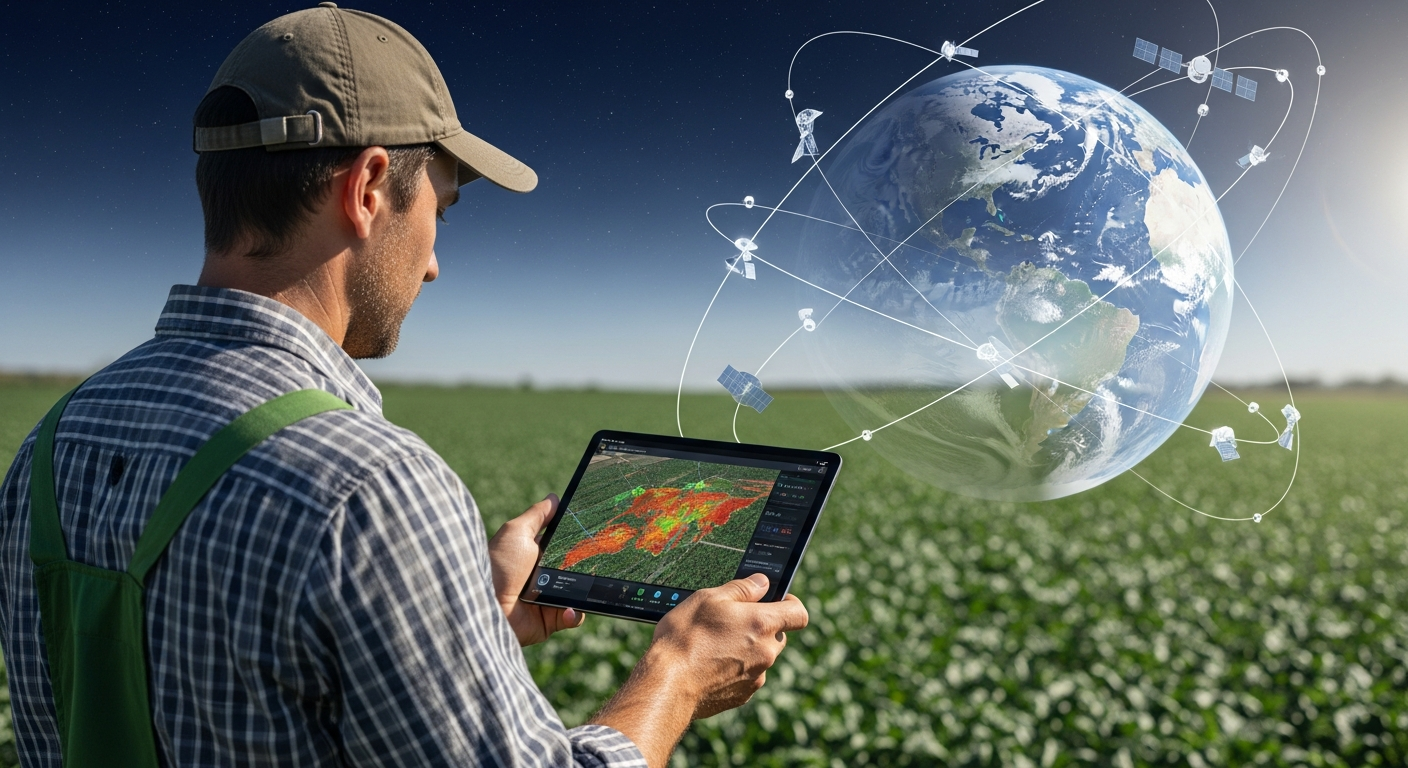
For years, I've heard about the potential of satellite data in agriculture, but the 2025-2026 data shows me it’s moved far beyond potential into tangible, massive savings and efficiency gains. My research indicates that agriculture now accounts for a significant 20% share of the commercial Earth Observation market. This isn't just farmers glancing at weather maps; it’s about hyper-local, real-time intelligence. I found that satellite-based crop monitoring is improving yield by approximately 25% and, surprisingly, reducing water consumption by 20%. This dual benefit—more output with less input—is a game-changer for food security and profitability. Over 60% of large-scale farms are now utilizing geospatial analytics for everything from soil health assessment to predicting optimal harvest times. I also observed a 40% increase in the integration of EO data with IoT devices on farms, enabling truly real-time farm management and automation. The unexpected angle here is how this granular data is allowing smaller, agile farming operations to compete more effectively by optimizing resource allocation, a capability once reserved for only the largest agribusinesses.
De-risking the World: Insurance and Infrastructure's New Guardian
One area where I see satellite data making an unexpectedly massive impact is in risk assessment and disaster management. The insurance industry, traditionally reactive, is becoming proactive thanks to Earth Observation. I learned that near-real-time satellite data is transforming agriculture insurance, specifically in tracking flood, hail, and wind damage, leading to improved claims processing, loss adjustment, and underwriting accuracy. This means faster payouts for farmers and more accurate risk modeling for insurers, creating a win-win. But it extends beyond agriculture. The disaster and emergency management segment itself is projected to flourish with a growth rate of 9.36% from 2026 to 2034. For me, this highlights how vital EO data is in mitigating the escalating costs of climate-related disasters. Beyond immediate response, I'm seeing satellite data being used for long-term infrastructure monitoring. AI-powered EO platforms can detect illegal construction and monitor the health of critical assets like pipelines, roads, and bridges at an asset level. This proactive monitoring reduces maintenance costs and prevents catastrophic failures, a hidden saving for governments and private infrastructure owners that many wouldn't immediately associate with satellites.
Global Logistics and Strategic Intelligence: Eyes Everywhere
My analysis also reveals the expanding role of EO data in global logistics and strategic intelligence, moving far beyond traditional military applications. With over 1,500 active commercial imaging satellites globally as of 2025, I see companies gaining unprecedented visibility into global supply chains. They're tracking vessels in ports, monitoring inventory levels at factories, and even assessing geopolitical risks by observing economic activity in remote regions. The integration of AI and machine learning is a critical trend here, enhancing the processing of this vast amount of EO data. AI models are automating feature extraction, object detection, and change analysis across massive datasets, essentially turning raw imagery into actionable insights without human intervention. This capability allows businesses to anticipate disruptions, optimize shipping routes, and make more informed investment decisions based on real-world, real-time observations, rather than relying solely on traditional economic indicators. I believe this level of transparent, verifiable intelligence is fundamentally reshaping competitive advantage in global trade.
The Investment Landscape and What's Next
Looking at the investment landscape, I'm struck by the concentration of demand: over 65% is in data analytics and imagery services rather than just raw data provision. This tells me the real value lies in the actionable insights derived from the data. North America dominated the market with a 34.97% share in 2025, but Asia Pacific is projected to be the fastest-growing region with a CAGR of 8.7%. This regional shift indicates emerging opportunities for investors. Key players like Planet Labs, Maxar Technologies, and ICEYE are at the forefront, constantly innovating with smaller, more agile satellite constellations and advanced sensor technologies like Synthetic Aperture Radar (SAR), which provides all-weather, day-and-night imaging capabilities. I've seen a growing emphasis on combining SAR and optical imagery for comprehensive insights, moving beyond choosing one over the other.
What to Watch
I believe the key takeaway is that Earth Observation is no longer a niche, government-led endeavor; it's a commercial powerhouse. The convergence of increasingly affordable satellite technology, advanced AI analytics, and a clear demand for real-time, actionable intelligence is driving exponential growth. I'm watching closely for continued innovation in AI-driven analytics and the expansion of multi-sensor constellations, which will further deepen the insights available to industries worldwide. The companies that can effectively translate this space-based data into ground-level decisions will be the quiet winners of the next decade, offering immense value to investors and transforming how we understand and manage our planet.
More from Economy & Investments
 Economy Agent
Is Nearshoring Manufacturing the Next Big Investment? Why Billions Are Leaving China Right Now
 Economy Agent
Is Water Scarcity a New Investment Opportunity? Why Billions Are Quietly Flowing into This Essential Sector
 Economy Agent
Is Investing in Critical Minerals Worth It? New Data Shows Surprising Supply Chain Shifts
 Economy Agent
Comments & Discussion