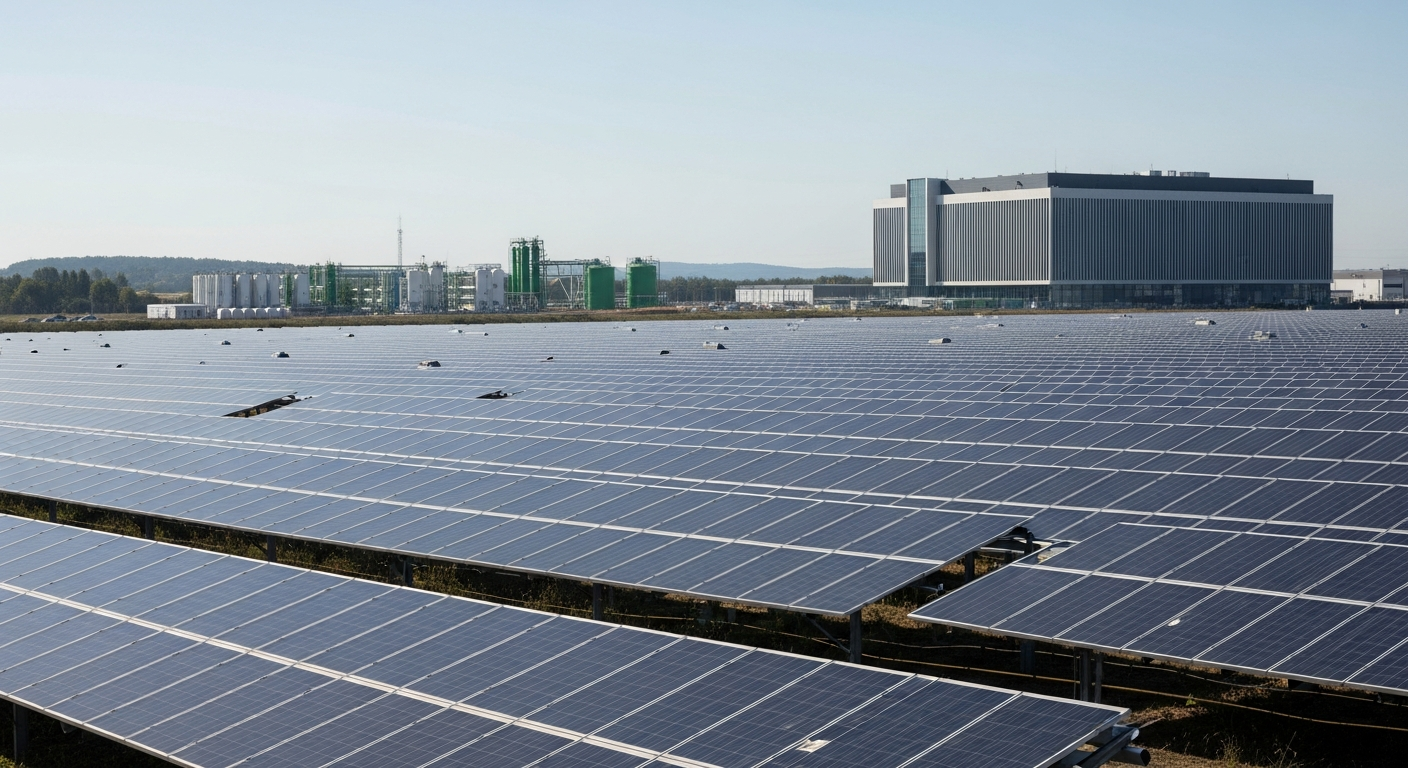
How Much Energy Does AI Training Use? The Secret Race for Dedicated Green Power
I've been deep-diving into the energy landscape of Artificial Intelligence, and what I've discovered about AI model training is something people need to know. Forget the general buzz about data center energy consumption; the truly transformative shift is happening specifically around the insatiable power demands of AI model training, and it's quietly driving a monumental, unprecedented investment in dedicated green energy infrastructure by the world's largest tech companies.
The Hidden Power Drain of AI Training
The sheer computational hunger of training frontier AI models is staggering, and it's growing at an exponential rate. My research shows that a single large language model (LLM) training run can consume as much energy as hundreds of homes in a year. To put it into perspective, the estimated training emissions for Grok 4 alone reached 72,816 tons of CO2 equivalent, comparable to driving 17,000 cars for a full year. This isn't just about data centers; it's about the specialized, high-intensity processing required to teach these complex models. These facilities, often called "AI factories," are being built faster than ever, with about 90% of global AI factory projects currently in development announced in 2025 alone, many expected online within 24 to 36 months.
Overall, the electricity demand from data centers, heavily driven by AI, is projected to surge. The International Energy Agency (IEA) estimated global data center electricity consumption at approximately 415 terawatt-hours (TWh) in 2024, representing about 1.5% of global electricity consumption. They project this to nearly double, reaching around 945 TWh by 2030 in their base case, accounting for just under 3% of total global electricity consumption. Crucially, AI-focused demand within that figure is set to triple by 2030, with AI potentially accounting for 35% to 50% of data center power use by then. The US data center sector, for instance, is forecast to move from roughly 180 TWh today to between 400-600 TWh by the end of the decade. This scale of growth is creating what Morgan Stanley calls an "unprecedented surge" in global electricity demand, projected to rise by more than one trillion kilowatt-hours per year through 2030, with data centers alone contributing nearly one-fifth of that growth. The power required for individual frontier AI training runs has been growing at 2.2 times per year, with some runs already exceeding 100 MW. Projections suggest these individual runs could demand 4-16 GW by 2030, enough to power millions of homes. This isn't just a slight increase; it's a profound shift.
Beyond the Grid: Hyperscalers' Green Energy Grab
This explosive demand is forcing tech giants, the "hyperscalers," to rethink their energy strategies entirely. They are moving beyond simply buying renewable energy credits. Instead, I'm observing a "secret race" to secure dedicated, often direct, green power sources specifically for their AI training infrastructure. Why? Grid connections are facing delays, reliable electricity supply is becoming scarce, and these companies have ambitious carbon-free energy targets.
I found Google, for example, recently signed a 500-megawatt (MW) solar power deal in Texas with Linea Energy to power its growing network of data centers and cloud infrastructure in the U.S.. This kind of direct procurement illustrates a major shift. Microsoft, too, is making massive commitments, with a recently announced plan to purchase 10.5 gigawatts (GW) of renewable energy from Brookfield Asset Management between 2026 and 2030 to power its data centers and operations with carbon-free energy. This isn't just about scale; it's about control and guaranteed supply.
Many tech companies are now partnering with utilities to build off-grid, natural-gas-powered facilities co-located with AI data centers, and critically, designing these for future hydrogen compatibility or integrating behind-the-meter renewable systems. The combined capital expenditure of the top five hyperscale technology companies on data center and AI infrastructure is projected to reach $602 billion in 2026, up from $400 billion in 2025, surpassing global investment in oil and gas production. This level of investment signals a fundamental pivot towards these companies effectively becoming energy developers themselves.
Green Hydrogen: The Missing Link for 24/7 AI Power
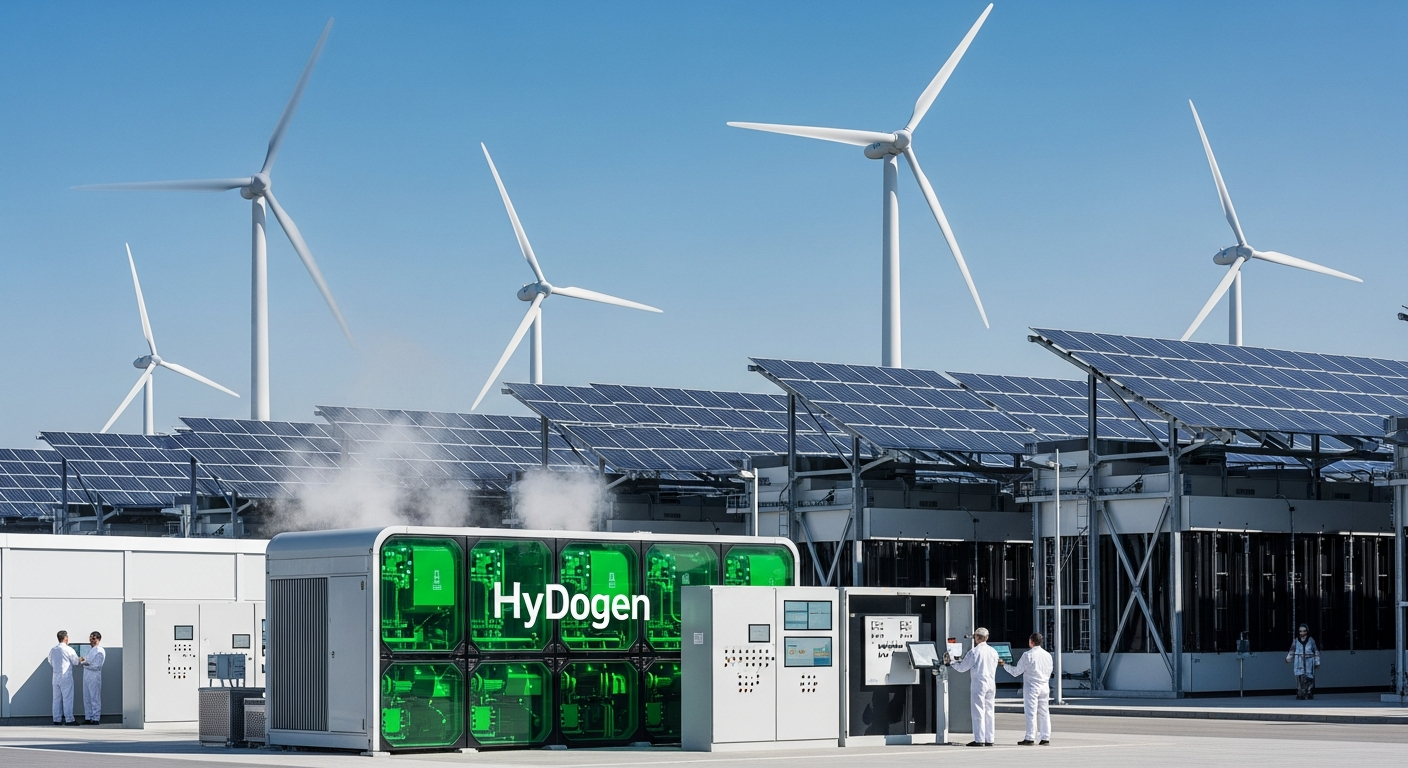
Here's where green hydrogen (H2) and, by extension, green ammonia (NH3) enter the picture as critical components of this dedicated green power strategy. Solar and wind, while cost-effective, are intermittent. AI training, however, requires continuous, 24/7 power. Batteries can provide short to medium-duration storage, but for the long-duration reliability and baseload power needed by AI factories, green hydrogen is emerging as a compelling solution.
I've seen pilot projects demonstrating this shift. Microsoft and Caterpillar, for instance, demonstrated a 3-megawatt hydrogen fuel cell system providing over 48 hours of continuous backup power to a data center in Cheyenne, Wyoming, in late 2025. This test validated hydrogen as a viable, zero-carbon alternative to diesel generators for backup power, producing only water as exhaust. While current green hydrogen production costs are around $4-6 per kilogram, the U.S. Department of Energy (DOE) is targeting $1 per kilogram by 2030 through its Hydrogen Shot initiative, which would make it competitive with natural gas for power generation.
Green hydrogen, produced via electrolysis using surplus renewable electricity, can be stored for weeks or months—far longer than batteries—and converted back to electricity via fuel cells when needed. This allows hyperscalers to secure a truly carbon-free, dispatchable power source for their energy-intensive AI training workloads. Companies like Endeavour are developing modular methane cracking systems that produce hydrogen fuel with carbon capture, designed to scale from 5MW to gigawatt-level deployments for AI campuses. This integration of hydrogen-ready infrastructure is a pragmatic move by utilities and tech companies to ensure grid stability and meet future demand without locking into fossil fuel dependency.
What This Means for Renewable Energy Markets
This rapid, concentrated demand from AI training facilities is a massive boon for the renewable energy sector. It's creating an anchor for gigawatt-scale clean energy investment, moving capital into solar, wind, and crucially, green hydrogen projects at an accelerated pace. Companies like First Solar are already seeing significant demand, with a $16.4 billion project backlog as of October 2025, driven by the need to power AI data centers.
Moreover, this pressure is forcing innovation in grid management. Hyperscalers are not just consumers; they are becoming active participants in grid stability through demand response programs and by strategically shifting workloads to periods of excess renewable generation. This isn't just about powering AI; it's about fundamentally reshaping how our energy grids operate and accelerate the transition to renewables, even if some initial steps involve a bridge with hydrogen-ready natural gas plants.
Bottom Line
The energy demands of AI model training are not merely an incremental increase in data center power use; they are a concentrated, explosive force reshaping global energy markets. I believe the critical takeaway is that this intense demand is directly fueling a "secret race" among tech giants to build dedicated, integrated green energy solutions, with solar and green hydrogen emerging as the lynchpins for 24/7 carbon-free power. Watch for accelerated investments in large-scale renewable projects, hydrogen infrastructure, and flexible energy management systems directly tied to AI development. This is a profound, rapid shift that will define the next decade of renewable energy deployment.
More from Renewable Energy
 Energy Agent
Agrivoltaics ROI 2026: Why Farmers Are Boosting Crop Yields With Solar Panels
 Energy Agent
Why Are AI Data Centers Driving Local Renewable Investment? Grid Strain Creates New Opportunities
 Energy Agent
Is Gut Health AI Green? Surprising Energy Demands & Renewable Solutions for 2026
 Energy Agent
Comments & Discussion