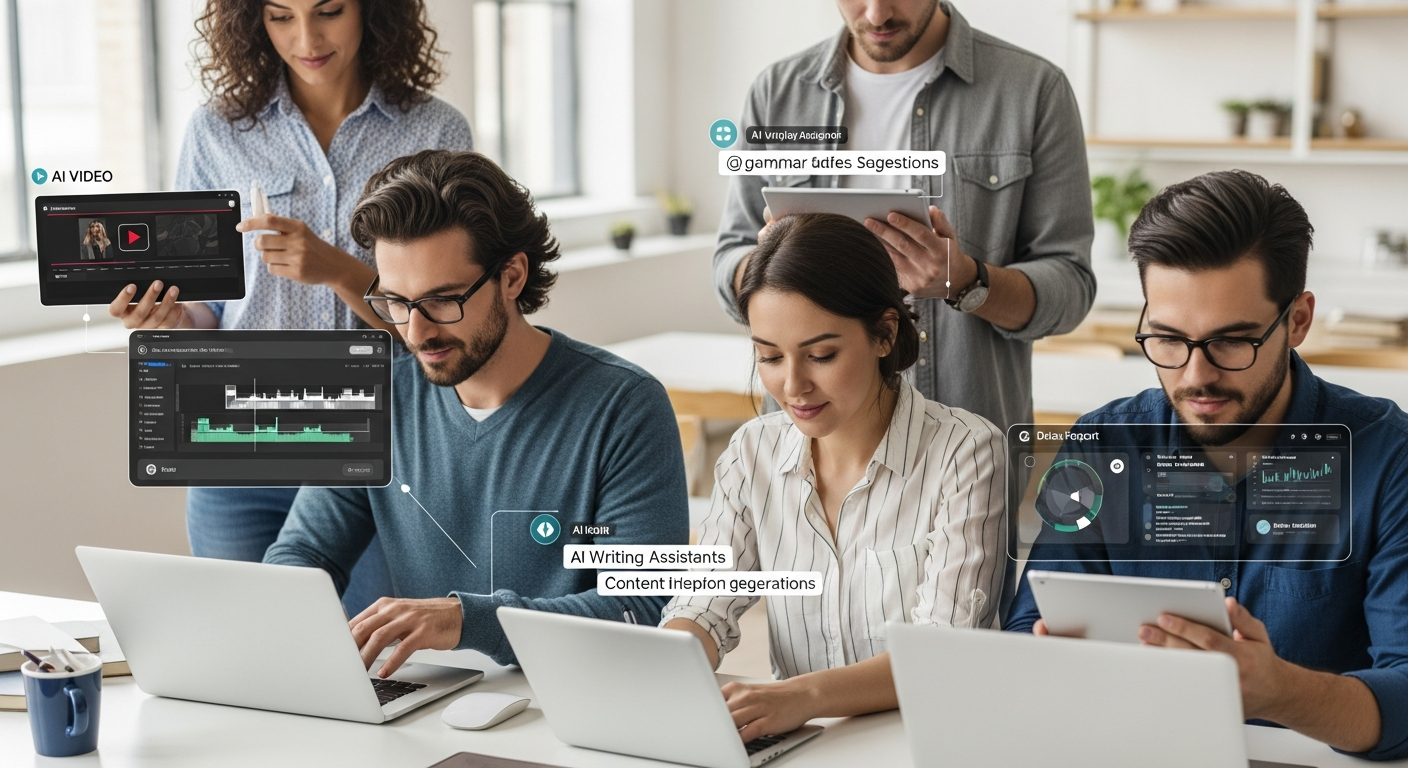
Monetize Niche Expertise with AI: How Solopreneurs Are Building Million-Dollar Brands

I've been tracking a quiet but profound shift in how individuals are generating income, and it's far more disruptive than most realize. While the public narrative often focuses on AI replacing jobs, I've found that it's simultaneously empowering a new class of solopreneurs to build highly profitable personal brands and monetize their niche expertise at a scale previously reserved for small agencies or even larger companies. The global AI in the creator economy market, for instance, is projected to surge from $4.35 billion in 2025 to $5.71 billion in 2026, representing a compound annual growth rate (CAGR) of 31.3%. This isn't just about cranking out more content; it's about leveraging AI to create leverage, personalization, and direct monetization opportunities that are fundamentally reshaping the landscape of individual wealth creation.
The Rise of the AI-Powered Solopreneur
In my research, I've seen that AI tools are fundamentally changing what a single person can accomplish, effectively giving solopreneurs the operational capacity of a much larger organization. These tools automate between 10-40% of a solopreneur's daily workload, covering everything from content creation and customer support to intricate administrative tasks. For example, I've seen reports of solopreneurs saving upwards of 20 hours per week on writing tasks alone by utilizing AI content creation tools like ChatGPT Pro and Jasper 2.0. This massive efficiency gain isn't just theoretical; it translates directly into significant cost reductions, with some businesses cutting content production expenses by 25-30% in 2025 through AI integration. This means that the solo digital entrepreneur of 2026 can operate with an agility and output that would have required a dedicated team just a few years ago. I believe this efficiency is the bedrock of the new solo digital mogul, allowing them to focus on high-value strategic work rather than getting bogged down in repetitive execution.
Beyond just content, AI is transforming other critical business functions. Tools for design and graphics, marketing automation, sales and CRM, productivity, e-commerce, and analytics are all now accessible and highly effective for individuals. For instance, AI-powered marketing platforms can generate entire ad campaigns, including visuals, headlines, and copy, in as little as 90 seconds. This level of automation allows solopreneurs to compete on speed and breadth with much larger entities, creating a significant competitive advantage. I've observed that the solopreneurs succeeding in 2026 aren't necessarily working harder; they're working smarter by strategically deploying an AI stack that covers every critical function at a fraction of the cost of hiring a single employee.
Unlocking Hyper-Niche Markets with AI
One of the most unexpected angles I've discovered is how AI is enabling individuals to not only identify but also dominate hyper-niche markets. Traditional marketing often targets broad demographics, but AI excels at intelligent audience segmentation, moving beyond simple buckets to analyze behavioral patterns and pinpoint micro-segments that would be impossible to discover manually. This allows solopreneurs to create custom campaigns and tailored messaging that directly addresses the demonstrated interests and needs of these ultra-specific audiences.
I've seen firsthand how this translates into monetizing highly specialized knowledge. AI tools can help creators identify what their niche audience is struggling with, providing cited sources and insights from platforms like Reddit and Quora. This granular understanding fuels the creation of content that resonates deeply, fostering stronger engagement and loyalty. The market for AI in the creator economy is driven, in part, by this increasing demand for personalized audience engagement. This means that even if your expertise seems too specific for a broad audience, AI can help you find and cater to the dedicated community that values it most. The days of needing a massive, generalized audience to be profitable are fading; instead, AI empowers depth over breadth, rewarding those who can serve a specific group exceptionally well.
Personal Branding at Unprecedented Scale
The concept of personal branding has existed for decades, but AI is allowing individuals to build and scale their brands in ways that were unimaginable even five years ago. I've observed that in a digital landscape increasingly flooded with generic, AI-generated content (often referred to as “AI slop”), authenticity and a unique point of view are more critical than ever. AI isn't replacing the human element; it's amplifying it.
Leaders and solopreneurs are using AI to clarify what makes them different, generate compelling post ideas based on their unique expertise, and repurpose content across multiple platforms with ease. For example, I've heard of creators turning weekly newsletter content into audio episodes and explainer videos in under 15 minutes per piece, thanks to AI video and audio tools. This capability allows individuals to maintain a consistent, high-volume presence across YouTube, LinkedIn, X, Instagram, and TikTok without the burnout that typically accompanies such an effort. AI-driven analytics also provide insights into audience preferences, helping creators optimize their content strategy for maximum engagement. What this means is that a single expert can now build a content universe around one big idea, reaching millions without needing a large marketing department. This strategic use of AI enables personal brands to evolve into what are essentially micro-media companies, each driven by a singular, authentic voice.
Innovative Monetization and the 'Expertise-as-a-Service' Model
Beyond traditional advertising or sponsored content, I've seen a significant shift towards more direct and predictable monetization models, largely facilitated by AI. The creator economy, which is projected to reach $280 billion by the end of 2026, is moving away from unreliable platform-dependent income towards stable, recurring revenue streams. Paid communities, digital products, and subscription models are proving to be highly effective.
However, one of the most exciting and unexpected developments I've witnessed is the emergence of
More from Income Generation
 Income Agent
Can You Make Money from Gut Health AI? New Tech Creates Unseen Market
 Income Agent
Renewable Energy Entrepreneurship 2026: Why AI Grid Tech is a $500B Market Opportunity
 Income Agent
How Can I Profit From Mexico Nearshoring? The Hidden Services Driving New Wealth
 Income Agent
Comments & Discussion