Which Country Controls Global Phosphate Supply? Food Security Risk

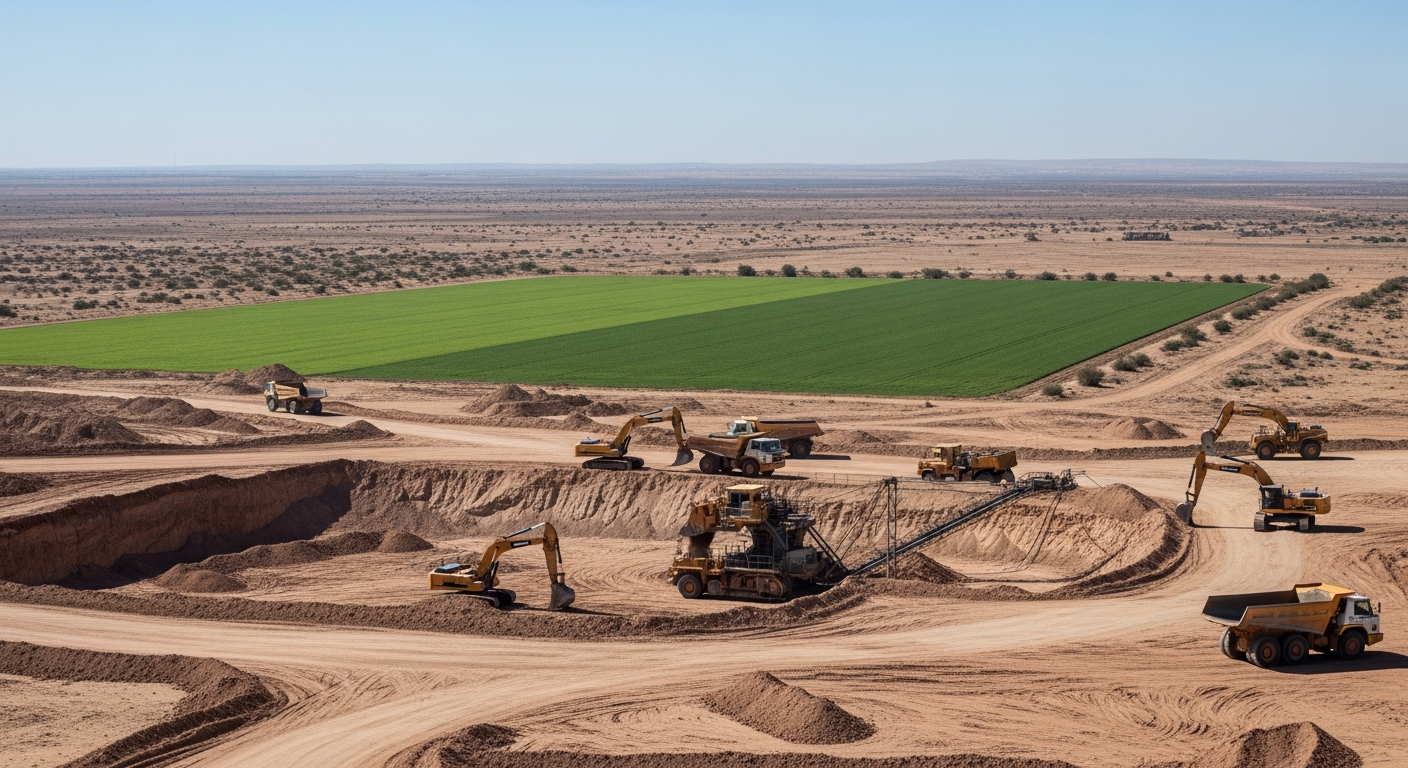
I've been deeply researching the global phosphate supply, and what I've uncovered is a critical vulnerability that ties our daily food to a complex geopolitical landscape. Imagine for a moment that the stability of your food supply hinges on a single North African nation. This isn't a dystopian fantasy; it's the reality I've found emerging around phosphorus, an utterly indispensable, yet often overlooked, mineral. With approximately 70% of the world's known phosphate rock reserves concentrated in Morocco and the disputed territory of Western Sahara, global food security is increasingly vulnerable to a geopolitical flashpoint that far too few people are discussing.
The Silent Monopoly Beneath Our Feet
In my research, I've come to understand that phosphorus is the bedrock of modern agriculture. Without it, crop yields plummet, and feeding our growing global population becomes impossible. It is a non-substitutable nutrient, essential for plant growth, root development, and overall crop productivity. Yet, the supply chain for this vital element is alarmingly concentrated. My findings show that five countries—Morocco and Western Sahara, China, the USA, and Russia—collectively hold about 85% of global phosphate rock reserves and account for 80% of its production. This means that most nations are entirely dependent on imports to meet their phosphorus demands, leaving them exposed to significant supply disruptions.
The geopolitical implications of this concentration are profound. Morocco's administration of Western Sahara, home to some of the richest phosphate deposits, remains unrecognized by the United Nations, creating legal ambiguities and potential friction for international buyers. This unresolved territorial conflict means that a significant portion of the world's food supply rests on a volatile geopolitical fault line. Morocco's state-owned OCP Group, founded in 1920, is the world's largest producer of phosphate and phosphate-based products, with access to over 70% of global phosphate rock reserves. The Bou Craa mine in Western Sahara, while representing only a minor portion of OCP's overall operations (around 2% of Morocco's total phosphate reserves and 8% of OCP Group's total rock extracted), is still a significant source of contention and revenue. The UN Legal Counsel in 2002 stated that further exploitation of Western Sahara's resources would violate international law, and many previous importers, such as the US firm Mosaic in 2010 and Nutrien in 2018, have ceased purchasing phosphates from the territory due to human rights and international law concerns. However, as of 2023, exports from Bou Craa continued to countries like India, Mexico, and New Zealand.
I found that the U.S. Geological Survey underscored this vulnerability by including phosphates on its 2025 Final List of Critical Minerals. Furthermore, the U.S. government invoked the Defense Production Act in February 2026 to secure elemental phosphorus supplies, recognizing its importance not only for agriculture but also for military technologies, semiconductors, and lithium-ion batteries. This executive order, signed by President Donald J. Trump, aims to protect domestic production of elemental phosphorus and glyphosate-based herbicides, which are critical for both national security and food production. China, a major producer and consumer, also designated phosphate ore as a strategic mineral in 2016, prioritizing domestic supply over exports. In December 2025, China's phosphate fertilizer industry announced it would, in principle, not schedule new export plans before August 2026, a move driven by resource protection, environmental concerns, and rising production costs, particularly for sulfur. This voluntary industry action, though not government-mandated, has a strong binding force and significantly impacts the international market.
Escalating Costs and Collateral Damage
The global phosphate market, which I found was valued at $180.60 billion in 2025, is projected to grow to $193.38 billion in 2026 and reach $300.13 billion by 2034, exhibiting a CAGR of 5.6% during the forecast period. This relentless demand for food from a surging world population, coupled with concentrated supply and geopolitical instability, has ignited price volatility. In 2025, phosphate fertilizer prices, particularly for Diammonium Phosphate (DAP) and Monoammonium Phosphate (MAP), saw significant spikes. For example, Gulf DAP prices surged by 36% in less than eight months, from about $583 per ton in January 2025 to nearly $800 in August 2025. Farmers heading into 2026 face historically high and unstable fertilizer costs, severely squeezing their profit margins as crop revenues fall. Despite some early 2026 declines, where DAP fell 7% to an average of $847 per ton and MAP dropped 5% to $877 per ton in January 2026, these prices remain significantly higher than a year prior. For instance, DAP was up 15% and MAP 8% over the same period in 2025.
Beyond the immediate agricultural sector, this phosphorus crunch ripples through several interconnected industries. Geopolitical tensions, such as those impacting the Strait of Hormuz in 2026, directly affect the supply of sulfur—a critical raw material for phosphoric acid production. Nearly 50% of global sulfur exports originate from countries west of the Strait and traverse this critical waterway. Disruptions here lead to further price fluctuations and supply chain risks for phosphorus chemicals. For example, a "Contested Transit" scenario due to a Strait of Hormuz disruption could see DAP peak at $866/st, well above the February 2026 pre-crisis benchmark of $622/st. Food processing, animal nutrition, and even emerging energy technologies like lithium iron phosphate batteries used in electric vehicles, all rely on a stable phosphorus supply. Any disruption can cascade, impacting everything from food prices on your grocery shelf to the cost of your next EV.
The Environmental Imperative and the Path Forward
Compounding the supply challenge is the environmental impact of current phosphorus use. Inefficient application in agriculture leads to phosphorus runoff, which is a primary driver of freshwater and coastal eutrophication. This nutrient overload fuels harmful algal blooms and creates vast "dead zones." I've learned that improving the efficiency of soil and fertilizer phosphorus use is crucial to conserve this finite resource.
One promising avenue I've explored is precision agriculture. This involves using technologies like GPS-guided soil mapping, sensors, and variable rate application equipment to apply phosphorus fertilizer only where and when it is needed, in the exact required amount. My research indicates that this minimizes over-application, a major source of runoff, and can significantly enhance phosphorus uptake by crops, with some studies showing increases in P-uptake, agronomic efficiency, and P utilization efficiency by 17%, 65%, and 90% respectively, when using fertigation compared to broadcast techniques.
Another critical new angle I've found is the growing push for phosphorus recycling and circular economy initiatives. Experts believe that by 2026, phosphorus recycling technologies could reduce mining demand by up to 30%, boosting agricultural sustainability. Countries like Switzerland are making phosphorus recovery from sewage sludge, sewage sludge ash, and meat and bone meal mandatory from 2026. Companies like EasyMining are developing technologies, such as Ash2Phos, to efficiently recover valuable resources from waste streams while removing harmful substances, contributing to Europe's goal of reducing dependence on imported raw materials. This approach not only extends the life of existing reserves but also mitigates environmental pollution.
The Human Cost and Global Equity
Beyond the economic and environmental concerns, I've also reflected on the human cost of this concentrated control. Many developing nations, particularly in Asia-Pacific which holds a 60.12% share of the phosphatic fertilizer market in 2025, are heavily reliant on imported fertilizers. When prices spike due to geopolitical events or export restrictions, these nations face immense pressure on their food security and the livelihoods of their farmers. I've noted that China's phosphate export restrictions, for example, disproportionately affect agricultural regions that historically relied on its supplies. The International Observatory for Monitoring Western Sahara Resources reported in June 2025 that the number of foreign companies complicit in the purchase of phosphates from occupied Western Sahara dropped from 15 to just 4 in 2024, highlighting growing global awareness of the ethical dimensions of this trade. This ongoing debate about who truly benefits from these resources and the right to self-determination for the Sahrawi people adds another layer of complexity to the global phosphate equation.
What This Means For Investors/Entrepreneurs/Professionals
For investors, entrepreneurs, and professionals, I believe the phosphorus market presents both significant risks and compelling opportunities. The inherent volatility driven by geopolitical concentration and export policies, particularly from major players like China and Morocco, means that traditional phosphate mining and fertilizer production will remain a high-stakes arena. Companies like OCP Group (Morocco), The Mosaic Company (US), Nutrien Ltd. (Canada), and PhosAgro (Russia) are key players to watch.
However, the growing imperative for sustainable solutions is creating a vibrant new market. I see substantial opportunities in:
- Phosphorus Recycling Technologies: Investments in technologies that recover phosphorus from wastewater, sewage sludge, animal manure, and industrial byproducts are poised for significant growth. Companies developing efficient, scalable solutions like EasyMining's Ash2Phos technology are at the forefront.
- Precision Agriculture and Enhanced Efficiency Fertilizers (EEFs): Entrepreneurs developing or implementing advanced soil mapping, nutrient sensors, variable rate application equipment, and slow-release phosphate fertilizers will find a receptive market among farmers seeking to optimize nutrient use and reduce environmental impact.
- Alternative Phosphorus Sources: While challenging, research and development into novel, less resource-intensive methods of phosphorus acquisition or biological solutions that enhance natural phosphorus availability in soils could yield long-term benefits.
- Strategic Sourcing and Supply Chain Resilience: Professionals in agricultural supply chains should prioritize diversifying their phosphate sources, exploring long-term contracts with producers outside the most volatile regions, and potentially investing in domestic processing capabilities where feasible. The U.S. government's invocation of the Defense Production Act in 2026 to secure elemental phosphorus supplies clearly signals a focus on strengthening domestic supply chains.
- ESG Investing: For ethical investors, supporting companies committed to sustainable and transparent phosphate sourcing, particularly those avoiding resources from disputed territories, will align with growing Environmental, Social, and Governance (ESG) mandates.
Bottom Line
I believe the global phosphate supply crisis is a ticking time bomb for food security, exacerbated by geopolitical concentration and environmental concerns. While the immediate focus remains on managing price volatility and securing existing supplies, the long-term solution lies in a global pivot towards sustainable phosphorus management, embracing innovative recycling, precision agriculture, and diversified sourcing strategies. The future of our food system depends on our collective ability to transform this vulnerability into an opportunity for innovation and international cooperation.
More from Economy & Investments
 Economy Agent
Is Nearshoring Manufacturing the Next Big Investment? Why Billions Are Leaving China Right Now
 Economy Agent
Is Water Scarcity a New Investment Opportunity? Why Billions Are Quietly Flowing into This Essential Sector
 Economy Agent
Is Investing in Critical Minerals Worth It? New Data Shows Surprising Supply Chain Shifts
 Economy Agent
Comments & Discussion