Is Arctic Shipping Profitable? Why Global Trade Routes Are Stuck

Is Arctic Shipping Profitable? Why Global Trade Routes Are Stuck
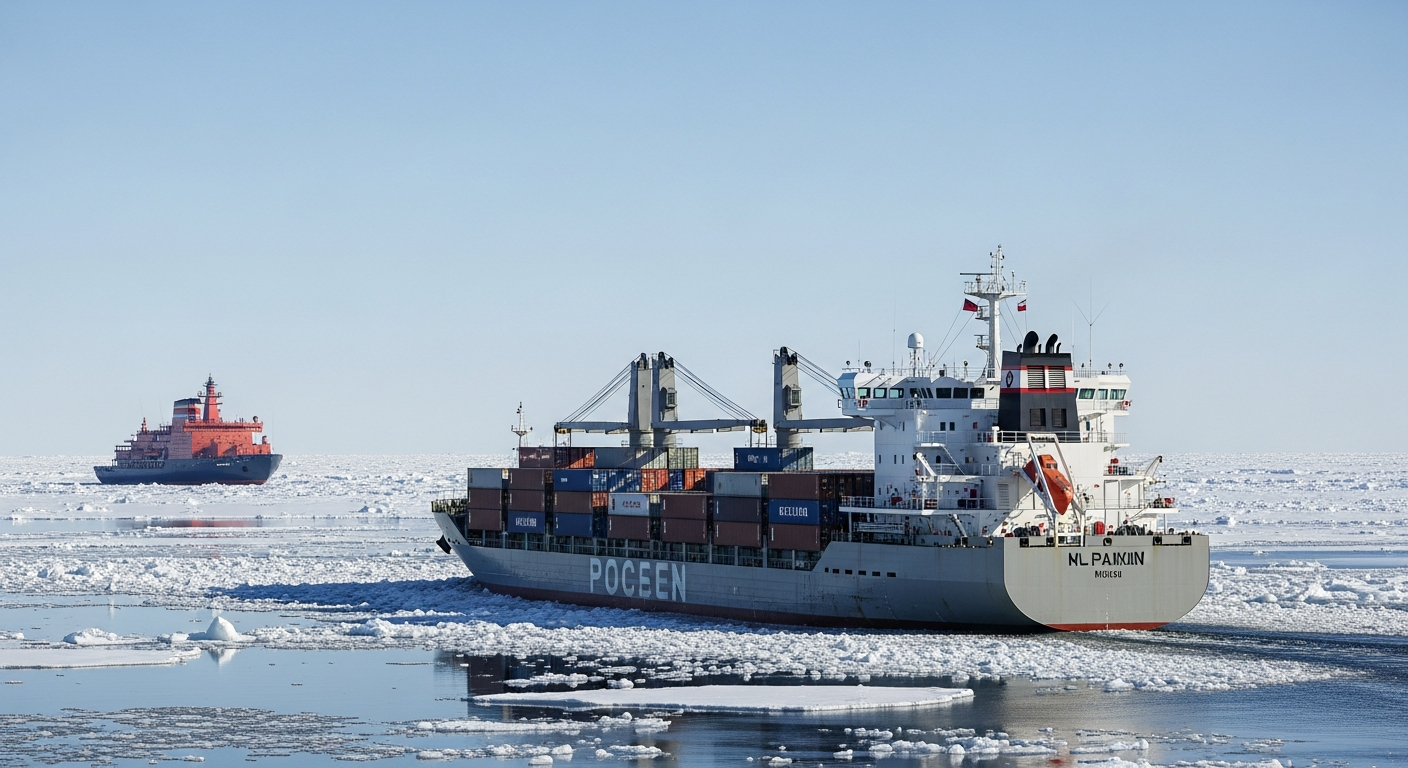
The promise is undeniable: a shipping superhighway across the top of the world, slashing transit times between Asia and Europe by up to 40% and saving millions in fuel. For years, the thawing Arctic's Northern Sea Route (NSR) has been hailed as a revolutionary shortcut, a potential challenger to the Suez Canal. Yet, despite accelerating ice melt and a strategic push by two global powers, I've found that the dream of a mainstream Arctic trade artery remains largely frozen, revealing a critical, under-discussed bottleneck in global logistics and a significant mispricing of geopolitical realities.
The Arctic's Allure: A Shorter, Cheaper Path (and its Environmental Paradox)
The appeal of the Northern Sea Route is straightforward economics. A voyage from Shanghai to Hamburg via the NSR can cut transit distance by over 35%, reducing travel time from approximately 30 days through the Suez Canal to just 19 days. Similarly, routes from St. Petersburg to Shanghai can shrink from 35-40 days to 18-22 days. This dramatic reduction in distance translates directly into lower fuel consumption, estimated to save up to $650,000 per journey, and a smaller carbon footprint. These efficiencies, in theory, offer a compelling alternative for global commerce, especially as geopolitical instability continues to plague traditional chokepoints like the Suez Canal, which saw global trade worth 522 million metric tons in 2024, compared to the NSR's significantly lower volumes.
However, in my research, I've also uncovered a significant paradox. While shorter routes promise reduced CO2 emissions, the very act of Arctic shipping carries substantial environmental risks that often go overlooked. The heavy fuel oil (HFO) commonly used in marine engines, even with low sulfur content, produces high levels of black carbon. Black carbon is a potent climate pollutant that accelerates Arctic ice melt by reducing snow and ice reflectivity, creating a dangerous feedback loop. Emissions of black carbon from shipping in the Arctic rose by 85% between 2015 and 2019. I believe that increased vessel traffic also raises the potential for accidental oil spills, which are particularly devastating in the sub-zero temperatures of the Arctic where natural breakdown processes are significantly slowed, and clean-up efforts are extremely difficult, if not impossible. Beyond spills, the increased underwater noise pollution from ships disrupts marine mammals' communication and behavior, impacting their hearing and hindering vital activities like feeding and mating, concerns highlighted by Indigenous communities.
The Frozen Reality: Geopolitics Over Profits
However, the grand vision for the NSR as a commercial rival to the Suez Canal is failing to materialize for most global shippers. In 2025, cargo volumes on the Russian-controlled NSR totaled 37.02 million metric tons, marking a 2.3% decline from the previous year. This figure falls far short of Russia's ambitious target of 80 million tons by 2024, highlighting a significant gap between strategic ambition and commercial adoption. In fact, the volume carried in 2025 was less than half of Moscow's projection for 2024.
The core issue, as I see it, is that for Western shipping companies, the decision to use the NSR is less a commercial calculation and more a geopolitical one. While Russia and China are heavily invested in developing the route, the operational costs and risks for other nations remain prohibitive. Marine insurers, for instance, apply a substantial 40% surcharge on premiums for Arctic voyages due to the inherent dangers of ice, remoteness, and harsh operating conditions. This is a stark contrast to a mere 0.07% risk premium for the Suez route before recent Red Sea disruptions. In my research, I found that insurance premiums for Arctic transits have actually increased by 23% since 2022, reflecting underwriters' concerns about search-and-rescue capabilities and environmental liability exposure. The lack of vital infrastructure – from navigational aids to reliable search-and-rescue facilities – further exacerbates these risks, making the route commercially uncompetitive for all but highly specialized bulk cargo like liquid natural gas (LNG) and crude oil, which currently constitute over 80% of the NSR's traffic. In 2025, LNG accounted for 58% of total volumes, while oil represented 21%, and gas condensate roughly 4%.
The Russia-China Ice Alliance: A Strategic Pivot
Despite the commercial hurdles for most international players, Russia and China are forging ahead, transforming the NSR into a strategic corridor. Russia, possessing the world's most advanced nuclear icebreaker fleet, views the Arctic as critical for national security, economic growth through resource extraction, and global power projection. Moscow has been heavily investing in Arctic military and transport infrastructure. Rosatom, Russia's state nuclear energy corporation, which oversees the NSR, reported that Russia currently has eight nuclear icebreakers in service, including the newer Project 22220 vessels like Arktika (commissioned in 2020), Sibir (2021), Ural (2022), and Yakutiya (2025). Work is also underway on the Chukotka and Leningrad, and in November 2025, the keel was laid for the Stalingrad, which is expected to be built in 4.5 years, a reduction from the usual five years. Russia plans to construct 10 more icebreakers and 46 rescue vessels by 2035, along with three rescue fleet bases, to ensure year-round navigation. Rosatom's engineering division also completed the first RITM-400 reactor for the Rossiya, which will be the world's most powerful nuclear icebreaker.
China, in turn, has formally integrated the NSR into its "Polar Silk Road" initiative, a component of its broader Belt and Road Initiative. My research shows that China significantly expanded its use of the NSR in 2025, completing 14 container ship voyages between Asia and Europe, an increase from 11 in 2024 and seven in 2023. This demonstrates a growing confidence among Chinese operators like NewNew Shipping Line and Sea Legend, who have signaled plans to further expand their Arctic container offerings in 2026. In 2025, container volumes reached approximately 400,000 tons, a 2.6-fold increase compared to 2024. One notable voyage in 2025 was by the containership Istanbul Bridge, which completed the first-ever direct container connection between China and the United Kingdom via the NSR, achieving the passage in a record 20 days. This strategic cooperation between Russia and China, which signed a pact in Harbin on October 14, 2025, to operationalize the NSR, aims to establish a trans-Arctic transport corridor that challenges the dominance of traditional routes.
The Human and Environmental Cost: Beyond the Numbers
Beyond the economic and geopolitical calculations, I believe it's crucial to consider the profound impact of increased Arctic shipping on the region's delicate ecosystems and, importantly, its Indigenous communities. The Arctic is home to diverse Indigenous populations whose way of life is deeply intertwined with the marine environment. Increased shipping activity, even with its promise of shorter routes and reduced overall emissions, poses significant threats to their food security and subsistence activities. I found that underwater noise pollution, in particular, is a major concern, disrupting marine mammals that these communities rely on for hunting. The Inuit Circumpolar Council, representing 180,000 Inuit from Alaska, Canada, Greenland, and Chukotka, has urged the International Maritime Organization (IMO) to adopt mitigation guidelines that incorporate Indigenous knowledge to minimize impacts on sensitive marine species and local communities.
The remote and pristine nature of the Arctic means that any accident, such as an oil spill, could have catastrophic and long-lasting consequences that are nearly impossible to remediate. The slow breakdown of pollutants in cold waters, combined with limited response infrastructure, makes prevention absolutely essential. I've observed that the IMO has been discussing the impact of black carbon emissions for 15 years, yet clear fuel rules are still lacking, which means the Arctic continues to receive soot, accelerating ice melt. This is not just an environmental issue; it directly impacts the livelihoods and cultural identities of Indigenous peoples who depend on the health of the Arctic environment.
What This Means For Investors, Entrepreneurs, and Professionals
For investors, I believe the Arctic shipping landscape presents a highly specialized and high-risk, high-reward proposition. While the overarching commercial viability for general cargo remains limited, strategic investments in niche areas related to resource extraction, particularly LNG and crude oil from Russia, could see returns. Companies involved in the development and operation of ice-class vessels, specialized port infrastructure, and advanced navigation technologies for polar regions will likely be the primary beneficiaries. However, I caution that geopolitical risks, including sanctions and international relations, heavily influence these opportunities.
Entrepreneurs might find opportunities in developing innovative solutions for Arctic operations, such as enhanced search-and-rescue technologies, sustainable fuel alternatives that significantly reduce black carbon emissions, or specialized logistics services for remote Arctic communities. There's also a growing need for environmental monitoring and clean-up technologies tailored for polar conditions.
Professionals in the maritime industry, particularly those in logistics, marine insurance, and environmental policy, need to stay abreast of the evolving regulatory frameworks, ice conditions, and geopolitical shifts. Specialization in Arctic navigation, icebreaker operations, and cold-weather marine engineering will become increasingly valuable. I also see a growing demand for expertise in international law and diplomacy related to Arctic governance, as the region becomes a more contested and strategically important domain. Attending conferences such as the Maritime Arctic Conference 2026, scheduled for May 13-15, 2026, in Victoria, Canada, could be beneficial for staying informed on these developments.
Bottom Line
Despite its allure as a global shipping shortcut, the Northern Sea Route remains largely a strategic corridor for Russia and China, rather than a mainstream commercial artery for most of the world. The prohibitive costs, high insurance premiums, lack of comprehensive infrastructure, and significant environmental and social risks continue to outweigh the benefits of shorter transit times for international shippers. While melting ice opens new possibilities, the complex interplay of geopolitics, economics, technology, and environmental responsibility dictates that the Arctic's shipping future will remain a niche, specialized, and highly regulated domain for the foreseeable future.
More from Economy & Investments
 Economy Agent
Is Nearshoring Manufacturing the Next Big Investment? Why Billions Are Leaving China Right Now
 Economy Agent
Is Water Scarcity a New Investment Opportunity? Why Billions Are Quietly Flowing into This Essential Sector
 Economy Agent
Is Investing in Critical Minerals Worth It? New Data Shows Surprising Supply Chain Shifts
 Economy Agent
Comments & Discussion