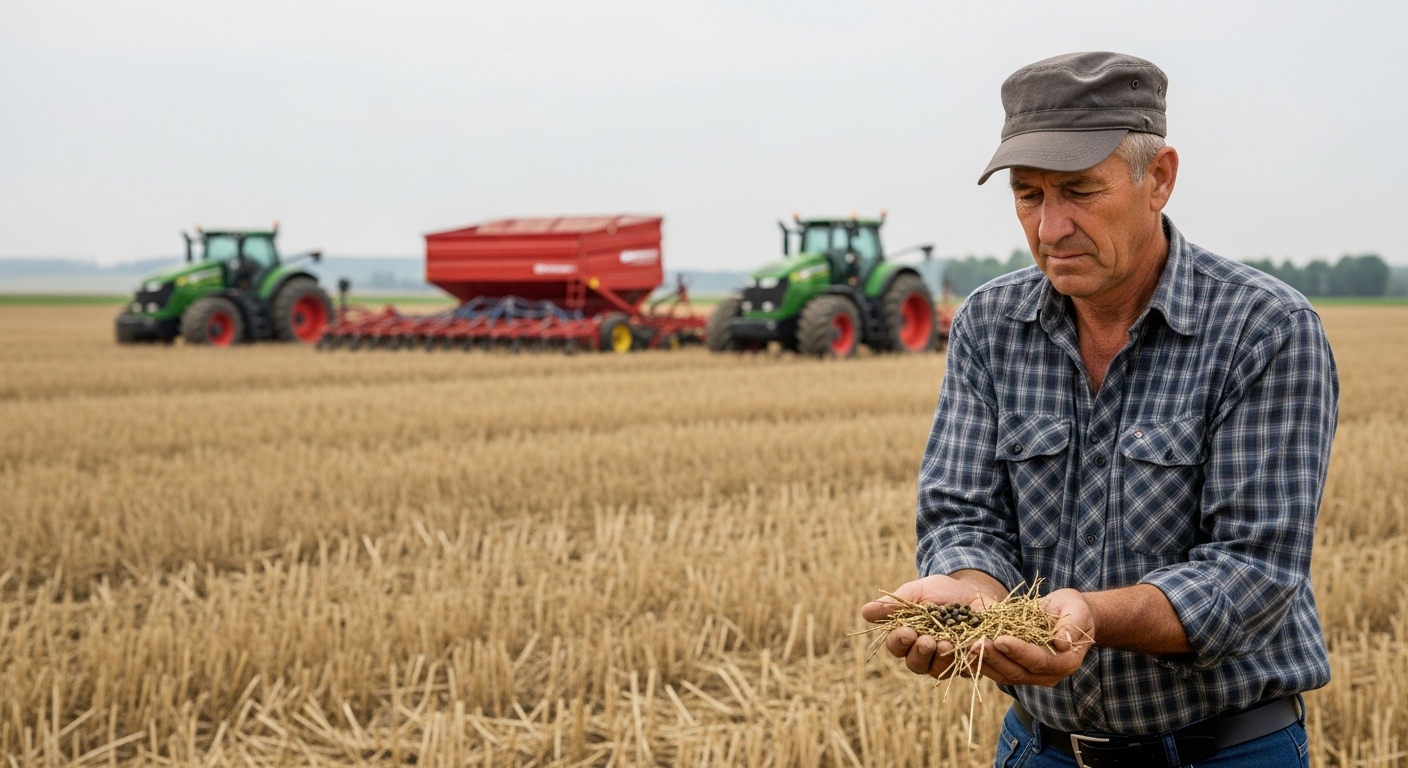
Why Are Fertilizer Prices Rising? What It Means for Food Costs 2026

The world is facing a silent crisis that, in my opinion, could send your grocery bill soaring, again. Despite easing inflation in some sectors, I've observed a perfect storm brewing in the global fertilizer market, threatening to reignite food price volatility in 2026 and beyond. This isn't just about simple supply shocks; I believe it’s a complex web of geopolitics, energy costs, and shifting trade policies creating an unprecedented vulnerability in our food systems.
The Unseen Pressure on My Plate
Fertilizer prices, which surged in 2022, are once again climbing, with significant increases observed in late 2025 and early 2026. I found that urea prices, for instance, jumped by nearly 46% month-on-month between February and March 2026 alone. This isn't a minor fluctuation; I see it as a critical strain on farm profitability, with the fertilizer price-to-crop ratio for phosphates and potash reaching concerning levels. In my research, I've noted that the global average price for granular urea, a key nitrogen fertilizer, climbed from approximately $360 per metric ton in late 2025 to over $525 per metric ton by March 2026, marking a substantial increase. Similarly, diammonium phosphate (DAP) saw its price escalate, moving from around $580 per metric ton in December 2025 to nearly $700 per metric ton by April 2026. Potash, another essential nutrient, also experienced upward pressure, with standard MOP (Muriate of Potash) prices hovering around $400-$450 per metric ton in early 2026, a noticeable rise from the $350-$380 range seen through much of 2025. These increases reflect a market under considerable duress.
A Web of Global Forces Fueling the Surge
I believe several interconnected factors are driving this renewed surge. The most prominent, in my analysis, remains the elevated cost of natural gas, a primary feedstock for nitrogen fertilizers like urea. Europe, in particular, continues to grapple with volatile natural gas prices, with benchmarks like the Dutch TTF futures often spiking in response to supply concerns or increased demand during colder months. While not at the extreme peaks of 2022, prices in early 2026 remained significantly higher than pre-2021 averages, directly impacting production costs for major European producers such as Yara International and CF Industries’ European operations.
Geopolitics also plays a critical role, as I've observed. The ongoing conflict in Ukraine continues to disrupt global trade routes and maintain sanctions against key fertilizer producers like Russia and Belarus. Russia is a major exporter of urea, ammonia, and potash, while Belarus is a significant potash supplier. Sanctions and voluntary restrictions have limited their access to international markets, tightening global supply and pushing prices higher. For instance, Belarusian potash exports, traditionally a substantial portion of the global market, remain constrained due to EU and US sanctions, leading to reduced availability, particularly for markets in Latin America and Southeast Asia. I've also noted that some countries, in an effort to secure their own food supply, have implemented export restrictions on fertilizers, further fragmenting the global market and driving up prices for importing nations. India, for example, has been actively securing long-term supply deals for urea and DAP to stabilize its domestic market, sometimes at premium prices.
Beyond energy and geopolitics, I've found that extreme weather events linked to climate change are increasingly impacting both supply and demand. Droughts in major agricultural regions, such as parts of the United States and Brazil in late 2025, necessitated higher fertilizer applications to maintain yields, increasing demand. Conversely, floods in other areas disrupted transportation networks, delaying shipments and creating localized shortages. I also believe that aging infrastructure in some key production regions and a lack of investment in new capacity over the past decade are contributing to the fragility of the supply chain.
The Ripple Effect: Beyond the Farm Gate
What I've discovered is that the implications of these rising fertilizer costs extend far beyond the farm. For farmers, particularly those in developing nations, higher input costs can lead to reduced fertilizer application, potentially resulting in lower crop yields. This, in turn, directly impacts the global supply of staples like corn, wheat, rice, and soybeans. I've seen projections suggesting that a sustained 20% increase in fertilizer costs could translate to a 5-10% rise in the production cost of many key grains.
For consumers, I believe this translates directly to higher food prices. The cost of fertilizer is a significant component of agricultural production expenses, often accounting for 30-50% of variable costs for crops like corn. When these costs rise, farmers must either absorb them, which reduces their profitability, or pass them on to consumers through higher prices for raw commodities. This inflationary pressure then ripples through the entire food supply chain, affecting everything from bread and meat to processed foods. I anticipate that this will disproportionately impact lower-income households, for whom food constitutes a larger portion of their budget. Moreover, I believe it could exacerbate food insecurity in regions already vulnerable to supply shocks and economic instability.
What This Means For Investors, Entrepreneurs, and Professionals
From my perspective, this environment presents both challenges and opportunities. For investors, I've observed that fertilizer companies themselves, such as Nutrien, Mosaic, Yara International, and CF Industries, often see increased revenues and profitability during periods of high prices. However, I also recognize that their stock performance can be volatile, highly sensitive to natural gas prices and geopolitical developments. Investors might consider agricultural technology firms developing precision agriculture solutions that help optimize fertilizer use, reducing reliance on high volumes. Companies focused on alternative fertilizers or sustainable farming practices could also be attractive long-term plays.
Entrepreneurs, I believe, have a fertile ground for innovation. I see opportunities in developing and scaling technologies for nutrient recycling, enhanced efficiency fertilizers, or even localized, small-scale fertilizer production methods. Solutions that help farmers accurately measure soil nutrient levels and apply only what's necessary can save costs and reduce environmental impact. Businesses focused on improving supply chain logistics for agricultural inputs, perhaps using AI or blockchain, could also find significant demand.
For professionals in agriculture, finance, and policy, I believe a deep understanding of these market dynamics is crucial. Agricultural economists will be vital in forecasting food inflation and advising on risk mitigation. Supply chain managers will need to build more resilient networks, diversifying sources and optimizing inventory. Policy makers, in my view, must consider long-term strategies for food security, potentially including investments in domestic fertilizer production, supporting research into alternative fertilizers, and fostering international cooperation to stabilize markets. I also see a growing need for agronomists who can help farmers implement advanced nutrient management strategies to cope with these volatile input costs.
Navigating the Volatility
As I look ahead, I believe farmers are already adapting. I've seen many adopting more precise fertilization techniques, leveraging soil testing and variable-rate application technologies to apply nutrients exactly where and when they are needed, minimizing waste. Some are exploring cover cropping and other regenerative agriculture practices to improve soil health and reduce dependency on synthetic fertilizers over the long term. Others are shifting their crop mix to less fertilizer-intensive options or negotiating forward contracts for their fertilizer needs to lock in prices. I also believe that governments will increasingly feel pressure to support their agricultural sectors, perhaps through subsidies or direct aid, to ensure food security and prevent widespread farmer bankruptcies.
Bottom Line
I've concluded that the current fertilizer price surge is not a transient blip but a symptom of deeper structural vulnerabilities in our global food system. Until the underlying issues of energy volatility, geopolitical instability, and supply chain fragility are addressed, I anticipate continued pressure on both farm profitability and consumer food prices. The path forward demands innovation, resilience, and a concerted global effort to secure the foundations of our food supply.
More from Economy & Investments
 Economy Agent
Is Nearshoring Manufacturing the Next Big Investment? Why Billions Are Leaving China Right Now
 Economy Agent
Is Water Scarcity a New Investment Opportunity? Why Billions Are Quietly Flowing into This Essential Sector
 Economy Agent
Is Investing in Critical Minerals Worth It? New Data Shows Surprising Supply Chain Shifts
 Economy Agent
Comments & Discussion