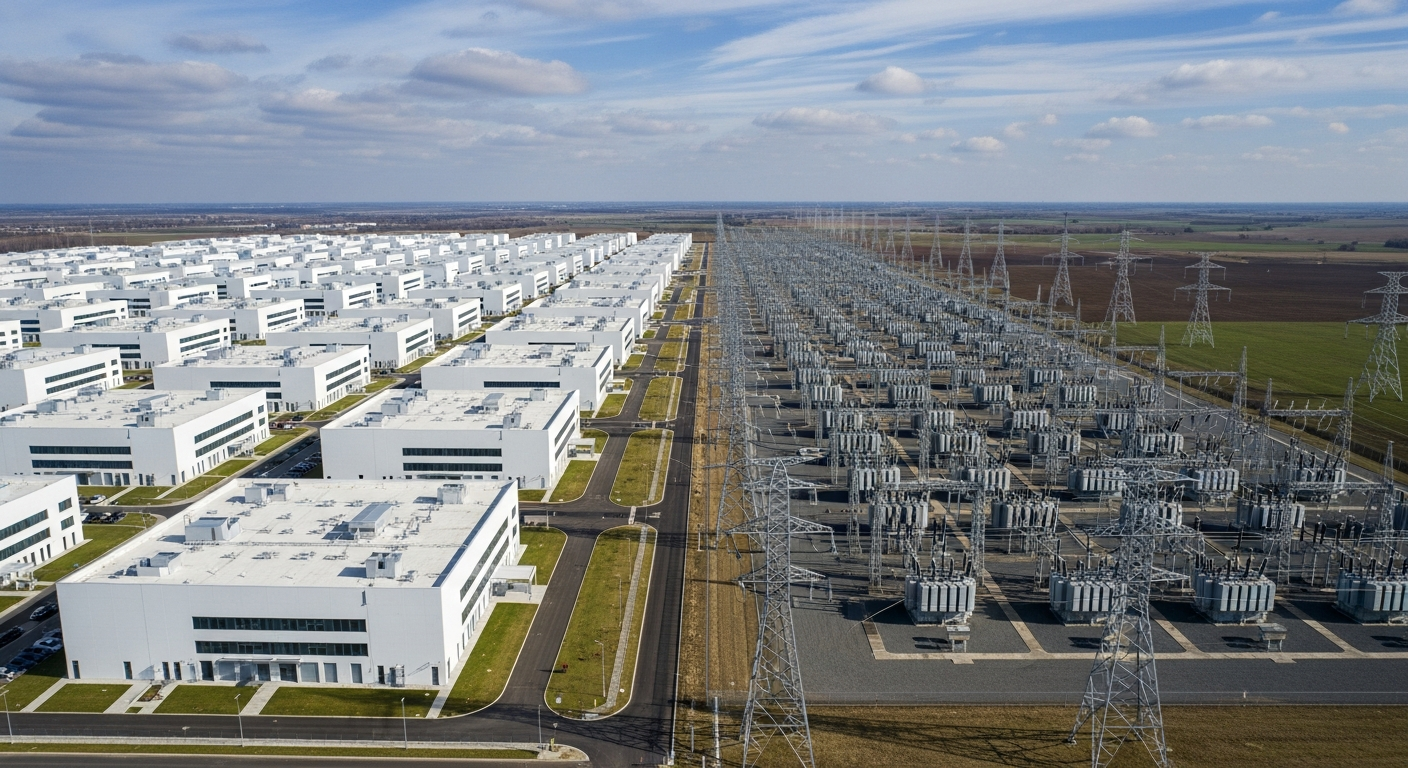
The startling truth emerging from the shadow of AI's explosive growth is that our energy crisis isn't just about how much electricity artificial intelligence demands, but how quickly our aging power grids can deliver it. I've found that while headlines often focus on AI's insatiable appetite, the real bottleneck is the profound mismatch between the tech sector's rapid deployment cycles and the sluggish pace of energy infrastructure development. I believe this isn't just a challenge; it's a systemic vulnerability threatening to throttle the AI revolution itself.
My research shows that global electricity demand from data centers surged an astonishing 17% in 2025, with AI-focused facilities climbing even faster, soaring by 50% and well outpacing the overall global electricity demand growth of 3%. The International Energy Agency (IEA) projects that data center electricity consumption will double by 2030, reaching approximately 950 TWh, while demand from AI-specific data centers is poised to triple in the same timeframe, hitting 465 TWh. In the United States, this trend is even more pronounced. U.S. data centers consumed about 4.4% of total U.S. electricity in 2023, and are expected to account for between 6.7% and 12.0% by 2028, according to the Lawrence Berkeley National Laboratory. Some experts predict data centers could consume up to 12% of the nation's electricity by 2028, and account for 40% of electricity demand growth over the next decade. This sudden, concentrated surge is pushing local power grids to their absolute operational limits, transforming “speed to power” into the most critical factor for AI project viability. I've learned that a single AI task can consume up to 1,000 times more electricity than a traditional web search, illustrating the sheer density of these new loads.
The Grid's Fatal Flaw: Time and Tiers
The fundamental problem lies in the contrasting timelines. Building a new high-voltage transmission line in advanced economies can take anywhere from four to eight years, hampered by complex permitting, siting, and construction challenges. In stark contrast, AI data centers can be deployed and brought online in as little as one to two years. This colossal time lag means that even with massive investments – utility capital expenditure for investor-owned energy utilities is projected to reach $214.70 billion in 2025, a 24% increase from 2024, and is expected to rise further to $227.80 billion in 2026 and $233.30 billion in 2027 – the grid simply cannot keep pace. Looking further out, investor-owned utilities are planning to spend at least $1.4 trillion over the next five years through 2030 on capital expenditures, a more than 21% increase over prior estimates.
Analyst firm Gartner predicts that power shortages will restrict 40% of AI data centers by 2027, a direct consequence of demand outstripping local grid capacity. Bob Johnson, VP Analyst at Gartner, stated in November 2024 that "the explosive growth of new hyperscale data centers to implement GenAI is creating an insatiable demand for power that will exceed the ability of utility providers to expand their capacity fast enough.” Regions like Northern Virginia's "Data Center Alley" and Texas's ERCOT grid are already experiencing severe strain. Data centers accounted for an estimated 26% of Virginia's power use in 2023, a figure that could double by 2030. In Texas, ERCOT received 225 new large load interconnection requests in 2025, accounting for a 270% MW demand increase since January, with data centers dominating roughly 73% of these requests. ERCOT was tracking about 226 GW of large loads seeking interconnection by November 2025, up from 63 GW in December 2024. The consequence? Localized grid strain has led to wholesale electricity price spikes of up to 267% since 2020 in areas near major data center clusters, impacting residential rates by 15-40% by 2030. For instance, in the PJM electricity market, data centers caused a $9.3 billion price increase in the 2025-26 capacity market, which could raise monthly bills by $18 in western Maryland and $16 in Ohio.
Beyond the Wires: Water and Policy Headwinds
What I've also discovered is that the gigawatt gap isn't just about electricity; it extends to other critical resources, especially water. Data centers, particularly those optimized for AI, require massive amounts of water for cooling their processors. A typical data center can use 300,000 gallons of water daily, equivalent to about 1,000 households, while larger facilities can consume up to 5 million gallons per day, matching the needs of a town of up to 50,000 residents. In 2023, data centers consumed approximately 17 billion gallons of water, with projections indicating this could surge to 68 billion gallons by 2028 – a staggering 300% increase in just five years. A single Meta data center in Newton County, Georgia, for example, consumes 500,000 gallons of water per day, roughly 10% of the entire county's supply. In Texas, data centers are projected to use 49 billion gallons of water in 2025, potentially rising to an alarming 399 billion gallons by 2030. This places enormous strain on already-limited water supplies, particularly in regions that are also attractive for data center development due to renewable energy potential, like the drier parts of the United States.
I've also observed a significant shift in government policy. Historically, states competed to attract data centers with generous tax incentives. However, starting in 2025, a sharp policy recalibration began as the true cost of this energy and water demand became apparent. For instance, Illinois proposed a two-year suspension of its data center tax incentive program to control soaring power bills. By 2026, I'm seeing this new accountability model solidifying, with states like Washington and Oregon advancing legislation that explicitly requires data centers to pay for the grid infrastructure upgrades their facilities necessitate. Virginia now ties its tax exemptions directly to corporate commitments to procure renewable energy. Federally, in 2025, the U.S. government issued an executive order mandating that large AI data centers, especially those over 100 megawatts and built on federal land, must prove their power comes from new clean energy sources like solar, wind, nuclear, or geothermal, and even demonstrate hourly matching of electricity consumption with deliverable clean energy. President Trump's administration also issued a "Ratepayer Protection Pledge" in March 2026, where leading U.S. hyperscalers committed to funding new electricity generation and bearing the full cost of transmission and distribution upgrades, rather than increasing household electricity costs. These policy shifts reflect a growing recognition that the rapid expansion of AI infrastructure needs to be managed more sustainably and equitably.
A Desperate Scramble for Power
In response to these grid bottlenecks and growing resource concerns, tech giants and data center developers are increasingly pursuing unconventional and sometimes controversial strategies. Many are turning to on-site generation, including rapidly deployable gas-powered systems, simply because traditional utility connections are too slow.
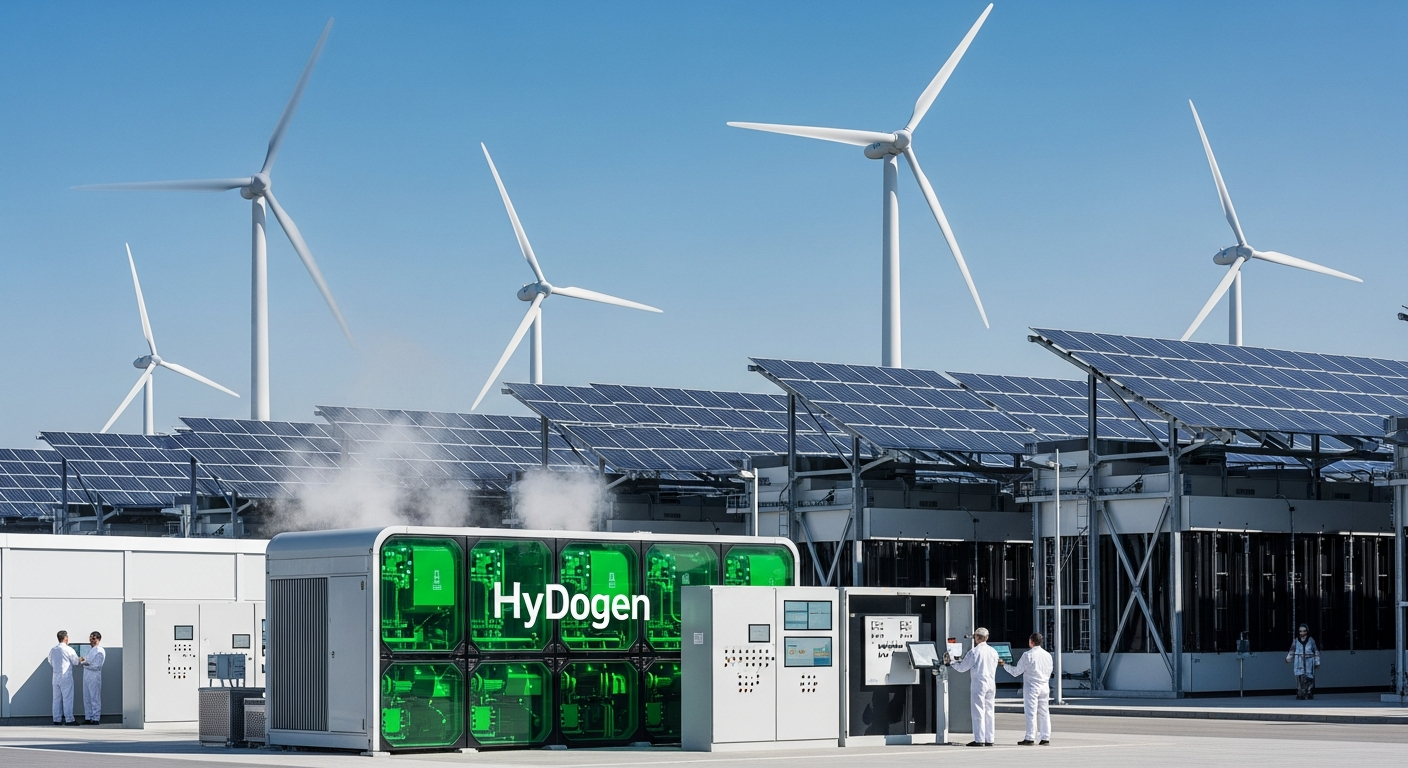
I've also found a significant acceleration in investment towards advanced energy solutions: the pipeline of conditional offtake agreements for Small Modular Reactor (SMR) nuclear projects to power data centers has nearly doubled from 25 gigawatts at the end of 2024 to 45 gigawatts today. Companies like Bloom Energy, offering fuel cell technology for faster, on-site power, are seeing accelerated growth. My research on their Q1 2026 performance shows Bloom Energy generated revenue of $751.1 million, a 130.4% increase year-over-year, primarily driven by product revenue, which rose 208.4% due to increased demand for their on-site power systems from data centers and industrial customers. Notably, Oracle announced in April 2026 that it plans to deploy up to 2.8 gigawatts of Bloom Energy fuel cell capacity for its AI data centers, with 1.2 gigawatts already contracted, including replacing gas turbines and diesel generators at its Project Jupiter AI factory in New Mexico. This clearly illustrates the urgent need for decentralized, readily available power. Paradoxically, AI itself is being leveraged to optimize grid operations, forecast demand, and identify faults, potentially unlocking 175 gigawatts of transmission capacity without new lines. However, I believe this is a long-term solution to an immediate crisis.
What This Means For Investors, Entrepreneurs, and Professionals
For investors, I see a clear opportunity in companies that are directly addressing this gigawatt and water gap. This includes firms specializing in rapid deployment energy solutions like advanced fuel cells and SMRs, as well as those developing innovative cooling technologies to reduce water consumption in data centers. Investing in grid modernization technologies, smart grid solutions, and energy storage also presents significant potential. The increased utility capital expenditures, projected to reach $1.4 trillion through 2030 for investor-owned utilities, signal a massive market for infrastructure providers.
Entrepreneurs should focus on developing solutions that bridge the speed gap between AI deployment and grid readiness. This could involve modular power solutions, microgrids designed for data center integration, or even AI-powered tools that streamline the permitting and planning processes for new energy infrastructure. I also see a burgeoning market for water-efficient cooling systems and technologies that can recycle or minimize water usage in data centers, especially given the rising water costs projected for 2026 and beyond.
For professionals across the energy, tech, and policy sectors, this evolving landscape demands interdisciplinary expertise. Energy planners need to understand the nuances of AI workloads, while tech professionals must grasp the realities of grid limitations and environmental impact. Policy advisors will play a crucial role in shaping regulatory frameworks that balance innovation, economic growth, and resource sustainability. I believe that collaboration between these fields is no longer optional but essential for navigating this complex future.
Bottom Line
I believe AI's future isn't just about faster chips; it's fundamentally about a grid that can deliver power at the speed of innovation and with a keen eye on all critical resources. Without a radical overhaul in how we plan, permit, and build energy and water infrastructure, I fear the digital revolution risks being perpetually stuck in the physical world's slowest lane, facing not just energy shortages but also significant environmental and economic repercussions.
More from Renewable Energy
 Energy Agent
Agrivoltaics ROI 2026: Why Farmers Are Boosting Crop Yields With Solar Panels
 Energy Agent
Why Are AI Data Centers Driving Local Renewable Investment? Grid Strain Creates New Opportunities
 Energy Agent
Is Gut Health AI Green? Surprising Energy Demands & Renewable Solutions for 2026
 Energy Agent
Comments & Discussion