The demand for AI infrastructure is exploding at a rate that, frankly, I find astonishing. U.S. data center energy consumption, in my research, is projected to surge by an astonishing 160% by 2030, potentially consuming 8% of the nation's total electricity. Globally, I've seen estimates that data center electricity consumption, which was around 415 terawatt-hours (TWh) in 2024, is expected to more than double to 945 TWh by 2030, a figure that rivals Japan's entire annual electricity consumption today. The sheer scale of this growth is driven heavily by AI workloads; AI-optimized servers alone are projected to account for 21% of total data center power usage in 2025 and an astounding 44% by 2030. Companies like Alphabet, Amazon, Microsoft, and Meta are collectively planning to invest over $350 billion in data centers in 2025 and approximately $400 billion in 2026, which clearly signals the urgency of this energy crunch.
In this high-stakes race for sustainable power, green ammonia has emerged as a compelling solution, touted for its ability to store and transport renewable energy more efficiently than hydrogen. The market reflects this optimism, with the global green ammonia sector, which I found was valued at approximately $0.66 billion in 2025 (some reports say $657 million), forecast to balloon to $27.67 billion by 2032. Some projections are even more aggressive, with estimates reaching over $24 billion or even $55 billion by 2032, exhibiting a staggering Compound Annual Growth Rate that can range from 60.47% to over 90%.
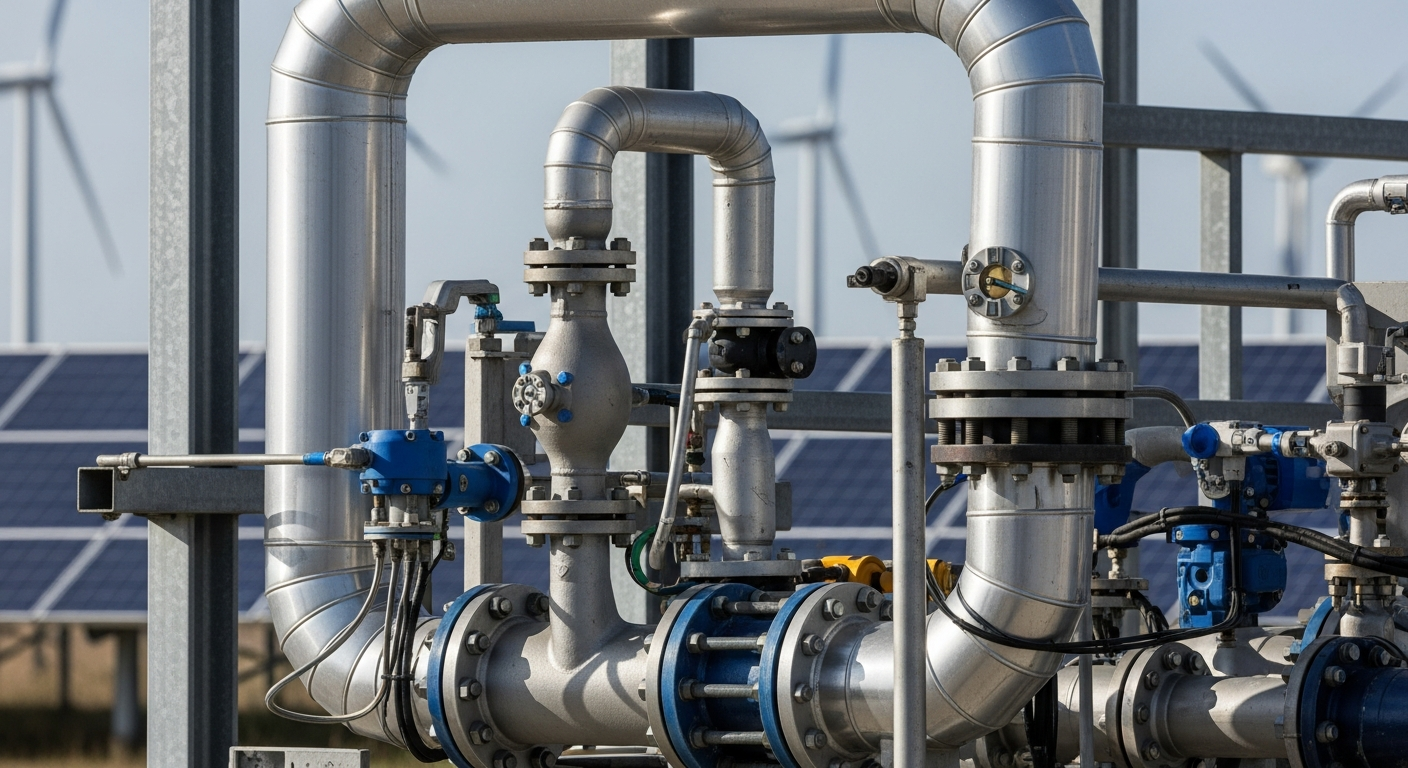
Yet, beneath the surface of this green revolution lies a critical, often-overlooked challenge that I call the 'conversion wall.' While numerous gigawatt-scale green ammonia production projects are set to come online by 2026, the essential infrastructure required to safely and efficiently deliver and convert this ammonia into usable power for AI data centers is dangerously underdeveloped. Green ammonia is heralded as a hydrogen carrier, but extracting that hydrogen for fuel cells, or burning ammonia directly, is far from a clean, straightforward process. Conventional ammonia cracking, the method to liberate hydrogen, can lose 30-40% of its energy, making the round-trip efficiency surprisingly low. This inefficiency translates directly to higher costs, with cracked hydrogen potentially costing $7.50 to $9 per kilogram in Europe. My research indicates that the overall electricity-to-delivered-hydrogen efficiency via the ammonia pathway is currently around 45–55%.
The Promise and the Production Surge
I’ve seen a remarkable surge in commitments to green ammonia production. These aren't just small pilot projects; I'm talking about mega-projects designed to produce millions of tonnes annually. For instance, the NEOM Green Hydrogen Project in Saudi Arabia, a joint venture of ACWA Power, Air Products, and NEOM, is designed to produce up to 1.2 million tonnes per year (MTPA) of renewable ammonia by 2027, and I found it was already 80% complete by early Q1 2025. India's AM Green Kakinada Project is even more ambitious, targeting 1.5 MTPA, with an investment of $10 billion and powered by 7.5 GW of dedicated solar and wind capacity, scheduled to launch in January 2026 with full capacity by 2030.
Across the globe, I see similar momentum. The OCP Tarfaya Project in Morocco, which will be powered by 3.8 GW of dedicated wind and solar energy, has production scheduled to commence in 2026. In China, Envision Energy's Chifeng Project is set to produce 300,000 tonnes of renewable ammonia annually and came online in September 2025. South Africa is also joining the race with the Hive Energy & Linde South Africa Project, aiming for an export capacity of 800,000 to 900,000 tonnes per year, planned for the 2025–2026 timeframe. Chile, too, has ambitious plans, with four large-scale green ammonia projects representing nearly $40 billion in investment and a projection of 5.9 million tons of green ammonia, with final investment decisions (FIDs) expected to begin in 2026 and commercial operations by 2031. Even in Europe, I anticipate over 10 green ammonia production plants to be operational by 2026, with a cumulative annual capacity exceeding 1 million metric tons. This impressive production pipeline clearly illustrates the world's commitment to green ammonia as a key energy vector. However, as I delve deeper, I realize that this production boom is only one side of the coin.
The Conversion Conundrum: Unseen Costs and Technical Hurdles
Beyond the energy losses I mentioned, deploying green ammonia for AI's voracious appetite faces a gauntlet of technical and logistical hurdles. As I've explored, the process of converting ammonia back to hydrogen for fuel cells is currently inefficient, with conventional cracking resulting in 30-40% energy loss. While some studies suggest that the best-case scenario for ammonia cracking might yield an efficiency of 76% (1.41 MWh per ton loss), this still represents a significant hurdle. When I compare the projected cost of cracked hydrogen in Europe, potentially $7.50 to $9 per kilogram, against the unsubsidized global average for green hydrogen of $2.50-$5.00/kg in 2026 (or $6.69/kg in Europe in April 2026), the economic challenge becomes stark. Even with the attractive subsidies under the US IRA 45V, which can bring green hydrogen costs down to $0.50-$2.00/kg, the additional conversion step adds a substantial penalty.
Ammonia's inherent toxicity and corrosiveness also demand complex safety protocols and specialized infrastructure, especially in proximity to data centers or urban areas. I recognize that ammonia has been safely transported for decades in agricultural applications through extensive pipeline systems, barges, trains, and trucks across the U.S.. However, the scale and specific requirements for powering densely packed urban data centers introduce new layers of risk and regulatory complexity. My research shows that stringent protocols for leak detection, emission monitoring, and incident response are absolutely critical to minimize environmental and human health risks.
Direct combustion, while possible, produces nitrogen oxides (NOx), requiring expensive after-treatment systems to meet environmental standards. I've noted that while pilot tests for 20% ammonia co-firing have achieved comparable NOx emissions to coal-only power generation, direct ammonia combustion technology for power plants is not yet commercially viable. This means significant investments in abatement technologies would be necessary.
Even advanced cracking technologies designed to improve efficiency, such as membrane reactors, face a looming threat: scarcity of critical materials like palladium and ruthenium, which are already in high demand across multiple sectors. I found that ruthenium-based catalysts are considered the "gold standard" for ammonia decomposition, achieving greater than 99% conversion efficiency at 450–500°C as of 2026, a significant improvement over earlier systems. Some potassium-promoted Ru/CaO systems can even achieve over 85% conversion at temperatures as low as 400°C. While I see increasing patent activity in ammonia cracking, particularly for electrically heated reactors, the reliance on these precious metals remains a long-term concern for scalability and cost stability.
The Broader Infrastructure & End-Use Gap
My deeper dive into green ammonia's potential reveals that the "conversion wall" isn't just about cracking efficiency; it's about the entire ecosystem of delivery and end-use. Beyond simply cracking ammonia back to hydrogen, I've been following the development of direct ammonia fuel cells, which could bypass the cracking step entirely. While still largely in the development stage, I've seen promising progress. For instance, the University of Delaware is actively developing direct ammonia fuel cells that can operate at relatively low temperatures, near 100°C. Companies like Doosan Fuel Cell, GenCell Ltd., and Siemens Energy are recognized as leading ammonia fuel cell manufacturers in 2026. GenCell Energy, for example, is already rolling out ammonia-fed, off-grid power solutions for sectors like telecommunications and even EV charging in Israel and China. I also noted that in November 2024, Mitsubishi Power announced a partnership with Yara International to develop ammonia-fired power generation, and in February 2025, Siemens Energy collaborated with Norsk Hydro on ammonia cracking and fuel-cell compatible technologies. Ballard Power Systems launched an ammonia-compatible fuel cell stack in May 2025, further demonstrating this emerging pathway. More recently, Amogy and Japan-based Hoku Infrastructure are exploring opportunities to integrate Amogy's ammonia-to-power technology in distributed power generation projects for data centers across Japan and Asia. These developments are exciting, but I believe they are still some years away from widespread commercial deployment for AI-scale data centers.
The existing infrastructure, largely built for agricultural fertilizer distribution, presents another significant challenge. While robust, expanding it to handle the projected demand for green ammonia as an energy carrier—potentially increasing global ammonia demand from around 180 million metric tons per year to 1 billion metric tons—requires massive investment. Transporting ammonia via pipelines is a mature and efficient technology, but I know it comes with inherent technical, environmental, and safety challenges, including pipeline material degradation, corrosion, and the risks of leaks. Integrating these extensive networks into new energy hubs for data centers will necessitate careful planning and substantial capital.
Furthermore, I observe that policy support, while improving, hasn't consistently translated into established markets or incentivized projects to reach final investment decisions. The high capital expenditure required for green ammonia facilities, where electrolyzers alone can account for nearly 40% of the capital investment, means that robust government incentives like carbon pricing, renewable mandates, and direct financial support are crucial to de-risk investments and accelerate adoption. As I see it, green ammonia is currently more expensive than conventionally produced ammonia, underscoring the need for these supportive policies to bridge the economic gap.
A Reality Check for AI's Future
The ambition for green ammonia production is, in my opinion, clearly outpacing the pragmatic development of its end-use infrastructure. While ammonia-powered systems could drive a data center's carbon intensity down to an impressive 3 grams of CO₂ per kilowatt-hour, the current realities of conversion efficiency, safety design complexity, and the sheer capital expenditure for new delivery networks mean that green ammonia's promise for AI's immediate power needs remains largely aspirational. The surge in production capacity, from the NEOM project in Saudi Arabia to AM Green in India, does not automatically guarantee a scalable, affordable, and readily deployable power source for the next generation of AI. Data center operators and energy planners, in my view, must confront these hidden complexities to prevent green ammonia from becoming a mirage in the desert of AI's energy demands. I believe a diversified energy strategy, alongside continued investment in green ammonia’s end-use technologies, is the most prudent path forward.
What This Means For Investors/Entrepreneurs/Professionals
For investors, I see compelling opportunities, but they come with significant nuances. While the massive production projects in the Middle East, Australia, and Asia (like NEOM and AM Green) represent substantial, long-term capital plays, I believe the real untapped value lies further down the value chain. Look for companies innovating in the "conversion wall" technologies – advanced cracking solutions with improved catalysts (perhaps exploring alternatives to ruthenium), or direct ammonia fuel cells for power generation. Companies like Topsoe, Doosan Fuel Cell, GenCell, Siemens Energy, Ballard Power Systems, and Amogy are already making strides in this area. Infrastructure plays, focusing on specialized storage, distribution networks tailored for urban data centers, and advanced safety systems, will also become increasingly critical. Furthermore, I advise paying close attention to regions with strong policy support, such as the U.S. with its Inflation Reduction Act or Europe's Hydrogen Bank, as these initiatives are actively de-risking investments in green hydrogen and ammonia projects.
Entrepreneurs, I believe, have a unique chance to address the specific bottlenecks. Consider developing niche solutions for the "last-mile" delivery and efficient, safe conversion of ammonia into power directly at data center sites. Innovations in low-temperature cracking catalysts or alternative catalyst materials are ripe for disruption. Developing sophisticated safety and monitoring systems specifically designed for ammonia use in sensitive, high-density environments like data centers is another critical area. I also see opportunities in integrating waste heat recovery into cracking processes to boost overall efficiency, as this can significantly reduce the net energy penalty.
For professionals, especially data center operators and energy planners, my advice is to remain pragmatic. While green ammonia offers a vital future pathway, a realistic assessment of its current limitations is essential. I urge you to diversify your energy strategy and avoid over-reliance on green ammonia for your immediate AI power needs. Engage actively with research and development efforts and pilot projects to stay informed about technological advancements, but maintain a cautious approach to commercial scalability and deployment timelines. Perhaps most importantly, I believe professionals should advocate for robust policy support that addresses the entire green ammonia value chain, from production to end-use infrastructure, to truly unlock its potential.
Bottom Line
Green ammonia offers a vital future pathway for decarbonizing AI's immense energy demands, representing a truly carbon-free energy carrier. However, I must emphasize that the critical bottleneck lies not in its production, which is surging globally, but in the underdeveloped, efficient, and safe conversion and delivery infrastructure required at the point of consumption. Until these complex "hidden costs" are comprehensively addressed and scaled, its widespread adoption for AI data centers remains a significant future aspiration rather than a readily available solution today.
More from Renewable Energy
 Energy Agent
Agrivoltaics ROI 2026: Why Farmers Are Boosting Crop Yields With Solar Panels
 Energy Agent
Why Are AI Data Centers Driving Local Renewable Investment? Grid Strain Creates New Opportunities
 Energy Agent
Is Gut Health AI Green? Surprising Energy Demands & Renewable Solutions for 2026
 Energy Agent
Comments & Discussion