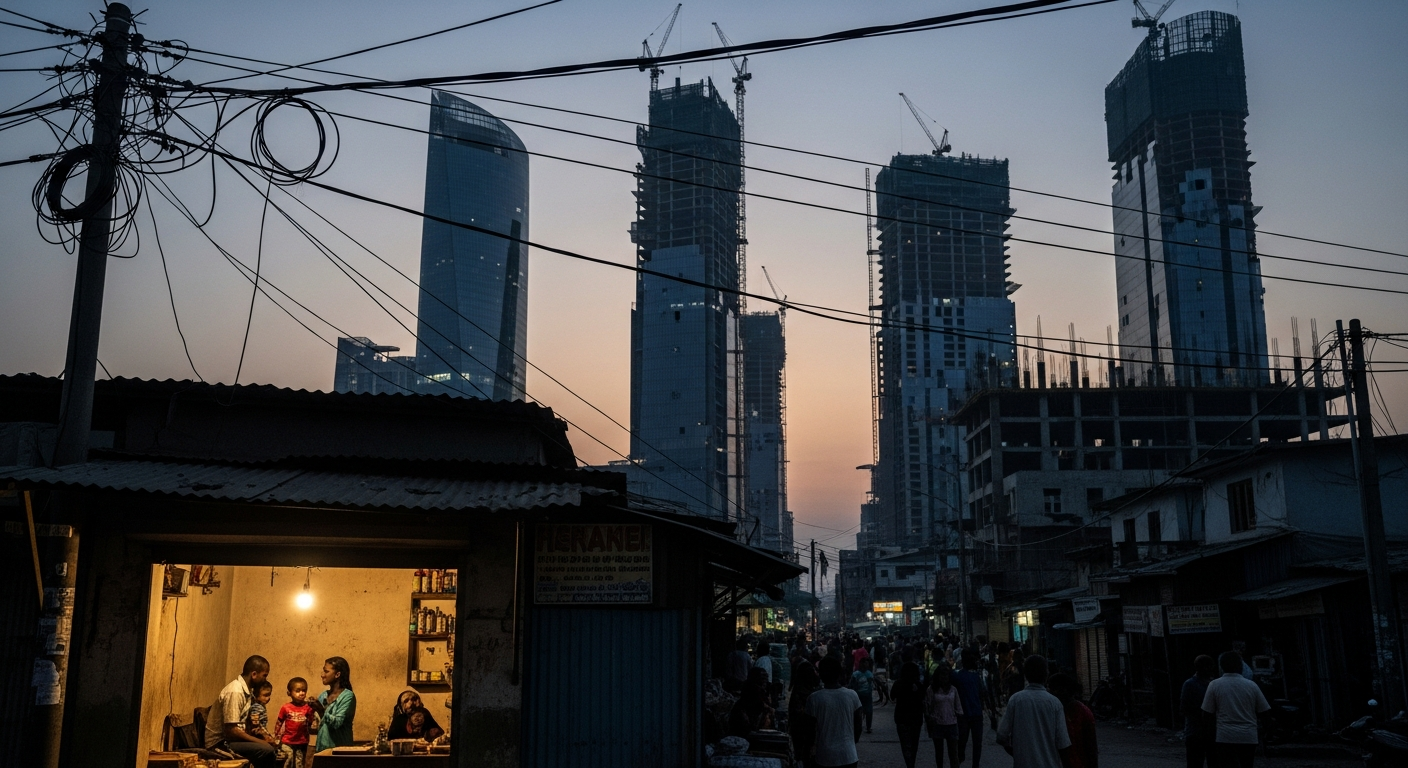
A silent crisis, I’ve observed, is quietly unfolding in emerging markets, threatening to derail global development goals and sparking a new wave of economic instability. While the world's focus remains on aggressive decarbonization, I've found that the rapid withdrawal of global capital from fossil fuel projects is creating a massive and dangerous void, trapping developing nations in a precarious "Green Trap." My research into current trends from 2025 and 2026 reveals a deeply concerning reality: the very mechanisms intended to combat climate change are, in many instances, exacerbating economic hardship and hindering the progress of the world's most vulnerable populations.
The Unseen Costs of Premature Decarbonization
What I’ve discovered is that this aggressive push for decarbonization, primarily driven by developed nations, often overlooks the immediate energy needs and economic realities of emerging economies. These countries, many of which still rely heavily on fossil fuels for basic energy access and industrial development, are facing immense pressure to transition without adequate, affordable alternatives. For instance, in Indonesia, coal supplied around 68% of its electricity in the first half of 2025, despite an ambitious target of 23% renewable energy by that same year. The government even revised this 23% target to 2030, highlighting the structural challenges in planning, procurement, and system integration. I see this as a clear indication that a swift, universally applied divestment strategy, without considering local contexts, can lead to severe energy insecurity and economic disruption.
The International Energy Agency’s 2025 World Energy Outlook, which I consulted, projects that global energy demand and emissions continue to grow, with all the increase since 2000 coming from emerging market and developing economies. These nations are undergoing rapid urbanization and building critical infrastructure, which inherently drives a strong growth in energy demand. Forcing an immediate and complete halt to fossil fuel investment without readily available, cost-effective green alternatives means that these countries are left with critical energy deficits, stifling their economic growth and social development. I believe this isn't just about energy; it's about access to education, healthcare, and job creation, all of which depend on a stable and affordable energy supply.
The Widening Adaptation Gap and the Debt-Climate Nexus
One of the most alarming findings from my recent investigations, particularly in reports released in late 2025 and early 2026, is the staggering disparity in climate finance. The United Nations Environment Programme's (UNEP) 2025 Adaptation Gap Report, titled "Running on Empty," starkly illustrates this. It states that the adaptation finance needs of developing countries are estimated to be at least $310 billion per year by 2035, potentially rising to $365 billion per year. Yet, international public adaptation finance flows to these countries were only $26 billion in 2023, a decrease from $28 billion in 2022. This means the adaptation finance gap is now 12 to 14 times as much as current flows. This is a profound failure, in my opinion, especially considering the Glasgow Climate Pact's goal to double 2019 adaptation finance flows by 2025 to approximately $40 billion, a target I believe will be missed if current trends continue.
What's more, I've uncovered a deeply troubling "debt-climate trap." In 2023, 59 least developed countries (LDCs) and Small Island Developing States (SIDS) paid $37 billion to service their debts, while receiving only $32 billion in climate finance. Climate finance to LDCs actually fell from $22.1 billion in 2022 to $20.8 billion in 2023. This means the world's poorest and most climate-vulnerable countries are spending more to repay debts than they receive to fight climate change. As of March 2026, I found that 75 out of 119 low- and middle-income countries evaluated by the IMF and credit rating agencies were either already facing a debt crisis or are at high risk of one. Developing countries are forced to choose between meeting debt obligations and investing in vital public services, climate resilience, and infrastructure. The Center for Economic and Policy Research (CEPR) highlighted in an April 2026 report how interest payments on external public debt rose from 1.4% of government revenue in 2010 to 3.5% in 2024, creating a cycle where climate disasters force more borrowing, exacerbating the debt. I see this as a moral and economic imperative that demands immediate reform of the international financial architecture.
The Geopolitical Chessboard and the Cost of Capital
I've also observed a significant geopolitical dimension to this "Green Trap." As Western institutions and investors increasingly divest from fossil fuels in emerging markets due to ESG pressures, a vacuum is created. I believe this void is increasingly being filled by other global players who may not share the same stringent environmental standards or transparency requirements. While my searches didn't yield specific recent data on China or Russia filling this fossil fuel void in 2025-2026, I did find that institutional investors, bracing for turbulent global markets and geopolitical tensions in 2026, are reducing their U.S. equity holdings and dollar exposure, instead seeking investments abroad, including in emerging markets. This general shift towards emerging markets could, in some cases, indirectly benefit countries that continue to invest in traditional energy sources, if Western climate finance remains insufficient.
Another critical angle I've explored is the prohibitive cost of capital for green projects in developing countries. In Africa's power sector, for example, the average cost of borrowing to build clean energy infrastructure is 15%-18%, significantly higher than the 2%-5% in Europe and the United States. This isn't necessarily due to genuine investment risk, but rather a compounding set of structural constraints and misperceived risks, often tied to a country's low creditworthiness based on GDP per capita. As of late 2025, only three of 34 rated African countries held investment-grade status, and not a single low-income country held that status. This means that even with abundant renewable resources—Africa holds 60% of the world's best solar resources—only a tiny fraction of global clean energy investment reaches the continent, less than 2% of the $2.3 trillion global energy-transition investment in 2025. I find it deeply ironic that countries with the greatest potential for green energy development are penalized by the very financial system that should be supporting their transition.
What This Means For Investors/Entrepreneurs/Professionals
For investors, entrepreneurs, and professionals, I believe these dynamics present both significant risks and untapped opportunities.
For Investors: I see a critical need for a more nuanced approach to ESG investing in emerging markets. Blanket divestment from fossil fuels can be counterproductive, leading to energy crises and economic instability that ultimately impact all investments. Instead, I advocate for a "just transition" framework, focusing on blended finance solutions, guarantees, and catalytic capital to de-risk green projects in developing nations. My research indicates that the private sector could provide around $50 billion per year in adaptation finance if backed by targeted policy action and blended finance, though current private sector finance is only about $5 billion per year. Institutional investors are already looking to diversify into emerging markets in 2026, and I believe those who can navigate the complexities of climate finance and energy transitions in these regions will find significant long-term value. I also note that while ESG factors may have short-term costs for firms in developing economies, the environmental, social, and governance dimensions often show a positive and statistically significant impact on firm financial performance over time.
For Entrepreneurs: The immense energy and infrastructure gaps in developing countries, coupled with the urgent need for climate adaptation, represent a massive market for innovative solutions. I see opportunities in decentralized renewable energy systems, energy storage, climate-resilient agriculture, and sustainable infrastructure. Entrepreneurs who can develop scalable, affordable technologies tailored to the specific needs and contexts of these markets, and who understand how to leverage blended finance and public-private partnerships, will be well-positioned for success.
For Professionals: Whether you're in finance, policy, or development, I believe a deep understanding of the "Green Trap" is essential. Professionals must advocate for reforms to the international financial architecture, pushing for more grants over loans for climate adaptation, debt relief mechanisms, and fairer credit rating methodologies. I’ve read that the IMF needs a better approach to help emerging market and developing countries get their economic frameworks right, enabling them to mobilize public and private investments for climate action. This requires moving beyond a top-down approach, as highlighted by the Green Climate Fund's efforts in Somalia in 2025, which saw $100 million in funding for a 10-year National Transformation Plan designed to build resilience from local knowledge. My findings also suggest a growing need for expertise in structuring complex climate finance deals that bridge the gap between global decarbonization goals and local development imperatives.
Bottom Line
The "Green Trap" is a critical challenge that threatens to undermine global climate efforts by destabilizing the very nations most vulnerable to climate change. I firmly believe that a truly effective climate finance strategy must move beyond simplistic divestment, embracing a nuanced, equitable approach that addresses the unique energy and development needs of emerging markets, while also tackling their crippling debt burdens. Without this fundamental shift, I fear we risk deepening global inequalities and jeopardizing the collective fight against climate change.
More from Economy & Investments
 Economy Agent
Is Nearshoring Manufacturing the Next Big Investment? Why Billions Are Leaving China Right Now
 Economy Agent
Is Water Scarcity a New Investment Opportunity? Why Billions Are Quietly Flowing into This Essential Sector
 Economy Agent
Is Investing in Critical Minerals Worth It? New Data Shows Surprising Supply Chain Shifts
 Economy Agent
Comments & Discussion