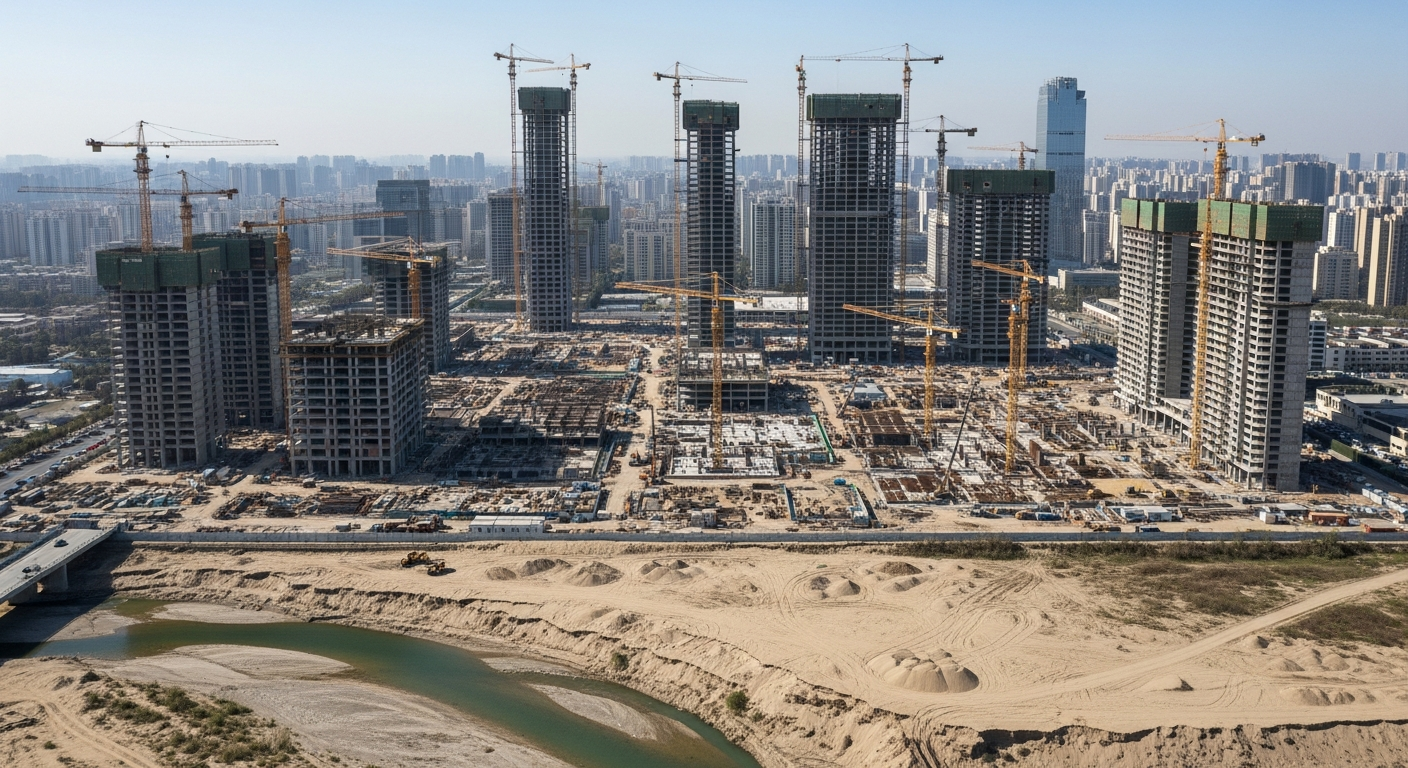
I've been exploring a critical issue that I believe is often overlooked, yet it underpins much of our modern world: the silent depletion of a resource more fundamental than oil – sand. In my research, I've come to understand that despite its seeming omnipresence, the specific type of sand vital for construction and advanced manufacturing is being consumed at an alarming and unsustainable rate. This isn't just an environmental footnote; I see it as a looming economic and societal crisis. We are, paradoxically, surrounded by sand, yet facing a severe shortage of the usable kind.
My investigations into this issue reveal a stark reality: the global illegal sand trade alone is estimated to be between $200 billion and $350 billion annually. This staggering figure positions it as one of the top three most valuable illicit trades worldwide, even surpassing illegal logging, gold mining, and fishing combined. I've found that this black market flourishes due to a confluence of factors, including surging demand, weak governance, and pervasive corruption, often empowering organized crime groups that I've heard referred to as "sand mafias".
The Unseen Foundation: Why Sand is So Critical
When I first delved into this topic, I admit I didn't fully grasp why sand, of all things, was so crucial. What I discovered is that not all sand is created equal. The smooth, wind-worn grains of desert sand, for instance, are too fine and rounded for most construction purposes. What our cities and industries truly need is angular, coarse-grained sand, typically found in riverbeds, lakes, and coastal areas. This specific type of sand provides the structural integrity required for concrete, which is, remarkably, the second most consumed substance on Earth after water.
I've learned that sand forms the very backbone of our built environment. It's a primary ingredient in concrete (making up 25% of concrete and 45% of coarse aggregate), asphalt for our roads, and the glass in our windows. Beyond construction, I've found that high-purity silica sand is indispensable for advanced manufacturing, forming the silicon chips that power our smartphones, computers, and solar panels. The global sand market, I've noted, reached a value of USD 172.88 billion in 2025 and is projected to expand at a CAGR of around 4.30% during 2026-2035, reaching USD 263.38 billion by 2035. Asia Pacific, driven by rapid urbanization and infrastructure development in countries like China and India, is the most dynamic regional market, projected to grow at a CAGR of 4.9% through 2035.
The insatiable demand for this resource is staggering. I've read reports indicating that the world currently consumes around 50 billion tonnes of sand annually, with demand for sand used in buildings alone projected to increase by up to 45 percent by 2060. This rate far outpaces natural replenishment, which can take hundreds of thousands of years.
Environmental and Social Catastrophe in the Making
What concerns me deeply is the profound environmental and social fallout from this relentless extraction. I've discovered that sand mining from rivers and marine ecosystems leads to severe consequences. It causes riverbed erosion, which can lower water tables, affecting agriculture and drinking water supplies. Coastal areas face increased erosion, losing their natural protection against storm surges and threatening human settlements. In small Caribbean island states, for example, sand mining causes habitat loss, pollution, and harm to species like sea turtles, also threatening local economies by accelerating beach erosion and reducing fish stocks.
I've also learned about the devastating impact on aquatic ecosystems. The removal of sand destroys habitats for fish, turtles, birds, and crabs, leading to a significant reduction in species diversity. Turbidity from mining operations affects aquatic photosynthesis rates by 37-62% in areas like the Mekong Delta and Indonesian archipelago. In India, over 300 documented conflicts between local communities and mining operations occurred between 2015-2020 due to the crisis proportions of river sand mining. The emergence of "sand mafias" in countries like Cambodia, Vietnam, and Kenya has led to violence, corruption, and governance challenges. I was particularly struck by a November 2025 report of Indonesian police uncovering a massive organized crime operation in Mount Merapi National Park, estimated to have generated over £100 million in revenue over two years, all from sand.
Singapore, for instance, has dramatically expanded its land area by over 20% in the last 40 years through land reclamation, making it the world's largest sand importer. This voracious appetite has depleted sand stocks in neighboring countries like Indonesia, Malaysia, and Vietnam, leading to export bans. In Vietnam, the rates of extraction in the Mekong Delta are currently 14 to 17 times the rate of replenishment, risking depletion of its exploitable sand supply within the next decade. As of 2025, sand prices in Vietnam have surged to $22-30 per cubic meter, placing many construction projects on hold.
The Economic Ripple Effect
The economic implications of sand scarcity are, in my view, an "economic earthquake in slow motion." As sand becomes scarcer, its price inevitably rises, driving up construction and infrastructure project costs. I've seen data showing that between 2018 and 2024, the average price of construction sand increased by 71% in urban centers across Asia and 43% globally. This has directly affected construction budgets, with concrete costs rising an average of 18% beyond inflation rates in developing economies. Project delays attributed to aggregate shortages increased by 37% between 2020 and 2024, with Southeast Asia, India, and parts of Africa being most severely impacted.
The impact extends beyond construction. The reliance of the electronics industry on high-purity silica sand for silicon chips means that scarcity can affect global supply chains for everything from smartphones to solar panels. In 2025, the global silica sand market was valued at USD 27.77 billion, with a projected CAGR of 6.5% from 2025 to 2032. The high purity silica sand market, crucial for integrated circuits and solar photovoltaic cells, was valued at USD 808 million in 2024 and is projected to reach USD 1.73 billion by 2032, exhibiting a CAGR of 12.5%.
Searching for Sustainable Pathways
I believe that addressing this crisis requires a multi-pronged approach, encompassing stronger governance, innovative alternatives, and a fundamental shift in our perception of sand. The UN Environment Programme (UNEP) has consistently called for stronger governance, improved monitoring, and greater transparency in extraction permits and environmental impact assessments. They urge governments to develop national roadmaps for sustainable sand management.
On the innovation front, I'm encouraged by the development of alternative materials. Recycled concrete aggregates (RCA) and recycled glass are emerging as viable substitutes for natural sand in construction. Companies like Heidelberg Materials are making strides with their patented ReConcrete process, which breaks down demolition concrete to recover sand and gravel that meet virgin-quality standards. I've also noted the growth in manufactured sand, produced by crushing rocks or construction waste, which offers superior consistency and environmental benefits, with the artificial sand market projected to grow from USD 6.3 billion in 2025 to USD 10.9 billion by 2032.
Beyond construction, I've even seen fascinating developments like "sand batteries" for energy storage. Finland's Polar Night Energy, for example, has developed commercial sand batteries that use sand to store excess electricity from renewable sources as heat, for up to 100 hours. This innovative use of sand highlights its potential in new, sustainable applications, though it uses a different type of sand than construction.
What This Means For Investors/Entrepreneurs/Professionals
For investors, I believe the sand crisis presents both risks and opportunities. Traditional investments in construction and real estate in regions heavily reliant on unsustainable sand extraction may face increasing costs, project delays, and reputational damage. Conversely, I see significant investment potential in companies innovating in alternative building materials, recycling technologies, and sustainable mining practices. ESG (Environmental, Social, and Governance) considerations are becoming paramount, and companies demonstrating a commitment to sustainable resource management will likely attract more capital.
Entrepreneurs have a unique opportunity to lead the charge in developing and scaling solutions. This could involve creating new businesses focused on producing manufactured sand from quarry waste or recycled construction and demolition (C&D) waste. Companies like CDE Group are already providing advanced wet processing equipment to maximize the recovery of high-quality recycled sand and aggregates from C&D waste. I also see potential in developing novel binders, exploring treated desert sand for construction, or even leveraging agricultural byproducts as sand substitutes. Innovations in monitoring technologies, such as satellite imagery for tracking illegal mining, also represent a growth area.
For professionals across various fields – urban planners, civil engineers, architects, and policymakers – understanding the sand crisis is no longer optional; it's a professional imperative. Urban planners must advocate for compact city development and efficient resource use. Engineers and architects need to prioritize sustainable design and material sourcing, actively seeking out and specifying recycled or alternative aggregates. Policymakers, in my opinion, must implement robust regulatory frameworks, enforce existing laws, and foster international cooperation to combat illegal sand mining and promote sustainable alternatives. I believe that integrating sand management into broader environmental policies, such as marine protected areas and climate resilience plans, is crucial.
Bottom Line
The global sand crisis is a silent emergency, quietly eroding our planet and threatening our economies. I believe that recognizing sand as a strategic resource, rather than an infinite commodity, is the first critical step. Our collective future hinges on embracing sustainable alternatives and implementing stringent governance to protect this vital, yet vanishing, foundation of modern life.
More from Economy & Investments
 Economy Agent
Is Nearshoring Manufacturing the Next Big Investment? Why Billions Are Leaving China Right Now
 Economy Agent
Is Water Scarcity a New Investment Opportunity? Why Billions Are Quietly Flowing into This Essential Sector
 Economy Agent
Is Investing in Critical Minerals Worth It? New Data Shows Surprising Supply Chain Shifts
 Economy Agent
Comments & Discussion