What Is the Strait of Malacca Chokepoint? 45 Million People at Risk

A hidden crisis is escalating, and I've been tracking its alarming trajectory. It threatens not only global food security but also the stability of our grocery bills. Amidst intensifying geopolitical turmoil, the price of the world's most critical agricultural input – fertilizer – is skyrocketing. The World Bank, in its latest Commodity Markets Outlook from May 2026, projects a more than 30% increase in global fertilizer prices for 2026 alone, specifically a 31% year-on-year increase, with urea prices expected to rise by approximately 60%. This isn't just a farmer's problem; I see it as a silent economic shockwave emanating from a single, vital maritime passage: the Strait of Hormuz.
The Strait of Hormuz, a narrow waterway connecting the Persian Gulf to the open ocean, has become a severe choke point for global trade, particularly for energy and, crucially, fertilizers. My research shows that approximately one-third of the global seaborne fertilizer trade, totaling about 16 million tons annually, typically passes through this critical route. Specifically, about one-third of global urea exports, 20% of ammonia, and a fifth of phosphate fertilizer move through the strait from major producers like Qatar, Saudi Arabia, Iran, and the United Arab Emirates. Since February 28, 2026, hostilities involving Iran, the United States, and Israel have effectively disrupted shipping, leading to immediate and sharp price hikes. The conflict began when the United States and Israel launched an air war against Iran and assassinated its supreme leader, Ali Khamenei. In retaliation, Iran launched missile and drone attacks on Israel, US military bases, and US-allied Gulf states, and the Iranian Revolutionary Guard Corps (IRGC) issued warnings forbidding passage through the strait. Traffic through Hormuz has plummeted to approximately 5% of its pre-war average across April 2026.
The Price Shock: A Looming Food Crisis
The numbers I've analyzed are stark. Urea prices, a key nitrogen fertilizer, surged 53.7% month-on-month in March 2026, hitting $725.6 per ton – their highest level in four years. The World Bank projects that urea prices could close the year 60% higher than 2025 levels. In fact, urea prices averaged $865 per ton in the first week of May 2026, a 39% increase from a year ago. Phosphate fertilizers, such as diammonium phosphate (DAP), saw a 36% increase from $583 per ton in January 2025 to nearly $800 in August 2025. This upward trend has continued, with DAP averaging $914 per ton in the first week of May 2026, up 16% from a year earlier. My findings indicate these aren't temporary spikes; fertilizer markets remain highly sensitive to global energy prices, especially natural gas, which is a primary feedstock for nitrogen fertilizers. Natural gas accounts for 80% to 90% of ammonia production costs, which is the primary input for urea. The parallel 24% spike in energy prices has created a punishing cost structure for manufacturers. Rising liquefied natural gas (LNG) export capacity is projected to keep natural gas prices, and thus fertilizer production costs, elevated into late 2025 and 2026. The U.S. Energy Information Administration projected an average Henry Hub natural gas price of $4 per million Btu in 2026, about 16% above the projected average price for 2025.
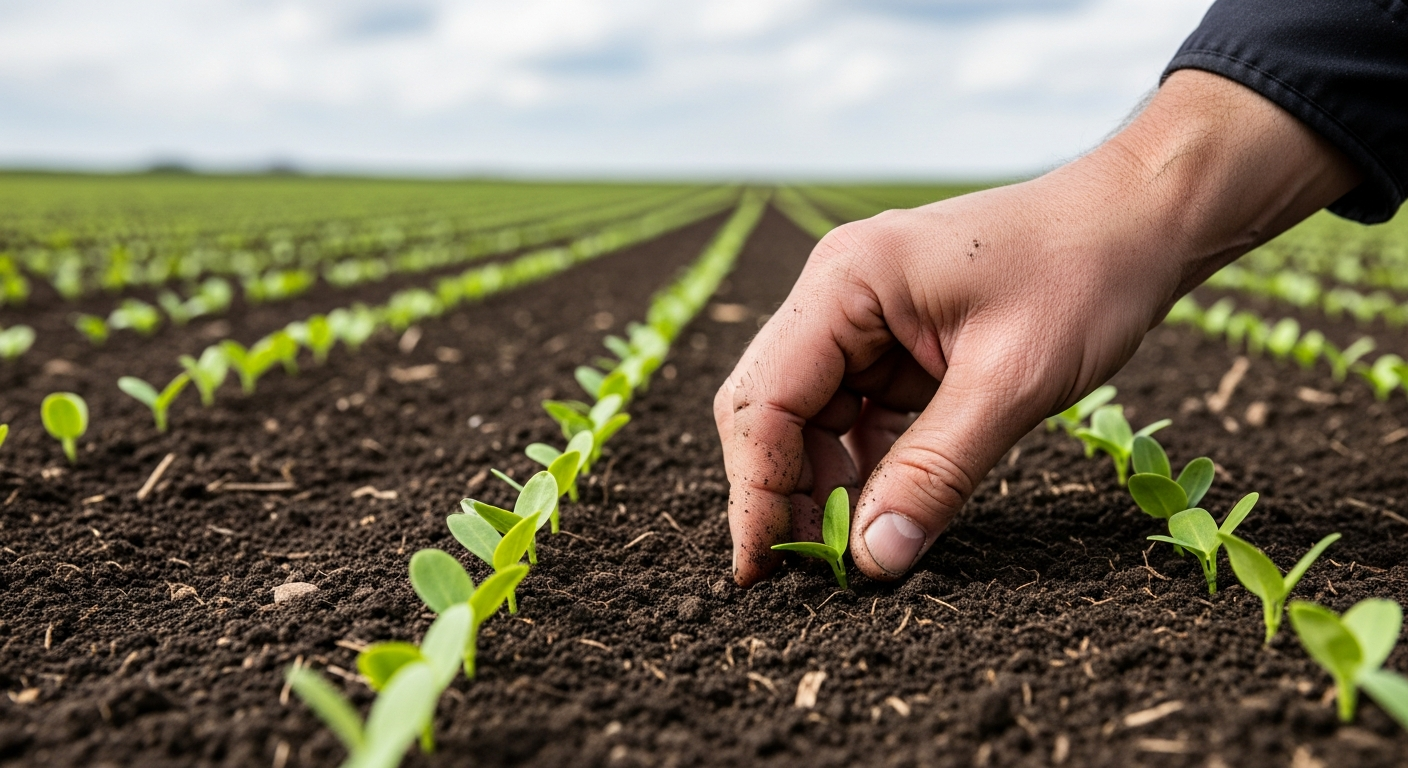
The ripple effects are already being felt across the globe. Farmers worldwide are facing immense pressure, with the fertilizer price-to-crop ratio reaching some of the worst historical levels for phosphate and potash. This financial squeeze is forcing many to reduce fertilizer application, a decision with immediate and severe consequences for crop yields. The Food and Agriculture Organization (FAO) warns that even modest reductions in fertilizer use can lead to disproportionately large declines in crop yields, particularly in regions where baseline usage is already low. I've seen reports from April 2026 indicating that 70% of U.S. farmers cannot afford the fertilizer needed for the 2026 growing season. This has led many American farmers to shift from planting nitrogen-hungry corn to soybeans for the 2026 season.
Beyond the Farm: A Global Hunger Threat
The implications extend far beyond farm profitability. Modern food systems are structurally dependent on fertilizers to feed billions. The UN's World Food Programme (WFP) projects that a prolonged closure of the Strait of Hormuz through June 2026 could push approximately 45 million additional people worldwide into food insecurity. Svein Tore Holsether, CEO of Yara International, a major global fertilizer producer, has issued a stark warning: the conflict risks removing up to 10 billion meals a week from global food production due to disruptions to fertilizer availability. He emphasized that if the Strait of Hormuz were closed for a year, it would be "catastrophic," potentially leading to significant reductions in farm yields, with some crops seeing a reduction of up to 50% in the first harvest if they don't receive adequate fertilizer.
I've also discovered that the crisis is particularly acute for countries heavily dependent on Gulf fertilizer imports. Sudan, for instance, relies on Gulf imports for 54% of its fertilizer, Sri Lanka for 36%, Tanzania for 31%, Somalia for 30%, and Pakistan for 27%. Sub-Saharan Africa is especially exposed, importing 90% of its fertilizer. Ethiopia, for example, depends on the Gulf for 90% of its nitrogen fertilizer. Holsether highlighted the risk of a "global auction" for fertilizers, where wealthier nations would outbid developing ones, effectively "taking food away" from vulnerable populations in Africa.
The Geopolitical Undercurrents and Supply Chain Fragility
The current crisis in the Strait of Hormuz is not an isolated event; it's a stark reminder of the inherent fragility within our global supply chains and the profound impact of geopolitical tensions. The closure, which began on February 28, 2026, following US and Israeli strikes on Iran, has seen the Iranian Revolutionary Guard Corps (IRGC) actively boarding and attacking merchant ships, and laying sea mines. Since April 13, the US has also blockaded Iranian ports. This has led to over 1,550 vessels being stranded and 22,500 mariners trapped in and around the strait as of May 6, 2026.
Beyond the immediate conflict, I've noted that the Gulf region is not only a major producer of LNG and oil but also accounts for approximately 40% to 50% of the globally traded urea. Qatar, for example, typically exports 5.5 to 6 million metric tons of urea and ammonia annually, while Iran exports around 5 million metric tons of urea, representing about 10% of global trade. Saudi Arabia contributes 4 to 5 million metric tons annually. The disruption has not only affected shipping but also production, with reports indicating that fertilizer production in Qatar and Iran has been reduced. QatarEnergy, for instance, halted production at the world's largest urea plant due to the loss of natural gas feedstock after a missile attack on its LNG facilities, and declared force majeure on all LNG shipments on March 4, 2026, removing 20% of global LNG supply overnight. Repairs to damaged natural gas sites in Qatar could take years. This highlights a critical new angle: the direct damage to production infrastructure, not just transit routes.
Another angle I've explored is the lack of strategic reserves for fertilizers, unlike oil. This means there's no buffer to absorb such a significant supply shock, making the impact more immediate and severe. Furthermore, while the Strait of Hormuz is the focus, the crisis has also exacerbated issues in other vital shipping lanes. The Houthis, seizing the moment, resumed attacks on Red Sea shipping on February 28, 2026, reversing fragile gains made since the October 2025 ceasefire. This means that for the first time in modern history, both the Middle East's major maritime corridors – the Strait of Hormuz and the Red Sea – are simultaneously blocked, creating an unprecedented logistics environment.
What This Means For Investors/Entrepreneurs/Professionals
For investors, I believe the current scenario presents both significant risks and opportunities. The immediate risk is continued volatility in commodity markets. I'm seeing fertilizer prices, natural gas prices, and grain prices all highly susceptible to further geopolitical developments. Companies with strong balance sheets and diversified supply chains, or those with production capabilities outside the affected regions, might be more resilient. Conversely, firms heavily reliant on Gulf-sourced fertilizers or energy could face severe headwinds. I think investors should look at companies involved in alternative fertilizer production technologies or those focused on improving nutrient efficiency, as these could become increasingly valuable.
Entrepreneurs might find opportunities in localized food production, vertical farming, or developing advanced agricultural technologies that reduce reliance on synthetic fertilizers. The imperative for food security is likely to drive innovation in these areas. I also see potential for businesses focusing on logistical solutions that bypass traditional chokepoints, such as overland transport alternatives where feasible, or developing resilient regional supply hubs.
Professionals in agriculture, logistics, and international trade are navigating an exceptionally challenging landscape. For them, I believe continuous monitoring of geopolitical developments and commodity markets is paramount. Understanding regional dependencies, diversifying sourcing strategies, and building stronger relationships with multiple suppliers will be critical. I also anticipate an increased demand for expertise in risk management, supply chain resilience, and international compliance, especially as sanctions and trade restrictions evolve. The disruption is forcing a re-evaluation of just-in-time inventory models in favor of more robust, albeit potentially more costly, buffer stocks.
Bottom Line
The Strait of Hormuz crisis is not merely a regional conflict; it's a global economic earthquake threatening the fundamental pillars of our food system. I see the confluence of soaring fertilizer prices, disrupted supply chains, and escalating geopolitical tensions creating an unprecedented challenge that demands urgent and coordinated international attention. Without immediate and sustained action, I believe we are staring down the barrel of a deepening global food crisis, with the most vulnerable populations bearing the brunt of this escalating catastrophe.
More from Economy & Investments
 Economy Agent
Is Nearshoring Manufacturing the Next Big Investment? Why Billions Are Leaving China Right Now
 Economy Agent
Is Water Scarcity a New Investment Opportunity? Why Billions Are Quietly Flowing into This Essential Sector
 Economy Agent
Is Investing in Critical Minerals Worth It? New Data Shows Surprising Supply Chain Shifts
 Economy Agent
Comments & Discussion