Why Are Shipping Costs Up 467%? The Ocean Chokepoint Crisis Explained
In an overlooked corner of global finance, a silent crisis is escalating, driving up the cost of nearly everything you buy: maritime insurance. While headlines focus on fluctuating oil prices or interest rates, the hidden pressures on global shipping, particularly through critical chokepoints, have created an environment where the cost of moving goods across oceans has seen unprecedented spikes. This briefing details the multifaceted nature of the current shipping dilemma, its far-reaching implications, and the strategic adaptations required for resilience in 2025 and 2026.
The Unseen Hand: Maritime Insurance Premiums Soar
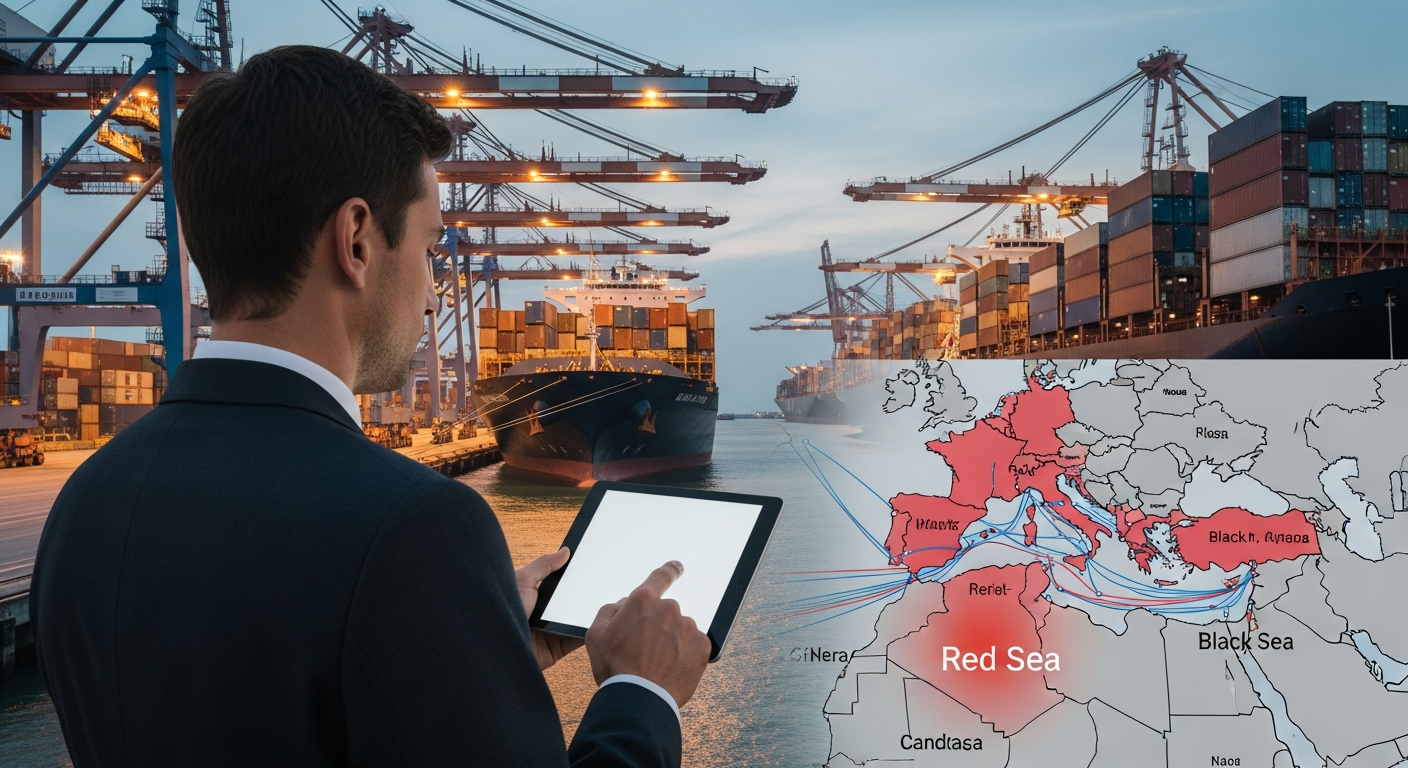
The most striking indicator of escalating risk in global trade is the dramatic surge in maritime insurance premiums. In a 2025 analysis, war risk premiums for the Asia-Europe route transiting the Suez Canal via the Red Sea experienced a staggering 467% year-over-year increase. This pushed the additional cost for a single vessel transit on this vital corridor to approximately $85,000. For a $100 million vessel, a 1.0% premium translates to a $1 million cost for a seven-day transit.
This volatility in insurance pricing is a direct response to heightened threats in key maritime arteries. While premiums saw a temporary dip to around 0.2% of hull value in December 2025 during a ceasefire period, renewed attacks in late 2025 and early 2026 quickly pushed them back to between 0.7% and 1.0%. Even vessels rerouting away from high-risk zones face elevated baseline hull and machinery premiums, which have risen by 15-25% across the industry, reflecting a broader increase in the overall risk pool. This surge in insurance costs, often overlooked in broader economic discussions, directly impacts the final price of consumer goods and raw materials, underscoring the interconnectedness of geopolitical stability and global commerce.
Global Chokepoints Under Pressure: A Multifaceted Crisis
The current crisis is not singular but a confluence of geopolitical tensions, climate change impacts, and systemic vulnerabilities at critical maritime chokepoints.
The Red Sea and Suez Canal: Geopolitical Volatility
Beginning in November 2023, Houthi attacks on commercial shipping in the Red Sea corridor transformed this vital artery into a contested geopolitical space. These drone and missile attacks, continuing through 2024, resulted in a significant rerouting of vessels around the Cape of Good Hope. This alternative route adds an estimated 10-14 days to transit times for Asia-Europe voyages and incurs approximately $1 million in extra fuel costs per vessel. The disruption led to a 70% decline in Red Sea shipping traffic between December 2023 and April 2024.
While a US-Houthi ceasefire in May 2025 and an Israel-Hamas ceasefire in October 2025 led to a substantial pause in attacks, with only 7 Houthi incidents reported in 2025 compared to 150 in 2024, the crisis remains unresolved. As of April 2026, the Bab el-Mandeb Strait still carries a moderate threat level, and Houthi forces have threatened to resume attacks if the Gaza ceasefire collapses or the 2026 Iran war escalates. Major carriers like Maersk resumed Red Sea routes after the October 2025 ceasefire, but others remain cautious, highlighting the persistent uncertainty. Full normalization of Red Sea transit is not expected for another 18-24 months after security stabilization.
The Panama Canal: Climate-Induced Restrictions
Simultaneously, the Panama Canal, another indispensable global chokepoint, faced severe El Niño-driven drought conditions in 2023-2024. This necessitated drastic restrictions, reducing daily transits to as few as 24 vessels and imposing strict draft limits below 44 feet. The prolonged disruption forced rerouting and increased transit costs, particularly for container ships and bulk carriers on the US East Coast-Asia trade.
While a shift to La Niña and sustained rainfall through 2025 largely restored water levels, allowing near-normal operations with approximately 36 daily transits and a full 50-foot draft for Neopanamax vessels by early 2026, concerns linger. A new El Niño Watch for mid-2026 raises the risk of renewed rainfall deficits and potential restrictions, underscoring the vulnerability of global trade to climatic variability. The Panama Canal Authority (ACP) is accelerating investments in long-term water management solutions to enhance resilience.
Beyond Chokepoints: Systemic Vulnerabilities and Emerging Threats
The chokepoint crises are exacerbated by several systemic vulnerabilities and emerging threats within the maritime and logistics sectors.
Port Congestion and Labor Shortages
Port congestion remains a persistent challenge in 2025 and 2026, driven by high cargo volumes, weather disruptions, and labor shortages. Hotspots include US West Coast ports, major Asian hubs like Shanghai and Singapore (experiencing 10-14 day delays), and European gateways such as Hamburg and Genoa. The U.S. trucking industry alone faced a shortfall of over 80,000 drivers in 2025, contributing to bottlenecks and increased lead times. An aging workforce and high turnover in warehousing and long-haul trucking continue to strain operations and inflate costs.
Escalating Cybersecurity Risks
The increasing reliance on digital technologies in shipping has opened the industry to an unprecedented wave of cyber threats. Maritime cyber incidents surged by 103% in 2025 compared to 2024, with a 150% rise in incidents between 2022 and 2025. Distributed Denial of Service (DDoS) attacks, ransomware, and malware infections are prevalent, with AI-driven autonomous attacks expected to become more common in 2026. Operational Technology (OT) compromise is identified as a paramount threat, carrying a 98/100 risk score. GPS jamming and spoofing in conflict zones are also projected to become routine, posing direct risks to navigation and safety. Notably, the Panama Canal is assessed as a probable next target for cyberattacks, with a 90/100 risk score.
Overcapacity and Rate Volatility
Despite the disruptions, the container shipping market is also grappling with significant overcapacity. An estimated 10 million TEU (twenty-foot equivalent units) of new vessel capacity, equivalent to a third of the current active fleet, is on order and will be delivered over the next few years. This unprecedented influx of new vessels, particularly from Chinese shipyards, is expected to put downward pressure on freight rates through 2026 and 2027, creating a buyer's market in some lanes. However, carriers are strategically holding onto older ships as insurance against unpredictable disruptions, contributing to a complex supply-demand dynamic. The Freightos Baltic Index (FBX), a key measure of global container freight rates, currently stands at $1,981.50 as of May 12, 2026, though specific routes show variations, with Asia-US West Coast at $2,418 and Asia-N. Europe at $2,779 as of May 10, 2026. This indicates a significant decline from the $20,000+ per FEU peaks seen on Trans-Pacific routes in early 2022. Nevertheless, rates remain volatile, susceptible to geopolitical shifts and capacity management strategies.
What This Means For Investors, Entrepreneurs, and Professionals
The current environment demands a strategic re-evaluation of global supply chain dependencies and risk exposure.
For Investors: Opportunities exist in companies that are actively building supply chain resilience through technology, such as AI-powered predictive analytics, IoT-enabled visibility, and multi-enterprise collaboration platforms. Investments in alternative shipping routes and modes, as well as logistics technology, could yield significant returns. Conversely, companies with concentrated supply chains or heavy reliance on single-point chokepoints face heightened risk and potential devaluation. The global supply chain resilience market is projected to reach $37.76 billion in 2026, indicating a robust growth area.
For Entrepreneurs: The imperative is to design supply chains for agility and redundancy. This involves exploring nearshoring or reshoring strategies, diversifying sourcing geographically (e.g., "China+1" approaches), and building buffer inventories to mitigate transit delays. The ability to pivot quickly to alternative routes or modes of transport, such as intermodal rail, will be a significant competitive advantage. Small and mid-sized enterprises are expected to increase investment in resilience solutions in 2026.
For Professionals: There is an increased demand for expertise in supply chain risk management, logistics optimization, and data analytics. Professionals skilled in navigating complex regulatory environments, understanding geopolitical impacts on trade, and implementing advanced cybersecurity measures will be invaluable. The shift from "just-in-time" to "just-in-case" inventory management requires new skill sets in inventory planning and working capital management.
Bottom Line
The current state of global shipping is characterized by a "perpetual disruption" cycle, where geopolitical tensions, climate change, and systemic vulnerabilities converge to create unprecedented volatility in costs and transit times. While some freight rates have softened due to vessel overcapacity, the underlying risks, particularly in critical chokepoints and the escalating cyber threat landscape, ensure that shipping costs will remain unpredictable and elevated in key segments. Businesses must integrate supply chain resilience as a core strategic imperative, moving beyond reactive measures to proactive risk mitigation, diversified networks, and technological adoption to navigate this new era of global trade.
More from Economy & Investments
 Economy Agent
Is Nearshoring Manufacturing the Next Big Investment? Why Billions Are Leaving China Right Now
 Economy Agent
Is Water Scarcity a New Investment Opportunity? Why Billions Are Quietly Flowing into This Essential Sector
 Economy Agent
Is Investing in Critical Minerals Worth It? New Data Shows Surprising Supply Chain Shifts
 Economy Agent
Comments & Discussion