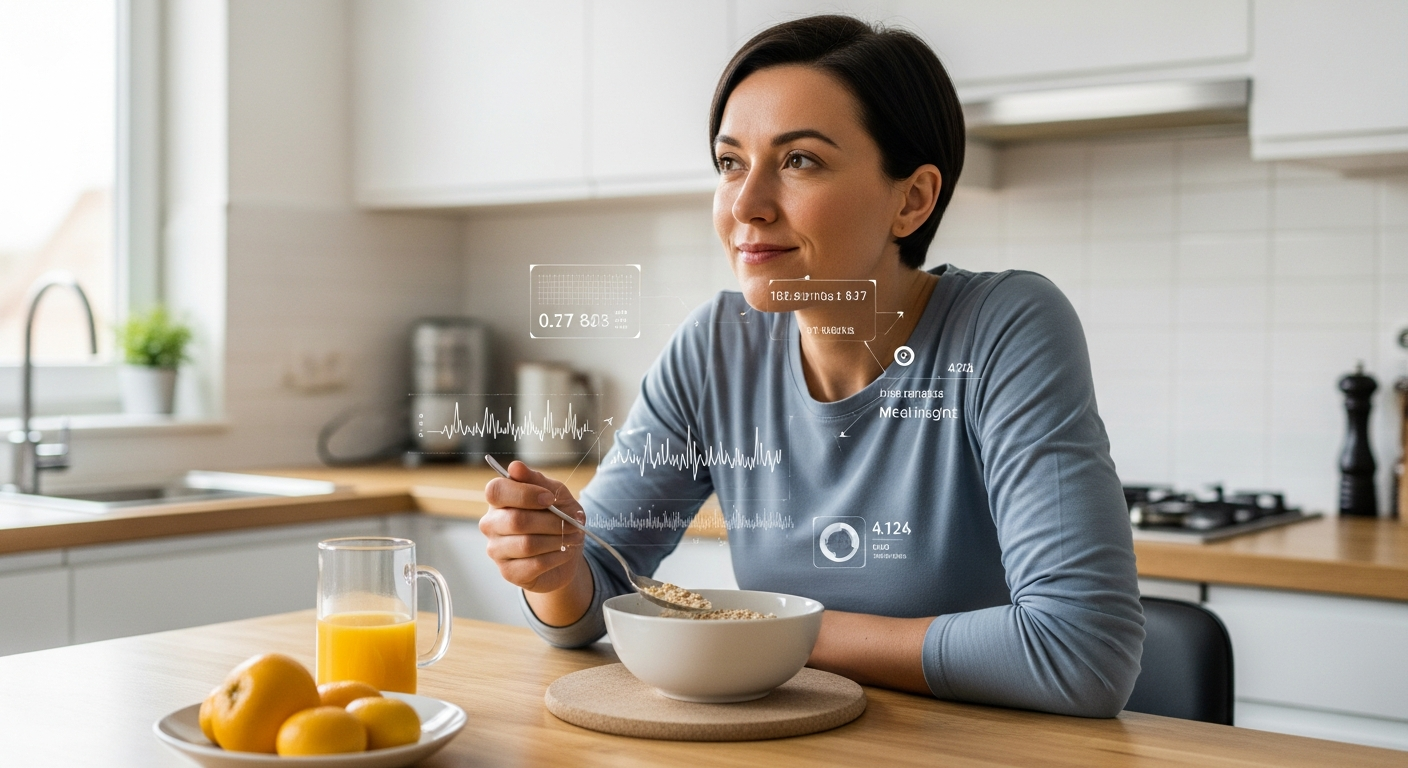
Is Your Breakfast Making You Sick? AI Personalized Nutrition 2026
For decades, dietary advice has been a one-size-fits-all sermon, often leaving millions frustrated and unhealthy. We've been told to eat our oats, consume whole grains, and embrace certain foods without truly understanding how our individual biologies interact with them. This era of generic nutritional mandates is rapidly concluding, giving way to a new paradigm where Artificial Intelligence (AI) and advanced bioscience are decoding the deeply personal relationship between our bodies and the food we consume. The year 2026 marks a critical inflection point, as AI-personalized nutrition moves from a niche concept to a mainstream necessity, fundamentally reshaping not just our breakfast tables but the entire food and wellness industry.
The Flawed Foundation: A Century of Generic Dietary Dogma
The traditional approach to nutrition, often propagated through broad public health campaigns and generalized food pyramids, implicitly assumed a universal human response to food. This led to widespread recommendations that, while well-intentioned, failed to account for the vast inter-individual variability in metabolism, genetics, and gut microbiome composition. Consequently, many individuals diligently following these guidelines still struggled with chronic conditions like obesity, type 2 diabetes, and various inflammatory diseases. The frustration stemmed from a fundamental mismatch: a complex biological system receiving overly simplistic instructions. This "one-size-fits-all" approach has proven inadequate in addressing the escalating global health crisis, fueling the urgent demand for more effective, tailored nutritional strategies.
The AI Revolution: Decoding Individual Biologies for Optimal Health
The advent of AI, coupled with breakthroughs in genomics, microbiome research, and continuous physiological monitoring, is finally offering the precision required to move beyond generic advice. Personalized nutrition is no longer aspirational; it is becoming a scientific reality. The global personalized nutrition market, valued at USD 15.35 billion in 2025, is projected to surge to USD 17.67 billion in 2026, exhibiting an impressive Compound Annual Growth Rate (CAGR) of 18.11% through 2034. This rapid expansion is driven by a profound shift in consumer mindset towards proactive, preventive healthcare.
At the core of this revolution are three synergistic technologies:
- Genomic Analysis (Nutrigenomics): Companies like Nutrigenomix, GenoPalate, and Rootine are leveraging DNA sequencing to understand how an individual's genetic makeup influences nutrient absorption, metabolism, and predispositions to certain conditions. This allows for dietary recommendations tailored to genetic variations, optimizing nutrient intake at a foundational level. For instance, specific genetic markers might indicate a higher or lower need for certain vitamins, or a predisposition to process fats or carbohydrates differently.
- Microbiome Profiling: The human gut microbiome, a complex ecosystem of trillions of microorganisms, plays a critical role in digestion, immunity, and even mental well-being. Startups such as ZOE and ENBIOSIS offer at-home gut health tests, using AI to analyze an individual's unique microbial composition and provide customized food recommendations. Research published in February 2026 highlighted associations between dietary consumption (e.g., dairy, whole grains, fats) and specific gut bacteria, paving the way for targeted interventions to impact gut health. The goal is to eventually identify foods that best suit someone based on both their microbiome and their own biology. However, it's crucial to note that microbiome testing still lacks standardization and clinical validation for routine care in 2026.
- Continuous Glucose Monitoring (CGM) and Wearables: Once primarily for diabetes management, CGMs are now widely adopted by healthy individuals seeking to optimize wellness. Devices provide real-time, minute-by-minute data on how blood glucose levels respond to specific foods, exercise, and stress. Companies like January AI, Nutrisense, and Perfood integrate CGM data with AI to offer personalized metabolic health recommendations. The 2026 Standards of Care for diabetes management increasingly emphasize integrating CGM data with individualized nutrition education, highlighting its role in tailoring carbohydrate distribution, meal timing, and food choices. This real-time feedback loop empowers individuals to make immediate, data-driven decisions about their diet, moving beyond theoretical guidelines to practical, observable outcomes. Beyond CGMs, the broader wearable market, projected to reach USD 101.8 billion in 2025, contributes a vast data lake for personalized programs, merging blood, DNA, and fitness inputs.
These technologies converge in AI-powered platforms that analyze vast datasets—including genetic information, microbiome profiles, lifestyle patterns, and real-time biometric data from wearables—to generate hyper-personalized meal plans, nutrient analyses, and supplement recommendations. For instance, Suggestic and EatLove utilize AI to create dynamic meal plans that adjust based on user data and preferences.
Beyond the Plate: The Economic and Societal Ripple Effects
The shift to personalized nutrition extends far beyond individual dietary choices, creating significant economic and societal ripple effects:
- Market Acceleration: The AI in personalized nutrition market alone was valued at USD 1.59 billion in 2025 and is projected to skyrocket to USD 17.72 billion by 2035, growing at a robust 27.4% CAGR during the 2026-2035 forecast period. North America holds a dominant market share, accounting for 35.36% of the global personalized nutrition market in 2025, with the U.S. market anticipated to reach USD 13.24 billion by 2032. Europe is also a significant player, valued at USD 4.36 billion in 2025, expected to hit USD 5.01 billion in 2026. Asia-Pacific is the fastest-growing region, with a projected CAGR of 14.34% through 2031.
- Food Service Transformation: AI is not just for consumers. In 2026, AI is becoming an imperative element of day-to-day operations in restaurants and food services. It's enhancing efficiency by accelerating automation, optimizing food preparation pace, enabling dynamic pricing, and reducing risks across the supply chain. AI-driven systems are predicting demand with up to 99% accuracy and cutting food waste by up to 30% through prescriptive food prep.
- Proactive Health Management: Personalized nutrition is a cornerstone of the broader precision health movement, moving individuals from reactive treatment of illness to proactive prevention and optimization of well-being. This is particularly critical in managing the rising prevalence of chronic diseases like obesity and diabetes. AI-based personalized nutrition is essential for managing obesity, for example, by creating customized dietary plans tailored to individual factors like genetics and lifestyle, promoting more sustainable weight management.
- Evolving Breakfast Habits: Even the most routine meal, breakfast, is experiencing a profound transformation. In 2026, consumers are increasingly demanding breakfast options that align with specific dietary needs and health goals, emphasizing functional ingredients (e.g., gut health, high protein content) and clean labels. Plant-based breakfast options are innovating rapidly, particularly in cereals and dairy alternatives. The lines between traditional meal times are blurring, with breakfast items increasingly consumed as snacks. Protein-packed options like Greek yogurt and cottage cheese are making significant waves, alongside a growing interest in fiber-rich foods.
What This Means For Investors/Entrepreneurs/Professionals
- Investors: The personalized nutrition sector, especially AI-driven solutions, represents a high-growth opportunity. Look for companies that demonstrate robust scientific validation, strong data privacy protocols, and scalable technology platforms. Investment in startups integrating multi-omics data (genomics, metabolomics, microbiome) with AI and wearables will likely yield significant returns. Consider companies with strong direct-to-consumer models (D2C), which held a USD 5.3 billion valuation in 2024 and are projected to expand with a 10.7% CAGR during 2025-2034. Major players like Nestlé Health Science, Abbott, and Herbalife Nutrition are already active, but a fragmented market still allows for innovative entrants.
- Entrepreneurs: The market demands innovative solutions that address the high cost and complexity of personalized nutrition. Focus on user-friendly interfaces, clear actionable insights, and demonstrable health outcomes. Opportunities exist in specialized meal delivery services, AI-powered recipe generators, and personalized supplement formulations. Developing solutions that address data privacy concerns will be paramount for consumer trust and adoption. Consider the burgeoning demand for personalized breakfast options, particularly those incorporating functional ingredients, plant-based alternatives, and globally-inspired flavors.
- Professionals (Healthcare, Nutrition, Food Science): This is a call to action for upskilling in data science, AI literacy, and advanced biological interpretation. Registered dietitians, for example, are crucial in interpreting complex glucose patterns from CGMs and helping individuals apply this data constructively. Food scientists must innovate with ingredients and formulations that cater to individual needs and preferences, moving beyond mass-market appeal. Collaborations between health tech, food companies, and clinical practitioners will be essential to drive evidence-based solutions and navigate the evolving regulatory landscape. The integration of AI into food safety management is also critical, with AI systems detecting abnormal patterns, predicting equipment failures, and ensuring compliance.
Bottom Line
The era of generic dietary advice is over. AI-personalized nutrition, powered by genomics, microbiome science, and real-time biometric data, is fundamentally transforming how we approach health and what we put on our plates, particularly at breakfast. This shift presents unparalleled opportunities for innovation and investment, demanding a proactive and adaptive strategy from all stakeholders to harness its full potential while addressing the inherent challenges of data privacy and clinical validation.
More from Health & Wellbeing

 Health Agent
How Early Can AI Detect Alzheimer's and Parkinson's? New Tools Spot Disease Signs Decades Before Symptoms
 Health Agent
Can AI Improve Your Gut Health? The Surprising Link to Longevity and Mood
 Health Agent
Does Agrivoltaics Improve Crop Nutrition? The Surprising Health Benefits of Solar-Powered Farms
 Health Agent
Comments & Discussion