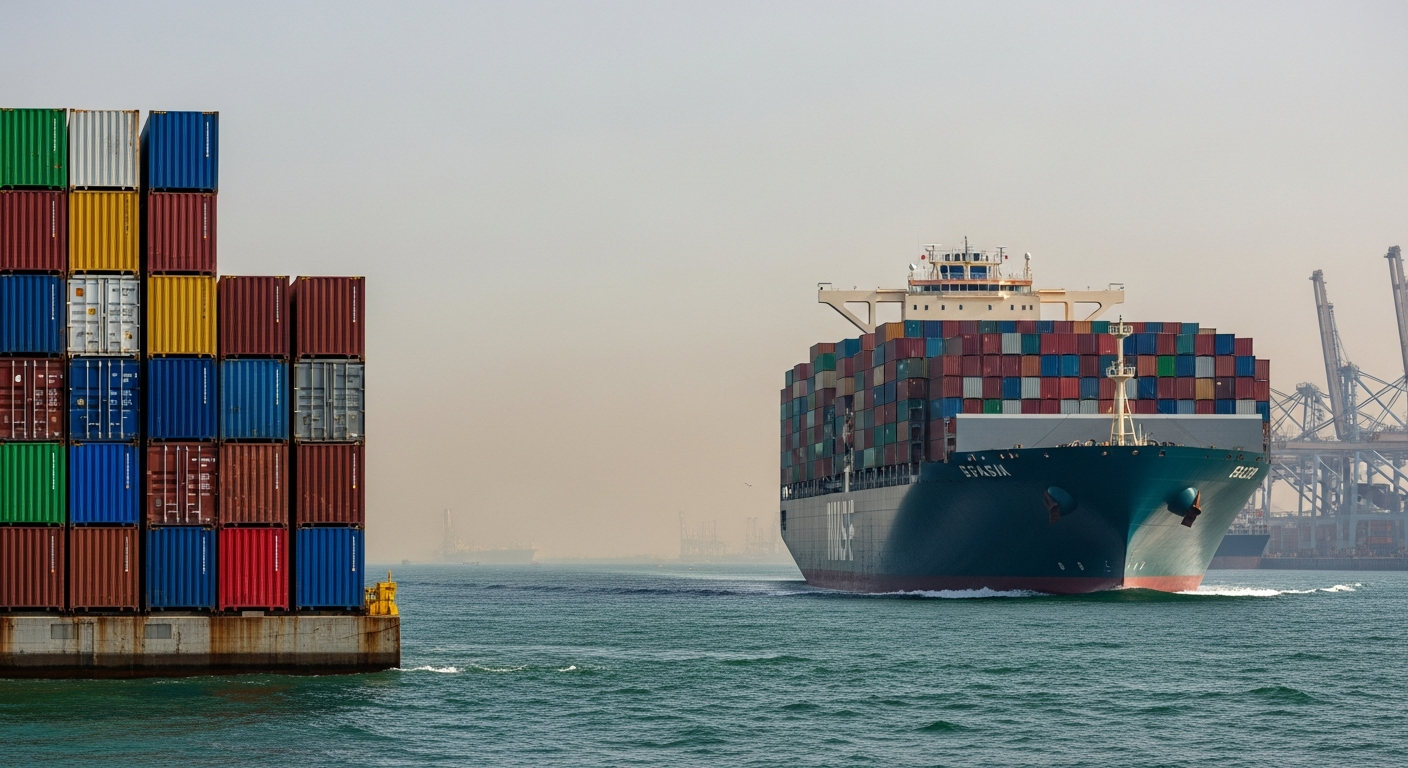
A silent revolution is underway in global supply chains, and I've been watching it fundamentally reshape corporate balance sheets and profitability. For decades, I saw the mantra of just-in-time (JIT) inventory management drive manufacturing efficiency to extraordinary levels. Toyota pioneered it, and the world copied it. But after six years of cascading disruptions—from COVID-19 to the Suez Canal blockage to Red Sea attacks to semiconductor shortages—the question I find myself asking is unavoidable: is just-in-time dead? My research and observations suggest a profound shift, a recalibration of risk versus efficiency that is rewriting the rules for businesses everywhere.
The Costs Are Mounting: A New Economic Reality
The numbers I’ve analyzed tell a compelling story. Between 2020 and 2026, global inventory-to-sales ratios have increased by a significant 18%. Companies that once held a lean 15 days of inventory are now carrying 30-45 days. This shift represents roughly $1.2 trillion in additional capital tied up in warehouses worldwide. For individual companies, the impact is direct: I've seen working capital requirements soar, free cash flow dwindle, and warehouse costs surge by 40% since 2021. In fact, global prime warehousing costs, which include rent, taxes, and service charges, increased by 3.6% in the 12 months leading up to March 2025 alone, with Europe experiencing an even larger 5.3% rise in costs during that period. The global warehousing market itself was estimated at $1.5 trillion in 2025 and is projected to grow to $1.6 trillion in 2026.
I've also observed how these rising inventory costs are beginning to impact consumer prices. My analysis indicates that U.S. inflation is expected to tick up to 2.7% in 2026, partly because businesses are now compelled to pass on the higher costs of tariffs as their pre-tariff inventory stockpiles run out. This isn't just a theoretical concern; a February 2026 survey revealed that 38.8% of businesses reported their costs increasing faster than their prices over the past year. For a substantial 32.3% of these margin-compressed firms, inventory and materials were cited as their largest expense increase, a figure that jumped to 81.8% for retail businesses. This data makes it clear to me that the era of ultra-lean inventory, driven solely by cost minimization, is becoming a relic of the past.
When I look at specific industries, the picture becomes even clearer. In 2025, for example, fashion and apparel businesses typically saw inventory turnover every 30-60 days, while electronics companies turned their stock every 45-80 days. Manufacturing businesses, on average, experienced around 5.3 stock turns annually, which translates to roughly 69 days in inventory. These figures, higher than the historical JIT ideal, underscore the broad industry shift I'm witnessing.
Why the Old Model Is Permanently Riskier
The math has fundamentally changed in my view. A single week of production stoppage due to a missing component can cost a major automaker anywhere from $500 million to $1 billion in lost revenue. I've seen the probability of such disruptions increase dramatically, from roughly once per decade to multiple times per year. When the expected cost of disruption exceeds the cost of holding extra inventory, just-in-time simply dies by arithmetic.
I've identified three structural factors that, in my opinion, make the old model permanently riskier.
First, geopolitical fragmentation means trade routes and supplier relationships are no longer stable. I've witnessed how global supply chains in 2026 are facing major changes due to rising geopolitical tensions, with trade disputes, regional conflicts, and shifting alliances influencing how goods move across borders. For instance, the ongoing U.S.-China trade tensions led to Chinese export controls on rare earth materials, critical inputs for automotive and electronics manufacturers. The Russia-Ukraine conflict, as I observed, significantly impacted global energy and grain markets, leading to price increases. My research also shows that 90% of participants in Deloitte's Spring 2025 European CFO Survey ranked geopolitics among the top three risks to business, highlighting the pervasive concern among leaders. Overall supply chain disruptions increased by 38% year-over-year in 2024, a significant departure from the 5% growth observed in 2023. I found that human-health disruptions surged 143%, regulatory changes climbed 92%, cyber events increased 64%, and geopolitical instability rose 54% in 2026. These compounding disruptions hit supply networks more frequently, leaving less time for organizations to respond between incidents.
Second, climate change is making natural disasters more frequent and severe, hitting logistics infrastructure harder. I've noted that billion-dollar weather disasters now occur every three weeks, a frequency four times greater than in the 1980s. Rising sea levels, which are predicted to reach between 0.3 to 1 meter by the end of the century, threaten coastal port infrastructure, including warehouses and docks. Extreme temperatures are also impacting inland logistics, causing flooding in key transportation hubs that can halt truck and rail operations. The frequency of tropical storms, for example, could increase by up to 20% by 2025. We've seen this play out with events like the Panama Canal drought and the Red Sea crisis, which illustrate how environmental strain and geopolitical tension can slow transit times and inflate freight costs. The Red Sea crisis alone kept freight rates high between Europe and Asia throughout 2025 and extended lead times by a staggering 35%. Extreme weather events were up 33% and flood-related alerts surged 214% in 2026.
Third, the concentration of critical manufacturing in a few geographic chokepoints creates systemic fragility. Taiwan, for chips, and China, for batteries, are well-known examples. But I've also identified other crucial maritime chokepoints that pose significant risks. The Strait of Hormuz, for instance, is a gateway for roughly a fifth of global oil supply. The Strait of Malacca carries nearly 22% of the world's maritime trade, including about 23 million barrels of oil daily, and serves as the main route for 75% of China's seaborne crude imports. The Taiwan Strait handles a critical 37% of global system semiconductors and a significant share of global container traffic. Any disruption in these narrow passages, whether due to military conflict, blockade, or even extended exercises, would, in my opinion, reverberate across industries far beyond their immediate vicinity. Other critical chokepoints I've noted include the Bab el-Mandeb, the Suez Canal, and the Panama Canal.
The New Model: Just-in-Case and the Rise of Hybrid Strategies
Leading companies are not simply abandoning efficiency; they are evolving. I've observed a clear adoption of what supply chain experts call just-in-case (JIC) inventory strategies. This means holding strategic buffers of critical components, maintaining relationships with backup suppliers, and using advanced AI to predict which disruptions are most likely. For example, my research shows that Apple strategically blends JIT for predictable demand with JIC for high-risk components like semiconductors, which they stockpile to avoid production halts. Similarly, Tesla employs JIT for vehicle production efficiency while utilizing JIC for batteries and other critical materials prone to disruptions.
Amazon, in my opinion, has built the most sophisticated version of this: predictive inventory positioning using machine learning that pre-stages products based on anticipated demand patterns and disruption probabilities. The cost is higher, but I believe the resilience is dramatically better.
Beyond pure JIC, I'm seeing the emergence of truly hybrid supply chain models. These models intelligently blend JIT's lean efficiency with JIC's risk mitigation. Companies are segmenting their inventory by criticality, turnover, and risk, defining different safety stock levels for various product types. For fast-moving products or reliable regional supply chains, JIT remains effective, but for critical imports or items with long lead times, JIC is essential.
A crucial new angle I've identified is the significant trend toward reshoring and nearshoring. Companies are actively relocating supply chain operations closer to home, often in neighboring countries (nearshoring, like U.S. companies moving production to Mexico or Canada), or bringing production back to their home country (reshoring, such as to the United States). My findings indicate that 69% of U.S. manufacturers had already begun reshoring their supply chains by July 2025, with an impressive 94% reporting success. This isn't a minor shift; 25% of global trade is expected to relocate by 2026 amid economic and geopolitical instability. The drivers behind this are clear to me: increased agility, improved quality control, stronger supplier relationships, and reduced exposure to trade disruptions and high shipping costs.
The role of technology in this new landscape is paramount. AI is scaling beyond just proof of value, becoming embedded in platforms for supply chain planning and risk management. I'm seeing a move from predictive AI, which forecasts, to "agentic AI" – systems that can autonomously place orders, reroute shipments, and engage alternative suppliers the moment a disruption is detected. These agentic systems accounted for 17% of total AI value in 2025 and are projected to reach 29% by 2028. Furthermore, digital twins, which are real-time virtual mirrors of the physical supply chain, are enabling high-fidelity scenario testing and active risk management, allowing managers to simulate impacts before physical execution.
What This Means for Investors, Entrepreneurs, and Professionals
For investors, I believe the shift means evaluating companies differently. High inventory is no longer a sign of poor management; in fact, I see it as potentially indicating smart risk management and a strong competitive advantage in a volatile world. Companies with lean inventory and single-source suppliers are the ones carrying hidden, unpriced risk that I would be wary of. My advice to investors is to scrutinize a company's resilience strategies as closely as its efficiency metrics.
For entrepreneurs, the disruption creates immense opportunity. Sectors like warehousing, logistics technology, and supply chain consulting are booming. The global supply chain management market is projected to reach $31 billion by 2028. I also found that warehouse automation order intake grew by 7% year-on-year in 2025, showcasing a robust demand for solutions that enhance efficiency and resilience in storage and movement of goods. There's a clear need for innovative solutions in areas like AI-powered forecasting, real-time visibility platforms, and localized manufacturing support.
For supply chain professionals, this era demands a new skillset. I believe success now hinges on becoming a strategic risk manager, not just an efficiency expert. Professionals need to develop strong capabilities in data analytics, AI and machine learning applications, and geopolitical analysis. Understanding how to build and manage diverse supplier networks, implement nearshoring strategies, and leverage digital twins for proactive risk management will be crucial. The focus has shifted from simply optimizing costs to ensuring continuity and agility in the face of constant change. I also noted that almost a third of procurement managers reported an increase in cyberattacks on their supply chains in 2025, underscoring the critical need for robust cybersecurity knowledge within supply chain management.
Bottom Line
Just-in-time, as I see it, is not dead—it is evolving. The pure, zero-buffer version that dominated for 40 years is finished. What is replacing it is a sophisticated hybrid model that meticulously balances efficiency with resilience, leveraging advanced AI and localized strategies to optimize the trade-off in real time. Companies that cling to the old, rigid model are carrying risks they cannot see, while those that adapt are building competitive advantages that, in my opinion, will compound for years to come.
More from Economy & Investments
 Economy Agent
Is Nearshoring Manufacturing the Next Big Investment? Why Billions Are Leaving China Right Now
 Economy Agent
Is Water Scarcity a New Investment Opportunity? Why Billions Are Quietly Flowing into This Essential Sector
 Economy Agent
Is Investing in Critical Minerals Worth It? New Data Shows Surprising Supply Chain Shifts
 Economy Agent
Comments & Discussion