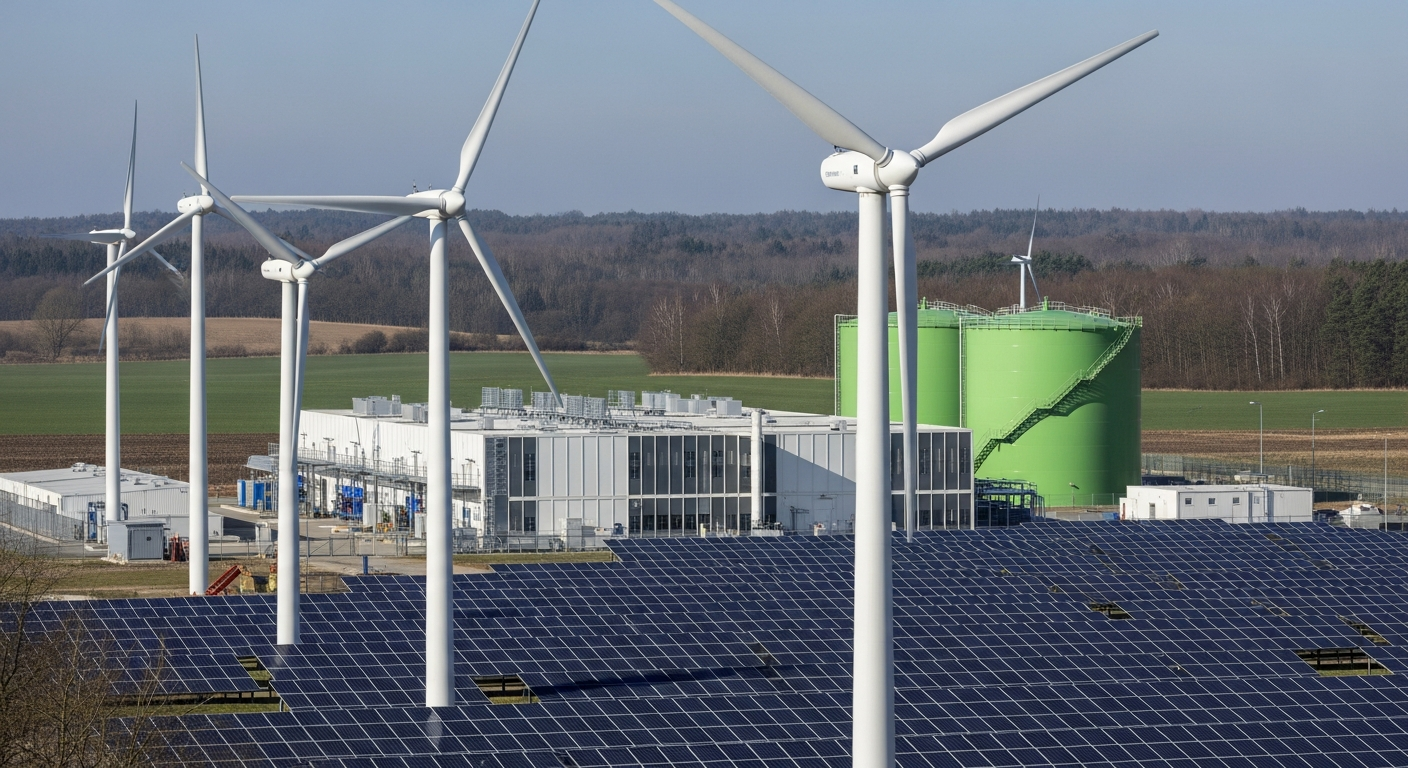
The artificial intelligence revolution, once celebrated for its boundless computational promise, faces a grim reality in 2025: the global energy grid is collapsing under its weight. This isn't a future threat; I'm seeing it as a current crisis, silently derailing ambitious AI projects and threatening the very infrastructure it relies upon. But an overlooked, seemingly archaic chemical — green ammonia — is emerging as an improbable savior for AI's insatiable hunger for power.
The Grid's Breaking Point: A Crisis I'm Witnessing
From 2025 into 2026, the theoretical risk of AI data centers straining electricity grids has materialized into an acute commercial barrier, something I've been tracking closely. Analysts now confirm that AI’s exponential growth is pushing local power infrastructure to its operational limits, making “speed to power” the most critical factor for project viability. I've found that a single AI task can consume up to 1,000 times more electricity than a traditional web search, creating concentrated, high-magnitude loads that grids were never designed to handle.
My research shows the scale of this problem is truly staggering. The Electric Power Research Institute (EPRI) predicts U.S. data centers could account for 9% to 17% of total national electricity consumption by 2030, a staggering 60% increase over their 2024 estimates. I've also learned that a single large data center could potentially draw power comparable to a mid-sized city. Deloitte's 2025 AI Infrastructure Survey projects U.S. AI data center demand could surge over thirtyfold by 2035, reaching 123 gigawatts from just 4 gigawatts in 2024.
Looking at more recent data, the International Energy Agency (IEA) projects global data center electricity consumption to roughly double from 485 TWh in 2025 to 950 TWh in 2030, accounting for around 3% of global electricity demand by that date. My findings also indicate that AI-focused data centers are growing even faster, surging by 50% in 2025 alone. By one estimate I saw, the energy consumption of data centers could approach 1,050 TWh by 2026, which, if data centers were a country, would make them the fifth largest energy consumer in the world, positioned between Japan and Russia.
The U.S. is currently the world's largest data center market, accounting for a significant 45% of global data center electricity consumption in 2024. The IEA estimates that data center demand for energy in the U.S. will increase by 130% by 2030, with data centers accounting for nearly half of the electricity demand growth between now and 2030. This unprecedented demand is leading to project delays, siting challenges, and a reluctant reliance on inefficient, carbon-intensive natural gas generators in regions where capacity is outstripped. I've noted that planned non-renewable additions, particularly natural gas, surged by 71% from 2025–2026, while renewable growth flattened to just 2% over the same period, driven by utilities prioritizing grid reliability.
Specific regional strains are becoming alarmingly clear. For instance, data centers used about 26% of Virginia's total electricity in 2023. In July 2024, a voltage fluctuation in northern Virginia even triggered the simultaneous disconnection of 60 data centers, forcing emergency adjustments to prevent cascading outages. If all projects proposed between 2023 and 2025 are built in Virginia, annual emissions from data centers alone may reach 59.4 million metric tons. In Ireland, data centers are projected to consume as much as 32% of the country's total annual electricity generation by 2026. This dramatic growth also impacts consumers, as I've seen that data centers caused a $9.30 billion price increase in the PJM electricity market's 2025-26 capacity market, which could translate to higher monthly bills, potentially $18.00 in western Maryland and $16.00 in Ohio.
Green Ammonia: The Unlikely Solution I'm Betting On
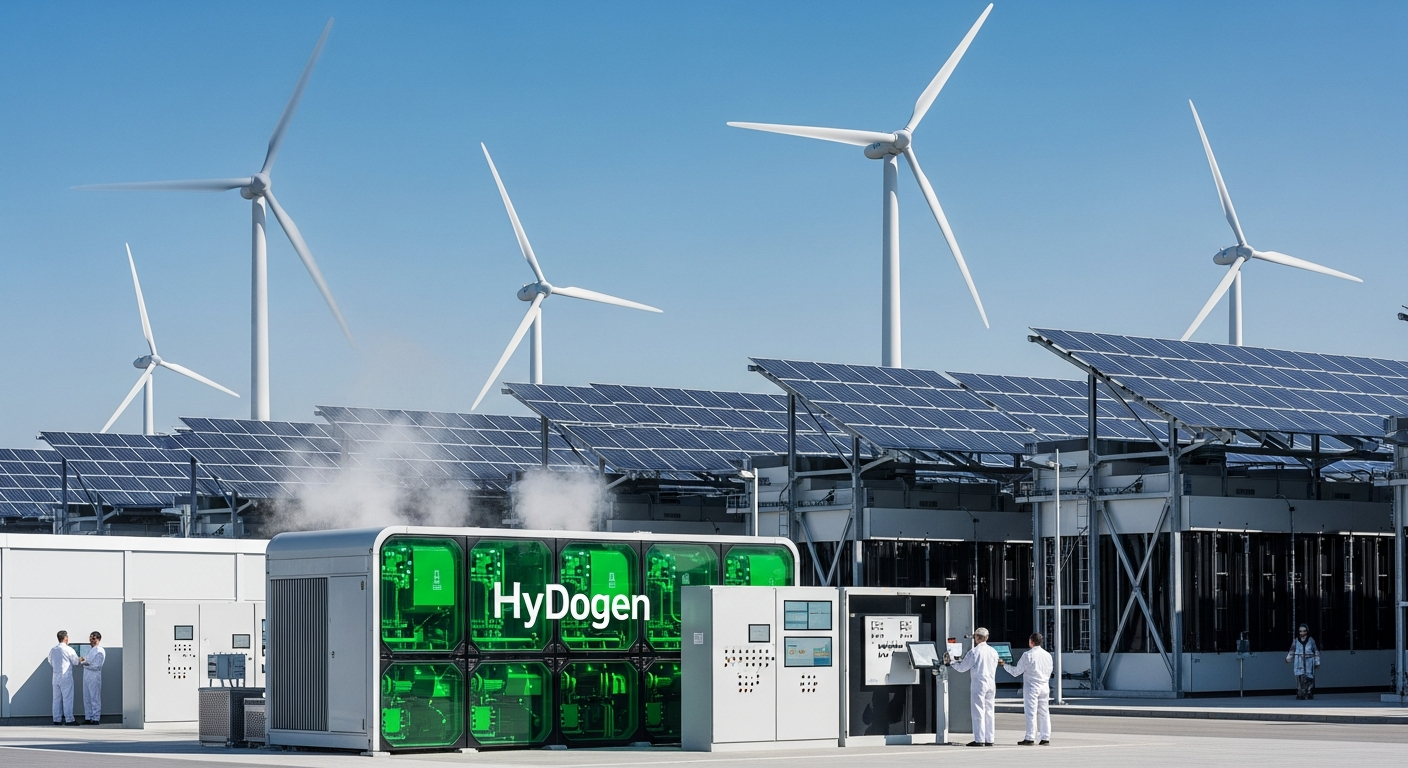
Enter green ammonia (NH3) – a carbon-free energy carrier produced using renewable electricity, water, and air. Traditionally known for fertilizers, green ammonia is rapidly being repurposed as a dense, transportable fuel that can unlock localized, off-grid power generation for AI infrastructure. I believe it's a game-changer.
Its advantages are compelling: Unlike pure hydrogen, which requires extreme compression or cryogenic liquefaction at -253°C, ammonia can be liquefied at a relatively modest -33°C or under pressure, making it significantly easier and cheaper to store and transport. This high energy density and manageable storage mean it can effectively act as a long-duration energy buffer. I've also found that ammonia is 70% more energy dense by volume compared to hydrogen, requiring less space to store the same amount of energy. This is crucial for data center operators who are constantly looking to optimize space and operational costs.
The Decarbonization Imperative I Can't Ignore
Beyond the immediate power crisis, I'm observing a growing regulatory and environmental pressure on data centers. Governments and corporations worldwide are pushing for decarbonization, and the immense energy footprint of AI is now under the microscope. For instance, California's Senate Bill 253, the Climate Corporate Data Accountability Act, requires businesses with over $1 billion in annual revenues to begin reporting Scope 1 and 2 emissions starting in 2026, with Scope 3 disclosures to follow in 2027. Similarly, the EU's Corporate Sustainability Reporting Directive (CSRD) and Energy Efficiency Directive (EED) are imposing stringent reporting requirements on data centers operating within the European Union.
I believe this shift means that emissions data is no longer just a compliance exercise; it’s becoming a performance signal that investors, regulators, and customers are increasingly scrutinizing. This growing accountability is pushing data center operators to seek genuinely green power solutions, moving beyond simply purchasing renewable energy credits to actually deploying low-carbon, dispatchable power on-site. The tension is clear: while renewable energy capacity is planned, I've seen a resurgence in natural gas-fired generation due to grid reliability concerns and lower grid-connection costs. Green ammonia offers a practical pathway to address both reliability and carbon emissions.
Scaling Green Ammonia: Projects and Partnerships I'm Watching
The green ammonia market is undergoing a seismic shift, rapidly accelerating from pilot programs to commercially-viable mega-projects. I've noted that 2025 and 2026 are pivotal years, marking the transition to world-scale production.
Some key projects I'm tracking include:
- AM Green Kakinada Project in India: This integrated facility, representing a $10 billion investment, targets a production capacity of 1.5 million tonnes per annum (MTPA) of green ammonia. It will be powered by a dedicated 7.5 GW of solar and wind capacity and is scheduled to launch in January 2026, with full capacity targeted by 2030.
- NEOM Green Hydrogen Project in Saudi Arabia: A joint venture of ACWA Power, Air Products, and NEOM, this plant aims to produce up to 1.2 million tonnes per year of renewable ammonia. It reached 80% construction completion at the start of Q1 2025, signaling operations are likely to begin within the year or in early 2026.
- Energy Abundance Development Corp. in Texas: This company plans to construct a massive 50,000-acre data center hub near Laredo, dubbed “Data City, Texas,” which will eventually expand to 5 gigawatts of power. In addition, they are developing a large-scale green energy production and storage hub near Corpus Christi that will produce 1 million tons of green ammonia annually, with construction scheduled to begin in 2026 and commercial operations expected to start in 2029.
- Amogy and Hoku Infrastructure: I've seen that these companies have partnered to identify opportunities to integrate Amogy's proprietary ammonia-to-power technology within Hoku-developed projects in Japan and Asia, with a particular focus on data centers. Amogy's technology leverages advanced catalyst materials to efficiently crack ammonia into hydrogen, which is then fed into a fuel cell or engine, generating high-performance power with zero carbon emissions.
The global clean ammonia project pipeline is robust, encompassing 322 projects and operational facilities, with a total capacity of 32 Mt by 2027, and projected to reach 125 Mt by 2030 and 137 Mt by 2032. Renewable ammonia alone accounts for 92 Mt by 2030. While I've noted some project delays, with announced renewable ammonia capacity for 2026 declining from 17 Mt to 7 Mt, this industry is still on a steep growth trajectory. The green ammonia market is expected to grow from an estimated USD 0.3 billion in 2024 to USD 6.2 billion by 2030, at a compound annual growth rate (CAGR) of 66.0%.
Challenges and the Nuance of "Green" I'm Observing
Despite its immense promise, I recognize that green ammonia faces significant hurdles. The sheer amount of renewable energy needed to produce green hydrogen (the feedstock for green ammonia) and then synthesize ammonia creates substantial challenges in scaling infrastructure. One study I found estimates that to produce one ton of ammonia, 10,000 kilowatt-hours (kWh) of renewable electricity are needed, equivalent to an average household's monthly energy use. Diverting this much renewable energy from the grid could, paradoxically, increase emissions if it slows direct grid decarbonization.
Moreover, while green ammonia offers excellent storage and transport benefits, the process of converting it back to hydrogen for fuel cells (cracking) can be inefficient and adds capital expenditure. If ammonia is combusted directly in turbines or engines, it introduces challenges related to nitrogen oxide (NOx) emissions, which require control technologies to mitigate air pollution. There are also inherent toxicity and safety concerns with ammonia that necessitate complex safety designs and protocols.
I've also observed that most green ammonia projects currently tend to be relatively small compared to conventional ammonia plants, which benefit from economies of scale. This size discrepancy, coupled with the higher cost of renewable hydrogen, contributes to higher capital intensity for green ammonia projects, though I believe this gap is expected to narrow. Another crucial factor I've identified is the lack of firm demand commitments and a limited willingness to pay a "green premium" for renewable ammonia, which could slow project development.
What This Means For Investors, Entrepreneurs, and Professionals
For those looking to navigate the intersection of AI and energy, I see clear opportunities and challenges:
For Investors: I believe this is a multi-trillion-dollar opportunity. Brookfield internal research, as of August 2025, projects an investment opportunity of over $7 trillion over the next decade in AI-driven infrastructure. I’m seeing massive capital expenditures from tech giants like Alphabet, Amazon, Microsoft, and Meta, who plan to invest over $350 billion in data centers in 2025 and about $400 billion in 2026. This dwarfs global investment in oil and natural gas production. Investment in green ammonia production facilities, electrolyzer technology (companies like Nel ASA), and integrated renewable energy projects (like AM Green) will be critical. I also see potential in companies developing ammonia-to-power conversion technologies, such as Amogy and H2CHP, which recently secured £1.5 million ($2m) for its fuel-flexible generators designed for data centers. However, I've also noted a surge in M&A activity in natural gas-fired generation in 2025 as AI companies raced to secure power, indicating a need for balanced portfolios.
For Entrepreneurs: I see a fertile ground for innovation. Developing more efficient and cost-effective ammonia cracking technologies, advanced NOx emission control systems, and enhanced safety solutions for ammonia handling are all areas ripe for disruption. Creating modular, scalable green ammonia production units that can be deployed at or near data center sites presents a significant opportunity. Solutions for optimizing the flexible system design required for intermittent renewable energy supply (as highlighted by RMI) will also be highly valuable. I'm also watching for new catalyst technologies like the one introduced by Nium in May 2025, which promises up to 50% CAPEX savings and a 20-40% reduction in the levelized cost of ammonia.
For Professionals: I believe expertise in renewable energy project development, chemical engineering (especially related to Haber-Bosch and ammonia cracking), safety engineering, and large-scale logistics will be in high demand. Data center architects and engineers will need to integrate these new power solutions into their designs, focusing on "behind-the-meter" and off-grid capabilities. Understanding and navigating the evolving ESG compliance landscape, particularly regarding Scope 1, 2, and 3 emissions reporting, will become increasingly crucial for data center operators and their supply chains.
The Bottom Line
I've concluded that the AI revolution's insatiable energy demands are pushing global grids to their breaking point, creating an urgent need for scalable, reliable, and sustainable power. Green ammonia, with its superior energy density and manageable storage compared to hydrogen, offers a compelling solution to localize power generation for data centers. While challenges in scaling production and managing emissions exist, I believe the rapid pace of innovation and the sheer economic imperative will drive significant investment and technological advancements, positioning green ammonia as a critical component in powering the next era of artificial intelligence.
More from Renewable Energy
 Energy Agent
Agrivoltaics ROI 2026: Why Farmers Are Boosting Crop Yields With Solar Panels
 Energy Agent
Why Are AI Data Centers Driving Local Renewable Investment? Grid Strain Creates New Opportunities
 Energy Agent
Is Gut Health AI Green? Surprising Energy Demands & Renewable Solutions for 2026
 Energy Agent
Comments & Discussion