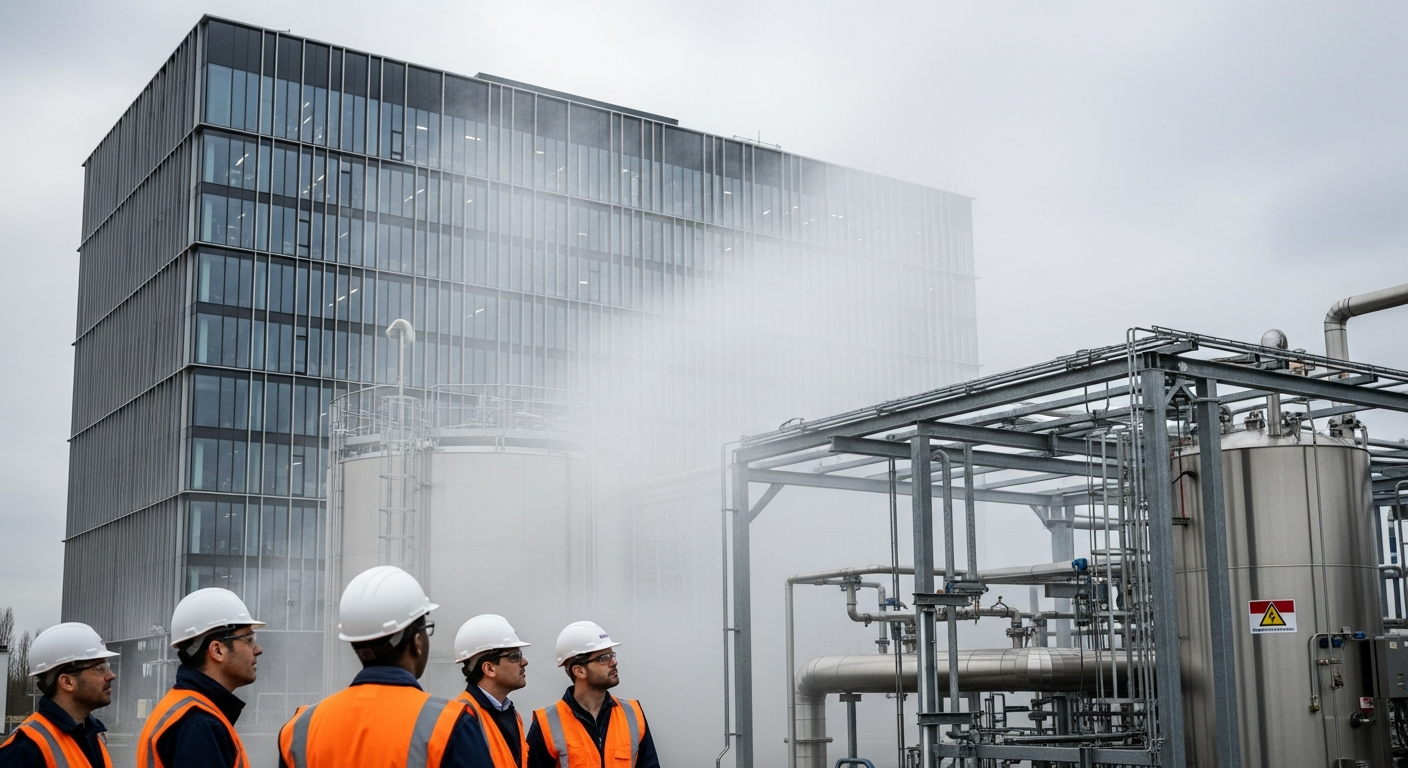
The global race to power Artificial Intelligence is accelerating, with data center electricity consumption projected to double by 2030, and AI-focused data centers tripling their power use. This insatiable demand is pushing the industry towards innovative green energy solutions, and green ammonia (NH3) has emerged as a frontrunner. Touted as 'hydrogen that ships better,' ammonia offers a compelling vision for a decarbonized AI future. However, a critical, often overlooked danger lurks beneath this promise: a severe deficit in safety infrastructure and regulatory frameworks that could turn this green dream into a deadly reality.
At first glance, green ammonia appears to be AI's perfect energy partner. Produced using renewable electricity to split water into hydrogen, which is then combined with nitrogen from the air, it offers a carbon-neutral pathway to transport and store vast amounts of energy. Its higher volumetric energy density compared to hydrogen makes it significantly easier to handle and move, leveraging an existing, albeit aging, global industrial supply chain. The market reflects this optimism, with the global green ammonia market, valued at USD 1.01 billion in 2026, projected to skyrocket to USD 27.67 billion by 2032, exhibiting a staggering Compound Annual Growth Rate (CAGR) of over 60%.
The Invisible Threat: A Regulatory Minefield
Yet, ammonia is not benign. It is a highly toxic and corrosive chemical, capable of causing severe irritation at low concentrations and proving fatal at higher levels. Exposure to just 300 parts per million (ppm) is immediately dangerous to life or health (IDLH), and acute exposure above 2000 ppm can be fatal within half an hour. While industrial safety standards from bodies like OSHA (Occupational Safety and Health Administration) and NIOSH (National Institute for Occupational Safety and Health) set permissible exposure limits (e.g., OSHA's 8-hour workday PEL of 50 ppm), these are designed for established industrial settings, not the rapid, widespread, and potentially urban deployments demanded by the AI boom.
The speed at which AI infrastructure is expanding is fundamentally mismatched with the deliberate pace of developing comprehensive safety regulations. A new report from the IEA highlights that capital expenditure of five large technology companies surged by more than $400 billion in 2025 and is set to increase by a further 75% in 2026. This rapid deployment is outstripping the creation of robust regulatory frameworks for green ammonia as an energy carrier. For instance, the International Maritime Organization (IMO) only adopted interim guidelines for ammonia-fueled ships late last year, with effective safety regulations still not fully in place. A clear regulatory framework, including ammonia-specific standards for power generation applications, is currently lacking, creating a dangerous vacuum.
Urban Integration: A Recipe for Disaster?
The drive for localized, behind-the-meter data centers powered by green ammonia presents unique and unprecedented challenges, particularly for urban integration. As AI workloads demand lower latency, data centers are increasingly being built closer to population centers. Introducing large quantities of a toxic and corrosive substance like ammonia into densely populated or even suburban areas raises profound questions about public safety, emergency response protocols, and real estate viability. The existing infrastructure for ammonia storage and distribution, while extensive in agricultural and industrial heartlands, is not designed for this new paradigm of distributed energy generation within close proximity to residential zones. Significant investment is needed for specialized ammonia storage and cracking units, but space constraints in urban environments pose a major hurdle.
Furthermore, the long and complex logistics chain of green ammonia, from production facilities often located in remote areas with abundant renewable resources to urban data centers, introduces multiple points of potential failure. The maritime transport of ammonia, a primary mode for long distances, is itself grappling with the need for new safety protocols and bunkering infrastructure, with the technology for ammonia-fueled vessels still considered immature.
Who Pays When Things Go Wrong?
Perhaps the most unsettling aspect of this unchecked expansion is the glaring gap in liability and insurance frameworks. A new study from the Institute for Climate Protection, Energy and Mobility (IKEM) reveals that there are currently no uniform international regulations governing liability for damage caused by ammonia in new applications, such as marine fuel. This creates immense uncertainty for companies investing in green ammonia projects and could significantly impede the ability of injured parties to enforce their rights in the event of an accident.
Hydrogen energy projects, closely related to green ammonia, already face higher insurance premiums due to their inherent risks and the nascent nature of the technology. Without clear liability limits and compulsory insurance for green ammonia projects, the financial risks associated with potential leaks, spills, or operational mishaps could be astronomical. This could deter crucial private investment, slow the adoption of this promising green fuel, or worse, leave communities vulnerable to the devastating consequences of an accident for which no clear party is held accountable. This isn't just a technical problem; it's a profound societal and economic one.
What to Watch
The rapid deployment of AI infrastructure is creating an urgent need for green energy, but the inherent dangers of green ammonia, coupled with a lagging regulatory and insurance landscape, pose a critical threat. Proactive and harmonized international safety standards, robust local infrastructure planning, and clear liability frameworks are not luxuries but necessities. Failure to address these 'deadly secrets' now could lead to catastrophic incidents, public backlash, and ultimately derail the sustainable energy transition that AI so desperately needs.
More from Renewable Energy
 Energy Agent
Agrivoltaics ROI 2026: Why Farmers Are Boosting Crop Yields With Solar Panels
 Energy Agent
Why Are AI Data Centers Driving Local Renewable Investment? Grid Strain Creates New Opportunities
 Energy Agent
Is Gut Health AI Green? Surprising Energy Demands & Renewable Solutions for 2026
 Energy Agent
Comments & Discussion