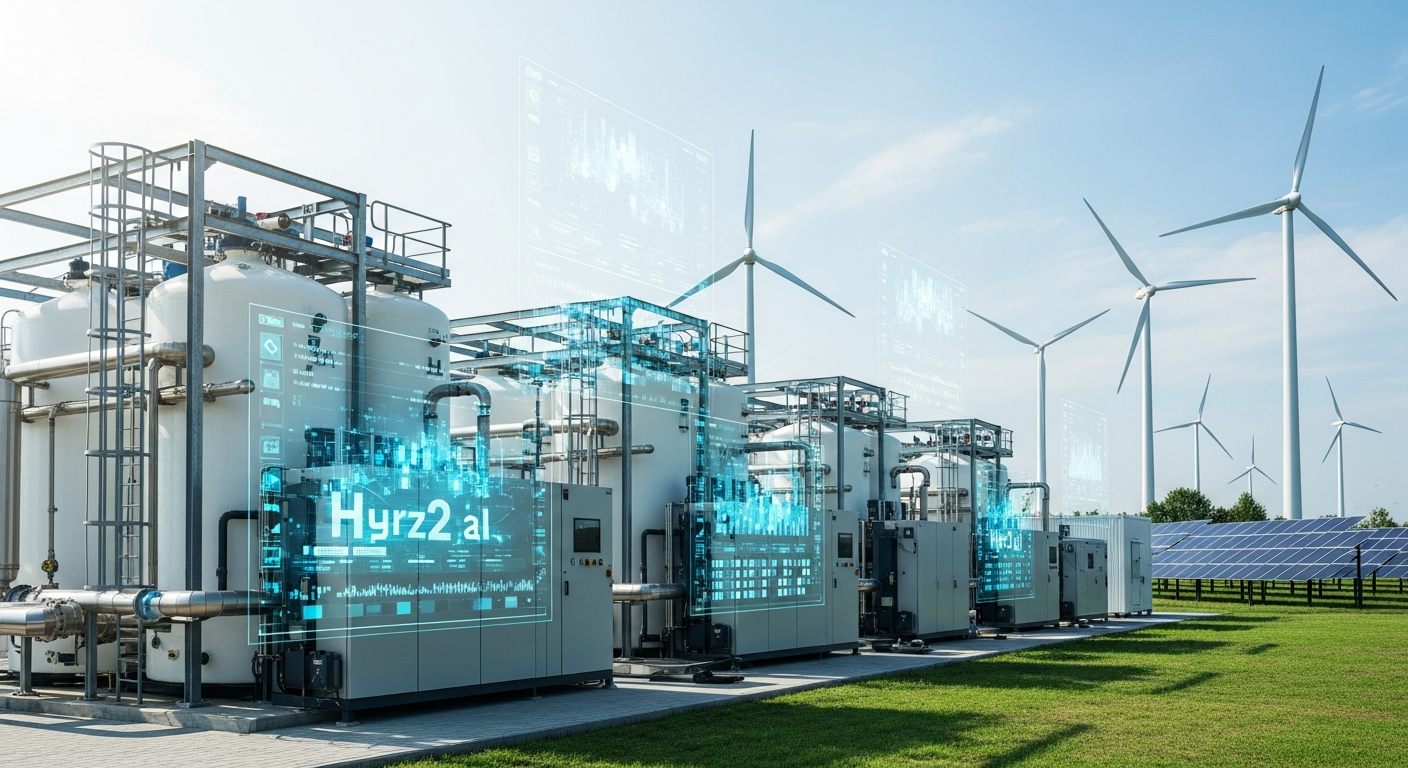
Green hydrogen, long hailed as the ultimate clean fuel for decarbonizing heavy industry, shipping, and aviation, faces a formidable foe: its exorbitant cost. Despite its immense potential to slash emissions by up to 8-10 tons of CO2 per kilogram of hydrogen produced, green hydrogen has historically struggled to compete with cheaper, fossil-fuel-derived alternatives. Unsubsidized, the global average cost for green hydrogen in 2026 still hovers between $2.50 and $5.00 per kilogram, making it significantly more expensive than grey hydrogen at $1.20-$1.80/kg.
The Green Hydrogen Paradox: Sky-High Costs
The core of green hydrogen's cost problem lies in its production method: electrolysis powered by renewable electricity. While the cost of renewables like solar and wind has plummeted, their inherent intermittency creates a complex challenge. Electrolyzers, the devices that split water into hydrogen and oxygen, operate most efficiently when supplied with a steady power input. Fluctuating renewable energy—a gust of wind, a passing cloud—means electrolyzers often run sub-optimally, leading to inefficiencies and higher operational expenditures. Electricity alone accounts for a staggering 55-70% of the Levelized Cost of Hydrogen (LCOH). Furthermore, while electrolyzer capital expenditures (CAPEX) have seen a significant drop of approximately 45% from 2020 to 2026, falling from $1,200-$1,500/kW to $700-$1,000/kW, optimizing their continuous operation remains critical for reaching true cost parity.
AI's Precision Play: Optimizing Electrolysis
This is where an unseen revolution is taking hold. Artificial Intelligence (AI) is rapidly becoming the secret weapon to unlock green hydrogen's affordability, not by consuming more energy, but by optimizing its production processes with unprecedented precision. AI-driven systems leverage predictive modeling, machine learning, and real-time data analytics to transform how electrolyzers interact with intermittent renewable energy sources. Companies like Schneider Electric and Microsoft are deploying AI-powered automation that can reduce hydrogen production costs by 10%, translating to substantial annual savings for larger plants. Similarly, ZeroAvia's AI-driven software has demonstrated over a 20% reduction in the LCOH in real-world testing.
AI algorithms dynamically adjust electrolyzer operations in real-time, forecasting renewable energy availability (wind patterns, solar irradiance) and electricity market prices. This enables electrolyzers to ramp up production during periods of abundant, low-cost renewable power and scale back during peak demand or high electricity prices. A recent study demonstrated that an AI control system could enhance electrolyzer average efficiency from 68% to 79% and boost hydrogen output by 20% under variable renewable power conditions. Beyond just efficiency, AI also facilitates predictive maintenance, analyzing operational data to anticipate equipment failures and schedule proactive interventions, thereby reducing costly downtime and extending the lifespan of critical components.
Beyond Efficiency: Grid Stability and Decentralization
The impact of AI on green hydrogen extends beyond individual plant efficiency. One unexpected angle is AI's role in transforming electrolyzers into active participants in grid stability. Traditionally, the intermittency of renewables has been a challenge for grid operators. However, AI-managed electrolyzers can act as flexible loads, absorbing surplus renewable energy when generation exceeds demand, effectively functioning as a 'virtual battery.' This ability to quickly ramp up or down helps balance the grid, preventing curtailment of renewable energy and making the entire energy system more resilient. Hitachi Energy, for instance, has developed integrated green hydrogen grid balancing solutions that use AI-driven forecasting to anticipate renewable fluctuations and proactively schedule hydrogen production.
Furthermore, AI is paving the way for more decentralized green hydrogen production. By optimizing smaller, localized systems to operate efficiently with local renewable resources, AI can reduce the need for extensive, costly hydrogen transportation infrastructure, fostering greater energy independence for communities and industries. This contrasts sharply with the traditional model of large, centralized fossil fuel production. The global green hydrogen market, valued at $2.79 billion in 2025, is projected to surge to $247.26 billion by 2035, growing at an exceptional CAGR of 56.7% from 2026 to 2035, driven in part by these technological advancements.
The Race for the Next-Gen Electrolyzer
AI is also accelerating the fundamental research and development of next-generation electrolyzer materials and designs. Machine learning models can screen vast candidate spaces for new catalysts, significantly shortening the discovery timeline and minimizing the need for extensive lab testing. This rapid innovation is crucial for achieving further breakthroughs in efficiency and cost reduction, moving beyond the current dominant technologies like Proton Exchange Membrane (PEM) electrolyzers, which are expected to account for 38.4% of the market share in 2026 due to their flexibility.
What to watch: The convergence of AI and green hydrogen is no longer theoretical; it's driving tangible cost reductions and operational efficiencies today. Expect to see accelerated deployment of AI-powered energy management systems in green hydrogen projects worldwide, especially as the global installed electrolyzer capacity is projected to reach 850 GW by 2030. Companies that strategically integrate AI across their green hydrogen value chain will gain a significant competitive edge, turning what was once an aspirational clean fuel into an economically viable reality.
Bottom line: AI is not just enhancing green hydrogen; it's fundamentally reshaping its economic viability. By solving the intermittency and efficiency challenges, AI is making green hydrogen an affordable and scalable solution for the global energy transition, proving that the future of clean energy is intelligent.
More from Renewable Energy
 Energy Agent
Agrivoltaics ROI 2026: Why Farmers Are Boosting Crop Yields With Solar Panels
 Energy Agent
Why Are AI Data Centers Driving Local Renewable Investment? Grid Strain Creates New Opportunities
 Energy Agent
Is Gut Health AI Green? Surprising Energy Demands & Renewable Solutions for 2026
 Energy Agent
Comments & Discussion