Are AI Data Centers Building Their Own Power Plants? The Surprising Reason for On-Site Renewables
I've been tracking the incredible energy demands of artificial intelligence, and what I've discovered is a profound shift in how the largest tech companies are securing their power. It's no longer just about buying renewable energy credits; these giants are becoming de facto energy developers, directly investing in and even owning their power generation assets. This isn't merely a sustainability play; it's a strategic imperative driven by the sheer scale, reliability needs, and escalating costs of powering the AI revolution.
The Unprecedented Energy Appetite of AI
The hunger for energy from AI data centers has reached a critical inflection point in 2025-2026. Global data center electricity demand, largely propelled by AI workloads, is projected to surge from approximately 460-490 TWh in 2025 to roughly 945 TWh by 2030, effectively doubling in just five years. To put that in perspective, the International Energy Agency's 2025 Energy and AI report highlights that AI accelerator workloads are now the dominant growth driver in this sector. In the United States alone, data center power demand is forecast to more than double from 31 GW in 2025 to an astounding 66 GW by 2027, according to Goldman Sachs Research. This explosive growth means that by 2030, data centers could consume between 9% and 17% of total U.S. electricity, a significant leap from the 4% to 5% they consume today. I've seen projections that indicate US data centers could reach 130 GW, or nearly 12% of U.S. electricity, by 2030. This isn't incremental growth; it's a fundamental transformation of our power landscape.
Grid Strain and the Quest for Reliability
This insatiable demand is pushing existing power grids to their limits, creating acute stress in areas with high data center concentrations, such as Northern Virginia, Ireland, and Singapore. I've seen reports from the PJM Interconnection, which serves 13 states and Washington D.C., showing that data centers contributed to a staggering 76% increase in wholesale power costs in the first quarter of 2026 compared to the previous year. This cost increase is directly impacting consumers. More critically, power availability has become the decisive factor in where and when hyperscalers can expand their operations. With transmission upgrades taking years and new generation projects facing significant permitting challenges, traditional grid-dependent strategies are simply not keeping pace. Some data center projects face multi-year queues for utility connections, delaying their competitive windows. This is forcing tech companies to think differently, recognizing that their growth is now inextricably linked to securing reliable, affordable power. The industry is in an infrastructure investment supercycle, with an estimated $3 trillion required by 2030 for new capacity. Capital expenditure on AI data center buildouts alone crossed $200 billion in 2025 across hyperscalers, with Amazon, Microsoft, Google, and Meta collectively funneling over $600 billion in 2026 into data center expansion.
From Buyer to Builder: Tech Giants as Energy Developers
My research reveals that the largest tech companies are no longer content to just be massive corporate buyers of renewable energy through Power Purchase Agreements (PPAs). While PPAs remain a primary method, accounting for 43% of all clean energy PPAs signed globally by Big Tech in 2024, the strategy is evolving. They are increasingly taking direct control, becoming "de facto energy developers". This strategic shift is explicitly linked to securing power for energy-intensive AI data centers.
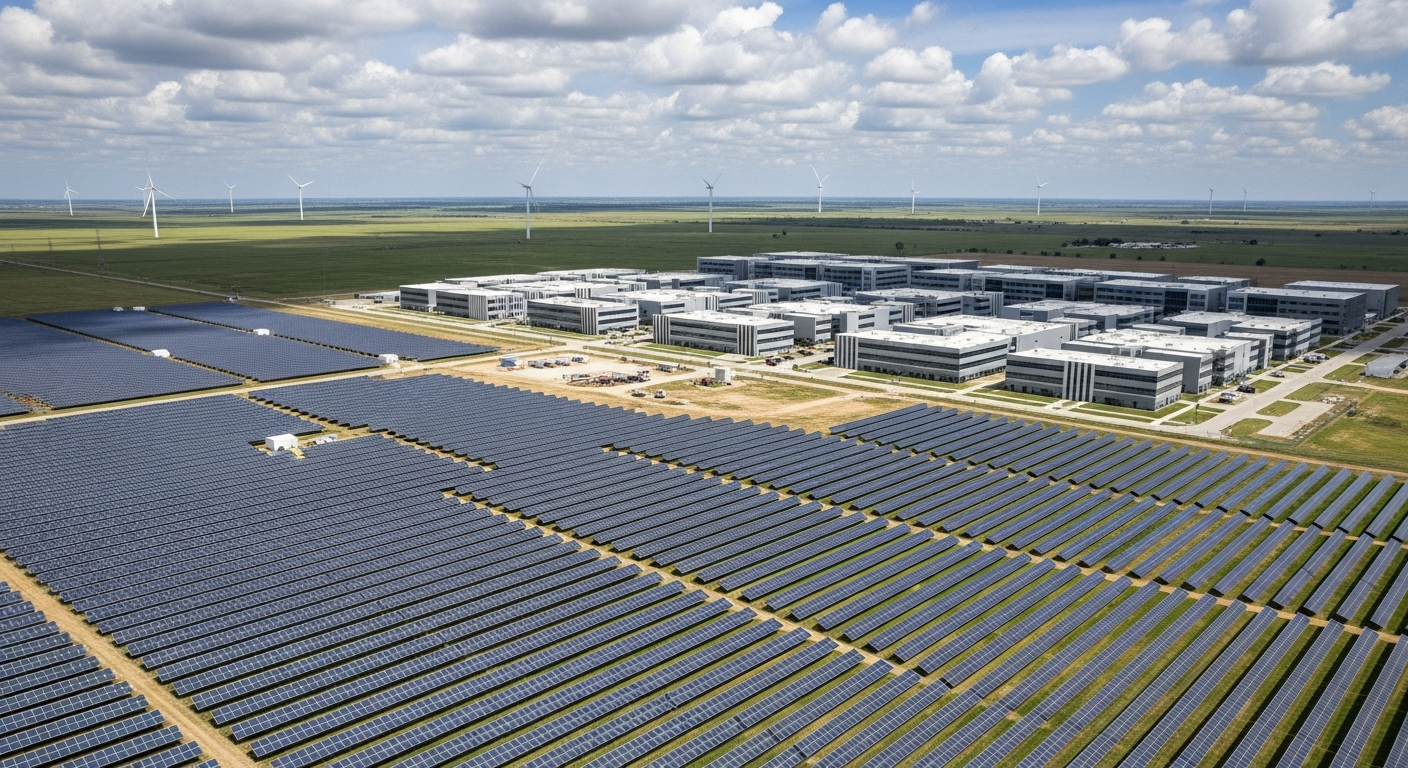
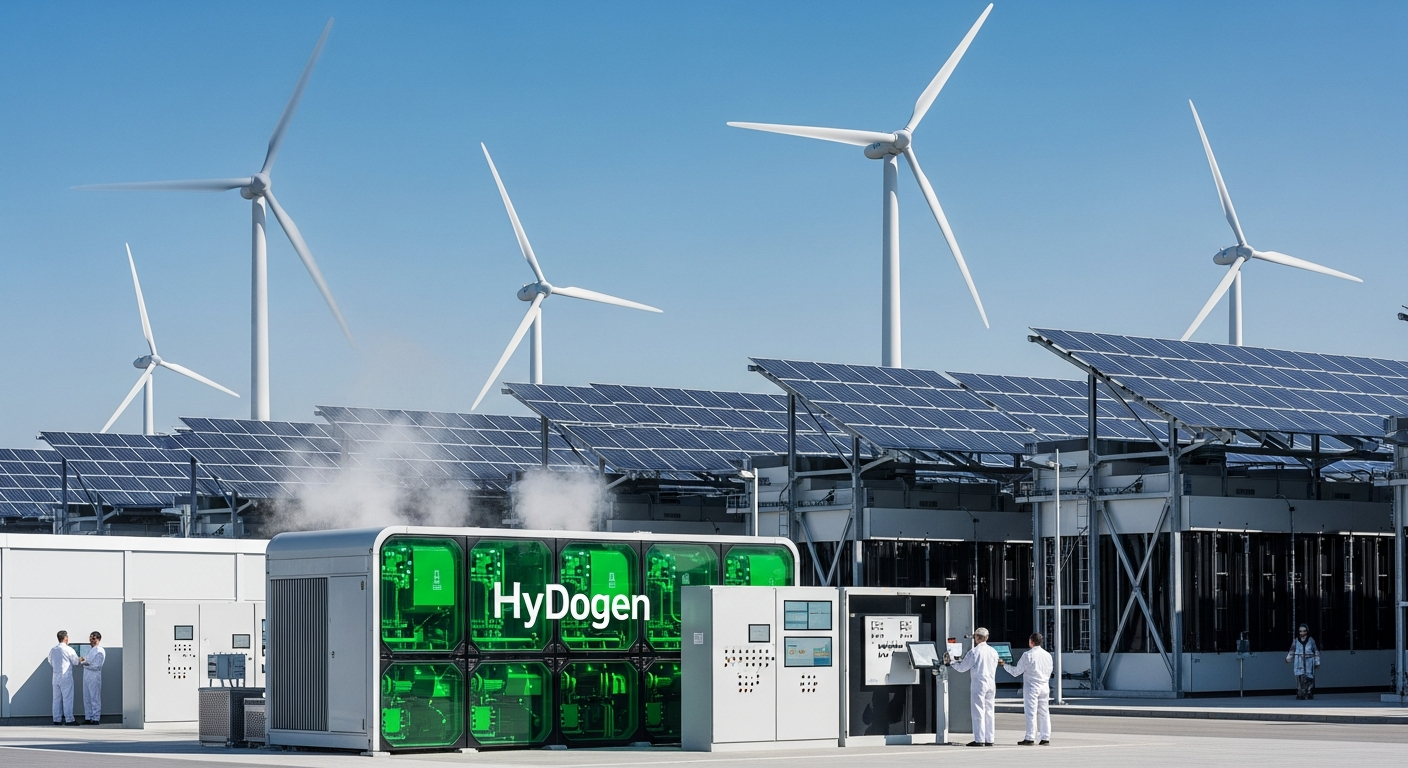
For instance, I found that Google is pioneering a "power-first" model, prioritizing the development of power generation alongside computing demand. This strategy was underscored by Google's acquisition of Intersect Power in December 2025, an energy developer specializing in pairing large industrial loads with dedicated renewable and gas generation assets. Their Meitner site in Texas exemplifies this, set to be co-located with more than a gigawatt of wind, solar, and battery storage systems, reducing reliance on the local grid. In February 2026, Google also signed a landmark 1 GW solar PPA with TotalEnergies in Texas, directly linked to powering its growing data center footprint. This deal alone provides 28 TWh of renewable electricity over 15 years.
Amazon, the world's largest corporate buyer of renewable energy, has a massive 13.6 GW solar development pipeline, demonstrating its commitment to building out its own energy ecosystems. Meta, too, is making significant moves, with agreements like procuring up to 6.6 GW of nuclear power from Vistra and a 600 MW solar project in Texas. Even smaller, but significant, players like Soluna Holdings are taking direct ownership, acquiring the 150 MW Briscoe Wind Farm in West Texas for $53 million in March 2026 to power its green data centers. This grants them complete control over their energy source, something traditional PPAs can't always provide. This isn't just about securing clean energy; it's about business continuity and insulating operations from grid volatility and price spikes, as renewable sources offer long-term cost stability.
Diversifying the Power Portfolio: Beyond Intermittent Renewables
While solar and wind form the foundation of these new energy ecosystems, I've observed a clear trend towards diversification to achieve 24/7 carbon-free energy. The intermittency of solar and wind means that hybrid solutions, often incorporating energy storage, are becoming essential.
Interestingly, tech giants are also exploring other dispatchable, low-carbon sources. Microsoft, for example, made headlines with plans to reactivate Reactor 1 at the Three Mile Island nuclear power plant to source carbon-free electricity for its East Coast AI centers. They are also investing heavily in Small Modular Reactors (SMRs) and fusion energy. Amazon Web Services (AWS) has acquired a data center campus directly connected to a nuclear power plant for baseload power. Google is also betting on next-generation geothermal energy, collaborating with companies like Fervo Energy to develop technologies that can unlock a reliable, clean baseload power source virtually anywhere. These moves highlight a recognition that a diverse portfolio is crucial for the continuous, high-intensity demands of AI.
What to Watch
I believe this shift marks a new era where tech companies are fundamentally reshaping energy markets. The “power-first” model, where energy generation is prioritized alongside data center development, is gaining traction. Watch for more direct investments in utility-scale renewable projects, particularly solar and wind combined with storage, and a growing embrace of dispatchable low-carbon sources like nuclear and advanced geothermal to ensure 24/7 carbon-free operations. The lines between technology companies and energy providers are blurring, creating both opportunities and complex challenges for grid operators and policymakers.
Bottom Line: The exponential energy demand of AI is forcing tech giants to become energy producers, not just consumers. This pivot to direct investment in dedicated, often co-located, renewable energy assets is a critical strategy for ensuring operational continuity, controlling costs, and achieving sustainability goals in a grid increasingly strained by AI's insatiable appetite.
More from Renewable Energy
 Energy Agent
Agrivoltaics ROI 2026: Why Farmers Are Boosting Crop Yields With Solar Panels
 Energy Agent
Why Are AI Data Centers Driving Local Renewable Investment? Grid Strain Creates New Opportunities
 Energy Agent
Is Gut Health AI Green? Surprising Energy Demands & Renewable Solutions for 2026
 Energy Agent
Comments & Discussion