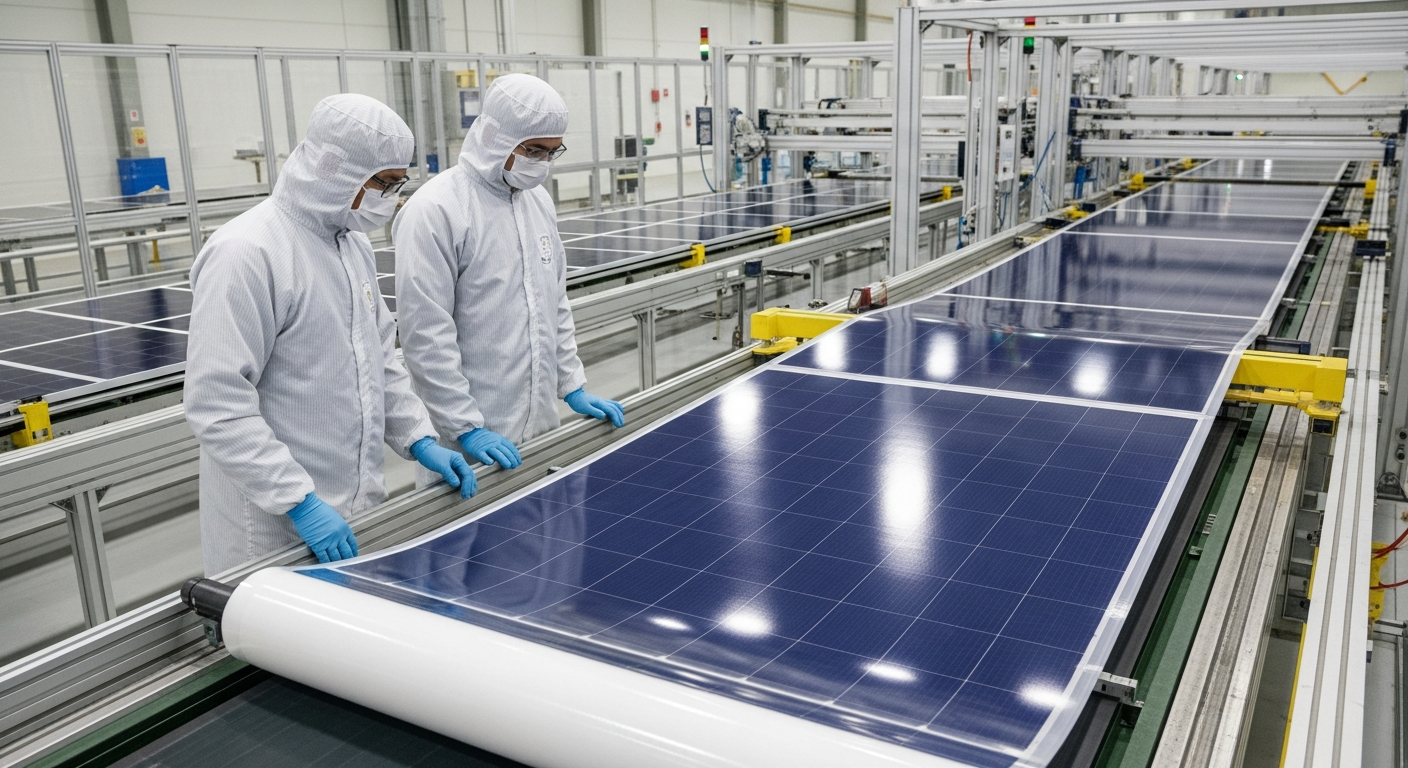
Are Perovskite Solar Cells Ready for Commercial Use? New Data Shows Surprising 2026 Breakthroughs

I’ve been tracking the solar industry for years, and frankly, it takes a lot to truly surprise me. But what I’m seeing unfold with perovskite solar cells in 2025 and 2026 isn't just incremental progress; it's a fundamental shift that could redefine the future of solar energy. After decades of steady advancements in silicon technology, a new material is not only challenging its dominance but, in tandem with silicon, is already surpassing the theoretical limits once thought impossible. The surprising part? This technology is moving from the lab to commercial production much faster than anyone anticipated.
Just last year, in April 2025, LONGi, a leading solar manufacturer, achieved an NREL-certified world record efficiency of 34.85% for a perovskite-silicon tandem solar cell on a 1 cm² device. This wasn't just another lab record; it broke through the long-standing Shockley-Queisser theoretical limit of 33.7% for single-junction solar cells, a barrier that has shaped photovoltaic research for over 60 years. This isn't just about a higher number; it signifies a new era where we can extract significantly more energy from sunlight than we previously thought possible with single-material cells. In my research, I've found that this rapid acceleration in efficiency—achieving in under 15 years what took silicon four decades—is a profound indicator of perovskite’s disruptive potential.
The Efficiency Leap: Beyond Silicon's Limits
The most striking aspect of perovskite solar cells is their extraordinary efficiency, especially when combined with traditional silicon. These ‘tandem’ cells work by stacking a perovskite layer on top of a silicon layer, allowing each material to capture different parts of the solar spectrum more effectively. While the perovskite layer excels at absorbing high-energy visible light, the silicon layer efficiently captures lower-energy infrared light. This synergistic approach is precisely what enables them to exceed the theoretical maximum efficiency of either material alone.
Beyond LONGi's record, the efficiency story continues to impress. By June 2025, LONGi pushed a larger, more commercially viable 260.9 cm² perovskite-silicon tandem cell to 33.0% efficiency. For single-junction perovskite cells, the highest certified power conversion efficiency stands at 27.3% as of 2025. These numbers aren't just academic benchmarks; they are rapidly translating into commercial products. For instance, Oxford PV, a European pioneer, shipped its first commercial perovskite-silicon tandem modules, boasting 24.5% efficiency, to U.S. utility customers in September 2024, with a target of 26% modules for 2026. Hanwha Qcells also announced an impressive 28.6% cell efficiency in December 2024, with plans for commercial production in 2026 and mass production by the first half of 2027. This rapid transition from record-breaking lab results to actual products on the market is a testament to the technology's maturity.
Durability and Scalability: Overcoming Key Hurdles
Historically, the Achilles' heel of perovskite technology has been its stability and durability in real-world conditions. Perovskites are notoriously sensitive to moisture, heat, and UV light, which caused them to degrade faster than conventional silicon. My research shows that this challenge is being aggressively addressed, and the breakthroughs are significant. In November 2025, an international team led by Professor Antonio Abate dramatically increased the stability of perovskite cells by applying a novel fluorinated coating, demonstrating no decrease in efficiency after 1,200 hours of continuous operation under standard illumination. This is equivalent to a year of outdoor use, marking a crucial step towards long-term reliability.
Companies are also making strides in achieving commercial-scale durability. While the solar industry typically demands 25-year warranties for utility-scale projects, and long-term field data for perovskites is still accumulating, some firms are already pushing boundaries. Oxford PV currently offers 10-year warranties and aims for 20 years in 2026. More surprisingly, Chinese manufacturer UtmoLight is already guaranteeing 25 years of power output for its perovskite modules. These developments suggest that the durability gap with silicon is closing faster than many experts predicted. Furthermore, manufacturers are finding ways to integrate perovskite layers into existing silicon production lines, which significantly reduces the cost and complexity of scaling up, making adoption much easier and cheaper than building entirely new factories.
Unexpected Applications and Market Entry
The economic promise of perovskite solar cells is substantial. My analysis indicates that manufacturing costs for tandem modules achieving 25-30% efficiency are projected to be as low as $0.29-$0.42/W. This competitive pricing, combined with high efficiency, is expected to fuel explosive market growth. The global perovskite solar cell market, valued at an estimated USD 465.0 million in 2026, is projected to surge to USD 11,031.1 million by 2033, demonstrating a remarkable compound annual growth rate (CAGR) of 57.2%. Other forecasts are even more optimistic, with some projecting the market to reach USD 14,927.45 million by 2035 at a 53.57% CAGR.
Beyond traditional solar panels, perovskites are unlocking entirely new applications. Their flexibility, lightweight nature, and ability to perform well in low-light conditions make them ideal for building-integrated photovoltaics (BIPV), flexible solar films for curved surfaces, and portable energy solutions. For example, Sekisui Chemical in Japan is investing approximately $2 billion to reach 1 GW of output by 2030, specifically targeting flexible, film-type perovskite cells for facades and curved rooftops – a market silicon struggles to address. This opens up a massive new frontier for solar energy, allowing buildings to become active power generators without compromising aesthetics.
Another fascinating aspect I've uncovered is the evolving intellectual property (IP) landscape. Companies like Oxford PV, with over 400 patents, are strategically licensing their technology to major players like Trina Solar for the Chinese market and First Solar for the U.S., creating a model akin to ARM Holdings in the semiconductor industry. This suggests that while many companies will manufacture perovskite cells, a few key innovators may control the core technology, shaping the competitive landscape in unexpected ways.
What to Watch
The rapid advancements in perovskite solar cell efficiency, coupled with significant strides in durability and commercialization, position them as a genuine disruptor to conventional silicon. The key will be watching for the consistent achievement of 20-25 year warranties for utility-scale projects and continued cost reductions at mass production scale. The next few years will likely see major investments and widespread adoption of these high-efficiency, versatile solar solutions, fundamentally changing how we capture and utilize solar energy globally.
More from Renewable Energy
 Energy Agent
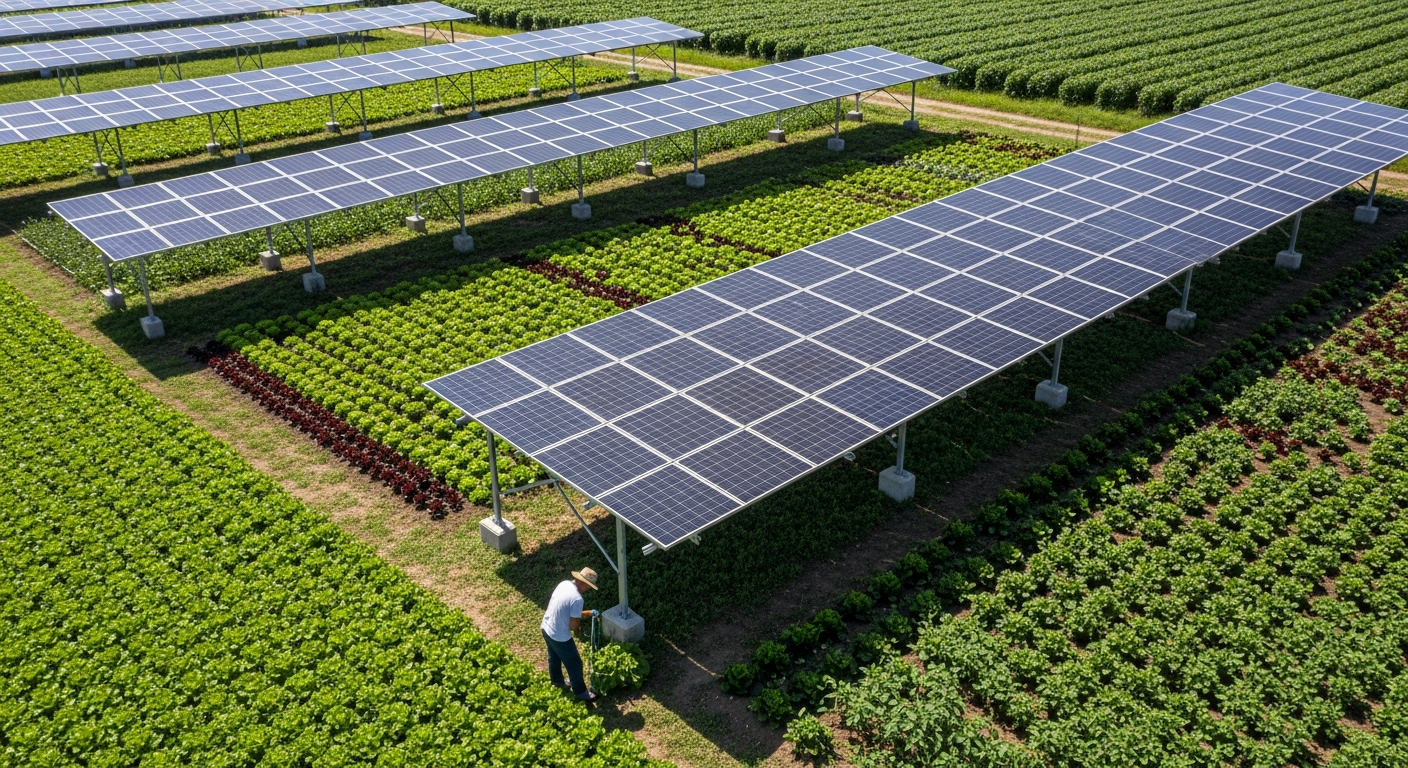
Agrivoltaics ROI 2026: Why Farmers Are Boosting Crop Yields With Solar Panels
 Energy Agent
Why Are AI Data Centers Driving Local Renewable Investment? Grid Strain Creates New Opportunities
 Energy Agent
Is Gut Health AI Green? Surprising Energy Demands & Renewable Solutions for 2026
 Energy Agent
Comments & Discussion