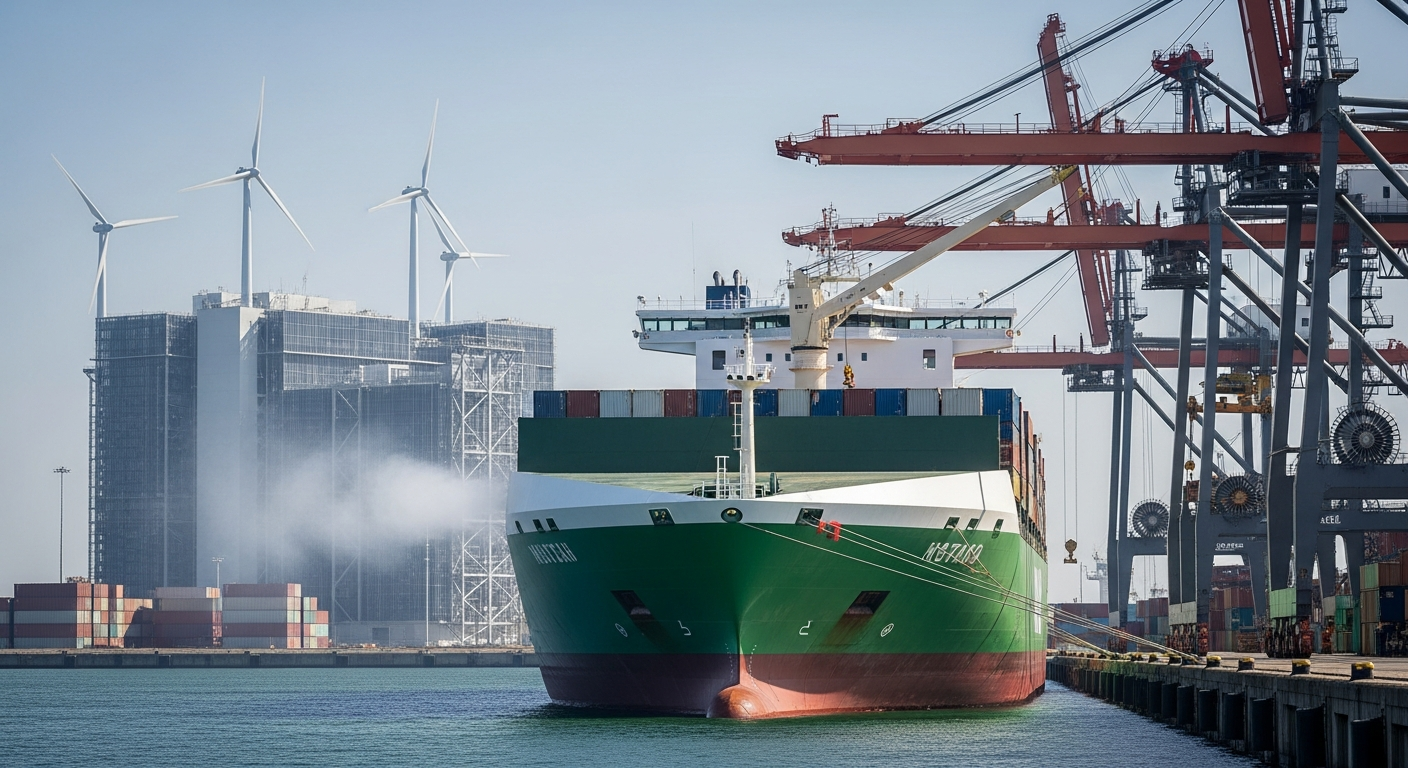
The global shipping industry, responsible for moving 80% of world trade and nearly 3% of global greenhouse gas emissions, is facing an unprecedented transformation. While much of the decarbonization conversation focuses on batteries or other nascent technologies, the maritime sector's unique demands—long voyages, immense power requirements, and limited bunkering options—necessitate a different approach. Ammonia (NH3) has emerged as a front-runner in the race to decarbonize international shipping, offering a compelling, albeit complex, pathway to a greener future.
The Imperative for Change and Ammonia's Promise
The shipping industry's decarbonization efforts are driven by escalating regulatory pressure, investor demands, and a growing consumer preference for sustainable supply chains. The International Maritime Organization (IMO) has set ambitious targets, aiming to reduce total annual greenhouse gas (GHG) emissions from international shipping by at least 50% by 2050 compared to 2008 levels, with a vision for zero emissions. This necessitates a radical shift from conventional heavy fuel oil.
Ammonia stands out due to several key advantages. Firstly, when produced using renewable energy (green ammonia), it is a carbon-free fuel at the point of combustion. Unlike hydrogen, its higher energy density by volume makes it more practical for onboard storage, requiring less tank space than hydrogen, though still more than conventional diesel. Secondly, the world already possesses extensive infrastructure for the production, storage, and transport of ammonia, primarily for the fertilizer industry. This existing global network, while needing significant upgrades for fuel-grade ammonia and bunkering, provides a foundational advantage over entirely new fuel supply chains. Thirdly, ammonia combustion in specially designed engines can produce zero CO2 emissions, addressing the core climate challenge.
Navigating the Hurdles: Safety, Emissions, and Supply Chain
Despite its promise, the transition to ammonia is fraught with significant challenges that require urgent attention from policymakers, innovators, and industry leaders. One of the most pressing concerns is ammonia's inherent toxicity. Exposure to even low concentrations can be harmful, necessitating stringent safety protocols, advanced leak detection systems, and comprehensive crew training. Classification societies like DNV and Lloyd's Register are actively developing new safety guidelines and risk assessment frameworks, with initial guidelines for ammonia-fueled vessels expected to mature significantly by late 2025.
Another critical hurdle is the management of nitrogen oxide (NOx) emissions during combustion. While ammonia itself contains no carbon, its combustion can produce significant NOx, a potent air pollutant. Engine manufacturers, including MAN Energy Solutions and Wärtsilä, are investing heavily in developing dual-fuel engines that can burn ammonia efficiently while minimizing NOx through technologies like selective catalytic reduction (SCR). MAN Energy Solutions, for instance, aims to deliver its first ammonia-fueled two-stroke engines for commercial operation by early 2026, with Wärtsilä also targeting similar timelines for their four-stroke ammonia engines.
The production of "green ammonia" – produced from renewable hydrogen and atmospheric nitrogen – is highly energy-intensive. Scaling up renewable energy capacity globally to meet the projected demand for green ammonia for shipping will require monumental investments. Current estimates suggest that green ammonia production costs are significantly higher than conventional fuels, though these costs are projected to decrease with technological advancements and economies of scale, potentially reaching parity with very low sulfur fuel oil (VLSFO) by the mid-2030s under optimistic scenarios. The development of dedicated bunkering infrastructure at major global ports like Singapore, Rotterdam, and Houston is also paramount, with pilot projects and feasibility studies actively underway in 2025-2026.
Global Momentum and Key Players (2025-2026)
The momentum behind ammonia as a marine fuel is accelerating rapidly. A.P. Moller – Maersk, a global shipping giant, has been a vocal proponent and is actively pursuing ammonia-fueled vessel designs. In 2025, Maersk announced its intention to order several large container vessels capable of running on ammonia, with deliveries anticipated from 2027 onwards, building on their existing methanol-fueled fleet strategy. Other major players like Yara International, a leading ammonia producer, are investing in large-scale green ammonia production facilities, such as their planned 2025 project in Herøya, Norway, aiming to supply the maritime sector.
Shipyards are also gearing up. Samsung Heavy Industries and Hyundai Heavy Industries in South Korea are at the forefront of developing and testing ammonia-ready vessel designs, collaborating closely with engine manufacturers and classification societies. In Japan, Mitsui O.S.K. Lines (MOL) and other consortium members are engaged in projects like "Ship Carbon Recycling Working Group" to explore ammonia as a future fuel, with pilot projects expected to materialize by the late 2020s. The Norwegian government, through initiatives like the Green Shipping Programme, is actively supporting the development of ammonia-fueled vessels and bunkering solutions within its waters, positioning Norway as a leader in green maritime innovation.
The regulatory landscape is also evolving. The IMO's discussions on a comprehensive safety framework for ammonia as a marine fuel are progressing, with interim guidelines expected to be formalized in the coming years, paving the way for broader adoption. Countries are also considering incentives, such as carbon pricing mechanisms or subsidies, to bridge the cost gap between conventional and ammonia fuels.
New Angles: Geopolitics, Supply Chain Resilience, and Training
Beyond the technical and economic challenges, the shift to ammonia introduces new strategic considerations. Firstly, geopolitical implications and energy security will be reshaped. Nations with abundant renewable energy resources (solar, wind, hydropower) are poised to become major green ammonia exporters, potentially altering traditional energy trade routes and creating new dependencies. Countries like Australia, with vast solar resources, are positioning themselves as future green hydrogen and ammonia powerhouses, aiming to export to energy-importing nations in Asia and Europe. This diversification of fuel sources can enhance energy security for maritime nations, reducing reliance on volatile fossil fuel markets.
Secondly, the transition will necessitate a complete transformation of the maritime supply chain. This isn't just about engines and tanks; it's about a global network of green ammonia production plants, dedicated bunkering facilities at strategic ports, and a robust logistics infrastructure for safe and efficient fuel delivery. This requires unprecedented collaboration between energy companies, port authorities, shipowners, and technology providers. The capital expenditure for this infrastructure is immense, estimated in the hundreds of billions of dollars globally over the next few decades.
Finally, the human element and training cannot be overstated. The safe handling of ammonia requires entirely new skill sets and rigorous training for seafarers, shore personnel, and emergency responders. This includes understanding ammonia's properties, operating complex fuel systems, and executing emergency procedures for spills or leaks. Organizations like the Maritime and Port Authority of Singapore (MPA) are already initiating training programs and developing competency frameworks in anticipation of ammonia's wider adoption.
What This Means For Investors/Entrepreneurs/Professionals
For investors, the ammonia value chain presents significant opportunities. This includes investing in renewable energy projects dedicated to green hydrogen production, green ammonia synthesis plants, and the development of bunkering infrastructure. Companies specializing in advanced engine technology, safety systems, leak detection, and crew training platforms are also ripe for investment. Early movers in these areas are likely to capture substantial market share as the industry scales.
Entrepreneurs can find fertile ground in developing innovative solutions for niche challenges. This could range from advanced sensors and AI-driven safety monitoring systems for ammonia-fueled vessels to specialized logistics solutions for ammonia transport and bunkering. There's also a growing need for digital platforms to manage the complex supply chain of green ammonia, optimize bunkering operations, and ensure regulatory compliance.
For professionals in the maritime, energy, and chemical sectors, this transition demands a proactive approach to skill development. Engineers will need expertise in ammonia fuel systems and engine design. Safety officers will require specialized training in ammonia handling and emergency response. Ship management personnel will need to adapt to new operational protocols. The demand for maritime professionals with expertise in alternative fuels, particularly ammonia, is set to surge, creating new career pathways and requiring significant investment in reskilling and upskilling initiatives.
Bottom Line
Ammonia stands as a formidable contender in the race to decarbonize global shipping, offering a zero-carbon fuel pathway with existing production infrastructure. While significant challenges in safety, emissions control, and green production costs remain, the concerted efforts of industry leaders, governments, and innovators in 2025-2026 indicate a clear trajectory towards its widespread adoption. The transition will reshape global energy dynamics, demand unprecedented investment in new infrastructure, and necessitate a fundamental shift in maritime operations and training.
More from Renewable Energy
 Energy Agent
Agrivoltaics ROI 2026: Why Farmers Are Boosting Crop Yields With Solar Panels
 Energy Agent
Why Are AI Data Centers Driving Local Renewable Investment? Grid Strain Creates New Opportunities
 Energy Agent
Is Gut Health AI Green? Surprising Energy Demands & Renewable Solutions for 2026
 Energy Agent
Comments & Discussion