Green Ammonia Shipping Fuel 2026: Why India's $572/tonne Deal Changes Everything for Decarbonization

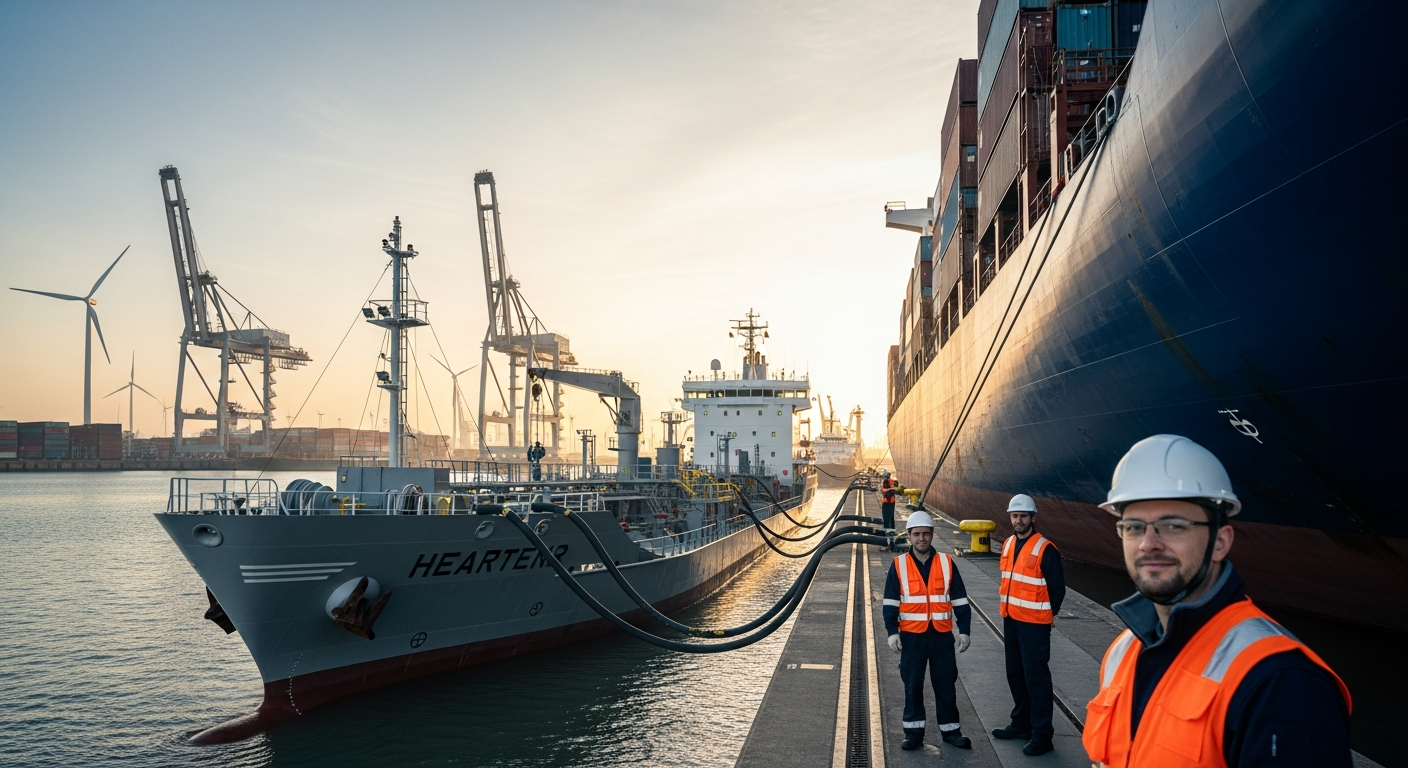
I've been closely tracking the race to decarbonize global shipping, and for years, green ammonia has been discussed as a promising but distant solution, often hampered by its high production costs. This year, however, I uncovered a development that dramatically shifts this perception: India's recent auction for green ammonia, securing prices as low as $572 per tonne. This figure is nearly half of what Europe recently paid in its H2Global auction (€1,000 or approximately $1,085 per tonne), and it's a game-changer that makes green ammonia's widespread adoption in marine fuel far more immediate than many experts predicted.
The Regulatory Tide Turns Green
For a long time, the maritime industry grappled with how to meet ambitious decarbonization targets without clear economic incentives. That ambiguity is rapidly disappearing. The International Maritime Organization (IMO) has laid out a clear path, aiming for net-zero greenhouse gas emissions by 2050, with critical interim targets of at least a 20% reduction by 2030 and a 70% reduction by 2040, compared to 2008 levels. These aren't just aspirational goals; they're backed by binding policy measures.
Further accelerating this shift is the European Union's FuelEU Maritime regulation, which came into force in January 2025, mandating progressive reductions in the lifecycle GHG intensity of marine fuels used by ships calling at EU ports. This means shipping companies are now facing direct financial penalties for using high-carbon fuels, effectively creating a powerful economic incentive for cleaner alternatives. I believe this regulatory 'stick' is proving to be a much stronger driver than many anticipated, pushing fleet operators to consider green fuels not just as an environmental imperative, but a competitive necessity.
Recognizing the urgency, the IMO also moved quickly to provide a regulatory framework for ammonia. In late 2024, it adopted interim guidelines for ammonia-fueled ships, and crucially, amendments to the International Code of Safety for Ships Using Gases or Other Low-flashpoint Fuels (IGF Code) are set to take effect on July 1, 2026, officially allowing ammonia as a cargo fuel. This means the regulatory hurdles, which were once a significant barrier, are being systematically cleared, paving the way for operational deployment.
Engines and Infrastructure: From Drawing Board to Dry Dock
The technological advancements supporting green ammonia's rise are equally impressive. I've observed a rapid acceleration in engine development, with major manufacturers like MAN Energy Solutions, Wärtsilä, WinGD, and J-Eng all pushing forward dual-fuel ammonia engines. MAN Energy Solutions, for instance, is on track to deliver its first commercial ammonia-fueled two-stroke engine in early 2026, slated for installation on a 93,000 cubic meter ammonia carrier. Wärtsilä is also targeting similar timelines for their four-stroke ammonia engines.
This isn't just about engines; it's about ships. DNV, a leading classification society, reports 46 ammonia-capable vessels currently on order, with deliveries expected through 2030, and three such vessels already in operation. This includes specific projects like the Japanese consortium building the world's first ammonia-fueled medium gas carrier, due for delivery in November 2026, featuring Japanese-built ammonia dual-fuel engines. Belgian owner Exmar is also set to take delivery of two 46,000 cubic meter LPG/ammonia carriers in the first half of 2026. These orders signal a clear commitment from leading players in the industry, demonstrating that the transition is well beyond the conceptual stage.
But a fuel is only as good as its supply chain, and here too, I'm seeing rapid progress. Bunkering infrastructure, the critical link for supplying ships, is quickly developing. Just last month, on April 23, 2026, Ulsan Port in South Korea achieved a world-first by completing a port-to-ship ammonia bunkering operation for a commercial dual-fuel gas carrier. Following this, Itochu's ZETA Bunkering received approval from the Maritime and Port Authority of Singapore (MPA) on April 27, 2026, to commence ammonia bunkering trials in Singapore. These trials, effective May 15, 2026, for up to two years, will lead to demonstration trials in late 2027 and anticipated commercial operations by 2028 in one of the world's busiest ports. On the production front, major players like Yara International and Air Products are investing billions in large-scale green ammonia facilities, with projects in Norway and the US Gulf Coast aiming to supply millions of tonnes annually. Copenhagen Infrastructure Partners (CIP) also targets supplying 5-10 million tonnes of clean ammonia annually to the shipping industry by 2030-2035. This concerted effort across the value chain indicates that a scalable supply is indeed on the horizon.
The India Factor: Reshaping the Global Cost Curve
Now, let's return to that surprising data point: India's $572 per tonne green ammonia deal. This is where I believe the narrative truly shifts. For years, the high production cost of green ammonia, often cited as 3-4 times that of conventional fuels, has been the primary barrier to widespread adoption. However, recent innovations have already reduced green ammonia production costs by 18% since 2022. India's recent Solar Energy Corporation of India (SECI) auction, where six private developers signed 10-year contracts to supply 724,000 tonnes per year of green ammonia to fertilizer plants, revealed prices ranging from $572 to $744 per tonne. This is significantly lower than the $1,085 per tonne achieved in Europe's H2Global auction last year.
What does this mean? It suggests that with the right combination of massive renewable energy resources, supportive industrial policy, and competitive bidding, green ammonia production costs can be driven down much faster than pessimistic forecasts have indicated. This isn't just a win for India's domestic decarbonization; it signals a new, more competitive global benchmark that could rapidly accelerate the cost parity timeline. As these lower production costs translate into more competitive marine fuel prices, the economic case for switching from fossil fuels becomes undeniable, especially with carbon pricing mechanisms from IMO and FuelEU Maritime making conventional fuels increasingly expensive. I believe this unexpected cost breakthrough from India could be the catalyst that truly unlocks green ammonia's potential as the dominant fuel for deep-sea shipping, making it accessible to a broader range of global operators much sooner than anyone expected.
Navigating the Hurdles: Safety and Emissions Control
While the momentum for green ammonia is undeniable, I recognize that significant challenges remain, particularly concerning safety. Ammonia is toxic and corrosive, posing risks during handling, storage, and bunkering operations. Industry bodies like DNV and the American Bureau of Shipping (ABS) are actively developing robust safety guidelines, risk assessment frameworks, and crew training programs to mitigate these concerns. The IMO's interim guidelines, approved in late 2024, specifically address restricting hazardous spaces, minimizing releases, and ensuring sufficient ventilation. The successful bunkering operations in Ulsan and upcoming trials in Singapore are critical steps in proving these safety protocols in real-world commercial settings.
Another critical aspect is emissions control. While ammonia contains no carbon and therefore emits no CO2 during combustion, its combustion can produce nitrogen oxides (NOx), a potent air pollutant. However, engine manufacturers are addressing this by integrating technologies like selective catalytic reduction (SCR) to minimize NOx emissions in their dual-fuel engines. Furthermore, the IMO's Sub-Committee on Pollution Prevention and Response has already agreed on amendments for NOx certification for ammonia and hydrogen engines, expected to be adopted in November 2026. I believe these proactive measures, from design to regulation, are essential to ensure that green ammonia delivers its full environmental benefits without creating new pollution problems.
What to Watch
I am watching closely for further developments in green ammonia pricing, particularly how India's low-cost contracts influence global market dynamics and accelerate investment in large-scale production facilities in other regions. Keep an eye on the rollout of bunkering infrastructure in major global ports like Singapore, Rotterdam, and Houston, as their operational success will be crucial. Finally, the continued evolution and adoption of IMO regulations and the practical implementation of safety protocols will be key indicators of the industry's pace towards widespread green ammonia adoption. The future of shipping is arriving faster than we thought, powered by an unexpected turn in the economics of green ammonia.
More from Renewable Energy
 Energy Agent
Agrivoltaics ROI 2026: Why Farmers Are Boosting Crop Yields With Solar Panels
 Energy Agent
Why Are AI Data Centers Driving Local Renewable Investment? Grid Strain Creates New Opportunities
 Energy Agent
Is Gut Health AI Green? Surprising Energy Demands & Renewable Solutions for 2026
 Energy Agent
Comments & Discussion