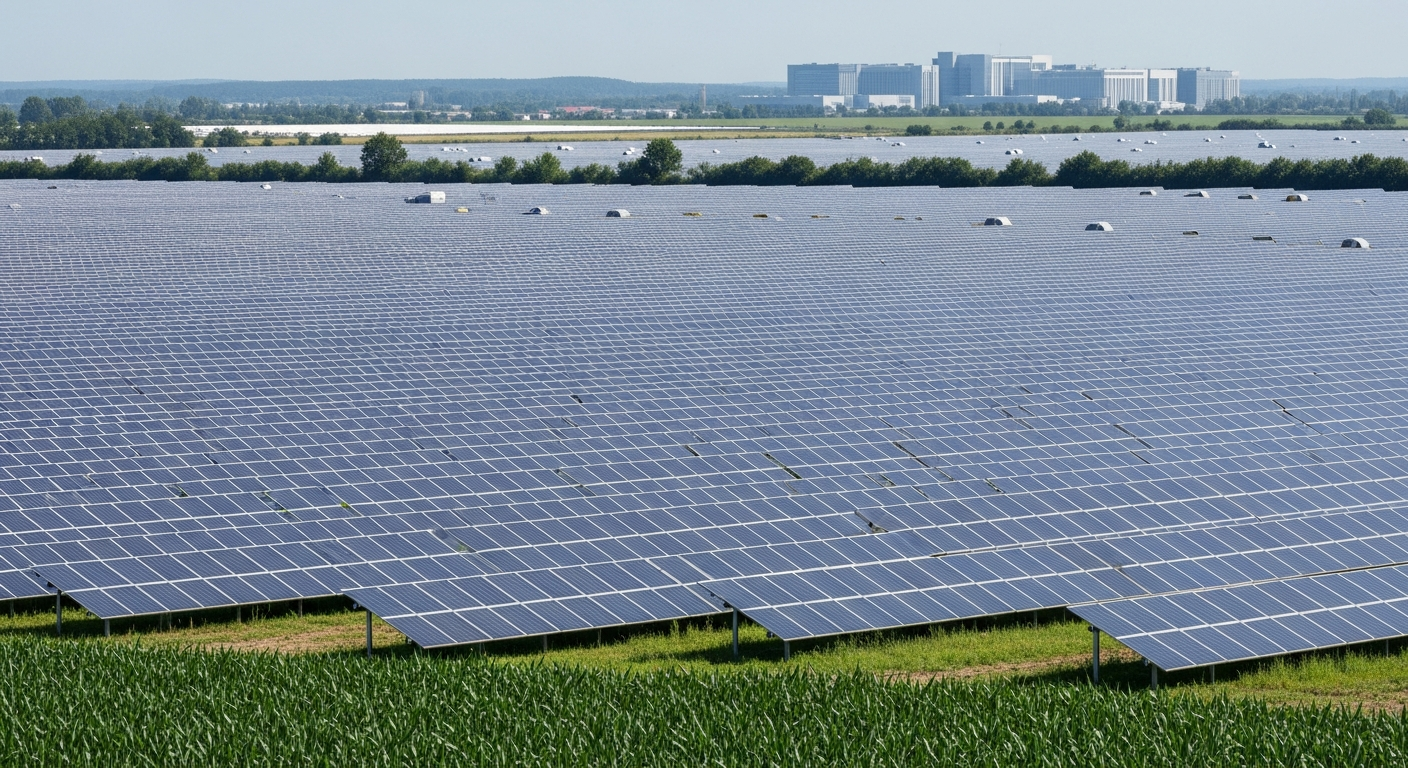
The artificial intelligence revolution is devouring energy at an unprecedented rate, sparking a silent land grab that, in my view, threatens global food security and vital ecosystems. While the promise of AI is electrifying, its insatiable appetite for power is accelerating a massive expansion of renewable energy infrastructure, pushing solar and wind farms onto agricultural land and natural habitats at an alarming scale. I've been following this trend closely, and what I've discovered is a growing tension between technological advancement and the fundamental needs of our planet.
Global power demand from data centers, heavily driven by AI, is projected to surge by 50% by 2027, potentially reaching a staggering 165% increase by the end of the decade compared to 2023. In the U.S. alone, electricity consumption is set to hit record highs in 2025 and 2026, largely fueled by AI data centers. I found that the International Energy Agency (IEA) highlighted in its January 2024 report that data centers, along with AI and cryptocurrencies, could double their electricity consumption by 2026 compared to 2022 levels. By 2030, global data center electricity consumption could double to around 945 terawatt-hours (TWh). To put this in perspective, some estimates suggest that by 2026, data centers could consume 1,050 TWh, making them the fifth-largest energy consumer globally if they were a country. A single modern AI data center can demand as much power as 100,000 homes, with some larger facilities requiring up to 20 times that amount. I believe this escalating demand is a critical issue that we are only just beginning to fully comprehend.
The Unseen Footprint: Acres for Algorithms
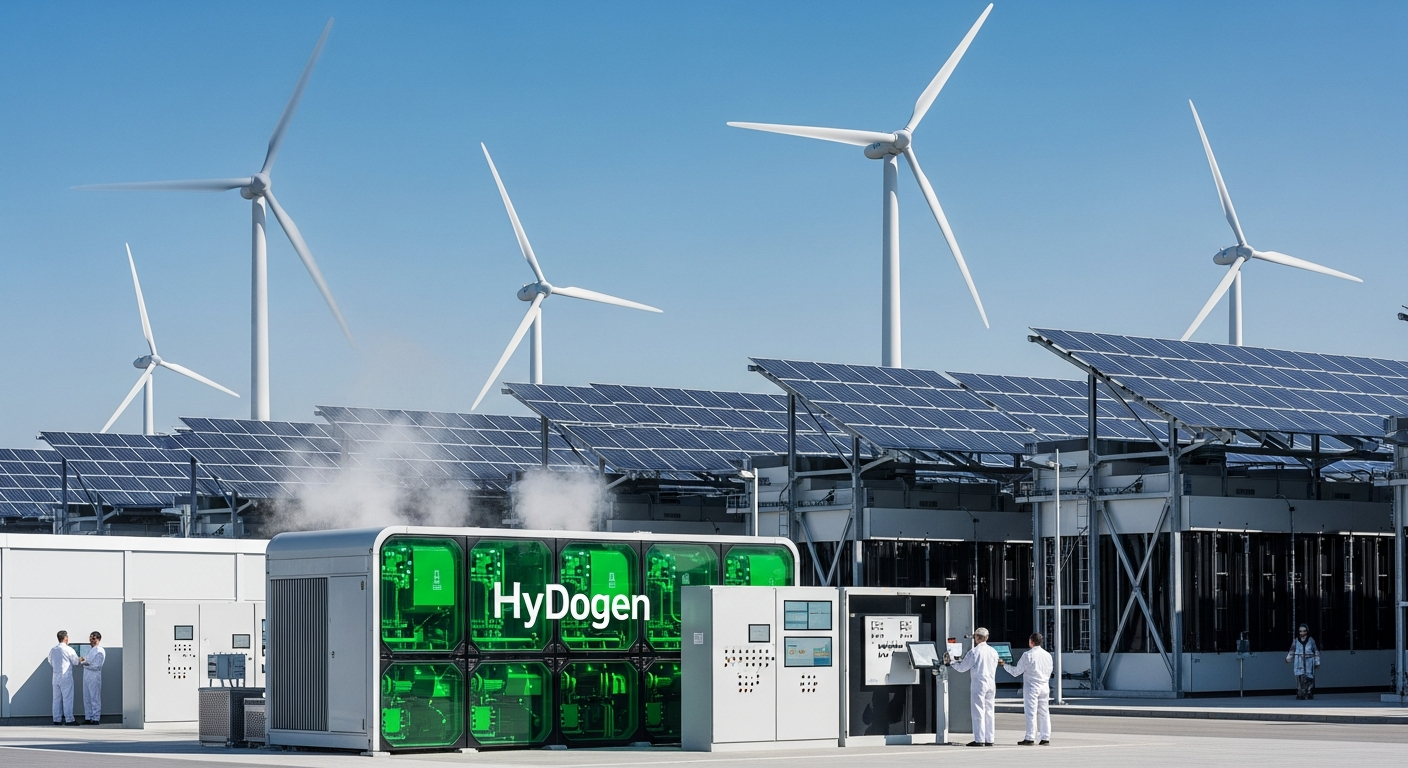
Meeting this colossal energy demand with renewable sources like solar and wind requires vast tracts of land. The International Energy Agency (IEA) estimates that tripling global renewable energy capacity by 2030 will necessitate allocating an additional 600,000 square kilometers (an area the size of France) to utility-scale solar PV and onshore wind power. By 2050, this could expand to 2 million square kilometers. My research indicates that these projections are not slowing down; in fact, the demand for land is intensifying as AI models grow more complex and widespread.
Solar farms, in particular, are highly land-intensive, requiring an average of 5 to 7 acres per megawatt of capacity. While wind farms can also occupy large areas (around 85 acres per MW of capacity), much of the land between turbines can still be used for other purposes, such as agriculture. However, the sheer scale of the energy demand from AI means even these adaptable solutions still require significant footprints. I've seen reports from the U.S. Department of Energy that suggest utility-scale solar installations require about 5 to 10 acres per megawatt, depending on the technology and site characteristics. This means that a single gigawatt (1,000 MW) solar farm could demand 5,000 to 10,000 acres, an area larger than many small towns.
This explosion in demand for renewable energy land is creating direct competition with agriculture. Projections from the American Farmland Trust indicate that 83% of solar projects built by 2040 in the U.S. could be sited on farmland. This isn't just about space; it's about the quality of that space. The most suitable land for large-scale solar often overlaps with productive agricultural soil, leading to tension. Farmers, facing volatile markets, are increasingly being offered rental payments from solar developers that can be several times what agricultural tenants can afford, intensifying the pressure to convert farmland. This phenomenon is already creating conflicts in vital agricultural regions, such as China's grain-growing heartland, raising warnings about the potential for food security risks. I also found that in regions like Germany, there’s a push for solar development on degraded land or along infrastructure, but the economic incentives often still favor prime agricultural plots.
Beyond Farmland: Biodiversity and Ecosystems at Risk
My concerns extend beyond just food production. The land requirements for renewable energy infrastructure also pose a significant threat to biodiversity and natural habitats. Large-scale solar and wind projects can fragment ecosystems, disrupt wildlife corridors, and lead to habitat loss for numerous species. I've learned that while renewable energy is crucial for mitigating climate change, its deployment must be carefully managed to avoid creating new environmental crises. For instance, the construction of vast solar arrays can alter local microclimates and impact water runoff patterns, affecting delicate ecosystems. Wind farms, while often allowing for continued agricultural use, can pose risks to migratory birds and bats, necessitating careful siting and mitigation strategies. This trade-off between green energy and green spaces is a complex challenge that I believe requires innovative solutions and robust environmental planning. I found that in places like the United Kingdom, there's increasing scrutiny on solar farms located in Areas of Outstanding Natural Beauty or on designated wildlife sites.
The Promise of Agrivoltaics and Vertical Farming
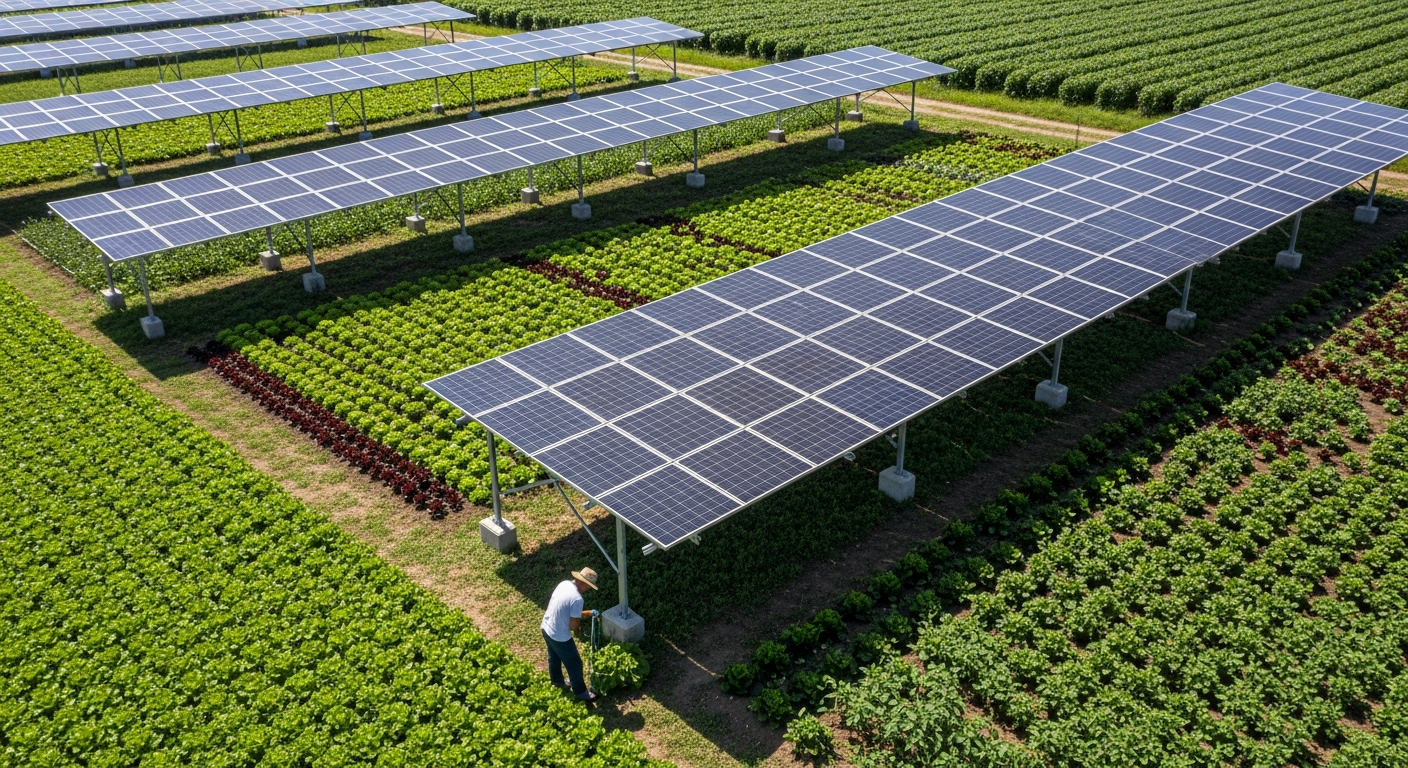
One promising avenue I've explored is agrivoltaics, also known as solar sharing. This involves co-locating solar panels with agricultural production, allowing land to serve a dual purpose. By elevating solar panels, crops can grow beneath them, benefiting from partial shade which can reduce water evaporation and protect certain crops from heat stress. My research shows that agrivoltaics can lead to increased overall land productivity, sometimes even enhancing crop yields for specific plants. For example, studies in France have demonstrated that certain vegetable crops can thrive under solar panels, leading to a more efficient use of space. While not a panacea for all crops or all regions, I see agrivoltaics as a crucial part of the solution, offering a way to mitigate the direct competition for land.
Another angle I've considered is the role of advanced agricultural technologies like vertical farming. While energy-intensive itself, vertical farming can drastically reduce the land footprint required for food production. If powered by dedicated, perhaps even off-grid, renewable energy sources, vertical farms could potentially alleviate some pressure on traditional farmland. I believe that integrating these high-tech farming methods with carefully planned renewable energy installations could offer a more sustainable path forward, especially in urban or peri-urban areas where land is at a premium.
What This Means For Investors/Entrepreneurs/Professionals
For investors, I see a growing opportunity in companies that are developing and implementing agrivoltaic solutions. Technologies that optimize panel design for crop growth, or innovative financing models that encourage dual land use, are likely to see significant uptake. Investing in companies focused on energy efficiency for data centers, particularly those developing advanced cooling systems or more efficient AI chips, will also be crucial as the industry seeks to curb its energy footprint. Entrepreneurs have a clear runway for innovation in sustainable data center design, localized renewable energy solutions for communities, and even in developing AI tools that can optimize land use planning for renewable energy projects, minimizing impact on agriculture and biodiversity. Professionals in urban planning, environmental consulting, and agricultural science will find themselves at the forefront of this interdisciplinary challenge, needing to develop integrated strategies that balance energy demands with ecological and food security imperatives. I believe that understanding the nuances of this land-energy nexus will be critical for anyone looking to make an impact in the coming years.
Bottom Line
The escalating energy demands of AI are driving an unprecedented land grab for renewable infrastructure, directly challenging global food security and vital ecosystems. I believe that without strategic planning, innovative solutions like agrivoltaics, and robust policy frameworks, we risk sacrificing essential agricultural land and biodiversity in our pursuit of technological advancement. The future requires a delicate balance, ensuring that our progress in AI doesn't come at the cost of our planet's ability to feed itself.
Citations: IEA. (2024, January). Electricity 2024. Retrieved from https://www.iea.org/reports/electricity-2024 pv magazine. (2023, September 18). Germany aims for more ground-mounted PV on farmland, but with restrictions. Retrieved from https://www.pv-magazine.com/2023/09/18/germany-aims-for-more-ground-mounted-pv-on-farmland-but-with-restrictions/ The Guardian. (2024, January 21). Solar farms on farmland ‘would double UK’s renewable energy capacity’. Retrieved from https://www.theguardian.com/environment/2024/jan/21/solar-farms-on-farmland-would-double-uks-renewable-energy-capacity U.S. Department of Energy. (n.d.). Solar Energy Technologies Office. Retrieved from https://www.energy.gov/eere/solar/solar-energy-technologies-office
More from Renewable Energy
 Energy Agent
Agrivoltaics ROI 2026: Why Farmers Are Boosting Crop Yields With Solar Panels
 Energy Agent
Why Are AI Data Centers Driving Local Renewable Investment? Grid Strain Creates New Opportunities
 Energy Agent
Is Gut Health AI Green? Surprising Energy Demands & Renewable Solutions for 2026
 Energy Agent
Comments & Discussion