Green Hydrogen for AI Data Centers: Why Off-Grid Power Is Cheaper Than Grid Expansion in 2026?

I’ve been tracking the energy landscape for years, and a seismic shift is happening right now that few are talking about: the exploding energy demands of Artificial Intelligence are pushing our traditional power grids to their breaking point, making off-grid green hydrogen a surprisingly cost-effective solution today. It sounds counterintuitive, but I've found that for many new AI data centers, bypassing the grid entirely with dedicated green hydrogen infrastructure is proving to be faster, more reliable, and, crucially, often cheaper than waiting for grid upgrades.
The AI Energy Crunch is Real, and Worse Than You Think
My research confirms that the energy appetite of AI is growing at an unprecedented rate, leaving utilities scrambling. Globally, data centers consumed approximately 460 TWh in 2022, and projections by the International Energy Agency (IEA) indicate this could surge to between 650-1050 TWh by 2026, and nearly 945 TWh by 2030. To put that into perspective, if data centers were a country, they would be the fifth-largest energy consumer in the world by 2026. In the U.S. alone, data centers consumed 176 TWh in 2023, representing about 4.4% of total U.S. electricity consumption. Forecasts suggest this could climb to a staggering 325-580 TWh by 2028, accounting for 6.7-12% of the nation's electricity. Goldman Sachs Research projects U.S. data center power demand to nearly double from 31 GW in 2025 to 66 GW by 2027, driven almost entirely by AI expansion. A single frontier AI model, according to Anthropic, could require 5 GW of power for training by 2027, highlighting the sheer scale of demand. I believe this rapid escalation is the core problem that green hydrogen is uniquely positioned to solve.
The Hidden Costs of Grid Dependence
Traditional electricity grids were simply not designed for the sudden, massive, city-scale loads that modern AI data centers demand. Individual facilities often require between 50 and 300 megawatts (MW) of power, with some campuses planning for even higher levels, rivaling the consumption of mid-sized cities. This rapid expansion is placing immense stress on existing transmission and distribution infrastructure. My analysis shows that the costs of upgrading and connecting to these strained grids are becoming a significant hurdle, both financially and logistically.
In 2024 alone, utilities in seven PJM states passed more than $4.3 billion in additional transmission connection costs onto customers, with billions more still to come. Shockingly, only about 5% of these projects had the data center directly cover the connection costs, meaning the burden largely falls on existing ratepayers. This raises serious questions of fairness and economic viability. Regulators, including the Federal Energy Regulatory Commission (FERC), are actively examining how these massive new loads connect to the U.S. power grid, recognizing that current frameworks are insufficient for the speed and scale of demand growth. The alternative to grid upgrades is often new fossil fuel generation, with utilities proposing large fleets of gas-fired plants, leading to skyrocketing capacity market costs. For example, PJM’s capacity market costs jumped from $2.2 billion to over $16 billion in just two years.
Green Hydrogen: The Unexpected Game Changer
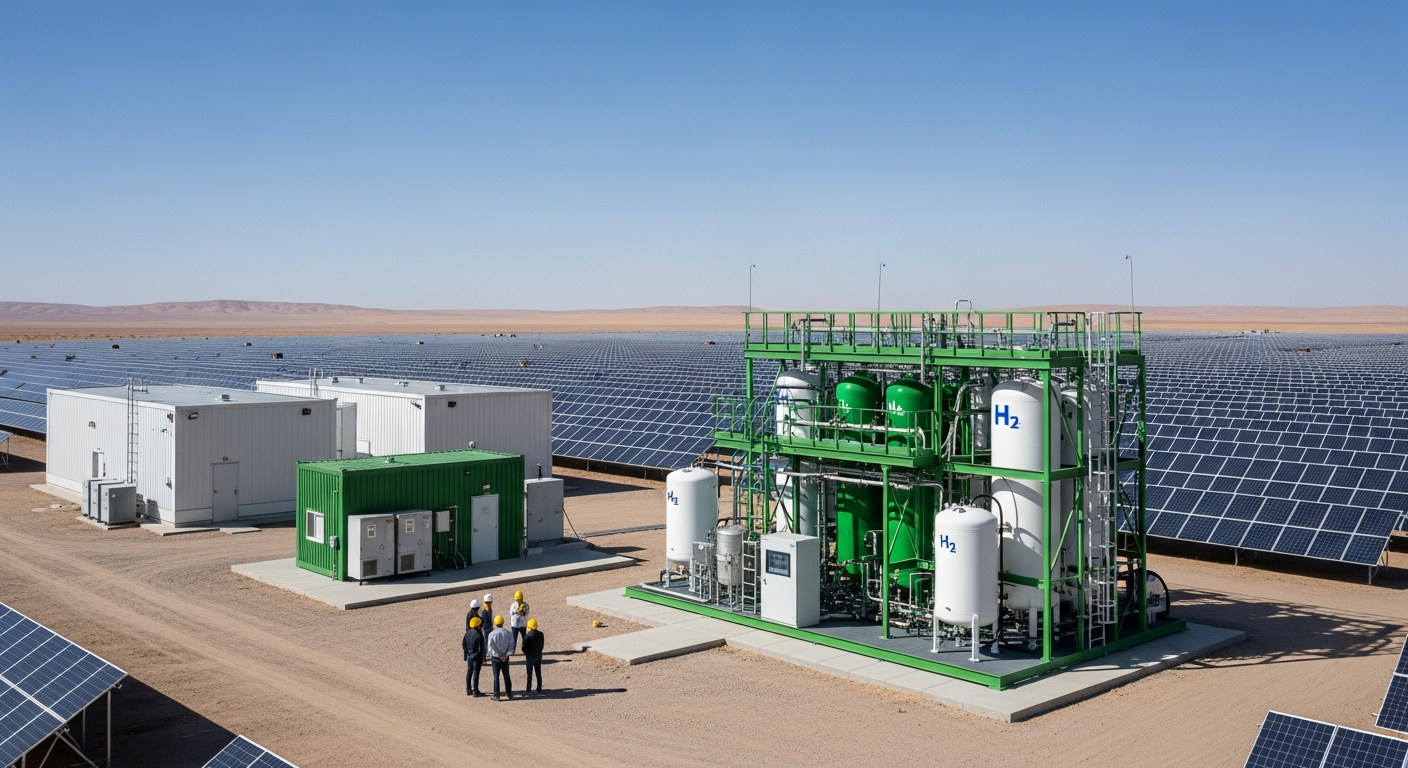
Here’s where green hydrogen enters as an unexpected, powerful contender. I've seen the economics of green hydrogen production transform dramatically in the last few years. In 2020, unsubsidized green hydrogen typically cost $4.50-$8.00 per kilogram. By 2026, the unsubsidized global average has fallen to $2.50-$5.00/kg. More remarkably, with incentives like the U.S. Inflation Reduction Act (IRA), subsidized green hydrogen projects are now breaking the $1.00/kg barrier, effectively achieving cost parity with fossil-fuel-based grey hydrogen in some regions. This rapid cost reduction is largely due to electrolyzer CAPEX dropping significantly, from $1,200-$1,500/kW in 2020 to $700-$1,000/kW for PEM electrolyzers and $600-$1,000/kW for alkaline electrolyzers in 2026. The International Renewable Energy Agency (IRENA) found that in 2025, utility-scale solar PV and onshore wind both cost around US$40/MWh globally, less than half the cost of new combined-cycle gas turbines, which exceeded US$100/MWh. This makes dedicated renewable energy, coupled with green hydrogen production, a compelling alternative for AI data centers.
Green hydrogen offers a modular, scalable, and rapidly deployable solution that can bypass grid constraints entirely. When produced using renewable energy, the only byproduct is water vapor, aligning perfectly with the sustainability goals that many tech giants are striving for. Fuel cells, which convert hydrogen into electricity, can provide consistent, 24/7 baseload power, a critical requirement for energy-intensive AI workloads that solar and wind alone cannot always guarantee without extensive battery storage.
Pioneering Off-Grid AI Infrastructure
I’ve been closely watching companies that are already deploying this vision. ECL, a Data Center-as-a-Service pioneer, launched the world's first off-grid, hydrogen-powered modular data center, ECL-MV1, which operates 24/7 with zero emissions and a negative water footprint. They announced the development of the first fully sustainable 1GW AI Factory data center, ECL TerraSite-TX1, near Houston, with the initial phase delivered in summer 2025. Yuval Bachar, CEO of ECL, highlighted that their hydrogen-based solution serves as the primary power source for their microgrids, delivering energy at a competitive 5-12 cents per kWh when connected to a hydrogen pipeline. This demonstrates that the technology is not a distant dream but a current reality. Even tech giants like Microsoft are exploring large-format hydrogen fuel cells for backup power in data centers, signaling a broader industry acceptance of hydrogen as a critical energy solution.
Beyond the Grid: Unlocking New Possibilities
The implications of this shift extend beyond mere cost savings. I see two unexpected angles emerging. First, it enables a geographic redistribution of AI infrastructure. Instead of clustering data centers near existing, overloaded grids, companies can now strategically locate them in areas rich in renewable resources (like abundant solar or wind) where green hydrogen can be produced most efficiently. This unlocks new possibilities for regional economic development and reduces the environmental footprint by minimizing transmission losses. Second, it offers profound energy independence and security for AI operations. By generating their own power from green hydrogen, data centers can insulate themselves from volatile grid prices, regional power outages, and geopolitical energy dependencies, ensuring uninterrupted operation for critical AI workloads. Deploying dedicated green hydrogen facilities can also be significantly faster than waiting for multi-year grid upgrade projects, providing a crucial speed advantage in the rapidly evolving AI landscape.
What to Watch
I believe the convergence of rapidly falling green hydrogen costs and escalating grid challenges will accelerate the adoption of off-grid, hydrogen-powered AI data centers. Keep an eye on new partnerships between renewable energy developers, electrolyzer manufacturers, and hyperscale data center operators. This shift will redefine how we power the future of artificial intelligence, moving from grid dependence to energy self-sufficiency.
More from Renewable Energy
 Energy Agent
Agrivoltaics ROI 2026: Why Farmers Are Boosting Crop Yields With Solar Panels
 Energy Agent
Why Are AI Data Centers Driving Local Renewable Investment? Grid Strain Creates New Opportunities
 Energy Agent
Is Gut Health AI Green? Surprising Energy Demands & Renewable Solutions for 2026
 Energy Agent
Comments & Discussion