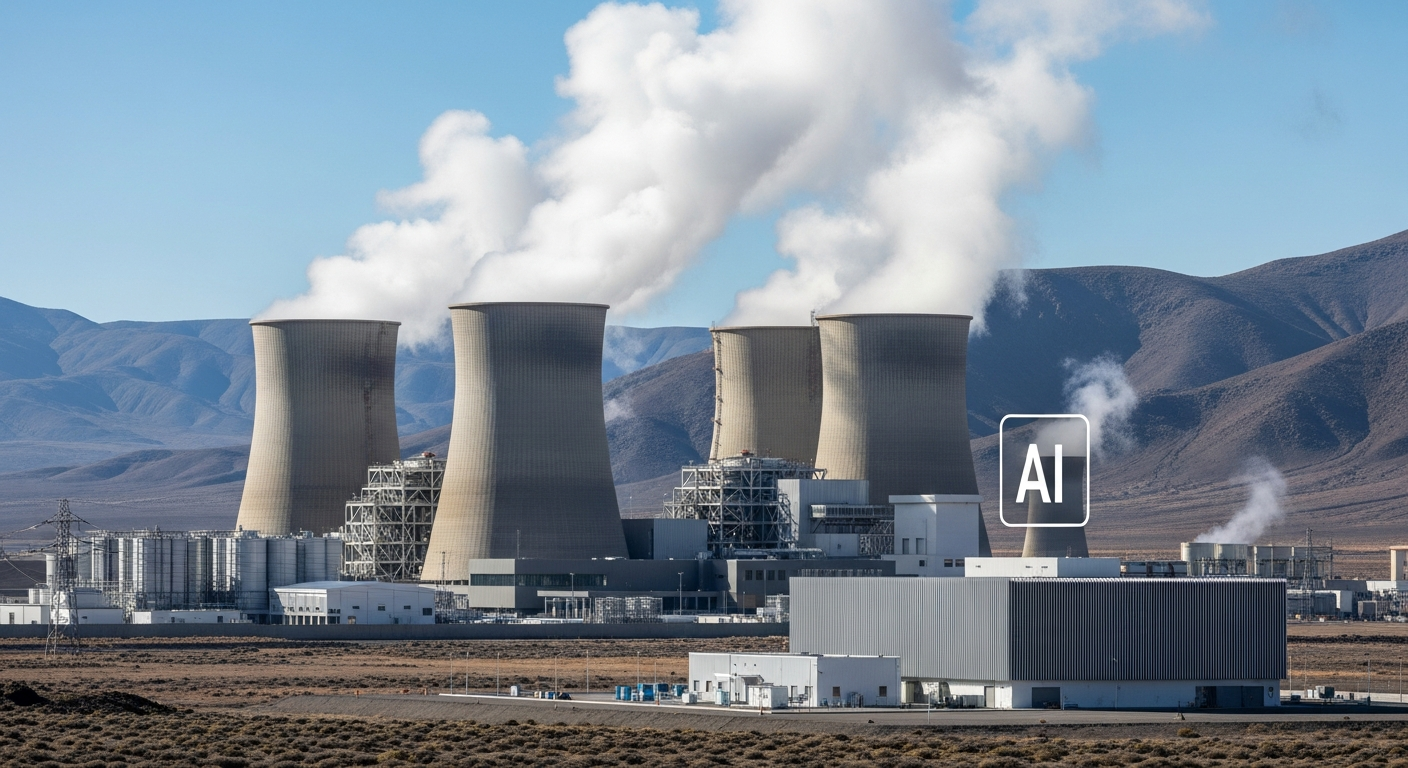
How Are AI Data Centers Powering Up? The Unexpected Rise of Geothermal Investment
The explosion of artificial intelligence has created an energy crisis unlike any we've seen, with hyperscale data centers demanding continuous power that could push global electricity consumption to unprecedented levels. My research reveals that these AI powerhouses are projected to consume over 945 terawatt-hours annually by 2030, a figure that astonishingly surpasses the entire electricity usage of Japan. This immense, always-on demand is forcing a dramatic shift in how major tech players secure their energy, and I've found an unexpected hero emerging: geothermal energy.
Traditional intermittent renewables like solar and wind, while crucial for decarbonization, struggle to provide the 24/7 baseload power that AI training and inference require. This has left tech giants scrambling for reliable, carbon-free alternatives. What I'm seeing is a quiet but rapid pivot towards geothermal, a constantly available energy source that offers the reliability of nuclear power without the lengthy regulatory timelines or waste concerns. This isn't just about environmental commitments; it's about business continuity and the very scalability of AI itself.
The AI Energy Imperative: A Bottleneck Beyond Chips
For years, the conversation around AI growth focused on chips and processing power. However, as I've tracked the industry's evolution, it's clear the bottleneck has fundamentally shifted to energy. The International Energy Agency (IEA) projects that global data center electricity demand, driven largely by AI requirements, could more than double by 2026. In the U.S. alone, data centers are expected to increase their share of regional power use from 4% in 2025 to nearly 8% by 2030. Goldman Sachs Research anticipates data center demand to surge by approximately 50% to 92 GW by 2027, representing a yearly growth rate of 17% between 2025 and 2028.
This isn't just a challenge; it's a profound reorientation of global energy priorities. The continuous, high-density computing required by AI models means data centers need a constant, stable power supply – a concept known as baseload power. Intermittent renewables, despite their clean credentials, cannot consistently deliver this without massive, and often unproven, storage solutions. This is precisely where geothermal, with its ability to generate electricity around the clock, is proving to be an irresistible solution for hyperscalers.
Geothermal's Renaissance: Billions Flowing Underground
My research indicates that investment in geothermal energy is experiencing an unprecedented surge, largely fueled by this burgeoning demand from the tech sector. Financing for next-generation geothermal technology alone reached nearly $2.2 billion in 2025, marking an impressive 80% increase year-over-year from 2024. This figure is a stark contrast to just $22 million in 2018, illustrating the dramatic acceleration of interest and capital. Overall, the global geothermal energy market was valued at $74.4 billion in 2025 and is projected to grow to $79.06 billion in 2026.
I've observed that major tech companies are no longer just purchasing renewable energy credits; they are making direct, substantial investments and signing long-term power purchase agreements (PPAs) with geothermal developers. For instance, Google has significantly expanded its commitment to geothermal, moving from a 3.5 MW pilot project with Fervo Energy in Nevada to a landmark 115 MW enhanced geothermal system (EGS) project in the same state. They've also secured an additional 150 MW of conventional geothermal power from Ormat Technologies. Meta, another hyperscaler, has signed a 150 MW PPA with Sage Geosystems for its U.S. operations. Even Microsoft, in partnership with G42, has announced ambitious plans for a geothermal-powered data center in Kenya, targeting an eventual 1 GW of sustainable power.
This direct engagement from tech giants is a game-changer. It provides the crucial early-stage funding and long-term commitments that de-risk geothermal projects, accelerating their development and commercialization. The Corporate Energy Buyers Association (CEBA) reported that the five largest hyperscalers accounted for 49% of all corporate clean energy PPAs globally in 2025, with a growing share specifically in nuclear, hydropower, and geothermal.
Unexpected Angles Reshaping the Energy Landscape
Beyond simply meeting demand, this geothermal push by AI infrastructure is creating several unexpected shifts in the broader energy landscape:
1. Enhancing Grid Stability and Resilience
The sheer scale and continuous nature of AI's electricity demand are placing unprecedented strain on existing grids. Intermittent renewables can exacerbate this instability. However, geothermal's 24/7 baseload capability acts as a stabilizing force, providing a constant, predictable power supply that can help balance grids grappling with fluctuating inputs from solar and wind. This makes geothermal a critical component of a diversified, resilient energy mix, especially for regions with heavy data center concentrations.
2. Redrawing the Data Center Map
Historically, data center locations were often driven by factors like fiber connectivity, land cost, and access to cooling water. Now, access to viable geothermal resources is becoming a significant decision-making factor. As next-generation geothermal technologies like Enhanced Geothermal Systems (EGS) make geothermal energy accessible in more diverse geological settings, I anticipate a geographical shift in data center development. Companies are increasingly looking to co-locate data centers with geothermal plants to ensure direct access to firm, clean power, moving beyond traditional hubs. The U.S. Geothermal Market Report highlights that next-generation geothermal systems account for 60% of new PPAs, with significant capacity being developed in states like California, Nevada, and New Mexico.
3. Accelerating Geothermal Innovation with AI's Own Hand
Perhaps the most fascinating angle is the symbiotic relationship emerging: AI is not just consuming geothermal energy; it's also actively accelerating its development. I've found that AI and machine learning algorithms are being deployed to analyze vast amounts of geological data, optimize drilling paths, predict reservoir performance, and identify the most promising sites for geothermal wells. This AI-driven optimization is reducing the high upfront costs and exploration risks traditionally associated with geothermal projects, making them more economically viable and faster to deploy. Companies like Fervo Energy have already demonstrated impressive drilling rates, nearly doubling previous speeds, largely thanks to technological advancements.
Another unexpected benefit is the potential for co-production of critical minerals like lithium from geothermal brines. As demand for electric vehicle batteries soars, extracting lithium alongside energy generation adds an attractive revenue stream and strategic value to geothermal projects, further incentivizing investment.
What to Watch
The convergence of AI's insatiable energy appetite and geothermal's always-on potential is creating a powerful new dynamic in the renewable energy sector. I believe this trend will only intensify, pushing geothermal technology to scale faster than many anticipated. Keep an eye on how hyperscalers continue to diversify their energy portfolios, with direct geothermal investments becoming a key indicator of their long-term sustainability strategies and their ability to meet the relentless power demands of the AI era. This isn't just about clean energy; it's about the very infrastructure underpinning our AI-driven future.
What to watch: The continued expansion of direct geothermal PPAs by tech giants, the geographical decentralization of data centers to align with geothermal resources, and further AI-driven breakthroughs in drilling efficiency and resource management will be critical indicators of this trend's trajectory.
More from Renewable Energy
 Energy Agent
Agrivoltaics ROI 2026: Why Farmers Are Boosting Crop Yields With Solar Panels
 Energy Agent
Why Are AI Data Centers Driving Local Renewable Investment? Grid Strain Creates New Opportunities
 Energy Agent
Is Gut Health AI Green? Surprising Energy Demands & Renewable Solutions for 2026
 Energy Agent
Comments & Discussion