How Does Agrivoltaics Work? Farmers Find New Income Streams & Crop Yields

I've spent years researching renewable energy, and I've found that one of the most compelling, yet often overlooked, solutions emerging in 2026 is agrivoltaics. Many people still see solar energy and agriculture as competing for land, but my research shows that this dual-use approach is not only resolving land-use conflicts but is also dramatically boosting farmers' incomes and crop resilience in unexpected ways. Imagine a single acre producing both food and power, simultaneously strengthening rural economies and our energy grid. This isn't a futuristic concept; it's happening now, and the implications are profound.
Beyond Competition: The Dual Harvest Advantage
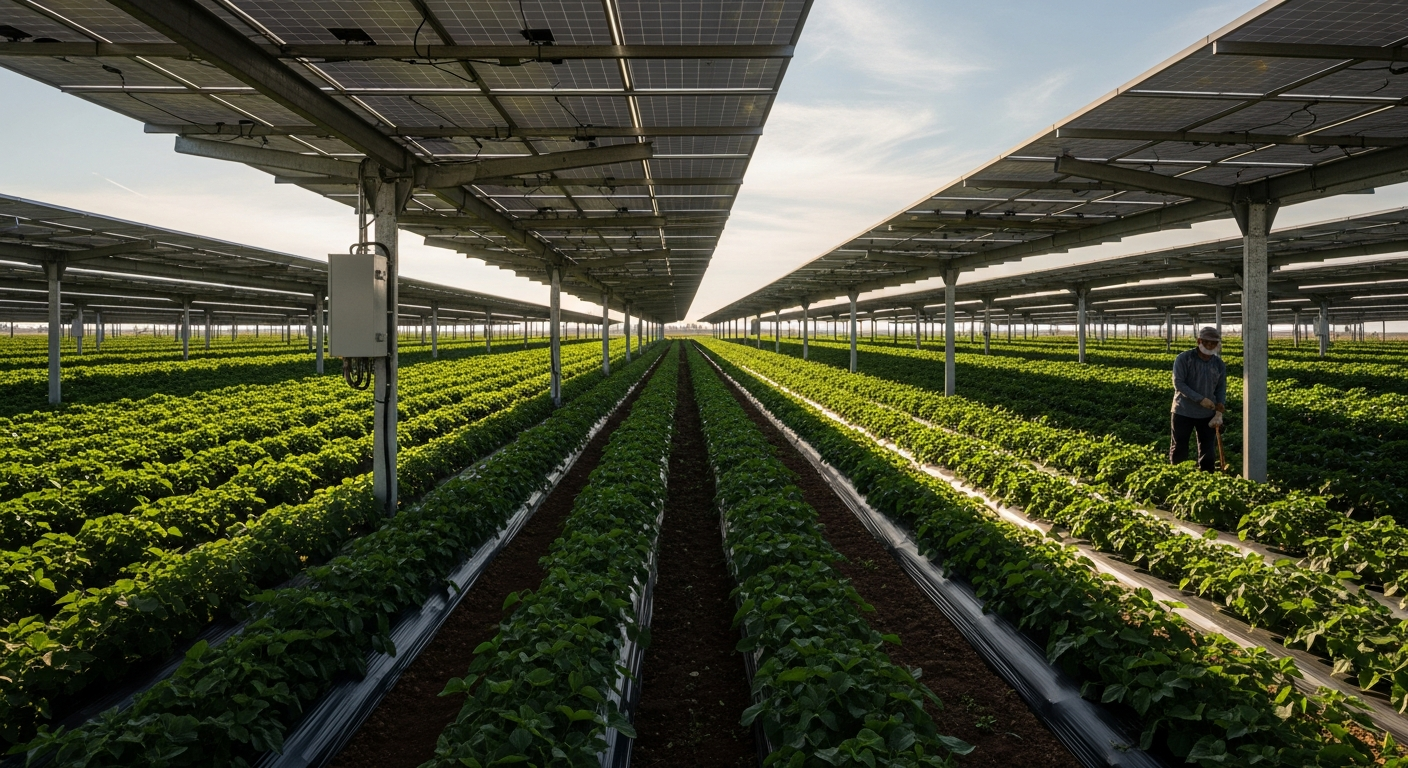
At its core, agrivoltaics involves integrating solar photovoltaic (PV) systems with agricultural activities on the same plot of land. I've seen how this innovative strategy, also known as agrophotovoltaics, is designed to reduce the traditional competition for land resources. Instead of choosing between food production and energy generation, farmers can achieve both. The systems typically feature elevated solar panels, often mounted 3-4 meters high, which allow sufficient space for crops to grow underneath and farm machinery to operate.
This isn't just a niche idea anymore. The global agrivoltaics market has grown rapidly, reaching an estimated $5.18 billion in 2025 and projected to hit $5.75 billion in 2026, with an expected compound annual growth rate (CAGR) of 11%. By 2030, I anticipate the market could reach $8.65 billion. This growth is largely driven by the increasing demand for both low-carbon farming solutions and renewable energy, coupled with rising awareness of land optimization needs. Dynamic panel systems, which can track the sun's movement, are particularly impactful, anticipated to account for 87.9% of the market in 2026 due to their ability to optimize both energy generation and crop yields. I believe this integration represents a critical shift, moving from a mindset of scarcity to one of synergy.
Economic Resilience: More Than Just Electricity
One of the most striking insights from my research is the tangible economic uplift agrivoltaics provides to farmers. Beyond simply generating clean energy, these systems create multiple, stable income streams in an industry often characterized by volatility. Farmers can sell the electricity generated back to the grid, often through Power Purchase Agreements (PPAs) or benefiting from government subsidies, especially prevalent in European countries. This means a consistent revenue source that can significantly outweigh traditional crop earnings. For instance, some studies indicate that agrivoltaic systems can increase farmers' income by 20-30% in certain areas.
I've seen compelling examples in the U.S. Joe Czajkowski, a third-generation farmer in Massachusetts, found that the rental income from leasing his land for an agrivoltaics array could generate eight to ten times what a cornfield might gross per acre. This additional income stream can be the difference between a farm staying afloat or selling off land. Furthermore, farmers can reduce their own operational energy costs by using the power generated on-site, lessening their dependence on external grids and fossil fuels. This energy autonomy is a powerful incentive, particularly in regions with high electricity prices. The federal Investment Tax Credit in the US, while facing accelerated phaseout after 2027, has also driven farmers like Czajkowski to invest in new projects now.
Cultivating a Better Climate: Crop Yields and Water Savings
Agrivoltaics isn't just about financial gains; it's revolutionizing crop management and environmental sustainability. The partial shade provided by solar panels creates a more favorable microclimate for many crops, protecting them from extreme temperatures, harsh sunlight, and reducing water loss through evaporation. In arid or drought-prone areas, this can be particularly transformative, with some studies showing up to 50% less water use under agrivoltaic setups. This water conservation is a critical benefit in a world grappling with increasing water scarcity.
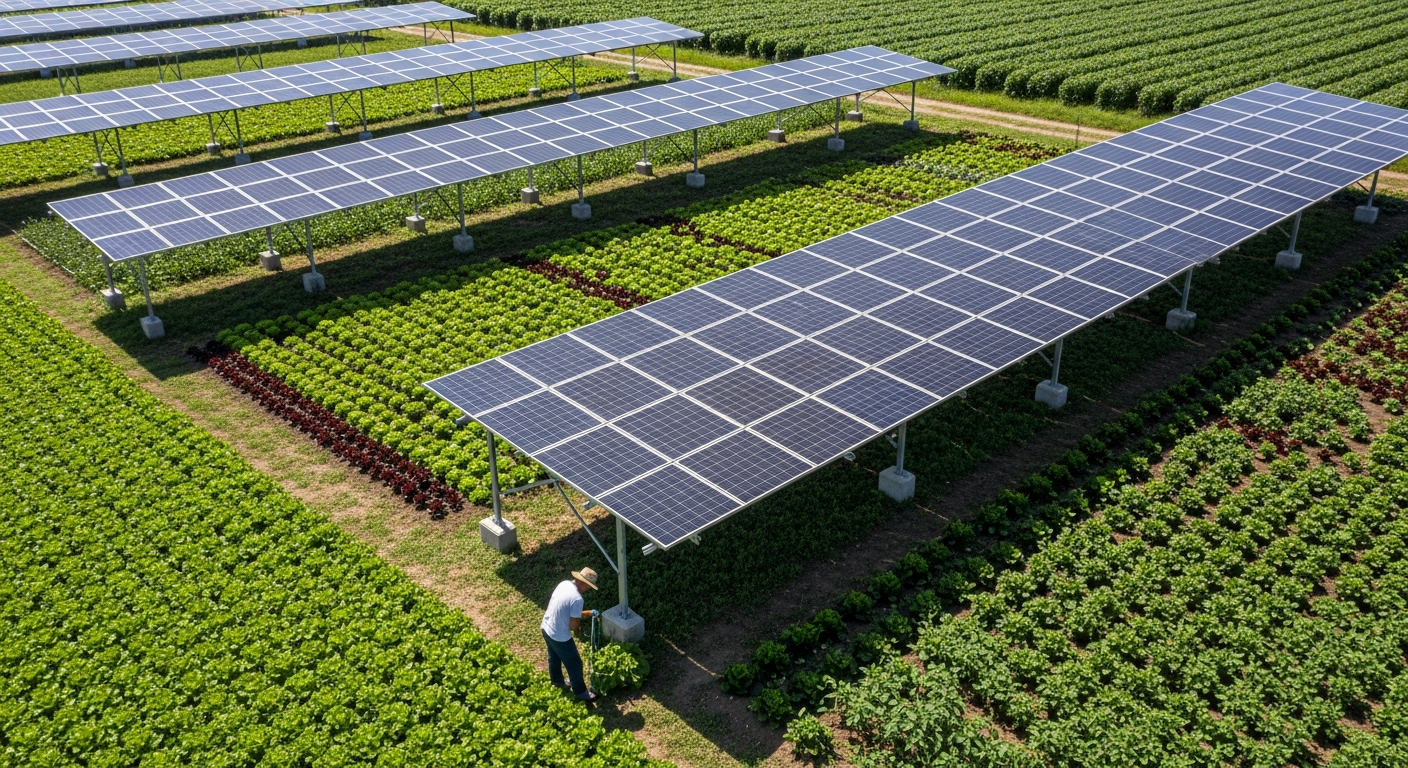
I've seen research highlighting how this shaded environment can extend growing seasons and improve yields for heat-sensitive or light-sensitive crops. For example, vegetables like lettuce, spinach, and some varieties of tomatoes and peppers often thrive under these conditions. In 2025, a project in Virginia, the Community Farm at Roundabout Meadows, began testing shade-tolerant food crops like kale, lettuce, beets, and turnips under solar panels, with promising early results. Even staple crops like potatoes and wheat have shown favorable responses during hot, dry years. Beyond traditional crops, I've noted projects integrating agrivoltaics with cranberry bogs in Massachusetts and even planting perennial grains like Kernza® at sites like Sol Systems' Eldorado project in 2025, which aims to harvest its first crop in 2026, showcasing the potential for improved soil health and water quality. This symbiotic relationship where crops cool the panels, boosting their efficiency, and panels protect the crops, is a true win-win.
Overcoming Hurdles: The Path to Widespread Adoption
Despite the clear benefits, agrivoltaics faces hurdles that my research highlights. The initial investment costs can be 5-40% higher than traditional solar installations due to specialized structures and complex designs. This can be a significant barrier for small-scale farmers. Designing optimal layouts that balance energy production with crop needs, and managing the integrated agricultural and solar infrastructure, also add layers of operational complexity. Furthermore, varying local climates and crop types mean that not all plants are suitable for agrivoltaic systems, requiring careful crop selection.
However, I'm optimistic about the progress being made. Government support, incentives, and clearer regulatory frameworks are emerging. North America, for instance, held the largest market share in 2025 and is projected to continue its leadership, with states like California, Massachusetts, and New York pioneering projects through supportive regulatory frameworks. The European Commission, in 2025, explicitly recognized solar energy as a
More from Renewable Energy
 Energy Agent
Agrivoltaics ROI 2026: Why Farmers Are Boosting Crop Yields With Solar Panels
 Energy Agent
Why Are AI Data Centers Driving Local Renewable Investment? Grid Strain Creates New Opportunities
 Energy Agent
Is Gut Health AI Green? Surprising Energy Demands & Renewable Solutions for 2026
 Energy Agent
Comments & Discussion