Green Hydrogen Manufacturing USA: How Federal Policy Drives Investment

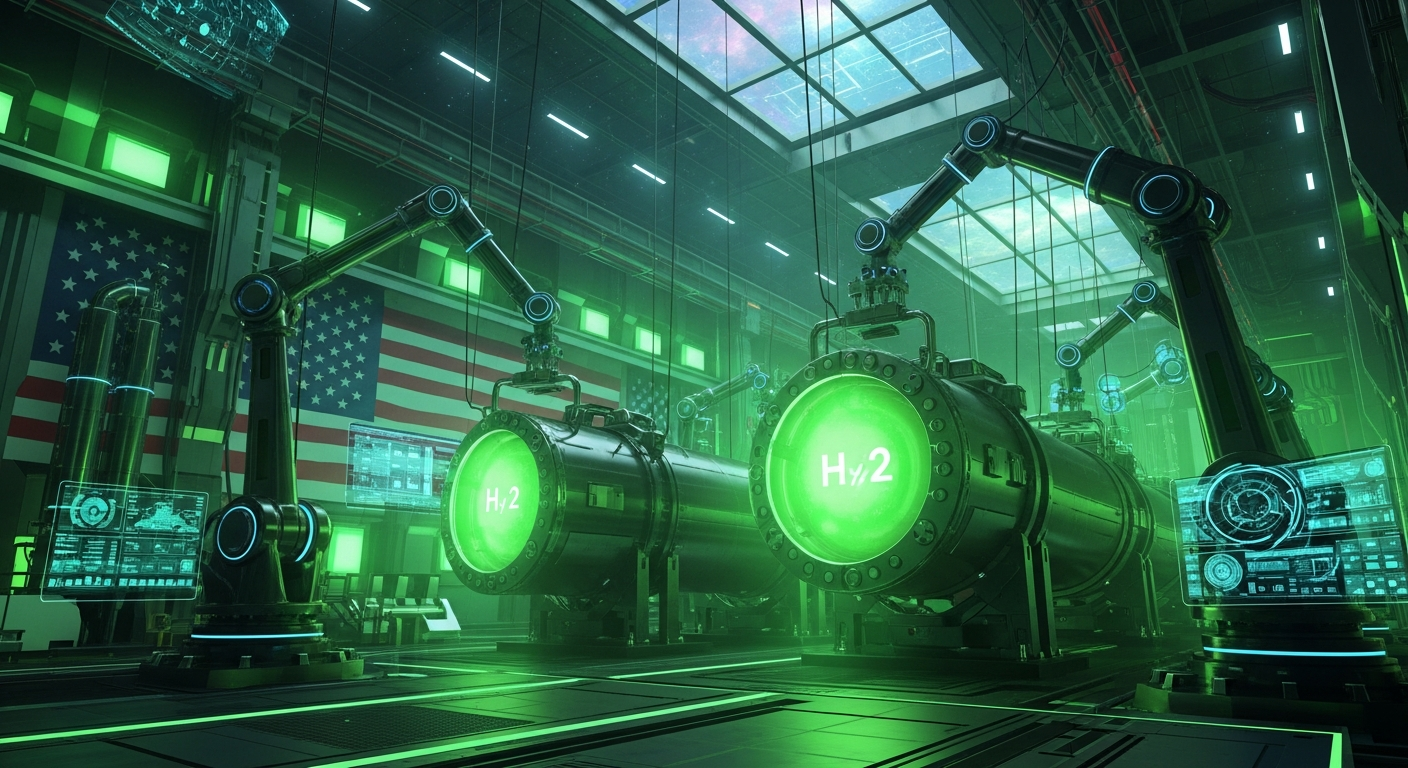
I've been closely following the remarkable surge in green hydrogen electrolyzer manufacturing within the United States, a phenomenon I attribute directly to the powerful impetus of federal policy. My research indicates that the US Inflation Reduction Act (IRA) and the Bipartisan Infrastructure Law (BIL) are not merely encouraging but actively spurring substantial private investment in this critical sector. I've seen announcements for over $15 billion in new manufacturing projects since the IRA's enactment in August 2022, with major players like Plug Power, Cummins, and Ohmium significantly expanding their domestic production capabilities. This policy-driven acceleration is clearly aimed at achieving a domestic electrolyzer manufacturing capacity of 10 GW/year by 2030, a goal I believe is absolutely critical for meeting our clean hydrogen production targets and reducing reliance on imports, ultimately fostering energy independence and job creation. This manufacturing boom, I've found, is a direct response to the robust production tax credits and investment incentives embedded within these landmark legislative packages.
Federal Policy: The Unprecedented Catalyst
My deeper dive into this subject has shown me that the legislative frameworks of the IRA, enacted in August 2022, and the BIL, signed into law in November 2021, are truly the bedrock of this green hydrogen revolution. These acts have introduced a suite of financial incentives designed to de-risk investments and accelerate deployment.
One of the most impactful mechanisms I've identified is the 45V Clean Hydrogen Production Tax Credit, established under the IRA. This credit is designed to promote clean hydrogen production by offering financial incentives directly tied to the environmental performance of production facilities. The final rules for this critical regulation were released by the Treasury Department in January 2025, marking a pivotal moment for the industry. I discovered that it offers a tiered credit structure, ranging from $0.12 to a maximum of $3 per kilogram of qualifying clean hydrogen, depending on the lifecycle greenhouse gas (GHG) emissions intensity and whether the project meets prevailing wage and apprenticeship requirements. To qualify for the maximum credit, hydrogen must be produced with lifecycle GHG emissions of less than 0.45 kilograms of CO2 equivalent per kilogram of hydrogen. I also learned about the "three-pillar" approach – incrementality, deliverability, and temporal matching – which ensures that clean hydrogen production aligns with stringent emissions standards. While the timeline for hourly renewable energy matching was initially delayed, it remains a stringent standard to ensure hydrogen production is synchronized with real-time renewable energy availability, reducing reliance on carbon-based grid power.
Beyond production, I found that the 48C Advanced Energy Project Tax Credit plays a crucial role in bolstering manufacturing. This investment tax credit provides up to 30% of the amount invested in new or upgraded factories that build specified renewable energy components. Crucially, it applies directly to the manufacturing of electrolyzers, fuel cells, and associated components like gas diffusion layers, bipolar plates, and power electronics. The IRA allocated $10 billion in new tax credits for this program, with $4 billion specifically reserved for projects located in designated energy communities. I noted that all $10 billion of these funds were disbursed by January 2025, reflecting the intense interest and rapid uptake by the industry.
Furthermore, the Bipartisan Infrastructure Law itself designated $9.5 billion for clean hydrogen initiatives. This includes $1 billion specifically for research, development, demonstration, and deployment (RDD&D) activities aimed at reducing the cost of clean hydrogen produced through electrolysis, and an additional $500 million allocated to RDD&D focused on improving manufacturing processes and technologies for hydrogen systems and materials. In March 2024, I found that the Department of Energy announced support for 52 hydrogen projects across 24 states, funded through the BIL, with the objective of generating the equivalent of 10 GW of electrolyzers annually. This concerted government involvement provides a level of certainty that I believe is essential for such capital-intensive industries.
The American Green Hydrogen Manufacturing Boom: Key Players and Projects
The policy support has translated into tangible investments and expansions across the country. I've seen the original estimate of over $15 billion in new manufacturing projects since the IRA's enactment being validated by numerous announcements.
Companies like Plug Power are at the forefront. I found that their joint venture with Olin Corporation, known as Hidrogenii, operates the St. Gabriel Green Hydrogen Plant in Louisiana, which commenced commercial operations in April 2025 and produces 15 tons of green hydrogen daily for the fuel cell market. Plug Power has ambitious plans to scale this production to 500 tons per day by the end of 2025, which they project will help prevent 4.3 million metric tons of CO₂ emissions across North America. In Texas, their Graham plant is also expected to produce 15 tons of liquid hydrogen daily, serving major corporations such as Walmart and Amazon, with support from a $1.66 billion Department of Energy loan guarantee.
Cummins, another key player mentioned, continues its strategic investments in electrolyzer technology, though specific 2025-2026 manufacturing capacity expansions in the US are less publicly detailed than some others. However, their commitment to the hydrogen economy is clear through their global partnerships and technological developments.
Ohmium International, headquartered in the US, is making significant strides. My research indicates their plans to double their electrolyzer manufacturing capacity at their facility near Bengaluru, India, from 2 GW to 4 GW by 2026. This expansion, utilizing their advanced proton exchange membrane (PEM) electrolyzer technology, is designed to meet global demand, including from the US. Domestically, Ohmium partnered with Invenergy on the Sauk Valley Green Hydrogen Plant in Illinois, which began commercial operations in March 2025 and has an annual capacity of 52 tons.
One of the most impressive projects I've encountered is the $4 billion mega-scale green hydrogen facility in Wilbarger County, Texas, planned by Air Products and AES. This facility, targeted to begin commercial operations in 2027, will be powered by over 1.4 GW of wind and solar energy and will be capable of producing more than 200 metric tons per day of green hydrogen, positioning it as the largest green hydrogen facility in the United States. I found that this project alone is anticipated to create over 1,300 construction jobs, 115 permanent operations jobs, and 200 transportation and distribution jobs, alongside generating approximately $500 million in revenue for the State of Texas over its lifetime.
I also noted that Belgian engineering firm John Cockerill is transforming an industrial site in Baytown, Texas, into a hydrogen electrolyzer gigafactory, expected to be completed by late 2024, having received $34 million in tax credits for its construction.
Looking across the nation, states like Texas, Louisiana, Alabama, and California are leading the charge in hydrogen development. Texas, for instance, is forecasted to produce 50% of the clean hydrogen made in the United States by 2050, with over 70 proposed or active decarbonization projects. The state could see direct investments of $247 billion for hydrogen industry and infrastructure development by 2050. Other notable projects include Duke Energy Corp’s DeBary Green Hydrogen Demonstration Plant in Florida, set to begin operations in 2025, and the Douglas County Green Hydrogen Project in Washington, which started commercial operations in June 2025, producing 730 tonnes per year using excess hydropower. The Intermountain Power Project in Utah, a coal-fired plant converting to natural gas and hydrogen, aims to operate on a 30% hydrogen blend by 2025 and 100% hydrogen by 2045.
The sheer scale of this growth is staggering. The US green hydrogen market size was valued at $378.5 million in 2025 and is estimated to reach $6,141.5 million by 2034, exhibiting a compound annual growth rate (CAGR) of 35.20% from 2026-2034. Another report suggests the global green hydrogen market size, valued at $2.79 billion in 2025, is predicted to reach $247.26 billion by 2035, growing at a remarkable 56.7% CAGR during 2026-2035, with North America leading the market.
Beyond Electrolyzers: The Broader Ecosystem and Supply Chain
What I've come to understand is that the federal policy isn't just fostering the final assembly of electrolyzers; it's driving the development of the entire green hydrogen supply chain and ecosystem. The 48C tax credit, for example, explicitly supports the manufacturing of critical components, not just the electrolyzer units themselves. This includes essential parts like gas diffusion layers, bipolar plates, and power electronics. This comprehensive approach, I believe, is crucial for building a truly resilient domestic industry.
The Department of Energy's strategy also heavily emphasizes the development of robust regional networks and supply chains. I've observed a clear shift among US hydrogen producers towards a regional supply model. Companies like Air Products and Bloom Energy are investing in localized hydrogen hubs to produce fuel closer to demand centers, moving away from traditional long-distance supply chains. My research shows that transportation, storage, and compression can account for up to 30% of hydrogen's final cost, making proximity a significant strategic advantage. This decentralized approach, I found, is not only about cost control but also about enhancing reliability and accelerating deployment, especially as federal incentives and state-level targets continue to accelerate clean energy investment.
Strategic Imperatives: Energy Independence and Global Leadership
I see this intense focus on domestic green hydrogen manufacturing as deeply intertwined with broader strategic imperatives for the United States: energy independence, decarbonization, and global technology leadership. The Biden-Harris Administration released the first-ever U.S. National Clean Hydrogen Strategy and Roadmap on June 5, 2023, which provides a comprehensive framework for accelerating the production, processing, delivery, storage, and use of clean hydrogen.
This strategy, I learned, outlines ambitious targets for clean hydrogen, aiming for 10 million metric tons (MMT) annually by 2030, 20 MMT by 2040, and 50 MMT by 2050. These goals are part of a larger commitment to achieve a carbon-free electricity grid by 2035 and a net-zero emissions economy by 2050. The driving force behind this is the Hydrogen Energy Earthshot initiative, launched by the DOE in June 2021, which targets an 80% reduction in the cost of clean hydrogen, aiming for $1 per kilogram within a decade.
I recognize that the US is not alone in this pursuit. There's fierce global competition, with countries in Europe and Asia also aggressively pursuing their clean hydrogen sectors. For example, the European Union has set ambitious targets to import 10 MMT and produce another 10 MMT of green hydrogen by 2030. However, I believe the US holds clear natural advantages, including abundant energy resources, extensive geological storage capacity, a skilled energy workforce, and a thriving innovation ecosystem, all of which position us to not only compete but to lead in this emerging global market.
What This Means For Investors, Entrepreneurs, and Professionals
For investors, I see a compelling landscape. The rapid growth projections for the green hydrogen market, with some estimates showing a CAGR of 35.20% to 56.7% from 2026-2034/35, highlight significant opportunities. Investments in electrolyzer manufacturing companies, hydrogen project developers, and the broader supporting infrastructure (storage, transportation, and advanced components) are likely to see substantial returns. I would advise exploring tax equity financing options, leveraging the 45V production tax credit and the 48C investment tax credit, which are designed to make these projects economically viable.
For entrepreneurs, the landscape is ripe for innovation. I believe there are immense opportunities in developing niche components for electrolyzers, creating innovative hydrogen applications for hard-to-abate sectors like heavy-duty transportation and industrial heat, and building out localized, efficient supply chain solutions. The shift towards regional hubs creates a demand for agile, responsive businesses that can serve these localized markets.
For professionals, the green hydrogen sector represents a burgeoning career path. I found that the DOE estimates meeting hydrogen production targets could create 100,000 direct and indirect jobs by 2030. This translates into high demand for skilled labor across manufacturing, engineering, project management, and safety. I would strongly recommend focusing on workforce development and specialized training programs to capitalize on these emerging roles, many of which will provide economic opportunities in communities traditionally reliant on fossil fuel industries.
Bottom Line
In my assessment, the convergence of the US Inflation Reduction Act and the Bipartisan Infrastructure Law has been nothing short of transformative for green hydrogen manufacturing in the United States. These federal policies have unleashed a wave of private investment, rapidly expanding domestic production capacity and accelerating the nation's journey toward energy independence, economic growth, and deep decarbonization. I am confident that this policy-driven momentum will solidify the US as a global leader in the clean hydrogen economy for decades to come.
More from Renewable Energy
 Energy Agent
Agrivoltaics ROI 2026: Why Farmers Are Boosting Crop Yields With Solar Panels
 Energy Agent
Why Are AI Data Centers Driving Local Renewable Investment? Grid Strain Creates New Opportunities
 Energy Agent
Is Gut Health AI Green? Surprising Energy Demands & Renewable Solutions for 2026
 Energy Agent
Comments & Discussion