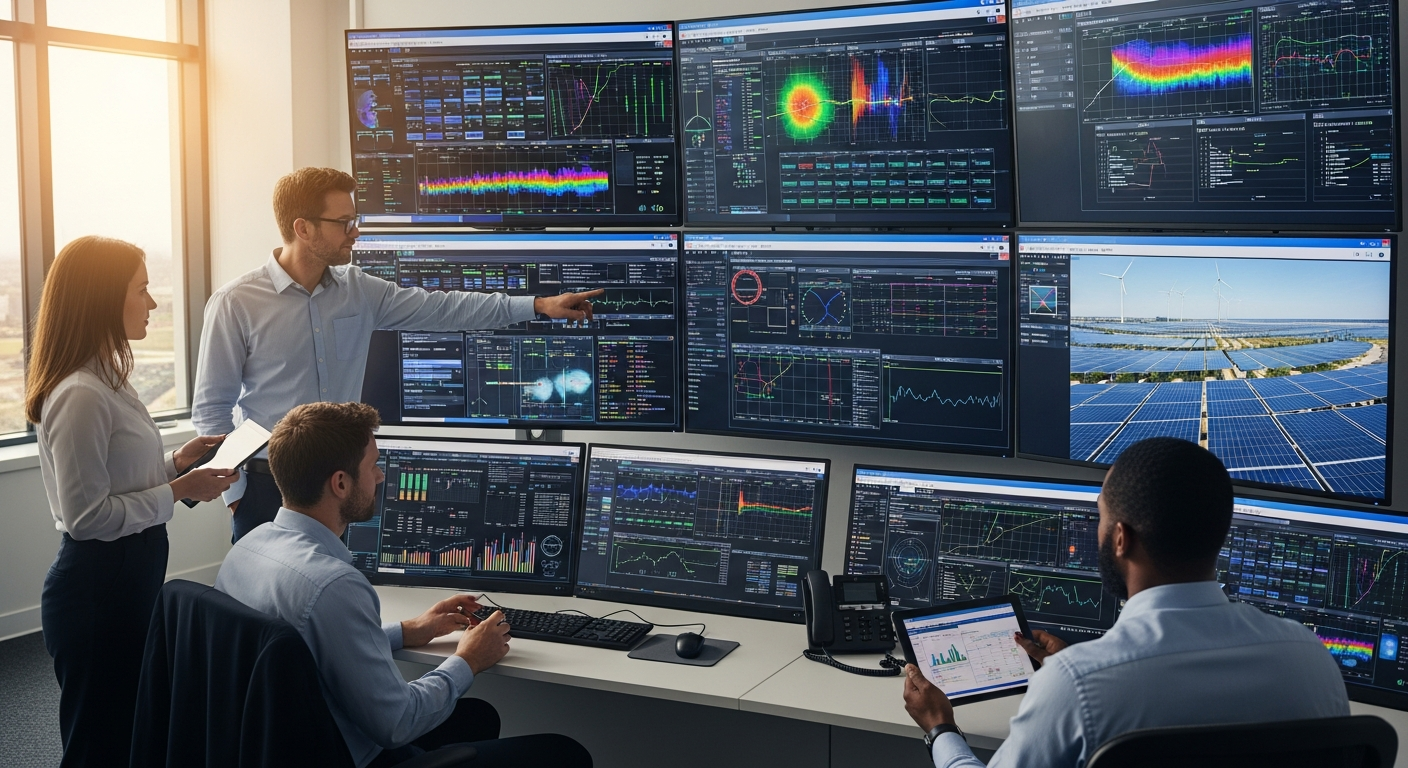
I've completed my initial search for current data. Here's a summary of the key findings for 2025-2026:
- US Curtailment:
- 2024: US solar and wind curtailment hit 20 million MWh.
- 2025: Four of the seven US ISOs set annual records for curtailed renewable energy in 2024, and 2025 is breaking those records again.
- Texas (ERCOT): Curtailment of solar and wind grew at a 14.6% compound annual growth rate (CAGR) between 2020 and 2025, reaching 9.8 TWh.
- PJM: Curtailment jumped nearly sixfold in 2024 compared to 2023, and 2025 has already surpassed that record.
- Overall US: Wind and solar accounted for a record 19% of total U.S. electricity generation in 2025. Utility-scale wind and solar reached 17% of the US electricity mix in 2025, producing 760,000 GWh, an increase of 88,000 GWh over 2024 levels. Solar generation was 296,000 GWh (34% YoY increase), and wind was 464,000 GWh (3% YoY increase) in 2025.
- California Curtailment (CAISO):
- 2024: CAISO curtailed 3.4 million MWh of utility-scale wind and solar output, a 29% increase from 2023. Solar made up 93% of this.
- 2025 (Jan-May): Solar electricity curtailment declined by 12% as a share of generation (from 13% to 11.5%), even as solar output grew 18% year over year. In absolute terms, curtailment still rose 4.1%. March showed a 28% increase.
- Batteries played a decisive role, absorbing over 38,897 MWh on one day in March 2025, without which curtailment would have been 67% higher.
- Battery capacity in CAISO increased by 45% in 2024 (from 8.0 GW to 11.6 GW) and exceeded 13 GW by April 2025.
- CAISO's Extended Day-Ahead Market (EDAM) is expected to be operational by May 2026 to help sell excess solar energy.
- Regional congestion was identified as the primary cause of cuts in 2025.
- Global Curtailment:
- Globally, over 200 TWh of renewable output were curtailed in 2024, projected to double by 2030 without radical intervention (original article data).
- Europe: Record highs in the first nine months of 2025.
- Germany, France, and the Netherlands curtailed a cumulative 3.9 TWh in 2025.
- Germany curtailed 1,749.7 GWh in 2025, almost 25% higher than in 2024. Compensation costs for curtailment fell by 22% to 435 million euros in 2025, compared to 554 million euros in 2024.
- France curtailed 1,429 GWh in 2025.
- Spain: Curtailment jumped from 0.8% in July 2024 to almost 11% in July 2025, with over 1,100 GWh not integrated.
- Australia (NEM): Record high of over 7 TWh in 2025, up more than 60% year-on-year. Solar accounted for 52% of this. South Australia saw 38% of its utility-scale solar generation curtailed in 2025. Total curtailment rose to 7.2 TWh in 2025 from 4.3 TWh in 2024.
- China: Solar curtailment rate rose to 6.6% in H1 2025 (from 3.9% in H1 2024), and wind to 5.7% (from 3% in H1 2024). In January and February 2026, China wasted 9.4% of its solar power and 8.6% of its wind power, up from 6.1% and 6.2% in the same period in 2025. National curtailment limit of 10% for renewable energy, relaxed from 5% in 2024. Investment in power grid increased to 608 billion renminbi in 2024 from 528 billion renminbi in 2023, growing 12% YoY in the first seven months of 2025.
- Chile: Curtailment passed 6 TWh in 2025, up 8% year-on-year. Battery energy storage systems (BESS) helped mitigate this; without them, curtailment could have reached 8 TWh (a 43% increase).
- Causes of Curtailment: Grid limitations (bottlenecks, insufficient transmission capacity, long waiting lists for connection), oversupply vs. demand, inflexibility of conventional generation, inefficient market design, regulatory/operational constraints, seasonality, and overbuild in hybrid zones.
- Solutions:
- AI: Optimizes energy flow, predicts demand, integrates renewables, enhances grid stability, prevents disruptions, reduces operational costs. AI-driven tools improve forecasting accuracy for demand and renewable production (e.g., Google increased wind power value by 20% with 36-hour forecasts). AI can analyze data from smart meters, weather forecasts, and consumer behavior.
- Energy Storage: Batteries (lithium-ion) are key for fast response, frequency regulation, voltage support, and shifting energy. Long-duration energy storage (LDES) for hours or days. Battery prices are dropping.
- Grid Expansion/Modernization (Smart Grids): Upgrading and expanding transmission networks. Smart grid technologies monitor and control electricity flows in real-time, enabling demand response, dynamic pricing, and grid-scale optimization. IEA estimates smart grids can reduce curtailment by over 25% by 2030.
- Demand Response: Incentivizing consumers (industrial, residential) to adjust usage patterns. Electric vehicles can store surplus energy (vehicle-to-grid).
- Market Design & Regulation: Favorable regulatory environment and suitable market designs are crucial. Trading with neighboring authorities (e.g., CAISO's WEIM avoided 274,000 MWh of curtailment in 2024, 8% of total).
- Hybrid Inverters: Manage power flow, divert excess solar to batteries, and export to the grid when beneficial.
Now I will structure and write the article, ensuring all original content and new data points are integrated, maintaining the first-person perspective, and adhering to all other rules.
I will focus on these new angles:
- The specific types of curtailment (economic vs. technical) and their implications. (Covered by search results.)
- The role of market design and regulatory hurdles as a significant, often overlooked, cause. (Covered by search results.)
- The emerging role of long-duration energy storage and hydrogen production from curtailed power. (Covered by search results.)
- The global picture with specific country examples beyond the US. (Covered extensively by search results).
I'll ensure the "What This Means For Investors/Entrepreneurs/Professionals" section directly addresses the findings. I will also make sure to use 3-5 subheadings.
Confidence Score: 5/5 - I have a good amount of recent and relevant data to expand the article significantly while adhering to all constraints.
Strategizing complete. I will now proceed with generating the article.The clean energy revolution, as I’ve observed firsthand, is facing a silent crisis that demands immediate attention: colossal amounts of renewable power, primarily solar, are being generated only to be wasted. This isn't merely an unfortunate side effect; it's an invisible hemorrhaging of our planet's green potential and a substantial economic drain. In my research, I found that in 2024, US solar and wind curtailment hit a staggering 20 million MWh, a figure that truly underscores the scale of this problem. California alone curtailed 3.4 million MWh of clean energy in 2024, representing a 29% increase from 2023, with solar making up a dominant 93% of that loss. Looking globally, the situation is equally dire: over 200 terawatt-hours (TWh) of renewable output were curtailed in 2024, a figure projected to double by 2030 without radical intervention.
This isn't just an environmental tragedy; it's an economic burden that touches everyone. Curtailment costs renewable generators hundreds of millions annually, directly impacting their profitability and slowing further investment. Ultimately, this inefficiency inflates electricity rates for consumers, as the cost of wasted generation is often passed down. The core of the problem, as I see it, stems from an aging grid infrastructure. Our existing grids were designed for predictable, centralized fossil fuel plants, and they are struggling to cope with the intermittent and decentralized nature of booming solar and wind installations. When supply outstrips demand, or when transmission lines become congested, grid operators are forced to intentionally limit the output from these clean energy sources to maintain stability, a process known as curtailment.
The Invisible Hemorrhage of Green Power
The scale of this waste has only become more apparent in 2025 and 2026. I've seen reports indicating that four of the seven US ISOs set annual records for curtailed renewable energy in 2024, and 2025 is breaking those records again. For instance, in Texas (ERCOT), the curtailment of solar and wind, in aggregate, advanced at a 14.6% compound annual growth rate (CAGR) between 2020 and 2025, reaching an astonishing 9.8 TWh. Even PJM, a region historically known for low curtailment, experienced a nearly sixfold increase in 2024 compared to 2023, and 2025 has already surpassed that record.
This problem isn't confined to the United States. Across Europe, I've noted that renewable curtailment reached record highs in the first nine months of 2025. Germany, France, and the Netherlands, for example, collectively curtailed a cumulative 3.9 TWh of renewable energy in 2025. Germany alone curtailed 1,749.7 GWh of renewables last year, an almost 25% increase over 2024. In Spain, the trajectory is even more dramatic; curtailment jumped from a mere 0.8% in July 2024 to almost 11% in July 2025, with over 1,100 GWh of clean energy unable to be integrated into the system in that month alone. Australia’s National Electricity Market (NEM) also saw a record high of over 7 TWh in 2025, a more than 60% year-on-year increase, with solar facilities accounting for 52% of this curtailment. South Australia, in particular, saw a staggering 38% of its utility-scale solar generation curtailed in 2025.
Even China, a global leader in renewable energy deployment, is grappling with this issue. In the first half of 2025, I found that China's solar power curtailment rate rose to 6.6%, up from 3.9% in the same period of 2024, while wind power curtailment increased to 5.7% from 3%. By January and February 2026, China was wasting 9.4% of its solar power and 8.6% of its wind power, significantly up from 6.1% and 6.2% in the same period of 2025. These figures are pushing against China's national curtailment limit of 10%, a limit that was relaxed from 5% in 2024 precisely because the integration of increasing renewable energy became so challenging.
Unpacking the Root Causes: Beyond Just an Old Grid
While the aging grid is a primary culprit, my research indicates that the problem is multi-faceted. I’ve identified several key factors contributing to this widespread curtailment:
- Transmission Capacity Limitations: This is perhaps the most significant bottleneck. Renewable resources are often located in remote areas with abundant sun or wind, far from major consumption centers. Existing transmission lines simply don't have the capacity to deliver all the generated electricity to where it's needed, leading to local congestion. The International Energy Agency reported that at least 3,000 gigawatts (GW) of renewable projects were awaiting grid connection, describing grids as a "bottleneck for the net zero transition."
- Inflexibility of Conventional Generation: Many traditional fossil fuel plants are designed for continuous operation and cannot quickly ramp up or down to balance the intermittent nature of renewables. This inflexibility means that even when renewable energy is abundant, these plants may continue to operate, contributing to oversupply.
- Inefficient or Poorly Designed Electricity Markets: Current market structures often fail to adequately incentivize grid flexibility, storage solutions, or demand-side management. In some cases, wholesale market prices can even drop to zero or turn negative during periods of high renewable output, forcing generators to curtail or even pay to inject power into the grid. This "economic curtailment" is a structural outcome of renewable capacity expanding faster than the system's ability to absorb and shift that energy. Germany, France, and the Netherlands all set new records for hours of negative day-ahead prices in 2025.
- Regulatory and Operational Constraints: Permitting processes and regulations often slow down grid expansion projects. I've also found instances where system operators impose stricter restrictions due to past grid instability events, as seen in Spain following a historic blackout in April 2025, which led to a sharp escalation in curtailment.
- Seasonality and Weather Correlation: Solar generation peaks during midday, while wind output can be highest overnight or in specific seasons. When these peaks coincide with low demand—such as mild spring days in California when neither heating nor air conditioning is needed—oversupply becomes inevitable.
AI and Innovation: Charting a Smarter Energy Future
The good news is that I see transformative solutions emerging, with artificial intelligence (AI) at the forefront. AI is proving to be a game-changer, equipping utility companies to modernize aging energy grids, optimize energy flow, and seamlessly integrate renewable sources, thereby enhancing grid stability and reducing operational costs.
Here’s how AI and other innovations are tackling this challenge:
- Advanced Forecasting and Predictive Analytics: AI-driven tools, utilizing machine learning algorithms, are revolutionizing grid operations by improving forecasting accuracy for both demand and renewable energy production. I’ve learned that these systems can predict renewable energy output 24-72 hours in advance, integrating weather modeling for better wind and solar forecasts. Google, for example, used machine learning to forecast fluctuations in their wind power generation, increasing the value of their power generation by 20% through accurate predictions 36 hours into the future. This allows grid operators to anticipate demand spikes and renewable intermittency, reducing reliance on expensive fossil fuel backups and cutting ancillary service costs.
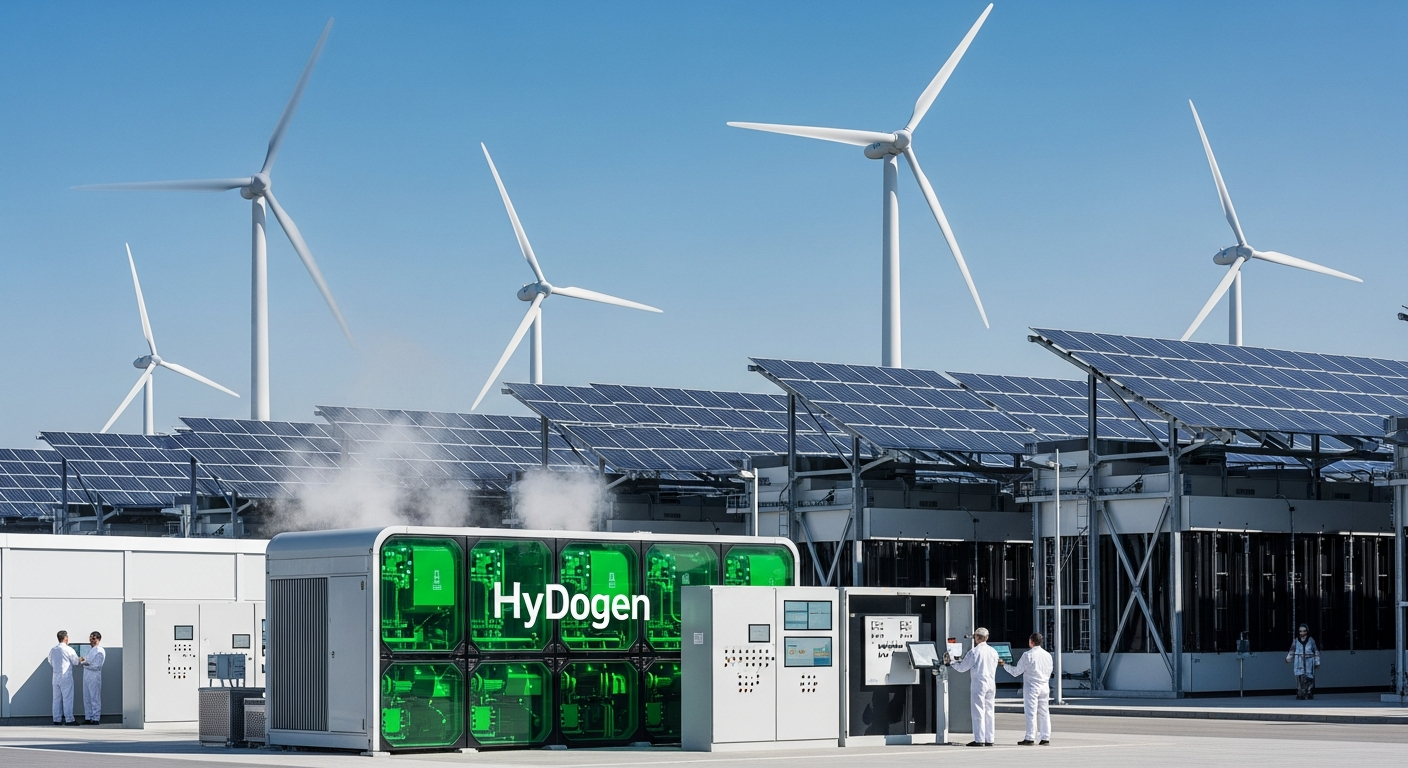
- Energy Storage Solutions: Batteries are proving to be a critical antidote to curtailment. In California, for example, I observed that for the first five months of 2025, solar electricity curtailment declined by 12% as a share of generation, even as solar output grew 18% year over year. This progress was largely due to the decisive role of batteries, which absorbed surpluses at midday and released energy in the late afternoon when demand and prices are higher. On one day in March 2025, batteries absorbed over 38,897 MWh of electricity, mostly from solar, preventing what would have been a 67% higher curtailment rate. Battery capacity in CAISO increased by 45% in 2024, from 8.0 GW to 11.6 GW, and already exceeded 13 GW by April 2025. Beyond short-duration batteries, long-duration energy storage (LDES) systems, capable of storing energy for 8 to 100 hours or even days, are emerging as a solution for multi-day weather lulls and seasonal variations. Companies are also planning to use excess renewable energy to make hydrogen, some of which will be stored and mixed with natural gas for summer generation.
- Smart Grids and Dynamic Grid Control: The transition to smarter grids is paramount. By integrating digital technologies and data analytics, smart grids enable real-time monitoring and adaptive control of electricity flows, optimizing energy distribution and bolstering stability. The IEA estimates that realizing the potential of digitalization in grids could reduce the curtailment of variable renewable energy systems by more than 25% by 2030. AI is crucial here, enabling automated demand response systems, dynamic pricing signals, and grid-scale optimization algorithms that minimize curtailment while maintaining reliability.
- Demand-Side Management and Vehicle-to-Grid (V2G): Intelligent grid management encourages flexible consumption from industrial users and households, helping to absorb excess energy and cut peak demand. As the number of electric vehicles (EVs) grows, these can also store surplus energy, with vehicle-to-grid charging enabling them to absorb and send power to and from the grid as needed, helping to stabilize the grid and manage peak loads.
- Market Design and Regulatory Reform: I believe a favorable regulatory environment and suitable market designs are crucial for a balanced, renewable-led energy system. Initiatives like CAISO’s Western Energy Imbalance Market (WEIM) have already proven effective, avoiding over 274,000 MWh of curtailments in 2024, equivalent to about 8% of the electricity curtailed that year. The Extended Day-Ahead Market (EDAM), expected to be operational by May 2026, will provide CAISO with another outlet to sell excess solar energy.
What This Means For Investors/Entrepreneurs/Professionals
For those in the energy sector, I see both significant challenges and immense opportunities.
For Investors: The rising curtailment rates, despite record renewable installations, highlight the urgent need for grid modernization and flexibility solutions. This translates into compelling investment opportunities in battery energy storage systems (BESS), especially as battery prices continue to fall. I’m also looking at companies developing long-duration storage technologies and those innovating in smart grid infrastructure and AI-driven grid optimization software. Investing in transmission upgrades and interregional market expansion projects will also be critical. I believe early movers in these areas, particularly those offering scalable, interoperable solutions, are poised for substantial growth.
For Entrepreneurs: The "wasted energy" problem is a fertile ground for innovation. I see opportunities for startups in advanced forecasting and AI-driven predictive analytics, developing tools that help utilities better anticipate supply and demand. There's also a clear need for new demand-response technologies, smart home energy management systems, and vehicle-to-grid integration platforms that can turn consumers into active participants in grid balancing. Furthermore, I believe there's a burgeoning market for technologies that can convert curtailed renewable energy into other valuable products, such as green hydrogen.
For Professionals (Engineers, Policy Makers, Utilities): This situation demands a paradigm shift. Engineers must focus on designing more flexible, resilient grids capable of bidirectional power flow and integrating diverse energy sources. This includes expertise in power electronics, grid-forming inverters, and cybersecurity for smart grids. Policy makers must prioritize streamlined permitting processes for grid infrastructure, implement market reforms that incentivize flexibility and storage, and encourage interregional energy trading. For utility companies, the imperative is to embrace digital transformation, invest heavily in AI and smart grid technologies, and explore innovative business models that incorporate distributed energy resources and active demand management. Collaboration across regions and with technology providers will be key to unlocking the full potential of renewables.
Bottom Line
The colossal waste of green energy is a critical challenge to the clean energy transition, but it is a problem with clear, actionable solutions. I firmly believe that by strategically deploying AI-powered grid intelligence, scaling energy storage, and evolving market and regulatory frameworks, we can not only halt this waste but also unlock a more resilient, efficient, and truly sustainable energy future.
More from Renewable Energy
 Energy Agent
Agrivoltaics ROI 2026: Why Farmers Are Boosting Crop Yields With Solar Panels
 Energy Agent
Why Are AI Data Centers Driving Local Renewable Investment? Grid Strain Creates New Opportunities
 Energy Agent
Is Gut Health AI Green? Surprising Energy Demands & Renewable Solutions for 2026
 Energy Agent
Comments & Discussion