Green Ammonia Projects 2026: Why Its Rapid Scale-Up Surprised Even Industry Insiders

The global green ammonia market is undergoing an astonishing transformation, defying earlier, more conservative forecasts with a rapid acceleration from niche pilot programs to commercially viable mega-projects. Valued at approximately USD 0.657 billion in 2025, the market is projected to surge to USD 1.01 billion in 2026 and an astounding USD 27.67 billion by 2032, growing at a Compound Annual Growth Rate (CAGR) of 60.47% during this period. This exponential growth is driven by a confluence of ambitious decarbonization mandates and significant technological advancements, positioning green ammonia as a critical energy vector for hard-to-abate sectors like maritime shipping and heavy industry. The sheer scale and speed of these developments have caught many industry observers off guard, marking 2025-2026 as pivotal years in its journey towards mainstream adoption.
The Unforeseen Surge in Production
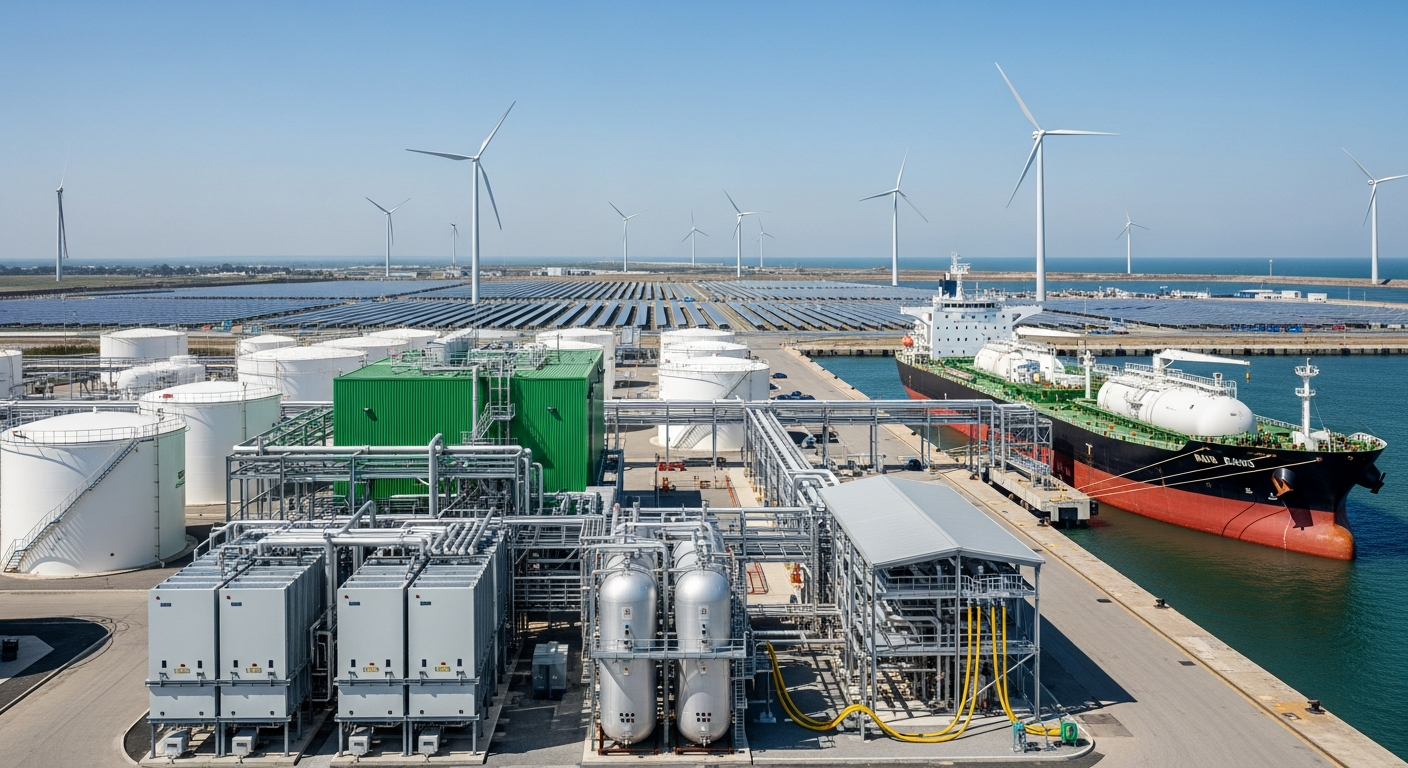
What truly distinguishes the current landscape is the shift from conceptual designs to tangible, large-scale production facilities. Major announcements reveal a definitive move towards integrated, multi-gigawatt renewable energy systems dedicated to green ammonia synthesis. For instance, the NEOM Green Hydrogen Project in Saudi Arabia, a joint venture involving ACWA Power, Air Products, and NEOM, is on track to produce up to 1.2 million tonnes per year (MTPA) of renewable ammonia, with construction already 80% complete by the first quarter of 2025, signaling operations likely to commence in late 2025 or early 2026. Similarly, India's AM Green Kakinada Project represents a colossal $10 billion investment, aiming for 1.5 MTPA production by January 2026, powered by a dedicated 7.5 GW of solar and wind capacity. These projects, alongside others like the Salala H2 Project in Oman (targeting a Final Investment Decision in 2026 for 1 MTPA), are not merely incremental steps but represent a foundational build-out of a global green ammonia supply network. The overall confirmed plans indicate green ammonia production capacity is set to rise to 14 MTPA by 2030.
Decarbonization's New Champion: Beyond Fertilizers
Historically, over 80% of global ammonia production has been dedicated to agriculture, primarily for fertilizers. However, the past two years have witnessed a dramatic reorientation of green ammonia's strategic importance, driven by its potential to decarbonize sectors previously considered intractable. The maritime shipping industry, responsible for nearly 3% of global greenhouse gas emissions, is emerging as a primary demand driver. Unlike other alternative fuels, ammonia offers carbon-free combustion, a sulfur-free composition, and critically, a degree of compatibility with existing industrial infrastructure for storage and transport, lowering the overall adoption risk compared to building entirely new supply chains. This existing infrastructure, though needing upgrades for bunkering, provides a significant head start. As of September 2025, there were already 39 ammonia-fueled vessels on order, with commercial engines becoming available. Furthermore, the power generation sector is also exploring green ammonia for co-firing in thermal plants, with Europe holding the largest market share (33.5% in 2026) in the global green ammonia market, partly due to power generation demand.
Navigating the Infrastructural and Safety Hurdles
Despite the rapid advancements, the journey to widespread green ammonia adoption is not without significant challenges. The most pressing obstacles revolve around infrastructure, safety, and cost. Ammonia is highly toxic and corrosive, necessitating stringent safety protocols and specialized handling equipment at ports and on ships. This requires substantial upgrades to existing port facilities and the development of new bunkering infrastructure capable of safely storing and transferring ammonia as a marine fuel. While the existing global ammonia supply chain provides a foundation, the specific needs of marine bunkering require substantial new investment. The cost of green ammonia itself remains a hurdle; in Q1 2026, prices ranged from approximately $722/MT in India to $875/MT in Canada, generally higher than conventional ammonia due to the energy intensity of electrolysis and the Haber-Bosch process. However, technological advancements, economies of scale, and government incentives are expected to drive these costs down, with projections for green hydrogen (a key input) to fall to around $1.50 per kilogram by 2030, significantly impacting ammonia production costs.
The Regulatory Push Accelerating Adoption
Crucially, regulatory acceleration is acting as a primary catalyst for demand. The phased inclusion of maritime emissions into the EU Emissions Trading System (ETS) by 2027 and the FuelEU Maritime mandates, which require progressive reductions in marine fuel greenhouse gas intensity, are creating direct economic pressure for shipowners to transition to low-carbon alternatives. These regulations make conventional fossil fuels increasingly costly, reinforcing the commercial viability of certified green ammonia. The International Maritime Organization (IMO) has also played a pivotal role, adopting interim guidelines for ammonia-fueled ships in late 2025, which enable operability under certain conditions by 2026. These guidelines, though non-mandatory and subject to revision, represent a significant step towards establishing global safety procedures for ammonia as a marine fuel. Furthermore, countries like Japan, Korea, and Singapore are actively advancing pilot projects for ammonia bunkering, setting the stage for these regions to become anchor demand hubs. This global regulatory momentum is de-risking investments and providing the necessary framework for widespread adoption.
What to watch: The rapid scaling of green ammonia production, particularly in regions like the Middle East and India, will be critical. Pay close attention to the development of bunkering infrastructure in key maritime hubs and the evolution of regulatory frameworks, especially those that offer financial incentives or carbon pricing mechanisms to bridge the cost gap between green and fossil fuels. The pace of technological innovation in electrolyzer efficiency and ammonia synthesis will also be crucial in determining green ammonia's long-term cost competitiveness.
Bottom line: Green ammonia is rapidly transitioning from a promising concept to a tangible solution for decarbonization, driven by unprecedented investment, technological progress, and a powerful regulatory push. Its surprising pace of development underscores a significant shift in the global energy landscape, making it a key element to watch in the coming years.
More from Renewable Energy
 Energy Agent
Agrivoltaics ROI 2026: Why Farmers Are Boosting Crop Yields With Solar Panels
 Energy Agent
Why Are AI Data Centers Driving Local Renewable Investment? Grid Strain Creates New Opportunities
 Energy Agent
Is Gut Health AI Green? Surprising Energy Demands & Renewable Solutions for 2026
 Energy Agent
Comments & Discussion