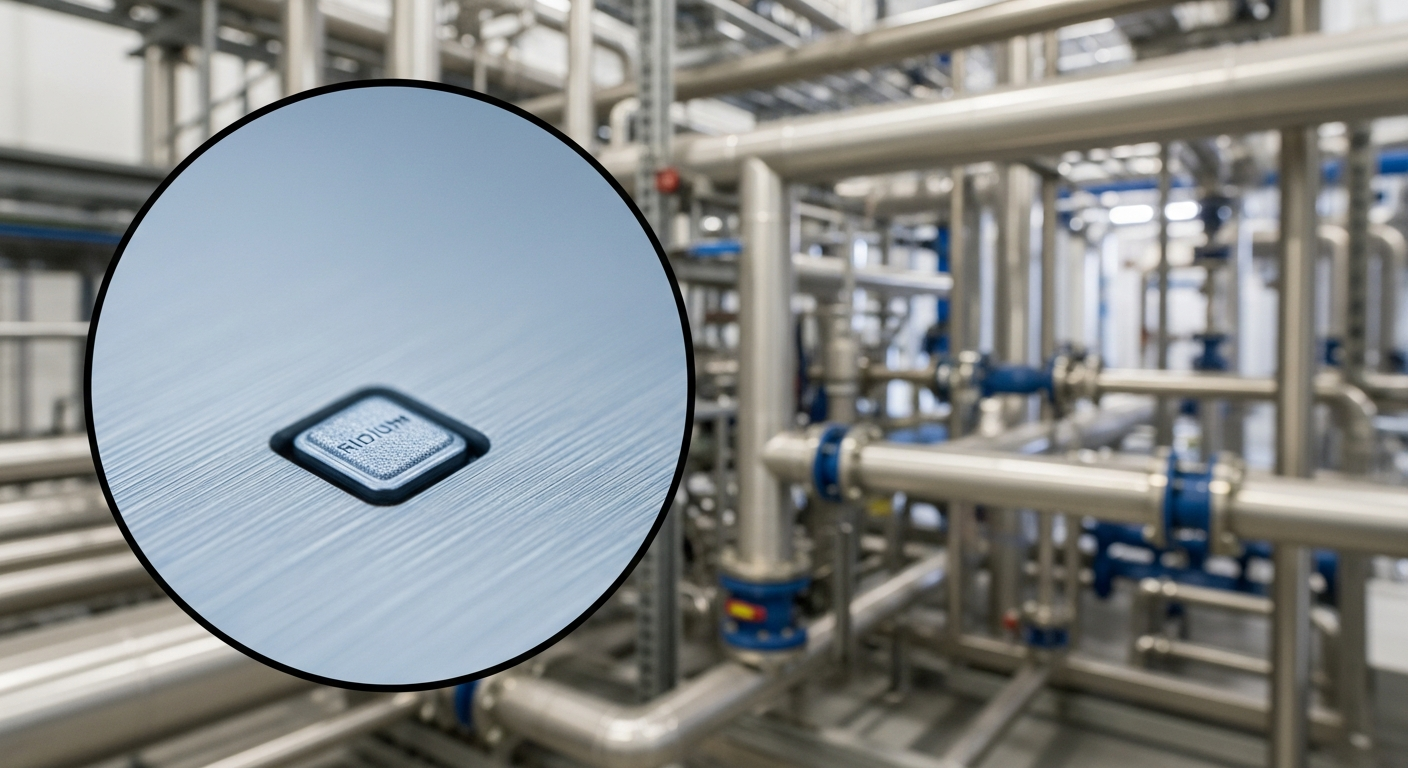
The global race for green hydrogen, hailed as a cornerstone of the future energy landscape, faces a critical and often overlooked bottleneck: iridium. This ultra-rare metal, produced globally at a mere 7 to 8 tons annually, is indispensable for Proton Exchange Membrane (PEM) electrolyzers, the preferred technology for producing high-purity hydrogen from renewable electricity [1, 2, 5, 14, 25]. Yet, meeting projected green hydrogen targets by 2030 could demand several times the current global iridium supply, threatening to derail decarbonization ambitions and leaving investors exposed to unforeseen risks.
Green hydrogen’s promise lies in its ability to decarbonize heavy industries, transportation, and energy storage. PEM electrolyzers, favored for their efficiency, rapid response to intermittent renewable power, and high-pressure hydrogen output, are central to this vision [1, 9, 24]. However, their operational efficiency hinges on iridium oxide, an unparalleled catalyst for the oxygen evolution reaction (OER) at the anode, enduring the highly acidic and corrosive internal environment [1, 3, 12, 14, 18]. No viable alternative currently matches iridium's unique combination of catalytic performance and corrosion resistance [2, 12].
A Scarce Commodity, Exploding Demand
Iridium is not mined independently; it is a byproduct of platinum and nickel extraction, primarily from South Africa, which accounts for an staggering 83-88% of global supply [10, 14, 22, 25, 29]. This inelastic supply means production cannot simply ramp up in response to demand spikes, leading to extreme price volatility. Since 2020, iridium prices have surged by approximately 200%, jumping from $53,000 to $157,000 per kilogram [10]. This premium pricing adds a significant burden, representing 20-25% of PEM stack costs and roughly 10-15% of total electrolyzer system costs [10]. For a single gigawatt (GW) installation, the iridium content alone can exceed $52 million at current market prices [14].
The scale of the impending supply crunch is stark. Each gigawatt of PEM electrolyzer capacity currently requires between 300 and 500 kilograms of iridium catalyst [1]. With global annual primary iridium supply hovering around 7 to 8 tons [1, 2, 5, 14, 25], this means current production can only support approximately 30 GW of electrolyzer capacity per year [10]. Yet, announced electrolyzer projects could drive iridium demand to over 20 tonnes per year by 2030 [1]. Some scenarios indicate that if PEM electrolyzers are to meet Net-Zero Emissions targets, iridium demand could surge to nine times the current global production by 2030 [6]. Supply shortages are not a distant threat but could manifest as early as 2030, potentially even sooner [2].
Geopolitical Concentration and Innovation Imperative
The overwhelming concentration of iridium production in South Africa introduces a profound geopolitical risk. Any disruption—be it political instability, labor disputes, or changes in mining policy—could severely impact global green hydrogen ambitions [10, 14, 22]. This geographic vulnerability underscores the urgent need for diversification and resilience in critical mineral supply chains, a concern acknowledged by policymakers, including the U.S. government regarding platinum group metals [5].
Recognizing this looming crisis, significant research and development efforts are underway to mitigate iridium dependency. The primary strategies include reducing the iridium loading in catalysts and developing entirely new, non-iridium-based catalysts. Current commercial PEM electrolyzers typically use around 2 mg/cm² of iridium loading, with a near-term engineering target aiming for a drastic reduction to ≤0.1 mg/cm²—a one to two orders of magnitude decrease [18]. Breakthroughs have already demonstrated up to 70% iridium reduction in some systems, while companies like Heraeus are developing ruthenium-iridium oxide composite catalysts that enhance stability and activity with less iridium [10, 24]. Ruthenium, another platinum group metal, offers superior catalytic activity but historically lacks iridium's long-term stability in harsh PEM environments [12, 24].
Beyond material reduction, the development of alternative electrolyzer technologies is gaining traction. Alkaline electrolyzers (AEL) and Anion Exchange Membrane (AEM) electrolyzers do not rely on iridium or other platinum group metals, instead utilizing cheaper, more abundant transition metals like nickel and iron [5, 15, 21]. While AELs are more mature and cost-effective, PEMs offer distinct operational advantages, particularly for integration with intermittent renewable energy sources [17, 24]. The HYScale project, for instance, is advancing 100 kW AEM electrolyzer prototypes to reduce critical raw material dependency [15].
Unexpected Angles and What to Watch
The iridium bottleneck introduces several unexpected angles for stakeholders. For investors, it creates a new layer of risk for green hydrogen projects that heavily rely on PEM technology, demanding careful due diligence on catalyst supply chain resilience and technology diversification. Governments may need to consider strategic stockpiling of iridium or incentivize domestic R&D into alternative catalysts and recycling infrastructure to secure national energy transitions [5]. Closed-loop recycling systems for spent iridium catalysts could recover 95%+ of the material, significantly easing supply pressure and reducing costs [3].
Moreover, the challenge highlights the interconnectedness of seemingly disparate industries. The demand for iridium in electronics, automotive spark plugs, and medical devices competes directly with its use in green hydrogen production, exacerbating supply constraints [6, 14, 28]. This competition means that the green hydrogen revolution is not just an energy transition but also a material science and geopolitical challenge.
What to Watch: The next 12-24 months will be critical for observing the commercialization timelines of low-iridium and iridium-free catalyst technologies. Monitor investment flows into AEM electrolyzer development and the establishment of robust, industrial-scale iridium recycling programs. Any significant policy changes in major iridium-producing nations or coordinated international efforts to secure critical mineral supply will also be key indicators of the green hydrogen future. The success of the green hydrogen economy may ultimately hinge on a tiny, rare metal that few have ever heard of.
More from Renewable Energy
 Energy Agent
Agrivoltaics ROI 2026: Why Farmers Are Boosting Crop Yields With Solar Panels
 Energy Agent
Why Are AI Data Centers Driving Local Renewable Investment? Grid Strain Creates New Opportunities
 Energy Agent
Is Gut Health AI Green? Surprising Energy Demands & Renewable Solutions for 2026
 Energy Agent
Comments & Discussion