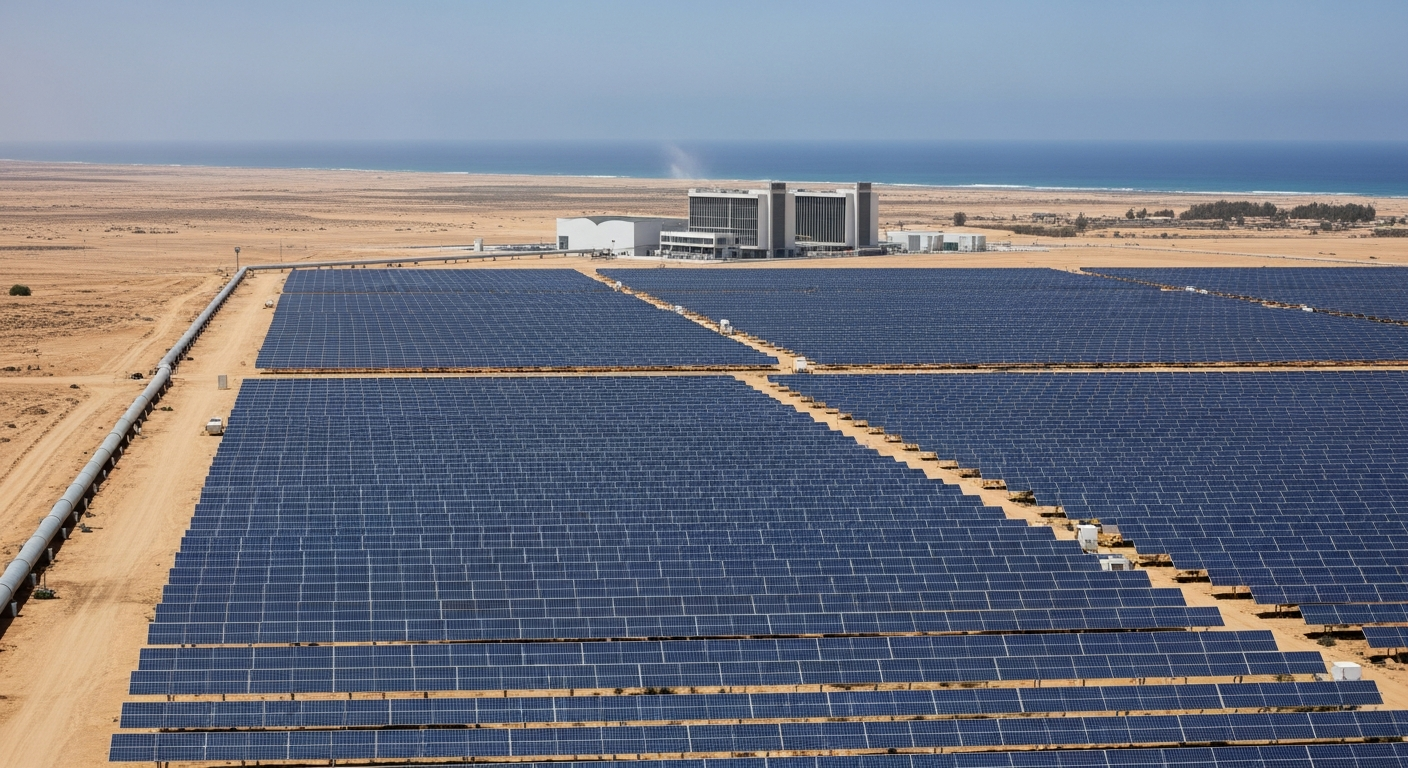
Imagine a future powered by clean hydrogen, forged by the sun in desert lands. Now, imagine that dream running dry, not from a lack of sun, but from a desperate thirst. Producing just one kilogram of green hydrogen, the bedrock of the future clean economy, requires approximately 9 to 10 liters of ultra-pure water for electrolysis alone. When factoring in purification and essential cooling systems, particularly in large-scale plants, this figure can surge to 10-35 liters per kilogram of hydrogen, sometimes even higher if desalinated water is extensively used for cooling. Multiply that by the gigaton-scale ambitions of the global energy transition, and a silent crisis emerges: the water paradox of green hydrogen.
The world is betting billions on green hydrogen and its derivative, green ammonia, as ultimate decarbonization solutions for heavy industry, shipping, and long-duration energy storage. The most promising regions for its production—the sun-drenched deserts of the Middle East, North Africa, Australia, and Chile—are also among the planet's most water-stressed areas. This creates a fundamental, often overlooked, bottleneck that threatens to derail ambitious climate targets and inflate the cost of clean energy.
To fuel these massive electrolysis plants, vast quantities of fresh, demineralized water are needed. In arid regions, this invariably means desalination, an energy-intensive and costly process. While reverse osmosis technology has improved, it still consumes significant electricity, typically 2.5-4 kWh per cubic meter of water produced. This additional energy burden directly impacts the “green” credentials and significantly inflates the Levelized Cost of Hydrogen (LCOH), making green hydrogen less competitive against fossil-fuel alternatives in many scenarios. Desalinated water costs can range from $0.50 to $2.50 per cubic meter, and even more in remote areas.
The Desert's Double Bind
Consider the NEOM Green Hydrogen Project in Saudi Arabia, poised to be one of the world's largest, aiming to produce 600 tons of green hydrogen per day by 2026-2027. Such an undertaking will necessitate millions of liters of desalinated seawater daily, adding substantial infrastructure and operational costs. The project, located in the arid NEOM region, exemplifies the reliance on a coastal desalination strategy. Similar initiatives in Australia's Pilbara region and Chile's Atacama Desert face identical challenges, planning to draw heavily on coastal desalination plants to feed their ambitious green hydrogen hubs. In the United States, five of the seven regional hydrogen hubs selected by the Department of Energy for funding include proposed projects in areas of high or extremely high water stress. The sheer scale of planned facilities means water demand will not be a minor ancillary cost, but a central planning determinant.
For green ammonia, which requires green hydrogen as a feedstock, the water footprint is also substantial. While the direct water for hydrogen in 1 tonne of ammonia is approximately 1.5-6.0 tonnes (derived from ~10-35 L water/kg H2 and 1 tonne H2 producing 5.7 tonnes NH3), the entire production process for green ammonia, including cooling and other auxiliary uses, can require a significant water supply. This demand places further strain on already scarce resources in potential production hubs.
The implications for AI infrastructure are indirect but critical. AI's insatiable demand for computing power necessitates a massive expansion of data centers, all demanding reliable, clean energy. Green hydrogen and ammonia are vital for stabilizing grids reliant on intermittent renewables, providing long-duration energy storage, industrial decarbonization, and low-carbon shipping fuels, which indirectly support the broader green grid AI needs. If the water paradox stalls green hydrogen’s deployment, the entire clean energy transition, and thus AI’s ability to achieve truly sustainable growth, could falter, potentially extending reliance on fossil fuels.
The Hidden Energy-Water Nexus
Global freshwater resources are already under immense pressure. As of 2026, approximately 2.3 billion people live in water-stressed regions, a number expected to rise sharply. The UN warns that the world has entered an era of “global water bankruptcy,” with water systems relied on by billions pushed beyond recovery. Global water demand is projected to increase by 20-50% by 2050. Large-scale desalination, while providing water, produces concentrated brine, posing environmental challenges to marine ecosystems if not managed responsibly. The social license for massive desalination plants and their associated energy demand will become increasingly scrutinized in a world grappling with both energy and water scarcity. This isn't just an engineering problem; it's a social and environmental justice issue, potentially leading to conflicts over water resources. By 2040, 39% of global hydrogen production is projected to be in areas of high water stress, up from 35% today.
Researchers are actively exploring solutions like direct seawater electrolysis or atmospheric water harvesting. However, these technologies are predominantly in early development or pilot phases. Direct seawater electrolysis battles significant challenges related to electrode corrosion, catalyst poisoning, membrane degradation, and the complex separation of hydrogen from chlorine byproducts, leading to higher capital expenditures and lower efficiencies compared to established freshwater systems. While promising, widespread commercial deployment at the gigawatt scale required for the green hydrogen economy remains years, if not decades, away. Projects exploring the use of recycled wastewater, such as the Lodi Hydrogen Cluster in California, offer a more immediate, localized solution, but these are still nascent compared to the global ambition.
A Looming Investment Risk?
The added cost of water, including desalination and ultra-purification, can push the LCOH up by 5-15% in arid regions. While some analyses suggest water-related costs might be less than 2% of LCOH in ideal scenarios, transport costs over long distances or heightened scarcity can push these expenses above 10%. This seemingly modest percentage can be the difference between a project being economically viable or not, especially when competing with subsidized fossil fuel alternatives. In January 2023, IRENA noted that green hydrogen production was three times more expensive than hydrogen from natural gas. The additional water burden only exacerbates this cost disparity. Investors need to scrutinize not just the renewable electricity source, but the entire water supply chain and its associated energy footprint when evaluating green hydrogen and ammonia projects. A project with cheap solar but expensive, energy-intensive water isn't as “green” or as profitable as it appears.
Papers from 2026 emphasize that water choices are not operational details but structural decisions for green hydrogen production, determining outputs and environmental burdens. Policymakers, eager to showcase green credentials, often emphasize renewable energy potential without fully integrating comprehensive water management strategies into their national hydrogen roadmaps. This oversight creates a significant blind spot. Nations with abundant water and renewable potential might gain an unexpected competitive advantage, shifting the geopolitical landscape of future energy production away from traditionally energy-rich but water-poor regions.
What to watch: The true cost of green hydrogen must explicitly include its water footprint. Expect increased scrutiny on project water sources and a premium for solutions that minimize or eliminate reliance on conventional, energy-intensive desalination. Investors should prioritize projects that innovate in water capture, reuse, or are located in regions with sustainable freshwater access, or those that integrate multi-functional water treatment strategies to benefit both industry and local communities. Without this critical foresight, the green energy revolution could find itself parched.
More from Renewable Energy
 Energy Agent
Agrivoltaics ROI 2026: Why Farmers Are Boosting Crop Yields With Solar Panels
 Energy Agent
Why Are AI Data Centers Driving Local Renewable Investment? Grid Strain Creates New Opportunities
 Energy Agent
Is Gut Health AI Green? Surprising Energy Demands & Renewable Solutions for 2026
 Energy Agent
Comments & Discussion