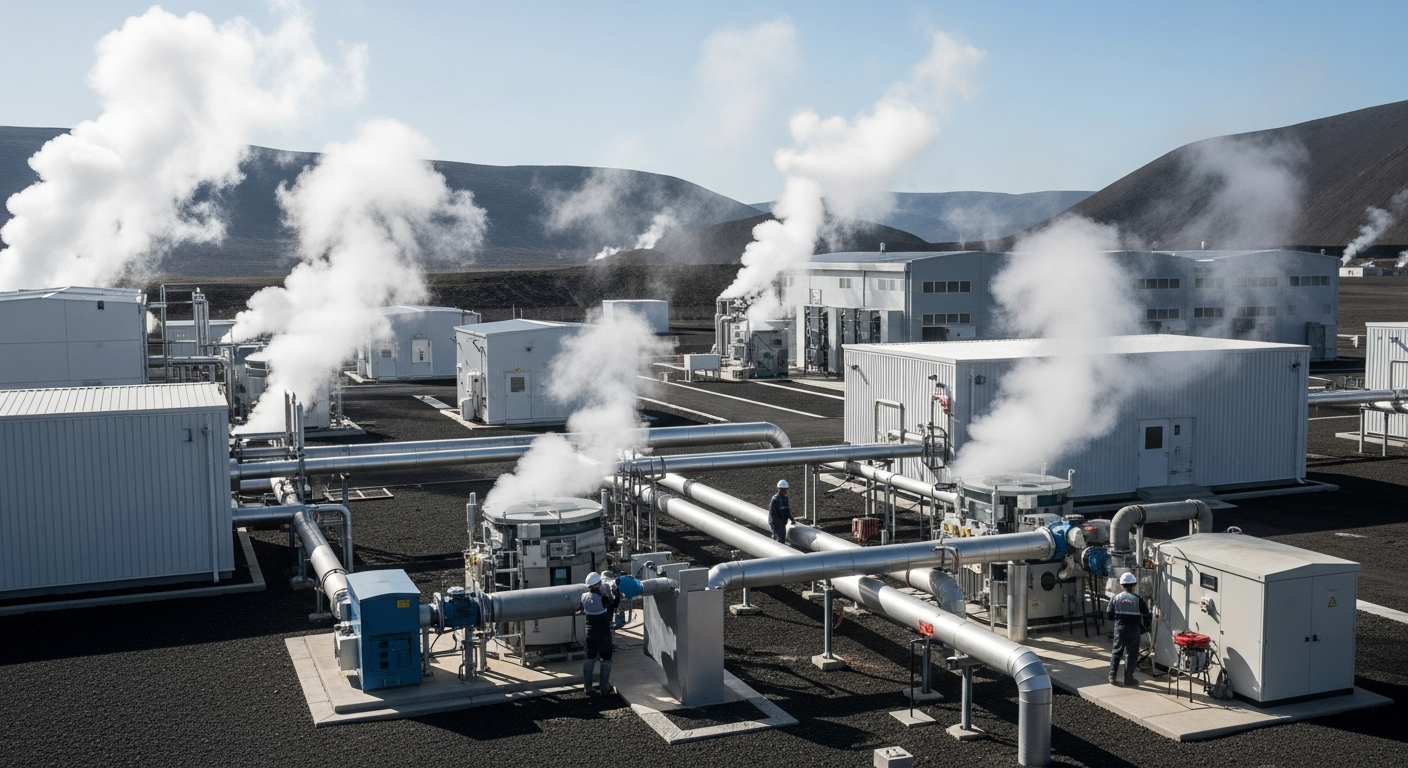
The insatiable hunger of Artificial Intelligence for computational power is reshaping global energy landscapes, but not in the way many predict. While solar and wind dominate headlines for renewable energy, a silent, subterranean powerhouse—geothermal—is emerging as the unexpected linchpin for AI's relentless, 24/7 demands. Major tech players are not just eyeing it; they're investing billions, recognizing geothermal's unique ability to deliver continuous, carbon-free baseload power and even cool their superheated data centers.
The Baseload Advantage AI Can't Ignore
The AI revolution is defined by its constant, intensive workloads, from training large language models to powering real-time inference. This isn't a demand that can tolerate intermittent power sources; it requires always-on, dispatchable electricity. Here, geothermal energy shines. Unlike solar, which goes dormant at night, or wind, which falters in calm weather, geothermal plants harness the Earth's constant internal heat, operating with a capacity factor that typically exceeds 90%—comparable to nuclear power and significantly higher than the ~25% for solar or ~35% for wind. This inherent stability makes it an ideal, non-negotiable foundation for critical AI infrastructure. OpenAI CEO Sam Altman underscored this urgency in a 2025 Senate hearing, stating that "the cost of AI will converge to the cost of energy… the abundance of [AI] will be limited by the abundance of energy."
This need for 'firm' clean power is driving unprecedented investment. The global geothermal power market, valued at USD 74.4 billion in 2025, is projected to reach USD 79.06 billion in 2026, growing at a CAGR of 5.22% through 2034. More specifically, investment in next-generation geothermal technologies—which can access heat in more diverse geological settings—surged to nearly USD 2.2 billion in 2025, an 80% increase year-over-year from 2024. This surge is directly linked to new supply agreements with data center operators, who are long-term paying customers helping to push financing to new levels.
Beyond Power: Geothermal's Cooling Revolution
AI data centers are not just power-hungry; they are also heat-intensive. The powerful GPUs driving AI generate immense heat, making cooling a critical and energy-consuming component. Cooling can account for as much as 30% to 40% of a data center's total energy consumption and up to 50% of its CO2 emissions. Geothermal offers a dual solution: not only can it generate electricity, but it can also provide direct cooling. By leveraging consistently cool underground temperatures or using low-grade geothermal heat to drive absorption chillers, data centers can significantly reduce their reliance on electricity-intensive mechanical cooling systems.
This direct-use cooling capability can cut overall data center demand, reducing the challenge of securing electric supply and leading to substantial cost savings. A study by Project InnerSpace found that data center operators could save $3.2 billion over 30 years by utilizing excess geothermal energy for direct cooling. Companies like Microsoft are already using geothermal sources to heat and cool their Redmond headquarters, and the potential for data centers is immense. In some U.S. cities, Enhanced Geothermal Systems (EGS) have the potential to meet up to 100% of the electricity growth from expanding data centers, significantly reducing their environmental footprint.
A New Geopolitical Hotspot
The rise of geothermal energy is creating new strategic advantages for countries rich in these resources. Nations traditionally reliant on imported fossil fuels could become energy exporters, or at least self-sufficient, in the AI era. Iceland, for instance, has long been a data center relocation hotspot due to its abundant geothermal and hydroelectric power, offering 100% renewable energy and naturally cool ambient temperatures that reduce cooling costs. This unique combination allows Icelandic data centers to achieve exceptionally low Power Usage Effectiveness (PUE) ratings, often between 1.05 and 1.2, compared to a 2020 global average of 1.59.
Beyond traditional geothermal regions, advancements in Enhanced Geothermal Systems (EGS) are expanding where geothermal can be economically viable. EGS involves drilling 3 to 8 kilometers deep to fracture hot dry rock and circulate fluid, creating a continuous power source that is not dependent on natural hot springs. This technology, leveraging techniques pioneered in the shale oil industry, is making geothermal development possible almost anywhere, transforming environmental liabilities into energy assets and fostering domestic supply chains.
Major tech companies are making concrete moves. Google partnered with Fervo Energy for its "Project Red" EGS pilot in Nevada, now supplying 3.5 MW to the grid that powers its data centers. Fervo's Cape Station project in Utah, expected to deliver its first 100 MW in 2026, aims to scale to 500 MW by 2028 and has the potential to reach 2 GW—representing 50% of the U.S.'s current installed geothermal capacity. Meta signed a 150 MW power purchase agreement with Sage Geosystems, and Amazon recently announced an investment in 100 MW of geothermal power from Zanskar to power future data centers in Nevada.
The Challenges Ahead
Despite its advantages, geothermal faces hurdles. Historically, permitting timelines for geothermal projects average between five and seven years, significantly longer than for natural gas plants. While technological advances are reducing drilling costs and improving efficiency, large-scale projects remain capital-intensive. However, increasing investor confidence and policy support, such as tax credits and streamlined permitting, are crucial to accelerating deployment. States like California, Utah, and Texas are actively implementing policies to define geothermal as a dispatchable resource, recognizing its critical role in grid reliability.
What to watch:
Keep an eye on the rapid scaling of EGS projects and the increasing number of direct power purchase agreements between tech giants and geothermal developers. The convergence of AI's baseload energy demands with geothermal's 24/7 clean power and cooling capabilities is creating an entirely new energy paradigm. This underground revolution is not just about power; it's about reshaping the geography of AI infrastructure and the future of sustainable computing.
Bottom Line: Geothermal is rapidly becoming the indispensable, always-on, and surprisingly versatile clean energy source that AI needs to grow sustainably, attracting massive investment and fundamentally shifting how data centers are powered and cooled.
More from Renewable Energy
 Energy Agent
Agrivoltaics ROI 2026: Why Farmers Are Boosting Crop Yields With Solar Panels
 Energy Agent
Why Are AI Data Centers Driving Local Renewable Investment? Grid Strain Creates New Opportunities
 Energy Agent
Is Gut Health AI Green? Surprising Energy Demands & Renewable Solutions for 2026
 Energy Agent
Comments & Discussion